
By Yuanna R.J. Chany
22 Jan 2026
Introduction
In his book Expository Exultation, John Piper writes, “Preaching itself is worship and is appointed by God to awaken and intensify worship. It does this by heralding the reality communicated through the words of Scripture, which was written to create and sustain worship.”1 If preaching is meant to be worship or sustain it, we must ask ourselves: are we truly worshiping or just trying to win a contest? The so-called singing in the modern church service poses a hidden danger.
In many modern contexts, particularly within African churches, singing no longer means exalting God, but instead, it has become a performance-driven competition. The “Unity” events of the past, where different churches came together in one place and sang against one another, vying to win applause or praise, have infiltrated our services. It is on Sunday mornings that many attendees serve with conflicting goals and expectations. Some come hungry to hear from God, while others focus on competing through songs. Shocking indeed! This article exposes the hidden dangers of “the event called Unity (singing competition)” and how it has drowned out the Word of God in our Sunday services.
The Shift From Worship to Performance
Today’s modern churches seem more uplifted during singing than while listening to the Word of God preached to their souls. Don’t misunderstand this, singing to God and praising him is biblical and a good thing. The Scripture repeatedly says, “Make a joyful noise to the LORD and come into His presence with joyful songs” (Psalm 100:1-2); “Sing to Him a new song and shout for joy” (Psalm 33:3); and “..singing psalms and hymns and spiritual songs, with thankfulness in your hearts to God (Colossians 3:16).
While singing to the Lord is a biblical command, it becomes problematic when it becomes the sole focus of worship. When the focus shifts to self, it ceases to honor God, but those who are on the stage. True singing or worship must be “in Spirit and Truth” (John 4:23-24), not for human recognition or applause. James Igga, currently a student at Shepherd Training College and a Pastor at Alere Baptist Church in the Alere Refugee Camp in the Adjumani District, Uganda, stated: “Back home in South Sudan, when I was a child, I was once a victim of this. I would go to church only to show off my talent, but my intention was not worship; it was self-exaltation. Because right after the singing and dancing, I would always leave without listening to the Word of God preached from the pulpit.” Today, this is not something to be looked down on or say is in the past, but the Church now suffers from it as well.
In our services today, various departments and groups demand their turn to perform on Sunday mornings. Choirs, youth groups, and others often sing two or three songs, in the name of exalting God, but in their hearts it is to outshine one another and elicit responses like, “Oh, how beautifully they sang!!” rather than, “How great is our God!” Meanwhile, the love of singing has taken over the whole service; this mindset of self-glory has dominated the sanctuary and left other things tasteless. Preaching and giving are no longer sweet moments where God can be praised and exalted.
Furthermore, the goal of the Sunday service has now shifted from attracting people to God’s presence to attracting people to the performance itself. There is no longer a deep hunger for God’s glory in our praises; instead, there is a craving for human applause or recognition.
Singing to God has been replaced by singing for people, where singing is measured by the crowd’s response, not by the greatness of who God is in the midst of His people. It is not pointed to the greatness of the One being worshipped, but to the one who sang. We forget that when worship becomes a contest, competition sneaks in, and self rises to demand glory, instead of giving glory back to God; this is idolatry. John Calvin wrote, “The human heart is a perpetual idol factory.” Indeed, it is in our hearts where self-craving comes for glory and human applause, instead of God’s glory. This has been the downfall of many Churches today, because congregations have stopped listening to the Word of God, but have started judging how glorious the singers are instead.
Scripture warns against such pride; “God opposes the proud but gives grace to the humble” (James 4:6), and let none boast but lest in the Cross (1 Corinthians 1:31). Oh, may we boast in Jesus, and in the Truth. God declares through his servant, Isaiah 42:8, “I am the LORD; that is My name! I will not yield My glory to another or My praise to idols.” God cannot share His glory with singers or any of our church departments. Glory belongs to God and to Him alone. The delusion of competition in Church service that attributes glory to the people who sing is not true worship, but idolatry. We can not remain silent about this toxic form of “singing,” which places man at the center of worship rather than God.
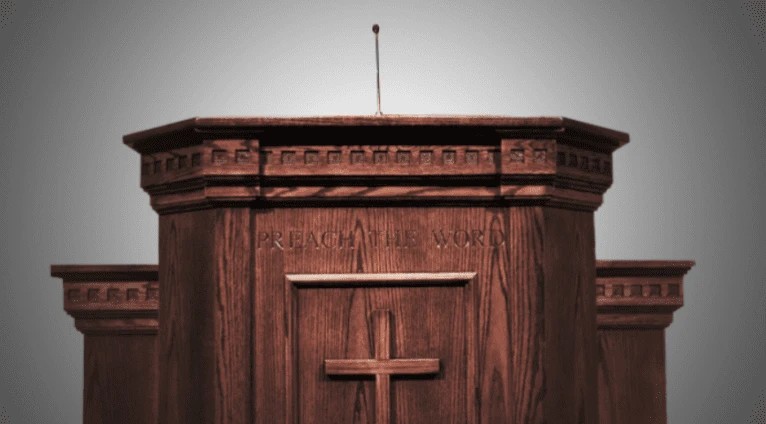
A performance is not a service that God can be said to be at the center, because there, His Word is shunned. Concert-style worship is never a place for God’s glory; it is a stage for performance. It's a place where we mostly enjoy songs more than the Word of God preaches. This is wrong!
We must reclaim the service from the stage. We need to rethink and see that true worship is all about God, God, and God. It’s not about a constant barrage of music without the Word of God. In most of our days, as the choirs leave the stage, so do the people. People leave the sanctuary as soon as their favorite group finishes singing, or even switch churches, because they weren't given enough time to sing. They forget that true service must remain biblical, not people-driven. Can we worship God without His Word? Absolutely not. So why do we grow bored when the Word of God is preached? The next point will address the issue of boredom when God’s Word is preached.
Bored When God’s Word is Preached
The fact that boredomness can stem from the message’s delivery at some point is not only what causes people to embrace songs more than the Word, but also personal agendas. Russell Moore wrote, “The biblical revelation is far from boring. It’s the most exciting, engaging story imaginable, which is why it is aped all over the place in epic, drama, poetry, and song.”2 Indeed, this is true, though in most Churches today, the love of music has blinded congregants’ ears from listening to the Word of God, which surpasses every epic. Most Christians have forgotten that a service is as true as the Word of God is central and dominant in its heart. We sing to God because He is a speaking God, but if the God that we sing to could not speak, He would be nothing more than an idol. But because the God of the Bible is the God who speaks, He also deserves to be heard with the same joy we show when a choir fills the altar.
Shane Idleman wrote, “The silent pulpit is not God's pulpit.” That’s true, it is in the Scripture that God preaches to us and where our souls find true satisfaction. 2 Timothy 3:16, “All scripture is given by inspiration of God, and is profitable for doctrine, for reproof, for correction, for instruction in righteousness”. It is in God’s Word that we find instructions for life and godliness. J. Vernon McGee said in his sermon titled “The power of the Word of God,” “we cannot have strong Christians without the knowledge of the Word of God.” It is only in God’s Word that we are equipped fully and truly. That is why joy should be our only response when the pulpit is occupied by a preacher of God’s Word, ready to exposit the Scriptures.
However, most of our churches today are trained to be more demanding of God than they are willing to give Him, their attentive ears. They closed their ears, and they cannot listen to the word of God. They have no love for God’s Word but love to “praise Him.” They only have the mindset that says, “Let's go home, the service is over,” simply because the singing has ended. This “trained” behavior ignores the fact that God is a speaking God who demands to be heard. Congregants only get excited when they are singing and dancing. Hence, this scene forgets that happiness found only in singing is a fleeting emotion, but the joy found in the Word of God brings eternal joy and salvation to the soul.
Apostle Paul says, “ Faith comes from hearing, and hearing through the Word of Christ” (Romans 10:17). Without a sermon, the soul remains exiled in its own deadness, and to be a “saved sinner” is to be one whose silence has been interrupted by God’s Word. On March 24, 1889, Charles H. Spurgeon says, “None can show forth the praises of God like those who taste his special love, and know the unutterable sweetness of it.”3 How do we taste his special love, and know the unutterable sweetness of it? It is through the Word of God. That’s why God demands that we hear Him speak, not us always making much of ourselves. We need to make much of God’s Word by listening to Him and allowing it to transform us.
Sadly, while we shout and cheer during musical presentations, we grow restless and bored during the sermon, checking our phones, whispering about the time, or yawning. Is the problem the preaching or the preacher in the pulpit? I have concluded it's neither. The issue lies in our hearts and ears. Many prefer singing to preaching because preaching acts as a “double-edged sword” that convicts and strikes the conscience (Hebrews 4:12). However, in response to how we feel during sermons, some preachers have become liberal and, therefore, are open to entertaining us with feel-good messages rather than proclaiming the truth to our hearts. Preachers, fearing empty seats, therefore shorten the sermons, turn to comedy, or become motivational speakers. Others say to the audience, “Today there is no sermon, let’s sing one or two songs and go home.” That’s why you find today’s preachers “entice” listeners by sandwiching the Word with songs: from the beginning, a song, in the middle, a song, and one at the end. To us, singing becomes enticing; however, in the end, we only remember the melody but forget the Message.
Conclusion
While singing is vital, we must not abandon the central pillar of worship, the Word of God. Just as we need both legs to walk, we need both singing and the Word to thrive spiritually. John Piper wrote, “As people gather to give united expression to their knowledge of God and their love for God, preaching is distinctly designed by God to model this love by its exultation, and to serve both the knowledge and the love by its exposition.”4 Indeed, we need preaching in our services if we want God to be most glorified in our Churches. We need to be people who listen to God.
Again, singing must never be for self-glory, but always for His exaltation. The Psalmist declare, “Praise the LORD!, not men. For it is good to sing praises to our God, not our singers” (Psalm 147:1). If there are followers of Christ in our churches today, then we must preach the Word (2 Timothy 4:2; Matthew 28:19-20; Romans 10:14-15; Mark 16:15). If indeed we truly know the One we worship with songs and dancing, then we must listen to Him (John 10:27; Luke 11:28). We should cultivate the same passion for the sermon as we do for the songs. Our goal should not be to hear, “They sang well,” but cry out, “What a God! What a Savior!” May the truth of God’s Word move us even more deeply than the beauty of our music. Evaluate your Church today and ask yourself, is our Church truly worshiping God, or is it trying to win a contest? If it’s trying to win a contest, let us return to worship that honors God truly, through both joyful song and attentive listening to His Word. We need to go and revisit the regulative principle of worship.
1. “Expository Exultation: Christian Preaching as Worship.” 2025. Pg. 51. Desiring God. September 29, 2025. https://www.desiringgod.org/books/expository-exultation.
2. Russell Moore, By Anon Year: 2016 Container: Russell Moore URL: https://www.russellmoore.com/2016/08/10/spiritual-warfare-boring-preaching/
3. The Spurgeon Library | Sounding Out the Word of the Lord. (2018). The Spurgeon Center. https://www.spurgeon.org/resource-library/sermons/sounding-out-the-word-of-the-lord/
Newer articles:
- South Sudan’s Vice-President on Trial: The Case’s Potential Consequences for the Restoration of Peace - 09/02/2026 11:12
- NDA's Crisis Is Orchestrated By The Regime - 06/02/2026 14:16
- Greenland: Trump's predatory mood - 03/02/2026 18:17
- A Call For Unity, For Victory Of The Opposition - 03/02/2026 12:23
- Understanding China-Africa Partnership for Collective Modernization - 27/01/2026 11:15
Older news items
- From Washington To Beijing: Why Chinese Path To Modernization Is The Alternative Development Path For The Global South - 23/01/2026 14:48
- Another Empty Threats By Gen. Paul Nang - 23/01/2026 14:38
- Cultural Soft Power: The 2026 Mundari Festival as a Blueprint for South Sudanese Unity - 19/01/2026 12:50
- The Politics Of Joint Operations Of The Armed Forces By The Regime - 16/01/2026 15:20
- The C5 Mandate: Why African Union’s Diplomacy Must Pivot to Action in South Sudan - 16/01/2026 13:35
Latest news items (all categories):
- The Emerging Endgame of the Russo-Ukrainian War - 05/08/2026 22:59
- The changing face of “Made in China” - 05/08/2026 22:41
- UK - Change of His Majesty’s Ambassador to South Sudan: Rebecca Fabrizi - 05/08/2026 22:09
- South Sudan rewriting its future with eyes on agriculture and mining boom - 05/08/2026 21:53
- Moroccan king's letter confirms naming of major highway in honour of Trump - 05/08/2026 21:52
See also (all categories):
Random articles (all categories):
- South Sudan reports nearly 1,500 cholera cases: UN - 10/06/2014 06:00
- South Sudan’s poisoned inheritance - 02/02/2012 22:04
- South Sudan confirms 18 new COVID-19 cases - 21/06/2020 03:52
- UN gives Sudan, South Sudan 48 hours to halt hostilities - Channel News Asia - 02/05/2012 18:00
- South Sudan's First Year of Independence Mired in Conflict - Voice of America - 04/07/2012 13:34
Popular articles:
- The Final Communique of SPLM-DC Third Session of the National Council - 29/03/2011 01:00 - Read 83078 times
- Roles and Definition of Political Parties - 29/04/2011 01:00 - Read 64778 times
- Agriculture in Southern Sudan: Challenges and Investment Opportunities - 06/10/2010 01:45 - Read 57317 times
- Fashoda Youth Forum Rehabilitation of Drainage Culverts in Malakal town Report - 07/08/2008 16:22 - Read 35812 times
- Creation and establishment of the Local Government Councils ( Counties ) (2) - 28/09/2011 01:00 - Read 33606 times
