
By Amaju Ubur Yalamoi Ayani
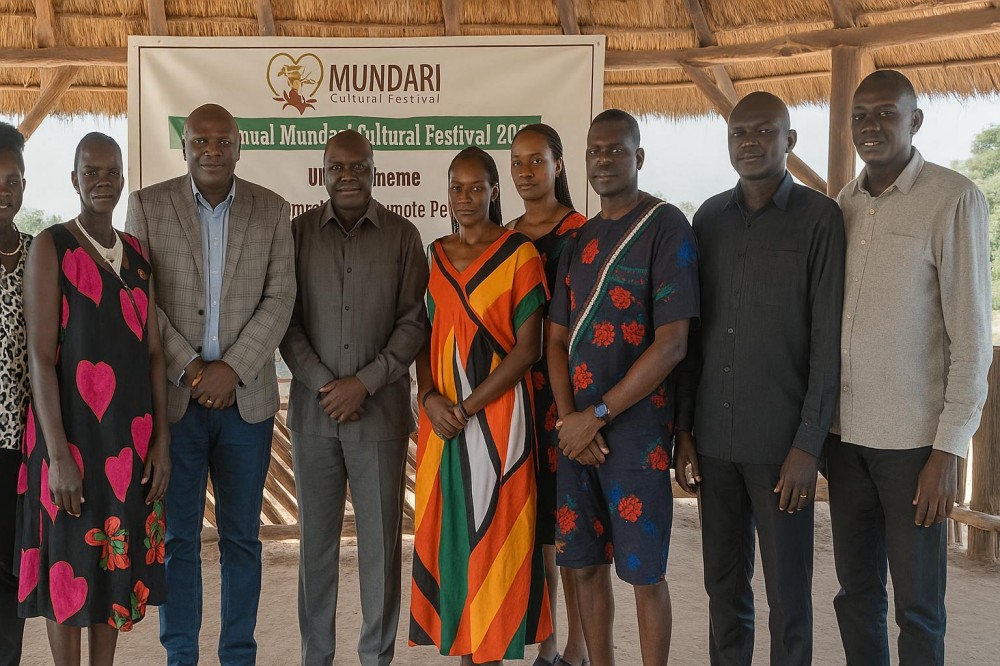
As South Sudan navigates the high-stakes journey toward the December 2026 general elections, the air is thick with political tension and the weight of a fragile peace process. Yet, this week in Terekeka, a different kind of authority was on display. The 3rd Annual Mundari Cultural Festival, which concluded on January 18, 2026, has proven that the nation’s most effective tool for stability is not found in a boardroom, but in its cultural soft power.
While formal diplomacy often struggles to bridge ethnic divides, the festival—held under the theme “Celebrating Mundari Culture to Promote Peaceful Coexistence”—succeeded where politics often falters.
Soft power—the ability to influence through attraction rather than coercion—is precisely what the Mundari people offered the nation this January. By showcasing their world-renowned connection to their cattle and their mastery of traditional wrestling, the Mundari did not just celebrate themselves; they invited the nation to find common ground.
The festival’s success was bolstered by the strategic involvement of high-profile government officials, researchers, and international institutions like UNESCO South Sudan, which has long advocated for using living heritage as a tool for reconciliation. By supporting the documentation and celebration of these traditions, UNESCO and local organizers, for example, are helping to transform tribal pride into a national asset. The inclusion of the Bari Cultural Union and representatives from various states transformed a local event into a strategic peacebuilding exercise, creating a shared identity essential for a country attempting to move past decades of conflict.
For communities in states and administrative areas still scarred by the bitter herbs of cattle raiding and intercommunal conflict—the Terekeka festival offers vital lessons:
- Sublimation of aggression
The Mundari people show that the warrior spirit is better served in a wrestling pit than an ambush. Wrestling provides a rules-based arena to settle scores without spilling blood.
- The guest-tribal doctrine
By inviting rivals to dance, the Mundari proved that the eye that sees the beauty of another tribe’s dance cannot easily look through a gun-sight.
- Economic dividends
While conflict brings empty granaries, the festival brought thousands of traders to Terekeka. Peace is the most profitable crop a tribe can plant.
In the wrestling pits of Terekeka, we saw a blueprint for how South Sudan can manage its internal rivalries. Wrestling is a disciplined, rules-based competition that settles scores through strength and skill rather than violence. For the youth—who are often the most vulnerable to political mobilization ahead of the 2026 polls—the festival offers a productive outlet for tribal pride.
By elevating the youth as protectors of culture rather than soldiers of war, the festival acts as a grassroots stabilizer. As noted by one official during the festival, “… these platforms are vital for strengthening the national unity required to see the country through its current transition.”
As the international community monitors the implementation of the peace deal, they should look to the “Terekeka Model”. The 2026 Mundari Cultural Festival suggests that if South Sudan invests in these cultural anchors, it can create a social safety net that protects the country from election-related shocks.
Culture provides the trust that the ballot box sometimes lacks. The success seen at the 3rd Mundari Cultural Festival suggests that a National Cultural Festival in Juba—bringing together all 64 tribes—could be the most effective pre-election activity the government could fund.
South Sudan’s diverse cultures are often cited as a source of friction, but the Mundari have shown they are actually our greatest asset. By leveraging cultural soft power, we can stitch together a national fabric resilient enough to withstand the pressures of 2026. In the end, it may not be the politicians who save South Sudan, but the singers, the wrestlers, and the elders who refuse to let the spirit of unity go out.
About the writer
Amaju Ubur Yalamoi Ayani, aka Amaju Joseph Ubur Ayani, is a teacher and political commentator. He can be reached via
Newer articles:
- A Call For Unity, For Victory Of The Opposition - 03/02/2026 12:23
- Understanding China-Africa Partnership for Collective Modernization - 27/01/2026 11:15
- The Silent Pulpit: How Singing Drowned Out the Word Of God - 23/01/2026 18:18
- From Washington To Beijing: Why Chinese Path To Modernization Is The Alternative Development Path For The Global South - 23/01/2026 14:48
- Another Empty Threats By Gen. Paul Nang - 23/01/2026 14:38
Older news items
- The Politics Of Joint Operations Of The Armed Forces By The Regime - 16/01/2026 15:20
- The C5 Mandate: Why African Union’s Diplomacy Must Pivot to Action in South Sudan - 16/01/2026 13:35
- Joint Statement on the Alleged Forgery of the Twic Dinka Paramount Chief's Signature and Fraud Claims Against TECA-Juba Chairperson Gen. Biar Mading Biar Yaak - 14/01/2026 12:59
- The 2026 Year of people-to-people Exchanges: Reclaiming South Sudanese Identity Through the Global Civilization Initiative - 14/01/2026 12:55
- Twenty-One Years Later: Why the CPA’s Vision of Justice, Liberty and Prosperity Remains a Dream - 12/01/2026 11:27
Latest news items (all categories):
- Ramaphosa presses Kiir to implement peace deal ahead of South Sudan’s first elections - 09/10/2026 12:19
- South Sudan steps up Ebola alert after Kenya case - 09/10/2026 12:17
- Laotian man deported by U.S. to South Sudan leaves for Laos after year in detention - 09/10/2026 12:14
- Bullet and blast injuries … and a constant need for blood: inside South Sudan’s overwhelmed trauma wards - 09/10/2026 12:10
- MTN South Sudan and Regulator Pledge Cooperation to Expand Connectivity - 09/10/2026 12:01
See also (all categories):
Random articles (all categories):
- Qatar loses on World Cup field, makes gains on global stage - 29/11/2022 00:06
- South Sudan: Government, armed groups sign peace deal - 30/04/2013 13:59
- Sudan, South Sudan reach oil deal, will hold border talks - Reuters - 04/08/2012 12:23
- Rockport Native Kidnapped By Sudanese Radicals - KRIS Corpus Christi News - 04/11/2012 23:17
- قلم جرئ - هل تمرد صحفي المصير مع المتمردين ام رفضو تمرير اجندات الحكومة - 11/06/2014 15:07
Popular articles:
- The Final Communique of SPLM-DC Third Session of the National Council - 29/03/2011 01:00 - Read 83247 times
- Roles and Definition of Political Parties - 29/04/2011 01:00 - Read 65002 times
- Agriculture in Southern Sudan: Challenges and Investment Opportunities - 06/10/2010 01:45 - Read 57698 times
- Fashoda Youth Forum Rehabilitation of Drainage Culverts in Malakal town Report - 07/08/2008 16:22 - Read 36009 times
- Creation and establishment of the Local Government Councils ( Counties ) (2) - 28/09/2011 01:00 - Read 33868 times
