
By Amaju Ubur Yalamoi Ayani
(Pachodo.org) - Friday, January 9, 2026, marked the 21st anniversary of the signing of the Sudanese Comprehensive Peace Agreement (CPA). For the people of South Sudan, this date was intended to signify our national “coming of age.” In many cultures, twenty-one years represent the transition into full adulthood and the assumption of sovereign responsibility. Yet, as we survey the state of our nation today, the clarion call for “Justice, Liberty, and Prosperity” sounded in Nairobi in 2005 feels less like a realized inheritance and more like a receding mirage.
The Comprehensive Peace Agreement (CPA) was a watershed moment in African diplomacy, successfully silencing the guns of the continent’s longest-running civil war. It provided the essential roadmap that led to South Sudan’s hard-won independence in 2011. However, the tragedy of the last two decades is that our leadership has treated the CPA as a final destination rather than a foundation upon which to build. We secured the “Liberty” of a national flag and a seat at the United Nations and at the African Union, but we have failed to cultivate the “Justice” and “Prosperity” required to make that liberty more than just a hollow shell.
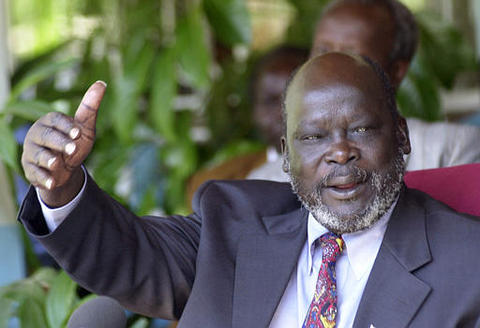
The wealth-sharing protocols of the CPA were designed to be the engine of a new, self-sustaining state. The vision was straightforward: utilize the nation’s vast petroleum reserves to transform a war-torn landscape into a modern economy. Dr. John Garang, one of the architects of the CPA made it loud and crystal clear, “We shall use the oil money to fuel agriculture …” Instead, twenty-one years later, South Sudan presents a staggering paradox. Since independence, the government has collected billions in oil revenue, yet according to reports from the United Nations Commission on Human Rights in South Sudan, systemic corruption and kleptocratic patronage networks have ensured that these funds rarely reach the public coffers.
The Prosperity envisioned in the CPA was intended for the masses, but in 2026, it remains the exclusive preserve of a narrow political and military elite. Investigative findings have highlighted emblematic failures such as the “Oil for Roads” program, which diverted massive sums into off-budget accounts while leaving the country with some of the least developed infrastructure in the world. While wealth is diverted, the social contract is fraying at the edges; as of January 2026, public sector workers—the very backbone of the nation—regularly face months of unpaid salary arrears. When national wealth is used to grease the palms of political loyalists rather than to provide basic services, the CPA’s economic vision is not merely delayed; it is being actively dismantled.
The second pillar of the CPA—Justice—remains the most neglected. The agreement was supposed to rectify decades of historical marginalization. However, internal accountability has proven to be the leadership's Achilles' heel. As we have entered 2026, the Reconstituted Joint Monitoring and Evaluation Commission (RJMEC) continues to warn that a vacuum of accountability is fuelling a vicious cycle of impunity.
While the 2018 Revitalized Agreement (R-ARCSS) sought to revive the spirit of the CPA through mechanisms like the Hybrid Court for South Sudan, progress has been glacial. Legislating for the Commission for Truth, Reconciliation, and Healing (CTRH) was a step in the right direction, but without the political will to fund and empower these bodies, they remain toothless tigers. In 2026, we must acknowledge that “justice delayed” has indeed become “justice denied” for the millions of victims who have seen their grievances brushed under the carpet by those in power.
We achieved the liberty of sovereignty, but the liberty of the individual remains precarious. As of January 2026, South Sudan is ostensibly preparing for national elections scheduled for December 22, 2026. These polls have already been postponed five times, most recently via a two-year extension announced in late 2024. International observers, including the United Nations Mission in South Sudan (UNMISS), have characterized these delays as a result of a lack of political will to complete the “heavy lifting” of the transition.
To some observers, holding an election in 2026 without a completed permanent constitution or a credible national census—the last of which was conducted in 2008—is tantamount to building a house on sand. Furthermore, the liberty to vote is a moot point if citizens do not feel safe at the ballot box. Without the full unification and deployment of the Necessary Unified Forces (NUF), the upcoming elections could inadvertently serve as a tinderbox for renewed instability rather than a democratic milestone.
Twenty-one years is the age of maturity. It is time for the leadership of South Sudan to step up to the plate and treat the promises of the CPA with the seriousness they deserve. To honour the martyrs who sacrificed their lives for this vision, the government must move beyond politics as usual and prioritize the following:
- Fiscal transparency
Ensuring that oil revenues are transparently managed and directed toward the timely payment of civil servant salaries and the funding of basic services.
- Genuine political inclusion
Restoring the voice of civil society, women, and the youth, ensuring they are at the table during the constitutional process rather than sidelined observers.
- Security sector reform
Completing the unification of the armed forces to ensure that security is provided by a professional national institution rather than fragmented, partisan militias.
In closing, the Comprehensive Peace Agreement (CPA) provided the map, but for twenty-one years, our leadership has been walking in circles. As we marked this anniversary yesterday, the message from the people is clear: we have waited long enough. The time has come to transform the CPA's vision from a distant dream into a lived reality of Justice, Liberty, and Prosperity.
About the author
Amaju Ubur Yalamoi Ayani, aka Amaju Joseph Ubur Ayani, is a South Sudanese teacher and political commentator. He holds a Master of Arts in International Relations, a B.Sc. in Political Science, and a Diploma in Civics. He is a regular opinion contributor to national and international media outlets, especially for Pachodo.org, Radio Tamazuj, Sudans Post, Informer East Africa, among others. He can be reached via
Newer articles:
- Cultural Soft Power: The 2026 Mundari Festival as a Blueprint for South Sudanese Unity - 19/01/2026 12:50
- The Politics Of Joint Operations Of The Armed Forces By The Regime - 16/01/2026 15:20
- The C5 Mandate: Why African Union’s Diplomacy Must Pivot to Action in South Sudan - 16/01/2026 13:35
- Joint Statement on the Alleged Forgery of the Twic Dinka Paramount Chief's Signature and Fraud Claims Against TECA-Juba Chairperson Gen. Biar Mading Biar Yaak - 14/01/2026 12:59
- The 2026 Year of people-to-people Exchanges: Reclaiming South Sudanese Identity Through the Global Civilization Initiative - 14/01/2026 12:55
Older news items
- Oil for Roads or Oil for Elites? South Sudan’s Broken Promise - 09/01/2026 18:21
- Armed Forces Should Leave Political Elites Alone To Carry Their Crosses !! - 09/01/2026 14:15
- From Bombing Iranian Nuclear Sites to Extracting Nicolás Maduro: Why Trump’s Total Enforcement is a Realpolitik Fallacy (Part II) - 09/01/2026 13:54
- Syria in 2025: Reconfiguring Its Position Between the United States, Russia, Iran, and Israel - 09/01/2026 13:43
- From Bombing Iranian Nuclear Sites to Extracting Nicolás Maduro: Why Trump's Total Enforcement is a Realpolitik Fallacy? (Part I) - 06/01/2026 17:24
Latest news items (all categories):
- The SPLM ruling party is facing a dilemma and Thucydides trap at a pivotal moment - 24/08/2026 14:06
- Shanghai Cooperation Organization (SCO) countries are making green development an engine of growth - 24/08/2026 13:36
- President Salva Kiir in Pretoria Seeking Support Ahead of South Sudan’s December Elections - 24/08/2026 12:48
- Tambura’s fragile path from conflict to recovery - 24/08/2026 12:45
- South Sudan’s Yei Joint Stars advance to semi final stage of Zonal qualifiers - 24/08/2026 12:43
See also (all categories):
Random articles (all categories):
- Sudan and South Sudan Sign Pact to Protect Oil Pipeline, Critical Oil Infrastructure - 10/10/2025 19:22
- South Sudan admits it downed UN helicopter, killing four - Reuters Africa - 22/12/2012 10:57
- جنوبيون ما زالوا يسكنون الخرطوم وانفصاليون مرة واحدة - 15/08/2010 01:00
- Refugee Children Dying at Alarming Rate in South Sudan, Aid Groups Say - New York Times - 06/07/2012 23:16
- South Sudan army commits shocking abuses in east: Amnesty - Chicago Tribune - 03/10/2012 16:33
Popular articles:
- The Final Communique of SPLM-DC Third Session of the National Council - 29/03/2011 01:00 - Read 83115 times
- Roles and Definition of Political Parties - 29/04/2011 01:00 - Read 64829 times
- Agriculture in Southern Sudan: Challenges and Investment Opportunities - 06/10/2010 01:45 - Read 57419 times
- Fashoda Youth Forum Rehabilitation of Drainage Culverts in Malakal town Report - 07/08/2008 16:22 - Read 35857 times
- Creation and establishment of the Local Government Councils ( Counties ) (2) - 28/09/2011 01:00 - Read 33678 times
