
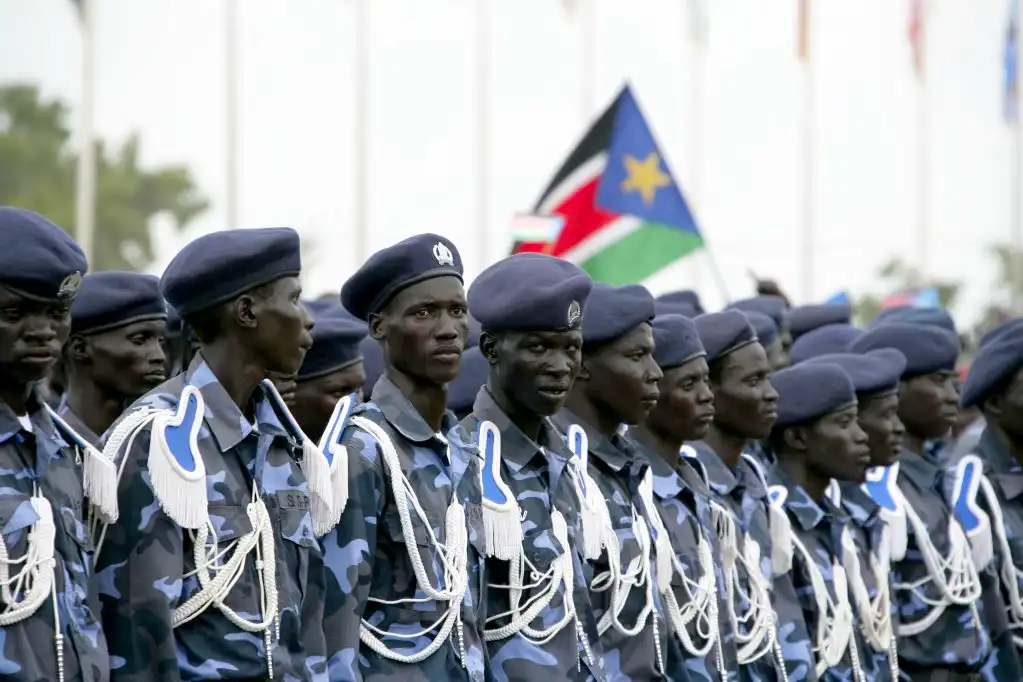
Southern Sudanese soldiers take part in independence celebrations in Juba, South Sudan, July 9, 2011, just after the state was created (Photo: Nasser Nouri/ picture alliance / Photoshot)
As South Sudan marks 15 years of independence, unresolved internal conflict and the spillover from Sudan’s war are pushing the world’s youngest state deeper into crisis.
On July 9, South Sudan marks 15 years of independence -- an anniversary that was once meant to symbolize peace, self-determination, and a new beginning. Instead, it arrives against the backdrop of deepening internal fragility and a rapidly deteriorating regional security environment, raising uncomfortable questions about whether the promise of statehood has been fundamentally undermined.
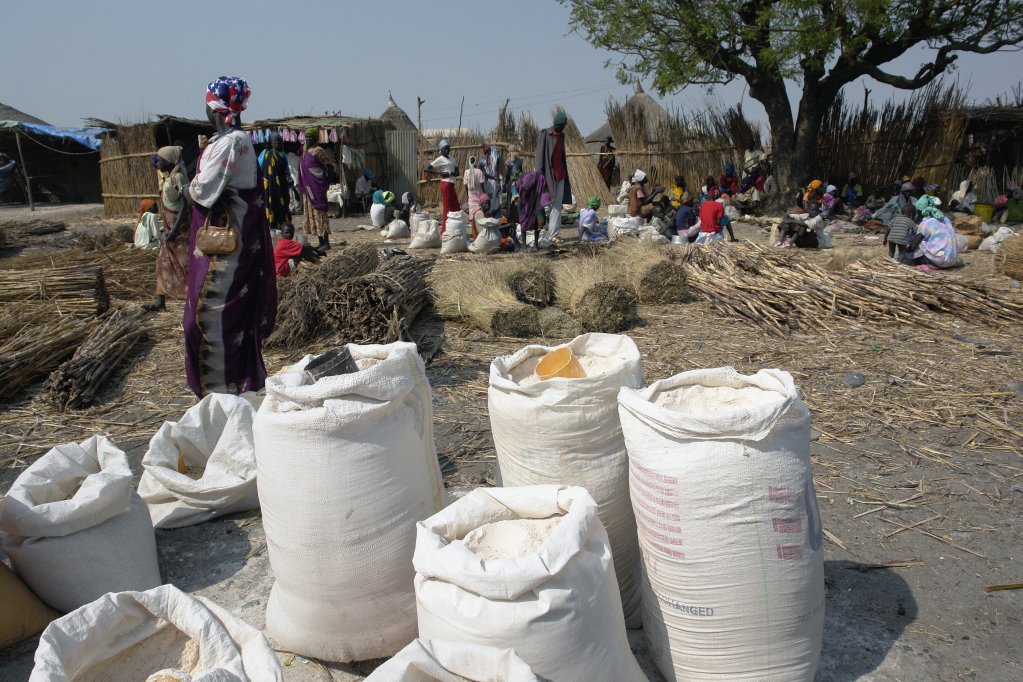 Local market in Yuai , Jonglei , South Sudan, January 2009. | Photo: John Heeneman / picture alliance
When South Sudan became the world’s youngest country in 2011, the moment was charged with extraordinary optimism. Nearly 99 percent of voters in a referendum had backed secession from Sudan, ending decades of marginalization, two civil wars, and a long-standing north-south divide rooted in colonial borders, religion, and political exclusion. For many South Sudanese, independence was not just political -- it was existential.
However, that promise has largely failed to materialize.
One of the world's poorest nations
Today, South Sudan ranks among the poorest and most fragile states globally. According to international data, around 10 million people -- roughly four-fifths of the population -- require humanitarian assistance in 2026. Life expectancy remains below 58 years, and access to electricity is limited to just 8 percent of the population. Economic decline has been stark: GDP per capita has fallen from approximately 1,400 US dollars at independence to under 500 US dollars today.
At the heart of this deterioration lies a political economy built almost entirely on oil. Revenues from oil account for up to 95 percent of the national budget, yet these resources have fueled elite patronage networks rather than broad-based development. The result is a system characterized by corruption, unpaid public servants, and parallel survival economies that erode trust in state institutions.
The failure to establish inclusive governance has also reignited conflict. Just two years after independence, a power struggle between President Salva Kiir and his former deputy Riek Machar escalated into a civil war marked by widespread atrocities. A 2018 peace agreement has seen only limited implementation, and elections -- still pending -- risk becoming another flashpoint rather than a pathway to legitimacy.
Regional instability
Yet South Sudan’s crisis cannot be understood in isolation. The ongoing war in neighboring Sudan is now compounding an already dire situation, and the spillover effects are immediate and destabilizing.
These effects are visible in border regions such as the Nuba Mountains in South Kordofan, where shifting alliances and mass displacement are reshaping local power dynamics. Once a peripheral conflict zone, the area has become both a refuge and a pressure point: armed groups like the Sudan People's Liberation Movement–North (SPLM-N) have aligned with Sudan’s Rapid Support Forces, while simultaneously hosting hundreds of thousands of displaced people with dwindling external support.
This convergence of armed actors, humanitarian strain, and limited international presence underscores how the Sudan conflict is fragmenting governance across the region, creating volatile spaces that directly impact South Sudan’s security and humanitarian outlook. The country has already taken in more than 600,000 refugees from Sudan, placing additional strain on its limited resources and fragile institutions. At the same time, disruptions to oil transport routes -- particularly through Sudan to Port Sudan -- have exposed the vulnerability of its economic lifeline.
The combination of internal dysfunction and external shock is creating a dangerous feedback loop: weak governance limits South Sudan’s ability to respond to regional crises, while regional instability further undermines its already fragile state structures. International actors, once strong backers of South Sudan’s independence, have grown increasingly disillusioned.
A joint statement by the United States, United Kingdom, and Norway in late 2025 pointed to a lack of meaningful progress in implementing the peace agreement and warned that core principles of power-sharing were being violated. The country has been described, starkly, as among the poorest and most corrupt in the world.
Resilience amid struggle
And yet, amid this bleak landscape, there are still fragments of resilience. Observers note the emergence of a distinct South Sudanese national identity, forged through shared struggle. Communities continue to adapt in the face of extreme hardship, sustaining informal systems where the state has failed. But resilience alone cannot substitute for governance.
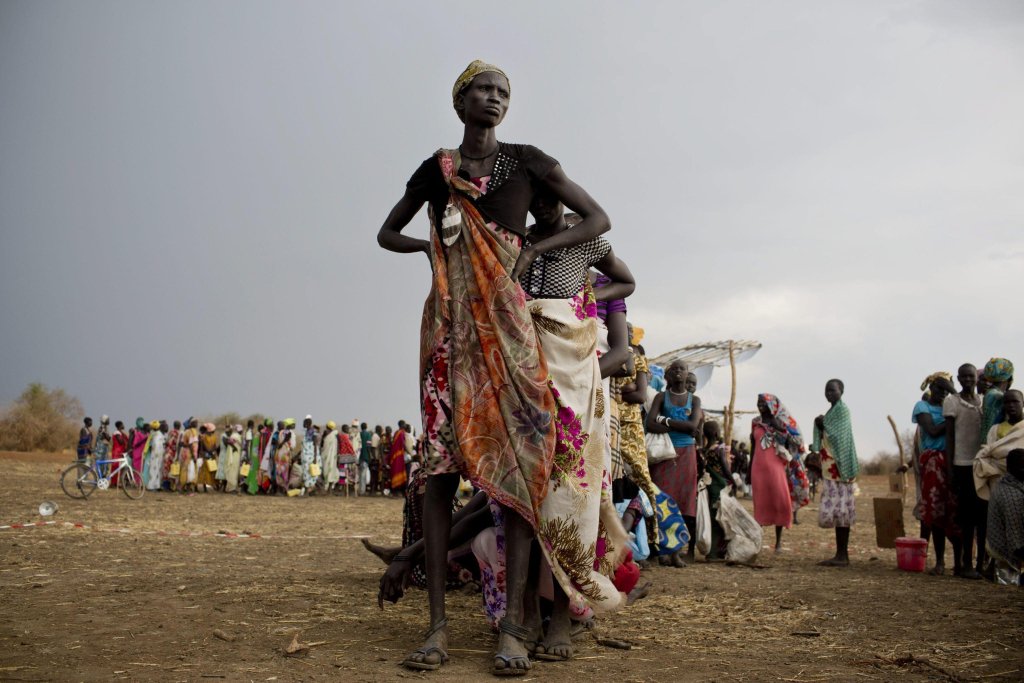 Women and children displaced by fighting between rebel soldiers and government troops wait in line to collect their food rations in Mingkaman, South Sudan | Photo: EPA/Kaste Holt/UNICEF
Fifteen years after independence, South Sudan stands at a crossroads shaped as much by its internal political failures as by the escalating violence in Sudan. Without meaningful reform, credible political processes, and sustained international engagement, the anniversary risks becoming less a celebration of sovereignty than a reminder of unfulfilled statehood.
Source: https://www.infomigrants.net/en/post/72277/south-sudan-fifteen-years-of-independence-marred-by-war
Newer articles:
- Fifteen years of independence for South Sudan, but still little to celebrate - 10/07/2026 21:23
- In maps and charts: South Sudan’s 15 years of independence - 10/07/2026 21:18
- South Sudan civil society warns AU elections could fuel instability - 10/07/2026 21:11
- El-Obeid: Brave witness of the Sudanese Church in a city under siege - 10/07/2026 21:07
- WFP triggers historic anticipatory action plan to shield people from severe drought impact in South Sudan - 10/07/2026 21:06
Older news items
- The $158 Billion Question: Reclaiming South Sudan’s Squandered Peace Dividend - 08/07/2026 18:46
- Kenya demands answers over citizen held under house arrest in South Sudan for 8 months - 08/07/2026 18:43
- South Sudan at 15: Political elite profiting from peace as well as war - 08/07/2026 18:40
- South Sudan eases oil dispute with BB Energy, awards 3 crude cargoes to restore access to crude financing - 08/07/2026 18:35
- New inter-communal violence in Warrap State: 19 killed and 14 injured - 08/07/2026 18:32
Latest news items (all categories):
- China’s new Long March: Why its modernization is a demanding journey - 21/10/2026 12:31
- Drone attack in disputed Sudan-South Sudan border region kills at least 153 - 21/10/2026 12:17
- South Korea - 'Smart camp' system built at Hanbit Unit in South Sudan - 21/10/2026 12:09
- Sudanese refugees in Gorom camp, South Sudan, struggle for water, medicines, security - 21/10/2026 12:05
- South Sudan: A Testing Ground For Democracy While Citizens Struggle To Survive - 19/10/2026 14:31
See also (all categories):
Random articles (all categories):
- KCB to open six more branches in South Sudan - The Star - 09/06/2012 15:02
- South Sudan central bank says foreign exchange reserves have run out - 19/08/2020 12:24
- Report: Iran’s Terrorist Network in Africa and Its Implications - 02/12/2021 02:02
- Church offers age-old sanctuary to South Sudan's dispossessed - 23/08/2017 23:45
- موقف يستحق التقدير والإحترام - 08/08/2014 09:41
Popular articles:
- Who is the darkest person in the world, according to Guinness World Record? - 25/10/2022 02:34 - Read 151168 times
- School exam results in South Sudan show decline - 01/04/2012 17:58 - Read 28325 times
- Top 10 weakest currency exchange rates in Africa in 2023 - 19/07/2023 00:24 - Read 25418 times
- No oil in troubled waters - 25/03/2014 15:02 - Read 24644 times
- NDSU student from South Sudan receives scholarship - In-Forum - 29/09/2012 01:44 - Read 22615 times
