
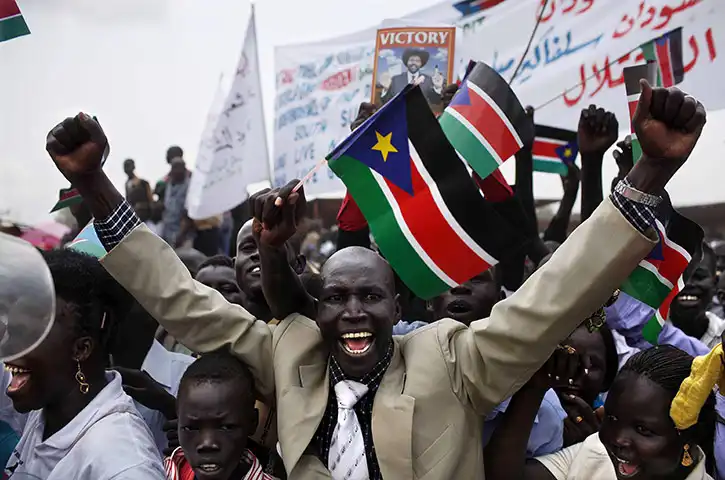
Independence Day celebrations in Juba South Sudan on 9 July (Photograph: Sipa Press / Rex Features)
By James Lwany
Malakal- February 24, 2026
(Pachodo.org) - On January 9, 2011, the people of South Sudan voted for independence from Sudan in a referendum. The result was almost unanimous with 98 percent of voters choosing to secede. This was a message from the people of South Sudan that they wanted to be free and have their own country.
After decades of war and being treated unfairly, the people of South Sudan were finally able to vote for their freedom. The referendum was a step towards independence, and it was a moment of great joy and hope for the people of South Sudan. However, the excitement and joy of independence did not last long. The new country of South Sudan was not well-prepared to govern itself.
The Sudan People’s Liberation Movement/Army, which had led the fight for independence was not ready to run a country. The movement had been focused on fighting a war not on building a government. As a result, the new government of South Sudan did not have the institutions and systems it needed to function properly. The country was not able to provide services to its citizens, and it was not able to manage its economy effectively.
The people of South Sudan had shown resilience and determination during the war, but their leaders had not done enough to prepare for independence. The country was not able to take advantage of its resources, and it was not able to develop its economy. The people of South Sudan were still struggling to recover from the war. They were not able to build a better future for themselves.
The international community had provided a lot of help to South Sudan during the war. This help had not been enough to build a strong and stable country. The country was still dependent on aid, and it was not able to stand on its own. The people of South Sudan were not able to benefit from their country’s resources, and they were not able to develop their economy.
The period between the referendum and independence was a time for South Sudan. It was a time when the country could have been built on foundations, but it was not. The leaders of South Sudan were not able to come and plan for the future. They were not able to build institutions, and they were not able to develop a strategy for economic development.
As a result, the country of South Sudan was not able to achieve its potential. The people of South Sudan were not able to benefit from their independence. They were not able to build a better future for themselves. The country was still struggling with problems, including poverty, hunger and disease. The people of South Sudan were still. They were not able to enjoy the fruits of their independence.
The education system in South Sudan was also not well-developed. The country needed trained professionals, such as teachers, doctors and engineers. It was not able to produce them. The curriculum was not relevant to the needs of the country, and the education system was not able to provide the skills that the people of South Sudan needed.
The security sector in South Sudan was also a challenge. The country needed a professional army, but it was not able to build one. The army was not well-trained. It was not able to provide security to the people of South Sudan. The country was still struggling with insecurity, and the people of South Sudan were not able to feel safe.
The international community had a role to play in the development of South Sudan. The country needed the support of the community to build strong institutions and to develop its economy. However, the international community was not able to provide the kind of support that South Sudan needed. The country was not able to get the help it needed to build a stable government.
The people of South Sudan were not able to benefit from their independence. They were not able to build a better future for themselves. The country was still struggling with problems, and it was not able to achieve its full potential. The leaders of South Sudan had not done enough to build institutions, and they had not done enough to develop the economy.
The central lesson from the experience of South Sudan is that independence is not enough. A country needs institutions, a strong economy and a strong government to be able to develop and to prosper. The people of South Sudan had shown resilience and determination, but their leaders had not done enough to build a strong and stable country.
The future of South Sudan is still uncertain. The country is still struggling with problems, and it cannot achieve its full potential. However, there is still hope for the people of South Sudan. The country can still build institutions, and it can still develop its economy. The people of South Sudan can still benefit from their independence. They can still build a better future for themselves.
The referendum in 2011 was a defining moment for South Sudan. It was a moment of hope and joy, but it was also a moment of great challenge. The country could not build on the momentum of the referendum. It was not able to achieve its full potential. However, the people of South Sudan are still determined to build a future for themselves, and they are still working towards a brighter tomorrow.
South Sudan’s referendum demonstrated unity of purpose among its citizens. The enduring question is whether the political leadership of South Sudan can align with that resolve by prioritizing long-term institution-building over short-term advantage. The promise of 2011 has not vanished, it remains unrealized. Recovering it requires a shift from patronage to policy from reliance on oil rents to economic diversification and from factional competition to national consolidation.
History rarely offers chances of such magnitude. The referendum was a defining moment. Whether it becomes a prologue, to statehood or a reminder of squandered opportunity depends on the choices that are still being made. The structural weaknesses are evident. The corrective path is known. What remains uncertain is the will to pursue it.
Newer articles:
- Whose Conflict is Ravaging the Middle East? Understanding the Disproportionate Influence of a Middle Power over a Superpower’s Grand Strategy - 06/03/2026 19:57
- China Agenda / Two Sessions 2026 - 27/02/2026 23:54
- The Nile’s New Reality: Why Cairo Must Abandon the Past - 27/02/2026 20:56
- A Controversial Choice: Haavisto's Envoy Role in Sudan - 26/02/2026 13:24
- Make the UN Great Again, Or Make It Collapse? - 26/02/2026 13:04
Older news items
- The Calculated Dissolution of the Global Norms and the Rise of Transactional Realism: A Critical Analysis of the 2026 Munich Security Conference - 23/02/2026 14:06
- The Return of Civilization? How the Decline of Liberal Internationalism Presents Chinese Modernization as the Viable Option for Global Governance - 19/02/2026 13:44
- Research - From Helsinki to Vienna: Reflections on Cooperative Security and the Evolving European Order - 19/02/2026 13:34
- The Collo fight for their ancestral land and dignity - 16/02/2026 14:22
- Rebuilding Nationhood Through Schools: Why South Sudan Needs a Philosophy-Driven Curriculum - 16/02/2026 13:50
Latest news items (all categories):
- Independent human rights investigators: Human cost of violence in South Sudan ‘continues to grow’ - 11/09/2026 10:43
- Displaced women build resilience through new livelihoods in Tambura - 11/09/2026 10:38
- Officially: Egypt lose their star for Angola and South Sudan clashes - 11/09/2026 10:36
- VP Nyandeng’s Critique And The Splintered Politics Of South Sudan - 09/09/2026 13:34
- UN rights Commission begins four-day South Sudan mission amid renewed conflict - 09/09/2026 13:25
See also (all categories):
Random articles (all categories):
- Pope's push for peace in South Sudan faces tough hurdles - 02/02/2023 09:31
- Calling South Sudan a failed state is unfair - 07/07/2013 10:32
- Girls, not guns: The promise of progress for South Sudan - WNN - Women News Network - 19/09/2012 18:46
- Commentary: South Sudan needs steady leadership to save it from collapse - New Sudan Vision - 18/12/2012 02:02
- Humanitarian appeal for South Sudan tops one billion - Examiner.com - 28/11/2012 20:40
Popular articles:
- The Final Communique of SPLM-DC Third Session of the National Council - 29/03/2011 01:00 - Read 83164 times
- Roles and Definition of Political Parties - 29/04/2011 01:00 - Read 64900 times
- Agriculture in Southern Sudan: Challenges and Investment Opportunities - 06/10/2010 01:45 - Read 57546 times
- Fashoda Youth Forum Rehabilitation of Drainage Culverts in Malakal town Report - 07/08/2008 16:22 - Read 35936 times
- Creation and establishment of the Local Government Councils ( Counties ) (2) - 28/09/2011 01:00 - Read 33779 times
