
Opinion - By James Lwany
Malakal - Feburary 14, 2026
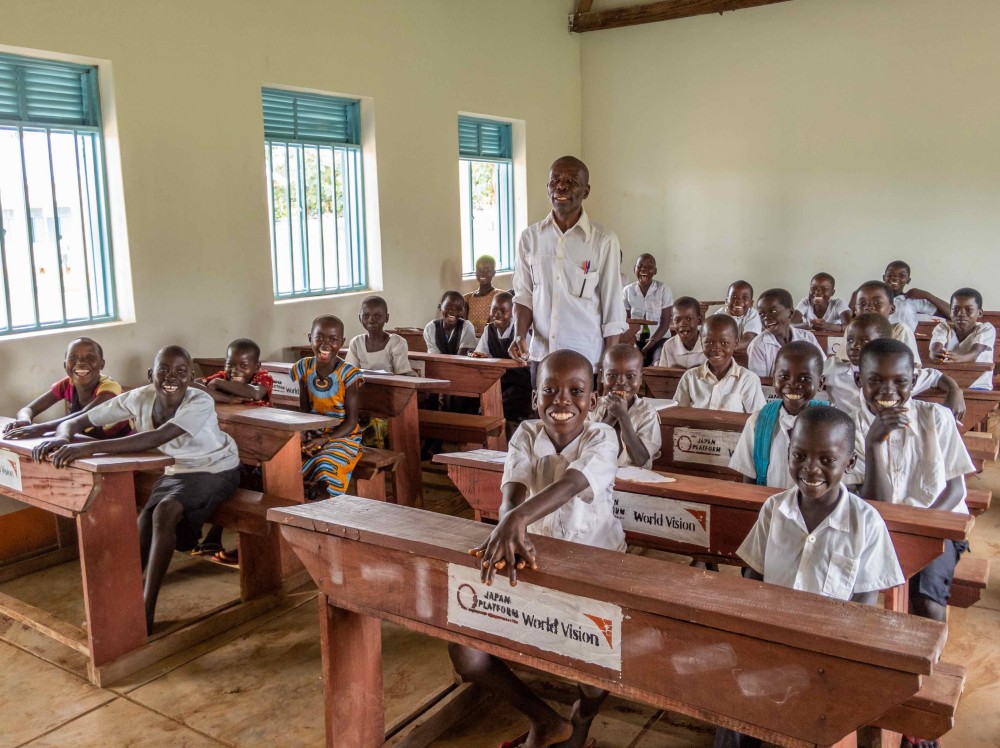
South Sudan’s reconstruction will not be won solely on the battlefield or in negotiating rooms. It will be won in classrooms. After decades of conflict that have torn schools apart, displaced teachers and students, and hollowed out shared civic narratives, education must be re-imagined as a principal instrument of peace and statecraft. Not as an afterthought to development, but as a deliberate strategy: a philosophy-driven curriculum that restores trust, builds citizenship, and anchors a fragile nation.
The case is simple and urgent. Schools are where collective memory is shaped, social norms are reproduced, and habits of civic engagement are formed. In a country marked by ethnic fragmentation and violent competition over identity and resources, a curriculum that treats education only as literacy and numeracy will leave the deeper wounds unaddressed. Instead, South Sudan requires curricula explicitly designed to cultivate reconciliation, restorative justice, and civic repair. Framed as a public good, peace education must be integral to schooling—not a project grafted onto an otherwise unchanged system.
Philosophy matters because it determines ends and shapes means. A national philosophy of education that foregrounds human dignity, pluralism and collective responsibility provides ethical legitimacy for curricular choices and a consistent yardstick for policy. It compels educators and policymakers to ask not just “what do children need to know?” but “what kinds of persons and citizens must they become?” The answer for South Sudan must be citizens capable of mediating conflict, engaging across difference, and committing to institutions that protect rights rather than privilege narrow identities.
Operationalizing such a philosophy means concrete curricular decisions. Peace-building competencies—conflict-resolution, mediation, restorative practices—should sit alongside civic literacy and critical thinking as core learning outcomes. History curricula should present multiple narratives rather than a single national myth; literature and the arts should reflect the country’s cultural heterogeneity; indigenous knowledge systems and traditional dispute-resolution mechanisms must be validated rather than sidelined. Language policy should promote mother-tongue instruction in early grades while providing orderly pathways into national and international languages, balancing cultural affirmation with future opportunities.
Pedagogy follows philosophy. Democratic and dialogic teaching—circle discussions, role plays, community projects—models the collaborative practices a plural polity needs. Assessment regimes must evolve past high-stakes rote testing to include portfolios, performance tasks and community feedback that can capture civic dispositions and reconciliation outcomes. Crucially, teachers are not neutral technicians. They are ethical and civic agents. Teacher preparation must therefore emphasize culturally responsive practice, conflict sensitivity and restorative classroom governance. Continuous professional development and clear ethical standards are prerequisites if curriculum ambitions are to reach every classroom.
Policy coherence and institutional design are non-negotiable. A curriculum that promotes pluralism without participatory development processes will lack legitimacy. Ministry officials, traditional leaders, civil society and international partners must be part of curriculum design and oversight. Resources must be equitably allocated; infrastructure rebuilt; and education policy coordinated with justice, youth and cultural initiatives. Donors and governments must widen success metrics to include indicators of social cohesion—declines in inter-group violence, increases in civic participation—alongside literacy and numeracy scores.
There is a pragmatic road-map. Convene a broad consultative process to articulate a national philosophy of education; translate it into a curriculum framework with explicit learning outcomes; pilot regionally diverse curricula that integrate peace education and plural histories; evaluate, iterate and scale the most effective models; and invest in teachers, assessment systems and multilingual materials. This is not cheap or quick. But neither are the costs of doing nothing: recurrent cycles of violence, chronic underdevelopment, and a lost generation.
International partners have a critical role. Funding that treats education as a peripheral humanitarian service will reproduce fragmentation. Donors should support long-term curriculum development, teacher training and locally led evaluation. They should insist on participatory processes and fund measures of social impact as part of education program success.
Ultimately, educational policy in South Sudan is destiny. Schools can be engines of fragmentation or instruments of national cohesion. A curriculum rooted in restorative justice, pluralism and democratic pedagogy can accelerate reconciliation, reduce drivers of violence and cultivate citizens prepared to sustain democratic institutions. If South Sudanese leaders and their international partners treat curriculum reform as central to national recovery, they will be investing not only in classrooms, but in the country’s political and moral rebirth.
To contact the author:
Newer articles:
- From Referendum to Fragility: The Unfinished State-Building of South Sudan - 25/02/2026 19:53
- The Calculated Dissolution of the Global Norms and the Rise of Transactional Realism: A Critical Analysis of the 2026 Munich Security Conference - 23/02/2026 14:06
- The Return of Civilization? How the Decline of Liberal Internationalism Presents Chinese Modernization as the Viable Option for Global Governance - 19/02/2026 13:44
- Research - From Helsinki to Vienna: Reflections on Cooperative Security and the Evolving European Order - 19/02/2026 13:34
- The Collo fight for their ancestral land and dignity - 16/02/2026 14:22
Older news items
- South Sudan’s Vice-President on Trial: The Case’s Potential Consequences for the Restoration of Peace - 09/02/2026 11:12
- NDA's Crisis Is Orchestrated By The Regime - 06/02/2026 14:16
- Greenland: Trump's predatory mood - 03/02/2026 18:17
- A Call For Unity, For Victory Of The Opposition - 03/02/2026 12:23
- Understanding China-Africa Partnership for Collective Modernization - 27/01/2026 11:15
Latest news items (all categories):
- South Sudan Opens 14 Oil Blocks, Courts Investors Ahead of SSOP 2026 - 26/10/2026 15:08
- Jambojet Explores South Sudan Expansion After Talks with Juba Regulator - 26/10/2026 15:05
- Kiir swears in 5 officials ahead of South Sudan elections - 26/10/2026 14:53
- South Sudan cattle battles leaves 10 dead: official - 26/10/2026 14:49
- Churches urge world 'not to forget South Sudan' ahead of first elections - 26/10/2026 14:47
See also (all categories):
Random articles (all categories):
- South Sudan: Humanitarian Access Snapshot (April 2026) - 08/05/2026 21:47
- Vacancies with UNICEF South Sudan Country Office, Juba - 12/11/2021 14:53
- South Sudan deploys first unified forces after peace deal - 16/11/2023 09:29
- South Sudanese military general's son, 22, on welfare benefits bought a $1.5m Melbourne mansion 'using five unexplained installments from African companies' - 14/05/2018 00:15
- Strengthening Technical and Vocational Education and Training in South Sudan - 08/12/2021 04:00
Popular articles:
- The Final Communique of SPLM-DC Third Session of the National Council - 29/03/2011 01:00 - Read 83358 times
- Roles and Definition of Political Parties - 29/04/2011 01:00 - Read 65127 times
- Agriculture in Southern Sudan: Challenges and Investment Opportunities - 06/10/2010 01:45 - Read 57848 times
- Fashoda Youth Forum Rehabilitation of Drainage Culverts in Malakal town Report - 07/08/2008 16:22 - Read 36114 times
- Creation and establishment of the Local Government Councils ( Counties ) (2) - 28/09/2011 01:00 - Read 34015 times
