
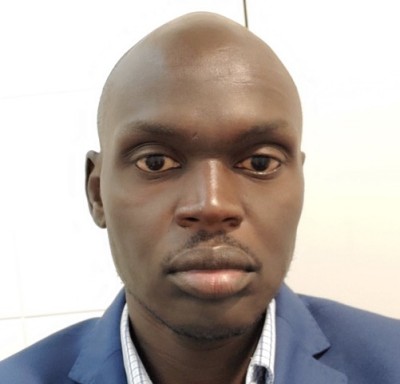
*Mark A. W. Deng
I. Introduction
South Sudan’s First Vice-President, Dr Riek Machar Teny, is going through a fight that may ultimately determine the fate of his political future in South Sudan. In March 2025, he was put under arrest for allegedly having instructed the White Army militia to attack South Sudan People’s Defence Force barracks in the town of Nasir, killing around 250 soldiers. (The White Army is a Nuer based militia allegedly allied with Dr Riek’s military movement — the Sudan People’s Liberation Movement in-Opposition).
In September 2025, President Salva Kiir Mayardit suspended him after he and his 7 co-defendants were charged with several offences related to the Nasir incident: treason, murder, crimes against humanity, conspiracy, financing terrorism, and destruction of public property. The charges were brought under the Penal Code Act, 2008 and the Anti-Money Laundering and Counter Terrorist Financing Act, 2012.
A Special Court was set up within the High Court of South Sudan — the court where all serious offences are heard in first instance — to try the case. The trial has been going on since late 2025. Dr Riek’s defence lawyers have challenged the case on many fronts, including that the Special Court lacks the jurisdictional power to try the case and that Dr Riek as the nation’s second highest political executive is constitutionally immune from criminal prosecution.
This post offers a preliminary review of the case, discussing the defence lawyers’ arguments and the case’s potential consequences for the long-term peace and political stability of South Sudan. It is my view that, whatever the crimes Dr Riek may have committed, the consequences of prosecuting him could far outweigh the justice the government may be seeking in this case, or the political expediency of the case for the government.
II. Defence Lawyers’ Arguments
Dr Riek’s defence lawyers have presented 3 major arguments in the case, submitting that the court should dismiss the case on these grounds. The first is that the Chief Justice of the Supreme Court of South Sudan, Dr Benjamin Baak Deng, acted beyond his power in appointing the Special Court to try the case. This argument lacks support in the applicable laws — the Transitional Constitution of South Sudan, 2011 and the Code of Criminal Procedure Act, 2008. The former is silent on the Chief Justice’s power to appoint a Special Court, but the latter vests such power in the Chief Justice in relation to serious crimes committed under chapters V and VI of the Penal Code (offences committed against South Sudan and offences committed against South Sudan’s defence force, respectively).
There are, however, other logical arguments that Dr Riek’s defence lawyers could make. For example, given that courts in South Sudan are supposed to operate independent of each other, it is not appropriate or acceptable for the Chief Justice to appoint judges of the Supreme Court to try cases brought in the High Court. The appointment interferes with the High Court’s operational independence and the judiciary’s internal independence. Another argument is that this is another example of the concentration of power in the Chief Justice of Supreme Court, which has been relatively widely discussed. The power of the Chief Justice to appoint a Special Court or panel should be exercised within the bounds of the Supreme Court only, not extended to other courts.
The second argument is that Dr Riek enjoys constitutional immunity, that is, he cannot be criminally prosecuted as a sitting Vice-President. Logically, he would need to be formally impeached by Parliament before he can be criminally charged. While this sounds logical, the Transitional Constitution is silent on the immunity of the Vice-President. So is the 2018 the Revitalized Agreement, which largely governs South Sudan during this transitional period. (This is a period of 3 years and it began in 2020, but it has been extended a few times to give the parties enough time to resolve issues outstanding in the agreement).
Only the President of the Republic is declared to enjoy both criminal and civil immunity during his tenure. However, Parliament can lift the immunity and impeach the President if he is found to have committed serious crimes such as “high treason”, or “gross violation of the Constitution or gross misconduct” relating to the national affairs. It then becomes a matter for the Supreme Court of South Sudan to adjudicate the case once the President has been impeached, although this has never happened since the founding of South Sudan as a nation in 2011.
The third argument is that only a hybrid court would have the jurisdictional legitimacy and competence to try the case as the alleged offences relate to the civil war. This is a valid argument for two principal reasons. First, a hybrid court is mandated by the Revitalized Agreement and it is to be established by the African Union Commission during the transitional period. Its functions are, among others, to investigate and potentially prosecute individuals found to have committed prohibited offences related to the war. Second, it will be composed largely of foreign judges, prosecutors and defence lawyers. This will have the potential to reduce the prospects of political interference in its proceedings or rulings.
Such a court — if it will ever be established — will have jurisdiction similar to that of the International Criminal Court, relating to 4 major areas of international law:
- genocide (calculated killing of a particular group of people);
- crimes against humanity (systemic attacks on civil population, including imprisonment, enslavement and sexual violence);
- war crimes (serious violations of international humanitarian law, including wilful mass killing of civilians);
- other serious crimes under international law and the relevant laws of South Sudan, including gender-based crimes and sexual violence.
The Special Court ruled that it has the jurisdiction to try all the criminal offences with which Dr Riek and his co-defendants have been charged. However, this is purely an assumption — and a dangerous one indeed. The Revitalized Agreement is unmistakeably clear in relation to a court that has the jurisdiction to try war-related offences:
Thus, it is a violation of the Revitalized Agreement for the government to investigate and prosecute Dr Riek and his co-defendants, and for the Special Court to entertain such a case. It is also a violation of the same agreement for the President to suspend Dr Riek as he lacks that power under the relevant legal documents. The (Revitalized) Transitional Government of National Unity is founded on mutuality and collegiality, placing its two principals — President Kiir and Dr Riek as the First Vice-President — practically on equal footing politically.
More worrying, (and this is one of the reasons a hybrid court was thought of as necessary), the Special Court lacks the institutional space and competence to try the case independently and impartially. It is a well-known fact in South Sudan that the members of the executive branch and the military regularly interfere in cases before courts to tip an outcome in their favour. Given that the government has much at stake in this case, which, arguably, is to frustrate Dr Riek as its opponent, it will likely have little incentive to restrain itself from interfering in the Special Court’s ruling or proceedings. The fact that the Special Court has assumed the jurisdiction it lacks may be an indication that it may not conduct a fair trial or deliver a fair outcome.
III. Conclusion – Significance and Potential Political Consequences of the Case
The case is a significant development in South Sudan’s history. It is the first time ever that a sitting Vice-President has been put on trial for criminal charges. While justice ought to be served where wrongs have been committed, the government’s case against Dr Riek is fraught with all sorts of problems. The Special Court’s lack of jurisdictional power to try the alleged offences is the most fatal. Can this court that has assumed the power it clearly lacks be expected to adjudicate the case in a fair manner? Is this an indication of the broader problem of South Sudan’s courts lacking competence, integrity and discipline, or the fact that judges are susceptible to all sorts of influences, including political pressure and bribery?
But even if the Special Court had the jurisdiction, it would still be prudent not to prosecute Dr Riek. For one thing, prosecution would result in severe consequences for the restoration of long-term peace and political stability in South Sudan, the value of which cannot be exaggerated. For example, it would not be idly tolerated by Dr Riek’s gun-wielding supporters. The violent clashes in Burebiey between South Sudan People’s Defence Force and the Sudan People’s Liberation Movement -in Opposition (Dr Riek’s armed movement) on the eve of Dr Riek’s trial proceedings cannot be taken in isolation. They are an indication of the risks of violence that could occur should he be prosecuted and put behind bars, or whatever the penalty the Special Court may impose upon him.
Given what appears to be a deep-seated enmity between President Kiir and Dr Riek, the genesis of which is traced back to the SPLM/SPLA’s liberation struggle of which both leaders were high ranking members, Dr Riek’s supporters, and any neutral observer, can be forgiven for thinking that the case is politically charged or that the government is executing justice selectively. This only makes the bad situation worse. Thus, it behoves the government to think critically of ways to avoid such costly eventualities — and other problems — if it intends on restoring durable peace and political stability in South Sudan.
* Mark Deng is a Law Lecturer at Charles Darwin University, and a researcher in South Sudanese public law
Newer articles:
- The Calculated Dissolution of the Global Norms and the Rise of Transactional Realism: A Critical Analysis of the 2026 Munich Security Conference - 23/02/2026 14:06
- The Return of Civilization? How the Decline of Liberal Internationalism Presents Chinese Modernization as the Viable Option for Global Governance - 19/02/2026 13:44
- Research - From Helsinki to Vienna: Reflections on Cooperative Security and the Evolving European Order - 19/02/2026 13:34
- The Collo fight for their ancestral land and dignity - 16/02/2026 14:22
- Rebuilding Nationhood Through Schools: Why South Sudan Needs a Philosophy-Driven Curriculum - 16/02/2026 13:50
Older news items
- NDA's Crisis Is Orchestrated By The Regime - 06/02/2026 14:16
- Greenland: Trump's predatory mood - 03/02/2026 18:17
- A Call For Unity, For Victory Of The Opposition - 03/02/2026 12:23
- Understanding China-Africa Partnership for Collective Modernization - 27/01/2026 11:15
- The Silent Pulpit: How Singing Drowned Out the Word Of God - 23/01/2026 18:18
Latest news items (all categories):
- IGAD and South Sudan Strengthen National Coordination for the Implementation of the Building Women’s Economic Resilience for Sustainable Peace Project - 03/08/2026 18:53
- South Sudan plans interoperable birth registration, digital ID systems - 03/08/2026 18:50
- South Sudan Oil & Power Returns as South Sudan’s Premier Investment Platform - 03/08/2026 18:04
- Kenya: Mudavadi meets South Sudan foreign minister as Juba gears up for landmark elections - 03/08/2026 16:52
- A Long Road Home: Jal’s Journey Through Conflict and Separation - 03/08/2026 16:41
See also (all categories):
Random articles (all categories):
- South Sudan News: President Kiir Takes Emergency Measures as Floods Continue - 17/09/2013 16:15
- Jonathan receives South Sudanese envoy, reaffirms support for peaceful ... - WorldStage - 16/01/2013 17:48
- Tensions high as South Sudan faces unity government deadline - 16/10/2019 02:00
- Open letter to President Salva Kiir Mayardit, VP Dr. Riek Machar and SG Pagan Amum - 14/08/2010 08:58
- Exclusive-Pope Francis denies he is planning to resign soon - 04/07/2022 02:03
Popular articles:
- The Final Communique of SPLM-DC Third Session of the National Council - 29/03/2011 01:00 - Read 83072 times
- Roles and Definition of Political Parties - 29/04/2011 01:00 - Read 64771 times
- Agriculture in Southern Sudan: Challenges and Investment Opportunities - 06/10/2010 01:45 - Read 57306 times
- Fashoda Youth Forum Rehabilitation of Drainage Culverts in Malakal town Report - 07/08/2008 16:22 - Read 35809 times
- Creation and establishment of the Local Government Councils ( Counties ) (2) - 28/09/2011 01:00 - Read 33599 times
