
 (Image Source: YouTube)
By *Amaju Ubur Yalamoi Ayani
“When Russia goes to war, it goes alone because it does not have allies. But, when America goes to war, it goes with us and we lose our people,” Kaja Kallas
(Pachodo.org) - The European Union Foreign Affairs Chief, Kaja Kallas made a serious rebuttal against the U.S. permanent representative to the United Nations, Ambassador Michael Waltze, during a heated debate at the 2026 Munich Security Conference. Kallas said, “When Russia goes to war, it goes alone because it does not have allies. But, when America goes to war, it goes with us, and we lose our people.” Her remark reminds us of the U.S. grand strategy of rallying allies when its vital interests have been threatened.
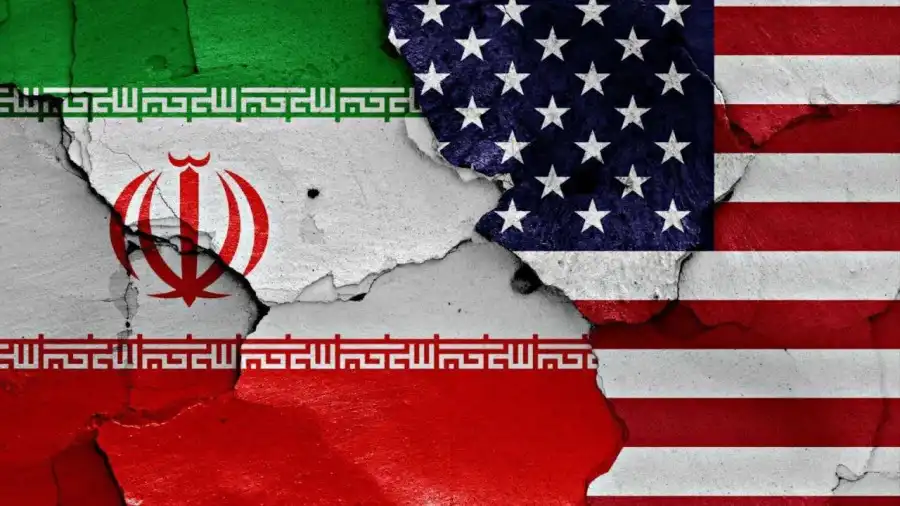
However, that is not the case with the Trump America. The 2026 geopolitical architecture of the Middle East, for example, is currently undergoing its most violent restructuring since the end of the Cold War. As "Operation Epic Fury"—the joint U.S.-Israeli military campaign against Iranian strategic infrastructure—enters its second week, the discourse has predictably focused on the clash of giants. Nevertheless, the traditional realist focus on great power competition fails to account for the most defining feature of this crisis: the structural capture of U.S. foreign policy by Israeli security doctrine. We are witnessing a historic inversion of the patron-client relationship, where the tactical imperatives of a middle power have effectively hijacked the grand strategy of a global superpower. As one senior European diplomat recently noted during yesterday’s emergency session in Brussels, “We are no longer watching an American peace process; we are watching an Israeli war process with American logistics.”
This shift marks a departure from the historical offshore balancing that once defined Washington’s approach to the Levant and the Persian Gulf. In previous decades, the United States acted as a final arbiter, maintaining a degree of strategic distance that allowed it to mediate between rival regional blocs while preserving its own global flexibility. Today, however, that distance has evaporated, replaced by a functional synthesis where American military assets are deployed as an extension of Israeli tactical planning. The current conflagration is not merely a localized conflict but a systemic transformation of American power into a vehicle for a middle power’s regional hegemony, raising urgent questions about the sustainability of a superpower that has effectively outsourced its sovereign decision-making.
The Mechanism of Strategic Capture
The descent into open warfare on February 28, 2026, was the byproduct of what scholars are increasingly calling “strategic capture.” For decades, the U.S.-Israel relationship was characterized by a patron-client dynamic; today, that relationship has been effectively inverted. Israel has moved beyond being a mere recipient of aid to becoming a primary stakeholder in the American national security apparatus. By successfully framing its own regional red lines as non-negotiable American interests, Israel has achieved a level of policy integration that leaves little room for independent U.S. manoeuvrability. One former Pentagon official recently remarked, “The U.S. military is no longer acting on an independent Middle East doctrine; it is operating as the kinetic enforcer of a vision drafted in Jerusalem.”
A primary driver of this capture is the monopolization of regional intelligence. In the lead-up to the current strikes on Tehran, the Trump administration relied heavily on Israeli-sourced data—specifically the Persian Shield dossiers—which presented a narrative of imminent nuclear breakout. By positioning the Mossad as the indispensable gatekeeper of regional threat assessments, Israel has effectively filtered the reality through which U.S. policymakers view the Middle East. When a superpower loses its capacity for independent intelligence verification, it inevitably loses its capacity for independent strategic thought. This dependency has turned the U.S. military into a reactive force, responding to a threat perception that is local in origin but global in consequence.
Furthermore, the domestic political landscape in the United States acts as a powerful reinforcing mechanism for this capture. The influence of pro-Israel lobbying, particularly through organizations such as the AIPAC, has moved from the periphery of foreign policy into the core of electoral survival. As the 2026 midterm elections approach, the political cost of advocating for strategic restraint has become prohibitively high. Lawmakers across the aisle recognize that a break from Israeli military doctrine is synonymous with political vulnerability. One analyst from the Brookings Institution recently observed, “Any attempt to decouple U.S. assets from Israeli escalations is met with immediate political retribution, ensuring the superpower remains tethered to a middle power’s war aims.”
The military-industrial synergy between the two nations has created a self-perpetuating cycle of escalation. Through the US$3.3 billion annual military financing framework (MOU), the U.S. has not only armed Israel but has deeply integrated its tactical doctrines with Israeli operational goals. This synergy was on full display during the decapitation strikes against IRGC leadership earlier this week. By utilizing American-made F-35s and precision munitions to execute Israeli-defined missions, the two militaries have become functionally indistinguishable in the field. This interoperability ensures that when Israel strikes, the United States is already committed to the aftermath, regardless of whether the initial action aligned with broader American global priorities.
The Erosion of Superpower Strategic Autonomy
The current conflict highlights a profound crisis in American grand strategy: the inability to distinguish between the survival of an ally and the stability of the global order. For decades, the U.S. maintained a role as the regional off-shore balancer, but the current campaign demonstrates that Washington has abdicated this role to become a direct belligerent in Israel’s regional shadow war. This shift has not only depleted U.S. diplomatic capital but has also committed American naval and air assets to a theatre that the Pentagon had previously sought to pivot away from in favour of the Indo-Pacific.
The lack of an independent American exit strategy is perhaps the most glaring evidence of this disproportionate influence. While the U.S. provides the bulk of the “Epic Fury” munitions and logistics, the criteria for victory are defined exclusively by Israeli security benchmarks. By committing to the total degradation of Iranian nuclear and missile capabilities, the U.S. has entered a forever war of attrition where the metrics for success are constantly shifting to meet Israel’s evolving threat perceptions. As Israeli Prime Minister Netanyahu declared on March 1, “We will not stop until the serpent’s head is crushed.” This sentiment leaves no room for the diplomatic off-ramps traditionally favoured by Washington.
Moreover, the unilateral nature of the U.S.-Israeli alliance has alienated traditional Western allies and international organizations. By prioritizing Israeli pre-emptive strikes over multilateral diplomacy, the U.S. has effectively dismantled the international legal framework it helped build. This isolation has forced the superpower into a narrow, bilateral tunnel-vision where the only relevant stakeholder is the Israeli Cabinet. In the words of a French Foreign Ministry spokesperson, “The United States is currently acting as a private security firm for a single regional power, ignoring the collective security of the Mediterranean.”
The consequences of this abdication extend beyond the battlefield and into the global economy. As the U.S. remains anchored to a middle power’s kinetic objectives, it loses the flexibility to respond to other emerging global crises, from rising tensions in the South China Sea to the economic fallout of energy disruptions in Europe. The prioritization of a specific regional theatre over systemic global stability suggests a superpower in retreat—not from the world, but from its own independent national interest. The result is a fractured global response where the U.S. finds itself increasingly at odds with the United Nations and partners who view the escalation as a reckless abandonment of collective security.
Reimagining Power in a Networked Age
In the final analysis, the war ravaging the Middle East today is a case study in reverse leverage. It demonstrates how a middle power, through a combination of superior intelligence networks, domestic political influence, and deep military integration with hegemons, can successfully steer the grand strategy of a superpower. The traditional hierarchy of international relations—where the big dictate to the small—is being replaced by a web of dependencies where specialized, highly-integrated allies can dictate terms to their protectors.
The devastation witnessed across the region is the price of a sub-contracted foreign policy. As global energy prices surge and the risk of a broader conflagration grows, the central question remains: can the United States reclaim its strategic independence, or has the special relationship permanently altered the trajectory of American power? The answer will determine not only the fate of the Middle East but the future of the American role as a global leader in the 21st century. As the rubble settles in Tehran and the gas prices climb in New York, the question remains: whose war is it, and who is truly in command?
About the writer

*Amaju Ubur Yalamoi Ayani, aka Amaju Joseph Ubur Ayani, is a South Sudanese teacher and a regular opinion contributor to national and international affairs for Pachodo.org. He can be reached via
Newer articles:
- The Power of Alliances: How the Delusion of America Alone is Manifested in the Strait of Hormuz - 18/03/2026 12:22
- Empowering Educators: The Key to South Sudan's Future - 16/03/2026 15:20
- The Nuclear Apartheid: How Small States Suffer Great Power Nuclear Double Standards - 16/03/2026 15:18
- The Indivisible Security Principle: How China’s New Security Architecture Can Help Stabilize the Middle East - 09/03/2026 14:16
- Challenge Of Leadership In Enhancing Good Governance In South Sudan - 09/03/2026 14:12
Older news items
- China Agenda / Two Sessions 2026 - 27/02/2026 23:54
- The Nile’s New Reality: Why Cairo Must Abandon the Past - 27/02/2026 20:56
- A Controversial Choice: Haavisto's Envoy Role in Sudan - 26/02/2026 13:24
- Make the UN Great Again, Or Make It Collapse? - 26/02/2026 13:04
- From Referendum to Fragility: The Unfinished State-Building of South Sudan - 25/02/2026 19:53
Latest news items (all categories):
- South Sudan Opens 14 Oil Blocks, Courts Investors Ahead of SSOP 2026 - 26/10/2026 15:08
- Jambojet Explores South Sudan Expansion After Talks with Juba Regulator - 26/10/2026 15:05
- Kiir swears in 5 officials ahead of South Sudan elections - 26/10/2026 14:53
- South Sudan cattle battles leaves 10 dead: official - 26/10/2026 14:49
- Churches urge world 'not to forget South Sudan' ahead of first elections - 26/10/2026 14:47
See also (all categories):
Random articles (all categories):
- South Sudan Professors Strike at Five Universities - 25/05/2016 08:20
- South Sudan buckles from stream of refugees fleeing Sudanese war - 16/10/2023 03:23
- جنوب الى اين؟ - 16/04/2015 19:43
- South Sudan says troops deployment not linked to calls for protests - 09/05/2019 18:00
- South Sudan, WHO step up preparedness amid Ebola outbreak in neighboring DR Congo - 23/11/2021 03:09
Popular articles:
- The Final Communique of SPLM-DC Third Session of the National Council - 29/03/2011 01:00 - Read 83352 times
- Roles and Definition of Political Parties - 29/04/2011 01:00 - Read 65122 times
- Agriculture in Southern Sudan: Challenges and Investment Opportunities - 06/10/2010 01:45 - Read 57843 times
- Fashoda Youth Forum Rehabilitation of Drainage Culverts in Malakal town Report - 07/08/2008 16:22 - Read 36109 times
- Creation and establishment of the Local Government Councils ( Counties ) (2) - 28/09/2011 01:00 - Read 34011 times
