
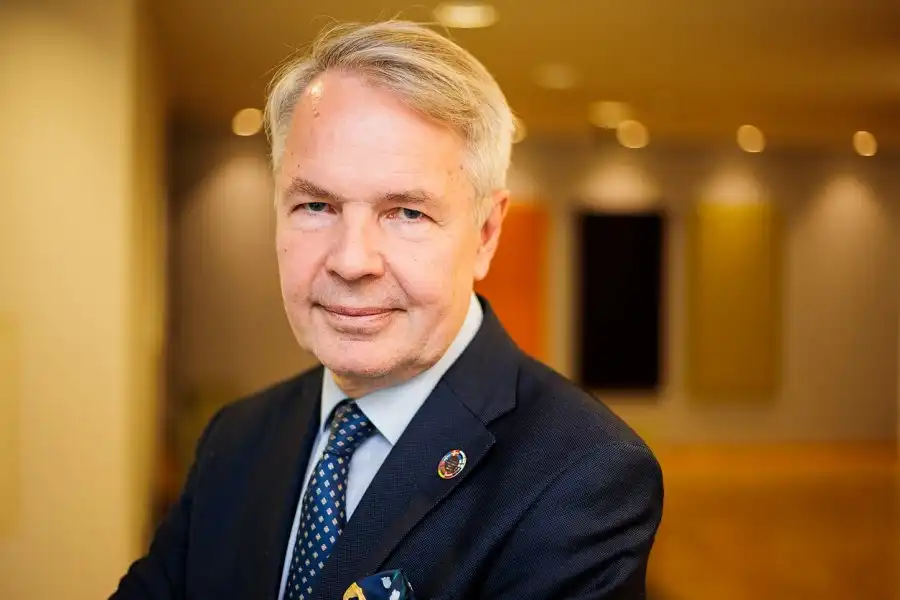
Pekka Haavisto (Photo Credit: J. Stacevičiaus / LRT nuotr)
Opinion: By James Lwany
Malakal – February 26, 2026
(Pachodo.org) - The recent appointment of Pekka Haavisto, a Finnish politician and diplomat, as the Secretary-General's envoy for Sudan brings forth a multitude of complexities that warrant meticulous examination, particularly given the entrenched cultural and legal context in Sudan. While Haavisto's dedication to conflict resolution and humanitarian initiatives is admirable, his identity as an openly gay man raises important questions about the implications of same-sex marriage within this framework.
There is a growing perception that the United Nations is inclined to reward individuals based on their sexual orientation through such appointments, as evidenced by Haavisto's elevation to this prominent role. This perceived endorsement of LGBTQ+ identities may be interpreted as an imposition of certain values upon diverse global cultures, particularly in regions like Sudan where conservative perspectives dominate.
In Sudan, the legal landscape is heavily shaped by conservative interpretations of Islamic law, which stigmatize and criminalize homosexuality. This context creates profound challenges for Haavisto, whose sexual orientation may sharply contradict local norms and values. The promotion of same-sex marriage is particularly contentious, as many communities view marriage through the lens of traditional practices and cultural heritage that unequivocally exclude same-sex relationships. Therefore, the UN’s apparent endorsement of such identities could risk exacerbating tensions rather than fostering dialogue.
Haavisto's appointment as a gay envoy may, in practice, hinder constructive engagement. Efforts to advocate for LGBTQ+ rights and acceptance in a society that fundamentally rejects these notions may alienate local communities, ultimately undermining the core objectives of diplomacy. The success of diplomatic relations often hinges on the ability to resonate with local values, and issues surrounding sexual orientation can serve as formidable barriers rather than bridges.
While it remains essential to champion the dignity and rights of all individuals, the promotion of same-sex marriage in conservative contexts can lead to division rather than unity. Discussions regarding human rights must be carefully contextualized within local cultural and religious beliefs to be genuinely effective. Advocacy must honor the intrinsic values held by communities, engaging them within their respective frameworks rather than confronting them in contentious ways that may provoke resistance.
In conclusion, while Pekka Haavisto's appointment as envoy for Sudan signifies a step toward diverse representation in diplomacy, it simultaneously raises pressing questions about the motivations and strategies of the UN. The perception that the organization is intent on promoting LGBTQ+ identities globally can be counterproductive in territories where such ideas are met with hostility. A nuanced and respectful approach is imperative—one that appreciates and upholds the values of the societies in question rather than seeking to impose external beliefs. The path toward greater acceptance of diverse identities must be gradual, rooted in dialogue that respects local traditions and cultural contexts.
James Lwany
Newer articles:
- The Indivisible Security Principle: How China’s New Security Architecture Can Help Stabilize the Middle East - 09/03/2026 14:16
- Challenge Of Leadership In Enhancing Good Governance In South Sudan - 09/03/2026 14:12
- Whose Conflict is Ravaging the Middle East? Understanding the Disproportionate Influence of a Middle Power over a Superpower’s Grand Strategy - 06/03/2026 19:57
- China Agenda / Two Sessions 2026 - 27/02/2026 23:54
- The Nile’s New Reality: Why Cairo Must Abandon the Past - 27/02/2026 20:56
Older news items
- Make the UN Great Again, Or Make It Collapse? - 26/02/2026 13:04
- From Referendum to Fragility: The Unfinished State-Building of South Sudan - 25/02/2026 19:53
- The Calculated Dissolution of the Global Norms and the Rise of Transactional Realism: A Critical Analysis of the 2026 Munich Security Conference - 23/02/2026 14:06
- The Return of Civilization? How the Decline of Liberal Internationalism Presents Chinese Modernization as the Viable Option for Global Governance - 19/02/2026 13:44
- Research - From Helsinki to Vienna: Reflections on Cooperative Security and the Evolving European Order - 19/02/2026 13:34
Latest news items (all categories):
- Call For Restraint Within the SPLA-IO - 18/09/2026 14:50
- Pinglu Canal: From a shorter route to closer China - ASEAN ties - 18/09/2026 14:20
- Nuclear Realism and Japan’s Choice: The Comparative Limitations of the Saudi Model and the Justification for Independent Nuclear Armament under a "Three-Front Nuclear Threat" - 18/09/2026 14:05
- South Sudan 2026 Elections: Bill Before Parliament Keeps Salva Kiir in Office - 18/09/2026 13:55
- At least 26 killed in South Sudan tribal clashes - 18/09/2026 13:49
See also (all categories):
Random articles (all categories):
- Modern Southern Front denies any connection with Dr Lam Akol Ajawin - 27/02/2007 11:28
- South Sudan: Nation Sees 'Concrete Improvements', Says Aid Official - 18/11/2013 08:19
- South Sudan on brink of a ‘humanitarian catastrophe,’ warns senior UN peacekeeping official - 06/08/2014 21:27
- SSUF/A - Dismissal of trader man Garang Achiec Bol Agiu from SSUF/A Peace Wing - 04/10/2019 21:04
- Head Of UN Peace Keeping Operation Concludes Visits To South Sudan - 14/06/2016 10:24
Popular articles:
- The Final Communique of SPLM-DC Third Session of the National Council - 29/03/2011 01:00 - Read 83191 times
- Roles and Definition of Political Parties - 29/04/2011 01:00 - Read 64931 times
- Agriculture in Southern Sudan: Challenges and Investment Opportunities - 06/10/2010 01:45 - Read 57580 times
- Fashoda Youth Forum Rehabilitation of Drainage Culverts in Malakal town Report - 07/08/2008 16:22 - Read 35958 times
- Creation and establishment of the Local Government Councils ( Counties ) (2) - 28/09/2011 01:00 - Read 33805 times
