
By Amaju Ubur Yalamoi Ayani
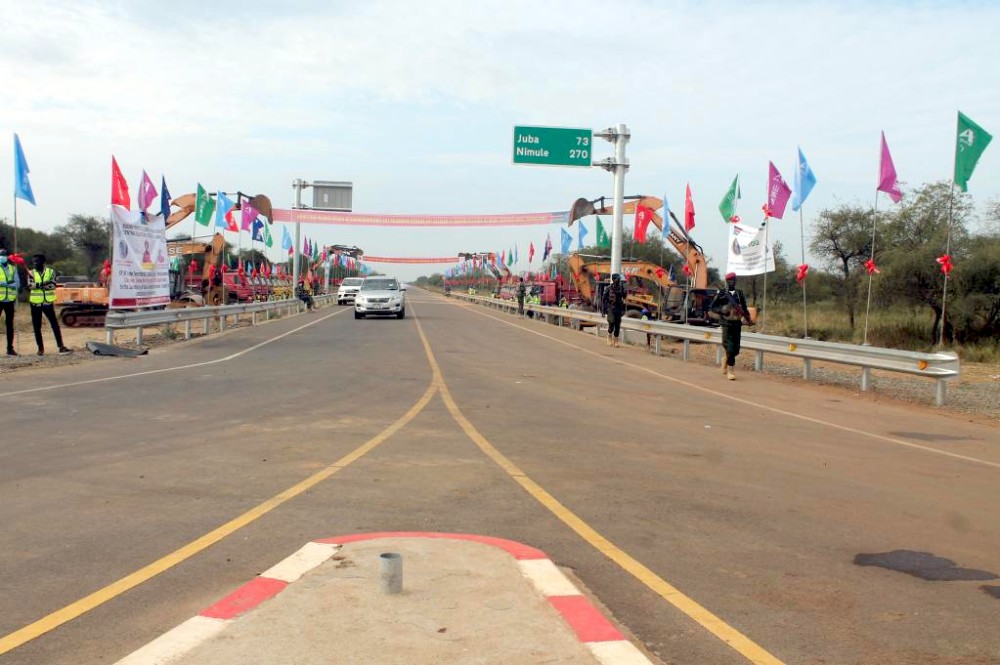
For more than a decade, the people of South Sudan have lived on a diet of promises. Since the dawn of independence in 2011, the vision of a prosperous, connected, and peaceful nation has been tethered to one resource: crude oil. In 2019, the government introduced a flagship policy that seemed to offer a pragmatic shortcut to development. Titled the “Oil for Roads” program, it promised to barter the nation’s underground wealth directly for the tarmac and bridges needed to stitch a fractured country together.
But as we navigate the landscape of 2026, the question is no longer when the roads will be completed, but where the money has gone. The bitter reality has set in: the oil did not build the roads; it paved a private highway for a new class of oil elites to consolidate wealth while the rest of the country remains physically and economically stalled in the mud.
The Oil for Roads initiative was basically designed as an unconventional financing model. By allocating thousands of barrels of crude oil per day to Chinese and local construction firms, the government claimed it could bypass the slow bureaucratic hurdles of international lending and the stringent conditions often imposed by the World Bank. On paper, it was a master stroke of sovereign resource management. In practice, it became a shadow budget beyond the reach of the National Legislative Assembly and public auditors.
Reports from the United Nations Commission on Human Rights in South Sudan and investigative bodies like The Sentry have meticulously documented the fallout. Between 2021 and late 2025, approximately US$2.2 billion in oil revenue was diverted. This money was specifically earmarked for the Juba-Rumbek highway, the Juba-Bor road, and the critical arteries connecting the Bahr el Ghazal region. Instead, the funds were funnelled into a violent patronage network. While less than 10 percent of the promised infrastructure has been completed to international standards, the luxury real estate markets in Nairobi, Dubai, and Juba have seen a suspicious boom in ownership by South Sudanese officials and their associates.
The choice of “Oil for Elites” over “Oil for Roads” is not a victimless crime. It is a moral catastrophe that manifests in the daily lives of 12 million people. South Sudan remains one of the world’s most food-insecure nations, a crisis exacerbated by the inability to move goods across a landscape where roads are just seasonal tracks of black cotton soil. According to the Integrated Food Security Phase Classification (IPC), millions are on the brink of starvation, often due to the lack of humanitarian access caused by impassable infrastructure.
When roads are not built, the cost of living skyrockets. A farmer in the fertile green belt of Western Equatoria, for example, cannot get his surplus crops to the markets in Juba because the Oil for Roads program failed to reach his county. Consequently, food rot in the fields, while urban centres rely heavily on expensive imports from Uganda and Kenya. In addition, during the catastrophic flooding that has plagued Jonglei and Unity State over the last three years, the lack of all-weather roads meant that humanitarian convoys were stuck for weeks in the mire. Children have died of preventable diseases because the road to the nearest health center was a river of impassable sludge. In these states, the absence of a road is a death sentence.
Who are these elites in the first place? They are a small circle of political and military figures who have mastered the art of state capture. Although some of them are right now languishing in detention for reasons not associated with corruption, their networks remain entrenched. Through the use of front companies—many of which lack any history of civil engineering—they have secured billion-dollar contracts paid upfront in oil cargo.
A primary example of this system is the network surrounding the ARC Resources Corporation, a company that has received massive allocations of crude oil and is linked to individuals previously sanctioned by the U.S. Treasury Department. While some road work is visible, the discrepancy between the value of the oil exported and the physical progress on the ground is vast. These individuals have managed to bypass the Public Financial Management and Accountability Act, creating a parallel economic zone where the national treasury is treated as a private ATM.
This system relies on a total lack of transparency. The Ministry of Petroleum and the Ministry of Finance for that matter often operate in silos, with oil marketing data hidden from the public eye. When the price of oil fluctuates, these elites use the volatility as a smokescreen to explain away missing funds, even as their personal lifestyles remain insulated from the economic shocks hitting ordinary citizens who struggle with triple-digit inflation and a plummeting South Sudanese Pound.
As we move further into 2026, South Sudan sits at a precarious crossroads. The international community, once the primary financiers of our birth as a nation, has grown weary of the leaky bucket that is the Juba treasury. The International Monetary Fund (IMF) has repeatedly called for the unification of the budget and the elimination of off-budget oil deals as a condition for further support.
The “Oil for Roads” program has become a symbol of why the peace process—the Revitalized Agreement on the Resolution of the Conflict in the Republic of South Sudan (R-ARCSS)—remains fragile. You cannot have a sustainable peace when the dividends of that peace are being hoarded by those at the top. The security that the elites claim to provide is bought with the money that should have gone toward the prosperity of the masses. In 2026, with elections theoretically on the horizon, the demand for “Roads over Riches” has become a rallying cry for a disenfranchised youth population.
With this in mind, the phrase “Oil for Roads” must be reclaimed from those who corrupted it. To do this, South Sudan requires a radical shift in governance strategies that includes three non-negotiable pillars.
First and foremost, there is a need for total transparency in oil marketing. Every barrel of oil sold must be accounted for in a public registry. The Bank of South Sudan must have sole authority over oil proceeds, ending the practice of direct payments to construction companies from the Ministry of Petroleum.
Secondly, independent physical audits must be established and strengthened. An international firm must be commissioned to conduct a physical audit of every kilometre of road claimed to have been built. Companies that received oil but failed to deliver tarmac must be blacklisted, and their assets—both domestic and foreign—must be pursued for recovery, as recommended by Human Rights Watch.
Thirdly, the judiciary and its wings must be empowered to do their job. The South Sudan judiciary and Anti-Corruption Commission must be given the full independence to prosecute oil elites, regardless of their political or military rank. This must be coupled with the establishment of the Hybrid Court for South Sudan to address both financial and human rights crimes.
In conclusion, the oil beneath the soil of Upper Nile and Unity State is a finite resource. It is the inheritance of every South Sudanese child. To use it to enrich a handful of men and women while the nation’s infrastructure remains a skeletal wreck is more than just corruption; it is a betrayal of the liberation struggle. Thus, the choice is stark. We can either continue down the path of “Oil for Elites,” which leads to a failed state defined by staggering inequality and perpetual conflict, or we can demand “Oil for Roads”—real roads that lead to schools, hospitals, and a unified national identity. The oil belongs to the people of South Sudan, not the palace. It is time the wealth of our land reflects the needs of our citizens, rather than the greed of our leaders. Until the tarmac reaches the furthest corners of our country, the struggle for independence remains unfinished.
About the writer
Amaju Ubur Yalamoi Ayani, aka Amaju Joseph Ubur Ayani, is a South Sudanese teacher and political commentator. He holds a Master of Arts in International Relations, B.Sc. in Political Science, and a Diploma in Civics. He is a regular opinion contributor to national and international media outlets such as Pachodo.org, Radio Tamazuj, Sudans Post, among others. He can be reached via
Newer articles:
- The Politics Of Joint Operations Of The Armed Forces By The Regime - 16/01/2026 15:20
- The C5 Mandate: Why African Union’s Diplomacy Must Pivot to Action in South Sudan - 16/01/2026 13:35
- Joint Statement on the Alleged Forgery of the Twic Dinka Paramount Chief's Signature and Fraud Claims Against TECA-Juba Chairperson Gen. Biar Mading Biar Yaak - 14/01/2026 12:59
- The 2026 Year of people-to-people Exchanges: Reclaiming South Sudanese Identity Through the Global Civilization Initiative - 14/01/2026 12:55
- Twenty-One Years Later: Why the CPA’s Vision of Justice, Liberty and Prosperity Remains a Dream - 12/01/2026 11:27
Older news items
- Armed Forces Should Leave Political Elites Alone To Carry Their Crosses !! - 09/01/2026 14:15
- From Bombing Iranian Nuclear Sites to Extracting Nicolás Maduro: Why Trump’s Total Enforcement is a Realpolitik Fallacy (Part II) - 09/01/2026 13:54
- Syria in 2025: Reconfiguring Its Position Between the United States, Russia, Iran, and Israel - 09/01/2026 13:43
- From Bombing Iranian Nuclear Sites to Extracting Nicolás Maduro: Why Trump's Total Enforcement is a Realpolitik Fallacy? (Part I) - 06/01/2026 17:24
- The unprecedented kidnapping of Maduro - 04/01/2026 14:25
Latest news items (all categories):
- South Sudan looks up to December elections for stability, economic resilience - 31/07/2026 11:45
- South Sudan’s forgotten crisis - 31/07/2026 11:44
- South Sudan’s president dismisses central bank governor - 31/07/2026 11:38
- South Sudan’s fight against the triple threat: Advancing action on HIV, Syphilis, and Hepatitis B - 31/07/2026 11:33
- South Sudan Nutrition Cluster - Quarterly Bulletin | Q3 2026 - 31/07/2026 11:29
See also (all categories):
Random articles (all categories):
- South Sudan on brink again as fragile peace teeters - 24/04/2025 16:49
- South Sudan: Social Media Influencer Hit With Jail Sentence, U.S.$87,000 Fine - 12/08/2021 00:23
- World Bank approves $45 million for South Sudan local service delivery improvement - 04/08/2020 00:31
- Obituary: Paramount Chief , Kwanyreth - Chol Dak Awu Goldit - 10/05/2013 17:28
- Hilde Johnson’s South Sudan Anniversary Article - 13/08/2013 10:36
Popular articles:
- The Final Communique of SPLM-DC Third Session of the National Council - 29/03/2011 01:00 - Read 83070 times
- Roles and Definition of Political Parties - 29/04/2011 01:00 - Read 64767 times
- Agriculture in Southern Sudan: Challenges and Investment Opportunities - 06/10/2010 01:45 - Read 57302 times
- Fashoda Youth Forum Rehabilitation of Drainage Culverts in Malakal town Report - 07/08/2008 16:22 - Read 35805 times
- Creation and establishment of the Local Government Councils ( Counties ) (2) - 28/09/2011 01:00 - Read 33595 times
