
By: *Isidoros Karderinis
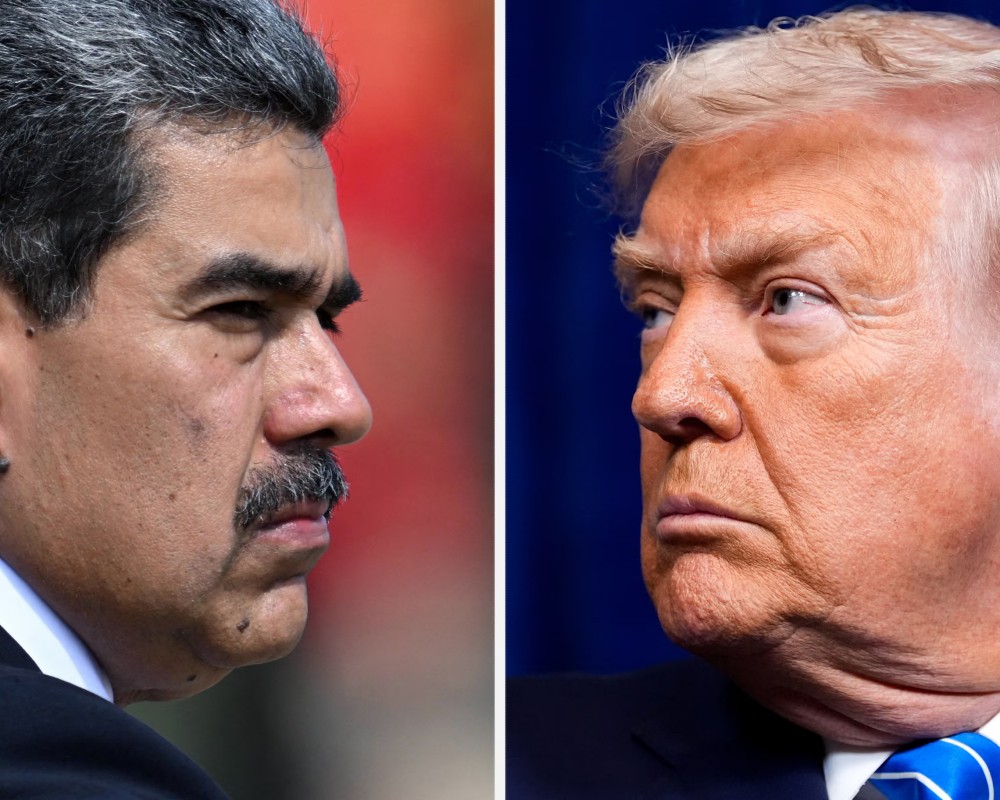
(Pachodo.org) - The unprecedented kidnapping in the world annals, in the manner in which it took place, of Venezuelan President Nicolas Maduro constitutes not only a military intervention in a sovereign and independent country in violation of the principles of international law, but also constitutes a clear warning to the entire planet. A warning to every insubordinate leader of any country.
Already on January 3, 2026, during a press conference he gave regarding the military operation and arrest of Maduro, US President Donald Trump issued threats against Colombian President Gustavo Petro, stating the following: "He would do well to be careful."
At the same time, the US president hinted that Cuba could be a topic of discussion within the context of broader US policy in the region, highlighting Washington's ability to expand its focus beyond Venezuela.
US Secretary of State Marco Rubio even said that the Cuban government should be worried after Maduro's arrest. Specifically, he said: "If I lived in Havana and was member of the government, at least I would be worried," adding that "Cuba is a disaster" and that the country is "run by incompetent and depraved men."
The history of the United States, moreover, is characterized by extensive imperialist interventions, both territorial and interventionist in other countries. Specifically, there have been approximately 400 interventions since 1776, when the Second Continental Congress adopted the Declaration of Independence on July 4, declaring the independence of the 13 American Colonies from the British Empire, an event that marked the official founding of the United States of America.
Who can forget that from April 15 to 19, 1961, 1,400 anti-Fidel Castro fighters, trained and financed by the CIA, attempted to land at the Bay of Pigs, 250 kilometers from Havana, but failed to overthrow the Cuban communist regime. These battles resulted in the deaths of about a hundred people on each side.
"With Salvador Allende winning the elections of September 4, 1970 in Chile and already Fidel Castro in Cuba, we will have a Red sandwich in Latin America that will inevitably become all Red," Richard Nixon feared, and his fear was soon confirmed by the election results.
So, in the face of this unpleasant reality for the United States, a solution had to be found. And the solution was found on that morning of September 11, 1973, when a military coup took place under the head of the army, General Augusto Pinochet, with the support of the United States, but also of Brazil, whose military regime was completely friendly and cooperative with the United States. The coup plotters, after first surrounding and bombing the Presidential Palace, then stormed it. Salvador Allende and his close associates were killed, after fierce resistance.
The United States also invaded Panama in mid-December 1989 during the presidency of George W. Bush. The purpose of the military invasion was to oust Panama's de facto leader, General Manuel Noriega, who was accused by American authorities of extortion and drug trafficking.
So, if one is looking for a historical parallel where the US arrested a de facto leader of a country and transferred him to the US for trial, the Noriega case is the most characteristic. And this happened after a regular military invasion, that is, in the context of a coordinated armed intervention, and certainly not a "normal" peace.
Noriega managed to escape and took refuge in the Vatican embassy in Panama City, the country's capital, where he remained for 11 days. There, he was subjected to relentless psychological warfare in order to surrender. The US military set up a horrible , deafening wall of sound outside the embassy. A fleet of Humvees with loudspeakers constantly played hard rock and occasionally heavy metal music. For example, "Panama" by the heavy metal singers Van Halen was played.
The Holy See rightly complained to President Bush, and the musical war ended after three days. By January 3, 1990, the general had agreed to surrender.
But what are the deeper reasons for the US military invasion of Venezuela and the pursuit of overthrowing the insubordinate existing regime?
Venezuela, therefore, has the largest proven oil reserves in the world, amounting to approximately 303.8 billion barrels as of 2021. For comparison, leading oil producing countries have smaller reserves. Specifically, Saudi Arabia has approximately 267 billion barrels and Kuwait has 101.5 billion barrels.
At the same time, the country's proven natural gas reserves exceeded 5.6 trillion cubic meters in 2021. It should be noted, at the same time, that in the Western Hemisphere, only the United States had more reserves.
Also, Venezuela's total iron ore reserves are estimated at 4.5 billion tons. And here it should be emphasized regarding iron reserves that the country is second in the region after Brazil. Venezuela finally has some of the largest reserves of bauxite in the world, a mineral used to produce aluminum. The country's total bauxite reserves amount to 950 million tons.
It is, therefore, clear to any objective observer that the US covets Venezuela's wealth-producing resources. Resources that they cannot get their hands on with the existing regime, which is a political and military partner and ally of Moscow, Beijing and Tehran, but also the main supplier of oil to China, whose control is drying up the flow.
The solution therefore for them, for the US, in order to secure primacy in the relentless international competition is the overthrow of the existing Venezuelan regime and the emergence of a president and a government that is absolutely friendly and serviceable. The rest, that is, whether such a thing is legal and democratic, does not concern them at all.
In closing, I would like to emphasize that the leaders of any country are overthrown only by their people, that is, by popular uprisings and revolutions, as has happened in various countries in the past. They are not overthrown by the military intervention of another country, a foreign power. Therefore, the US military invasion of Venezuela and the kidnapping of its president, Nicolas Maduro, are absolutely condemnable for any democratic and free-thinking citizen of the world.

*Isidoros Karderinis, journalist, foreign press correspondent accredited by the Ministry of Foreign Affairs, regular member of the Greek Foreign Press Correspondents' Association, novelist, poet and lyricist. Facebook: Karderinis Isidoros
Newer articles:
- Oil for Roads or Oil for Elites? South Sudan’s Broken Promise - 09/01/2026 18:21
- Armed Forces Should Leave Political Elites Alone To Carry Their Crosses !! - 09/01/2026 14:15
- From Bombing Iranian Nuclear Sites to Extracting Nicolás Maduro: Why Trump’s Total Enforcement is a Realpolitik Fallacy (Part II) - 09/01/2026 13:54
- Syria in 2025: Reconfiguring Its Position Between the United States, Russia, Iran, and Israel - 09/01/2026 13:43
- From Bombing Iranian Nuclear Sites to Extracting Nicolás Maduro: Why Trump's Total Enforcement is a Realpolitik Fallacy? (Part I) - 06/01/2026 17:24
Older news items
- South Sudan’s Youth Must Stop the Politics of Sycophancy to Move Forward - 03/01/2026 23:52
- The Art of Political Manipulation in South Sudan: Engineered Consent through Manufactured Crises - 03/01/2026 17:19
- The Betrayal Of National Duty By The SSPDF - 03/01/2026 15:36
- South Sudan! We Grieve Over You, But Louder Do The Foreigners, Why? A Response To The Call Of The Troika For Peace And Reversal Of The Course - 21/12/2025 23:32
- Repent, So That God Can Intervene - 19/12/2025 21:06
Latest news items (all categories):
- Western Equatoria prepares for voter registration - 14/09/2026 15:11
- South Sudanese Women Reclaim Their Lives after Fistula Surgery - 14/09/2026 15:10
- Digitel Launches Voice and Social Media Bundles in South Sudan - 14/09/2026 15:07
- Nearly 100,000 displaced in Sudan’s Blue Nile state since January amid fighting: UN agency - 14/09/2026 15:03
- جنوب السودان يرفض طلبًا لـ”حميدتي” بمنحه الحصة الأكبر من عائدات النفط - 14/09/2026 14:51
See also (all categories):
Random articles (all categories):
- Pillay welcomes South Sudan commitment to human rights, but says much still to ... - StarAfrica.com - 11/05/2012 16:02
- South Sudan: Women Abducted in South Sudan Released, Hundreds Remain Missing - 06/04/2021 00:28
- UN experts call to end sexual violence against women and girls by RSF in Sudan - 18/08/2023 03:29
- South Sudan: UN peacekeeping mission's helicopter shot down, killing all crew ... - UN News Centre - 21/12/2012 17:24
- Salva Kiir is on cloud nine as Somalia’s Mohamud polishes his dancing shoes - 27/11/2023 06:11
Popular articles:
- The Final Communique of SPLM-DC Third Session of the National Council - 29/03/2011 01:00 - Read 83167 times
- Roles and Definition of Political Parties - 29/04/2011 01:00 - Read 64903 times
- Agriculture in Southern Sudan: Challenges and Investment Opportunities - 06/10/2010 01:45 - Read 57558 times
- Fashoda Youth Forum Rehabilitation of Drainage Culverts in Malakal town Report - 07/08/2008 16:22 - Read 35941 times
- Creation and establishment of the Local Government Councils ( Counties ) (2) - 28/09/2011 01:00 - Read 33783 times
