
By Amaju Ubur Yalamoi Ayani
(Pachodo.org) - For decades, particularly after the Cold War ended in the 1990s, a singular development path was presented to the developing world: the “Washington Consensus.”
Coined by distinguished British economist John Williamson in 1989, the Washington Consensus champions instantaneous trade liberalization, extensive privatization, deregulation, and minimal state intervention. Its core message is clear: embrace free markets, and prosperity will follow. Such a neoliberal rhetoric is advanced by financial institutions such as the International Monetary Fund (IMF), the World Bank, and the U.S. Treasury Department.
Yet, as countless nations, especially in Africa, wrestled with the harsh realities of structural adjustment programs (imposed by the IMF in the 1990s)—which eventually led to increased inequality, social instability, and economic volatility—an alternative narrative has quietly emerged. This counter-narrative approach to development is the “China Model”, often referred to as the “Chinese Modernization”.
China’s remarkable rise—lifting more than 800 million people out of extreme poverty in less than half a century, and becoming the world’s second-largest economy, with a gross domestic product (GDP) $20.12 trillion while contributing 30 percent to global economic growth in recent years—is a triumph that fundamentally challenges the universal applicability of the Western neoliberal playbook. The phrase “Chinese Modernization” was composed to present China’s economic development model as an alternative—especially for developing countries—to the Washington Consensus.
The Chinese Modernization is not merely an economic theory; it is a pragmatic approach to development that offers the Global South a viable, sovereign alternative model that prioritizes stability, gradualism, and a powerful, guiding hand from the state.
Comparatively, the Washington Consensus operates on an implicit assumption that market fundamentalism is the only engine of sustainable growth. It views the state as an obstacle to efficiency, thereby advocating for its unconditional retreat from the economy. Developing nations adopting this model have often been forced to dismantle nascent domestic industries overnight, allowing themselves to unfetter global competition, and cut essential public services to meet stringent fiscal targets. The results are normally worst at best. In many parts of Africa, for example, rapid privatization concentrates wealth in the hands of a few, while volatile capital flows lead to repeated financial crises.
Economists have widely noted the Washington Consensus’s failure to consider the diverse local contexts, history, culture, and initial conditions of developing countries, leading to a consensus today that its recipes are neither necessary nor sufficient for successful economic growth in many countries of Africa. Countries that implemented these reforms during the 1980s and 1990s, for example, eventually experienced worsening social outcomes and increased poverty, leading that era to be dubbed the “lost decades” of development. The model, in many instances, has proven to be a classic case of “barking up the wrong tree”, pursuing a flawed course of action that overlooks real-world evidence.
On the other hand, the Chinese Modernization starkly deviates from this path. It is built less on abstract ideology and more on a philosophy best summarized by Deng Xiaoping’s famous adage, “It doesn’t matter whether a cat is black or white, as long as it catches mice.” This pragmatism is the bedrock of the Chinese model of development.
The Chinese Modernization is best characterized by three core pillars:
First, unlike the Washington Consensus’s emphasis on minimal government, the Chinese Modernization places the state at the centre of the economic universe. The government is not merely a regulator but an active participant, planner, and investor. Through state-owned enterprises (SOEs), strategic industrial policy such as the “Made in China 2025” initiative, and massive infrastructure spending, Beijing directs capital toward national priorities. This allows for the mobilization of resources on a scale impossible under the traditional free-market principles, facilitating long-term projects that the private sector might find too risky or slow-returning. The state acts as the master architect, not just a referee on the sidelines.
Second, the Chinese Modernization rejects the shock therapy favoured by Western neoliberal economists. China’s reforms began slowly in stages, usually experimenting with policies first in “Special Economic Zones” before rolling them out nationally. This “crossing the river by feeling the stones” approach allowed policymakers to adapt the correct course, and manage the social and economic consequences of change. This managed transition, maintained social stability—a paramount concern for Beijing—and avoided the chaotic volatility that normally accompanies rapid liberalization. It is a philosophy that embraces evolution over revolution, and prioritizing sustainable stability over a sudden change.
Third, perhaps the most appealing aspect for developing nations is the Chinese Modernization’s insistence on sovereignty and self-determination. The core belief is that every country must find its own unique path to modernization, free from external coercion. The People’s Republic of China prioritizes developing domestic technological capabilities and building a robust internal market before fully integrating into the global system. This focus on economic sovereignty resonates deeply with countries eager to escape the neocolonial dynamics often embedded in Western aid and loan conditions. It is a powerful message: countries need not be a fish out of water in the global economy, forced to adopt systems that don’t fit their local conditions and contexts.
A New Choice for the Global South: The Case for South Sudan
For a young nation like South Sudan that is grappling with acute fragility, political instability, immense infrastructure deficit, and a near-total reliance on volatile oil revenues, the Washington Consensus offers no immediate answers. The rigid demands for instant fiscal discipline and privatization often prove unworkable in a post-conflict environment, where state institutions are embryonic, and a vibrant private sector is virtually weak.
For this reason, the China Model presents a compelling alternative tailored to Juba’s exigencies:
First, South Sudan suffers from a catastrophic lack of basic infrastructure, with less than 2 percent of its road network paved in 2025. The Cheese Modernization’s emphasis on massive, state-led infrastructure development offers a result-oriented solution. Projects such as the China-aided Clement Mboro Bridge in Wau or the Juba Teaching Hospital phase I & II have already shown tangible benefits, improving connectivity, creating jobs, and bolstering public services in a way that market forces alone could never achieve in the short term.
Second, South Sudan requires stability above anything else to escape cyclical violence and economic meltdown. The Chinese experience emphasizes national unity and effective, disciplined state institutions as a prerequisite for development. Juba can learn from this approach by prioritizing transparent, multi-year national development plans and building state capacity, focusing oil revenues on public goods rather than private enrichment, which has been a persistent problem.
Third, the Washington Consensus often overlooks human capital in favour of immediate market liberalization. China’s path involves significant investment in education, science, and technical vocational training to create a skilled workforce. South Sudan could adopt this focus, sending youth for training in critical fields such as engineering and agriculture to diversify an economy currently dependent solely on oil exports.
Fourth, the Washington Consensus has left South Sudan highly dependent on donor aid for essential services, thereby compromising national decision-making power. The Beijing Consensus, which champions sovereignty and a nation charting its own course, provides a framework for South Sudan to prioritize its national interests and negotiate development paths that do not come with overly stringent political conditionalities.
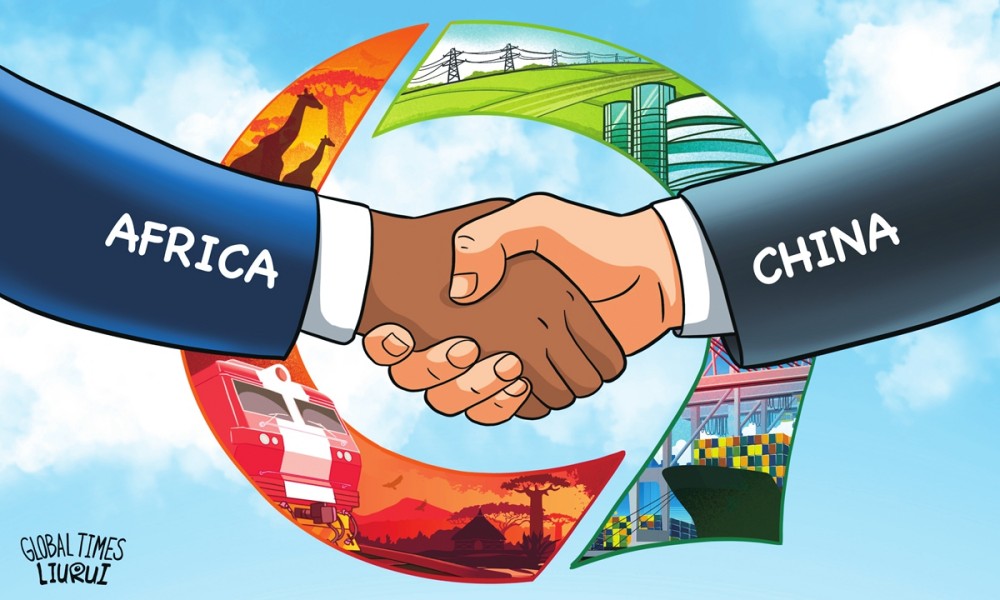
Guided by independent foreign policy of “Five Principles” of peaceful coexistence, and through initiatives, particularly the Belt and Road Initiative (BRI), the Global Development Initiative (GDI), and the Global Civilization Initiative (GCI), the People’s Republic of China exports elements of this model: state-led investment in infrastructure, long-term financing that is less conditional on political reforms, and the Westphalian principle of non-interference in internal affairs of other states.
A 2019 World Bank report estimated that when fully implemented, the BRI transport projects could help lift 7.6 million people from extreme poverty globally and 32 million from moderate poverty by 2030. For nations seeking roads, railways, and power grids now, the Beijing Consensus provides a functional blueprint and the capital to implement it, demonstrating a willingness to put its money where its mouth is. From 2000 to 2022 alone, China has built and upgraded seven critical infrastructures in Africa, including over 10,000 km of high-speed railways, nearly 100,000 km highways, 100 ports, over 130 hospitals, 200 schools, over 50 stadiums, and 200,000 km fibre-optic cable.
Acknowledging the strengths of Chinese development model should not equate to blind endorsement. Of course, critics may frame the model’s drawbacks, such as overcapacity in certain industrial sectors and the so-called a rigid political structure. These are substantial misrepresentations that developing nations must study carefully. Lack of transparency and tenacious prejudices in presenting alternative views on the China Model can lead to corruption and potential difficulties in understanding what it is all about.
For developing countries like South Sudan, adopting the fundamental principles of the Chinese path to modernization does not mean abandoning South Sudan’s political system. In other words, the China Modernization does not require to trade-off: economic progress and stability in exchange for political control. It is an obvious fact that trade-off is not universally desirable or applicable, and adopting it wholesale might mean that some developing nations like South Sudan are jumping the gun on a model that carries its own inherent risks.
The ultimate significance of the Chinese Modernization is that it is not an imperial universal theory, but a model that successfully broke the monopoly held by the Washington Consensus. It has demonstrated, unequivocally, that there are multiple paths to modernization and economic success. This development marks a potential paradigm shift in developmental economic thinking.
The debate on the table currently is no longer between development and stagnation, but between different types of development models. The China Model provides the developing world with leverage and, crucially, choice. It allows nations to pick and choose elements that fit their unique historical and contemporary contexts paved by political realities. In a multipolar world, this plurality of options is a healthy development, challenging the notion that “one size fits all.” The Chinese Modernization ensures that the conversation about how countries achieve economic prosperity and stability is now richer, and ultimately, more empowering for those nations seeking their own development paths.
About the writer
Amaju Ubur Yalamoi Ayani, also known as Amaju Joseph Ubur Ayani, is a South Sudanese teacher and political commentator. He holds a Master of Arts in International Relations, B.Sc. in Political Science, and a Diploma in Civics. He can be reached via
Newer articles:
- NDA's Crisis Is Orchestrated By The Regime - 06/02/2026 14:16
- Greenland: Trump's predatory mood - 03/02/2026 18:17
- A Call For Unity, For Victory Of The Opposition - 03/02/2026 12:23
- Understanding China-Africa Partnership for Collective Modernization - 27/01/2026 11:15
- The Silent Pulpit: How Singing Drowned Out the Word Of God - 23/01/2026 18:18
Older news items
- Another Empty Threats By Gen. Paul Nang - 23/01/2026 14:38
- Cultural Soft Power: The 2026 Mundari Festival as a Blueprint for South Sudanese Unity - 19/01/2026 12:50
- The Politics Of Joint Operations Of The Armed Forces By The Regime - 16/01/2026 15:20
- The C5 Mandate: Why African Union’s Diplomacy Must Pivot to Action in South Sudan - 16/01/2026 13:35
- Joint Statement on the Alleged Forgery of the Twic Dinka Paramount Chief's Signature and Fraud Claims Against TECA-Juba Chairperson Gen. Biar Mading Biar Yaak - 14/01/2026 12:59
Latest news items (all categories):
- China’s new Long March: Why its modernization is a demanding journey - 21/10/2026 12:31
- Drone attack in disputed Sudan-South Sudan border region kills at least 153 - 21/10/2026 12:17
- South Korea - 'Smart camp' system built at Hanbit Unit in South Sudan - 21/10/2026 12:09
- Sudanese refugees in Gorom camp, South Sudan, struggle for water, medicines, security - 21/10/2026 12:05
- South Sudan: A Testing Ground For Democracy While Citizens Struggle To Survive - 19/10/2026 14:31
See also (all categories):
Random articles (all categories):
- South Sudan: The Country Needs Responsible Opinion Writers at this Stage and NOT the “Isaiah Abraham” Type! - 02/12/2012 23:18
- Displaced families flee again as Sudan war spreads - 15/12/2023 03:50
- كيف يمكن إقناع الجنوبين على التصويت للوحدة؟ - 12/05/2010 09:29
- UN: Seven million people need aid in Sudan - 16/07/2014 21:28
- South Sudan: Women distil alcohol 'to pay school fees' - 25/09/2013 09:10
Popular articles:
- The Final Communique of SPLM-DC Third Session of the National Council - 29/03/2011 01:00 - Read 83320 times
- Roles and Definition of Political Parties - 29/04/2011 01:00 - Read 65086 times
- Agriculture in Southern Sudan: Challenges and Investment Opportunities - 06/10/2010 01:45 - Read 57800 times
- Fashoda Youth Forum Rehabilitation of Drainage Culverts in Malakal town Report - 07/08/2008 16:22 - Read 36081 times
- Creation and establishment of the Local Government Councils ( Counties ) (2) - 28/09/2011 01:00 - Read 33959 times
