
Date Mar 16, 2026
By: Yuanna R.J Chany
Introduction
(Pachodo.org) - In Sub-Saharan Africa, over 650 million people are said to be Christian. By 2050, projections indicate the number of Christians will exceed 1.1 billion.[1] Wow! Christianity is advancing greatly in Africa, more than anywhere else in the world. Yet a troubling question lingers in many minds: Is African Christianity a true one, or has Christianity been dressed with ATR (African Traditional Religion)? Or has ATR dressed up with Christianity? Though these questions may unsettle many, the truth is undeniable; syncretism and enculturation thrive more vigorously here than anywhere else.
In ATR, we were taught to chant and entice until the witch-doctor, or the fickle spirits, moved. The word “entice,” according to Merriam-Webster’s ELE Dictionary, states, “to attract (someone) by offering or showing something that is appealing, interesting, etc.”[2] You might ask: how can Satan be enticed by men? Well, if Lucifer, who was a created being, is capable of being “allured” or “enticed” by his internal desires like pride (Ezekiel 28:17), it stands to reason that he is not immune to external stimuli provided by those he seeks to rule. However, this article focuses narrowly on its title: Is God Your LORD or Your Witch-doctor or a fickle spirit that can be manipulated? Or is your God capable of being enticed, or is He unmoved by external rituals?
The Cultural Context
In broad terms, Dr. Ethan Doyle defines witchcraft and witch as “a varied range of ritual practices intended to manipulate occult, spiritual, or supernatural power regardless of intent. In this sense, witchcraft can be used to harm or to heal, allowing there to be both bad and good witches.”[3] This highlights how witch-doctors are enticed not merely to fulfil their own desire, but are manipulated by their clients or worshippers to do what their clients want. They are people-driven and can shift sides depending on what the worshipper offers. Though some claim not all witch-doctors or witchcraft are evil, Scripture declares that no satanic or demonic power is innocent in God’s sight. All such powers are evil, and therefore, God abhors them (Deuteronomy 18:10-12; Gal 5:20).
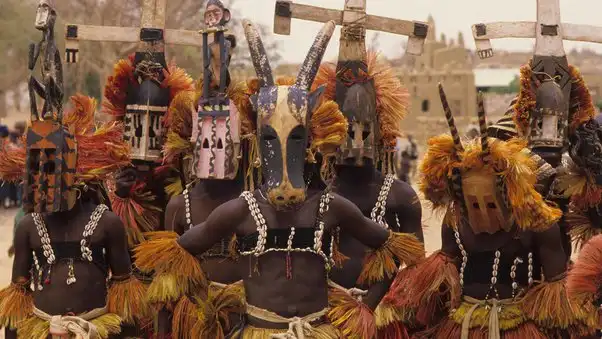
From the ATR worldview, the relationship between worshippers and their deities is often transactional. Deities are always seen as open to persuasion through rituals, sacrifices, gifts, songs - that “wake them up” or activate their power. If the gods are silent, the community performs specific actions to provoke and activate a response. This is transactional enchantment. A biblical example and parallel can be found in 1 Kings 18:20-40, where Elijah confronts the 450 prophets of Baal. Those prophets tried to rouse their deities by limping around the altar, cutting themselves, chanting, crying, and bleeding all morning, expecting their outward rituals and blood to attract Baal’s attention. For them, Baal was sleeping, and an attempt to wake him up could be the solution (even if the text didn’t say it). With them, ritualistic approaches constitute the worship.
Possibly, these practices were not unstudied or guideless, but well-constructed beliefs and practices rooted in Canaanite religion. Rather than random, chaotic actions or practices, it was laid down by their ancestors. This is attested by its being institutionalized as an official state religion in the Northern Kingdom under the reign of Ahab and Jezebel around 850 BC.[4] They believe that Baal could be enticed to act (which is, for sure, true). He could mimic power to some degree, but ultimately, he had no choice but to watch as the sovereign God displayed his glory and absolute power over Northern Yis-ra-el and beyond.
Ironically, while such pagan sites are historically documented, Africa has emerged as a high-ranking in witchcraft and pagan practices. When Christianity arrived, it encountered the ATR system with transactional worship; chants, songs, and drums to entice middlemen or fickle spirits into action, not communion. Therefore, we were faced with an established practice (ATR) already in place. Rituals were performed to ensure witchcraft and spirits are invoked, appeased, activated, and moved to action. Sadly, today, many African Christians have not fully abandoned these patterns. Conrad Mbewe, in his sermon titled, “Are We Preachers or Witch Doctors?”[5] was not a lapse in judgment, but a prophetic strike against this hybridization of faith. Like Mbewe, my heart is not to condemn, but to sound a wake-up call rooted in a profound love for this continent. Based on this topic, the question arises: Does God need our tricks to catch Him? Does he need enticement to act against his plan or sovereign decree? The next section addresses these.
The Theological Shift
Does God require a transactional relationship or a communion-based one with Christians? It must be communion. In ATR, we were taught to chant, entice, and dance until the witchcraft or spirits moved, but in Christianity, we discovered the God who doesn’t move because He is nudged, but because He is faithful, kind, self-sufficient, and his steadfast love endureth forever. From Christian’s worldview, the perspective of transactional worship shifts from persuasion (enticing) to trusting in the sovereignty of God. With a high view of God, who lacks nothing in Himself, he cannot be enticed or moved by rituals. He cannot be “bride” because he already owns everything, and his character is immutable. None or no one can cause or force him to act contrary to His will, for He is self-sufficient in Himself. He is eternally happy in himself. That is why, from eternity past to eternity future, his gladness is forever and ever. The Bible teaches that God acts according to His own will and timing (Ecclesiastes 3:1; Galatians 4:4), not because he was successfully “convinced” or manipulated by a ritual (1 Samuel 15:22; Isaiah 29:13). God, in His holiness, sovereignty, and rationality, is not subject to any formulaic power to be coerced by human efforts. YHWH is not subject to any formulaic coercion. Rituals never convince or manipulate Him.
As ATR, chant functions as a “tool” to produce a result; it does not work in the same way with the God of the Bible. In Christianity, songs and prayers are not meant to manipulate or to “wake up” a sleeping deity (Isaiah 40:28; Psalm 121:3-4). Christians’ God never sleeps or slumbers. Therefore, in Christianity, songs and prayers are viewed as expressions of communion, aligning the human’s will with God’s rather than forcing God’s hand. God does not have a “dark side” or ego that can be played upon by flattery or offerings. Sadly, many African Christians have not been deeply immersed in Christ’s culture through the ancient Scripture, but have been misled by hyper-contextualization. The notion that we worship God “as Africans” rather than the rest of the world is a myth because it ignores the Divine manual that is left for the Church and its practices. Today’s rapid Christian growth in Africa often stems from movements that do not demand Africans to stop being African, but instead offer them a “Jesus,” who requires no true transformation, and a “Holy Ghost” as a substitute or alternative to the “spirit world,” which they already know exists.
That’s why today, many Africans view God as a social-contract partner, who is obligated to deliver health, wealth, and success in exchange for faith, tithes, offerings, and fervent singing. Though this view is mostly attributed to the Charismatic movement, it’s actually a transfer of the ATR worldview into Christianity. While the prosperity Gospel is loud about this construct, the Evangelical movement often practices a “hidden” version of the same logic. In secret, most treat worship as a spiritual attraction, believing intense songs or fervent prayers will “move” God strategically. This is not a denial that we should expect answers to prayers, but those answers must flow not from our ritualistic approbation but from trust in God’s sovereign will and decree.
If ATR’s practices inform our Christianity, YHWH becomes a divine debtor, obligated to pay once we perform the right duties, turning grace into obligation. ATR worldview transforms the YHWH of the Bible from the source of grace into a divine debtor, obligated to settle the account once the believer has performed the correct spiritual duty now. We know it was in the past, when the first missionaries arrived, heralding a message of “total surrender to Christ,” though at that time, most came with a Christian dress-up with European culture; they refused to be silent, as we do today. Today, churches are not taught to stop the former practices (ATR); instead, the trend is not to abandon ATR practices, but to “Christianize” them into Christianity, where the “supreme god” is designated as the God of the Bible, which they already know exists.[6] With that clue in mind, Africans are left with the same design of a “supreme being,” who is far away but can be reached only through their practices and rituals. This incorporates witch-doctor-like middlemen and spirits into Christianity.
Worship is measured by the sweat of the brow, the intensity of chant, or how the worshipper feels, rather than how God is glorified or honoured for his faithfulness. The focus has shifted from the eternal nature of God to the immediate results of the ritual now. This is not a new perspective, but was also practiced in Genesis 4, where Cain, who did not align his heart with God’s will and sovereignty, but acted according to his desires. He needs God to be instructed by him, and not for God to instruct him. Luke in the Book of Acts 17:24-25 writes, “The God who made the world… does not dwell in temples made with hands. Nor is He worshipped with men’s hands, as though he needed anything, since he gives to all life, breath, and appearance, but looks at the heart.” According to this text, God is not worshipped with men’s hands. Rituals are not a necessity for God to approve or reveal himself; he is absolutely there, and he needs no “wake-up” songs or chants. It’s the heart that God desires, not the outward appearance of our dances, and mouth when singing songs (1 Samuel 16:7).
In Numbers 23:19, “God is not a man, that He should lie, Nor a son of man, that He should repent; Has He said, and will He not do it? Or has He spoken, and will He not establish it?” This text puts on display what we call in Christian Theology, the Immutability of God. It displays it in the highly lifted sky. It magnifies that God is immutable, and therefore, external acts outside his will and plan can never, ever change his mind to act contrary. Whatever he has not decreed will never occur, no matter how we try to “attract” or influence Him, which is impossible. He will not establish anything that does not mesh with His sovereign decree or will. In Matthew 6:7, we are warned against repetitive chants. Jesus taught that God is not a deity that can be swayed by the sheer volume or repetitive words, a practice he attributed to those who do not know the True YHWH. In Amos 5:23-24, God rejects songs without heart. He needed the hearts rather than the outward lips-worship (Isaiah 29:13).
If God, the Sovereign, could be enticed as traditional deities through witch doctors or middle spirits, he would be unpredictable. But because He is unmoved by external rituals, he is reliable.[7] He is not attracted by our music, voice, or rhythm, without our hearts, but by how sincere the heart of the worshipper is (a sincere heart transformed by God). John 4:24 commands worship in “spirit and truth.” I like the word “truth” because truth is not in our traditional practices or background, but in the Scripture. Though the art of music is good, true and proper worship is not a musical performance, but offering one’s daily life as a “living sacrifice” to YHWH (Romans 12:1).
Conclusion
On his website (Desiring God), John Piper states, “At the heart of what it means to be a Christian is to receive a new identity. In Jesus, we do not lose our true selves, but we become our true selves, only in Him.”[8] I love the phrase “in Christ.” Absolutely in Christ, our Christianity is defined, not in our culture nor in our former religion, nor in things external to Scripture. Dancing, singing, and drumming are not inherently evil; they can become dangerous when driven by an ATR worldview, rather than the Gospel of the Happy God. When our worship flows from a heart captured by the self-sufficiency of God in Himself, it is beautiful to Him. If our Christianity in Africa must be true, then our worship must be true worship, because as goes the worship, so goes the lifestyle.
Worship should not flow from a worldview of transactional relationship born of a social contract, but communion relationship born of adorational love of who God is, not what He gives. True worship is not result-driven, but grace-driven. The beauty of God’s amazing grace is the cause, finding its end not in what God gives but in who He is. God is not like a witch-doctor or a fickle spirit that can be manipulated; He cannot be enticed, as He is unmoved by external rituals. Cultural and traditional practices are not a plan B for Christian worship practices. They are not tools to transform Christianity, but Christianity is the object coming to us, reshaping our practices. Therefore, we must stop trying to command God through a pagan pattern and start seeking the God who calls us to a relationship, not a transaction.
[1] “Sub-Saharan Africa: Population by Religion 2010-2050.” n.d. Statista. https://www.statista.com/statistics/1282707/population-of-sub-saharan-africa-by-main-religion/.
[2] Merriam-Webster. 2010. Merriam-Webster’s Essential Learner’s English Dictionary. Merriam-Webster.
https://www.amazon.co.uk/Merriam-Webster/e/B005WYEZ2S/ref=dp_byline_cont_book_1
[3] White, Ethan Doyle. 2016. “Witchcraft.” In Encyclopædia Britannica. https://www.britannica.com/topic/witchcraft.
[4] “Baal Worship in the Old Testament.” 2016. Crivoice.org. 2016.
https://www.crivoice.org/baal.html.
[5] Grace to You
[6] Brino Kumwenda. 2024. “The Christian God Is Not the Supreme Being.” TGC Africa. April 9, 2024.
https://africa.thegospelcoalition.org/article/the-christian-god-is-not-the-supreme-being/.
[7] ———. 2020b. “What Does It Mean That God Cannot Be Tempted (James 1:13)? | GotQuestions.org.” GotQuestions.org. August 24, 2020. https://www.gotquestions.org/God-cannot-be-tempted.html.
[8] “Quotes by John Piper.” n.d. Grace Quotes.
https://gracequotes.org/author-quote/john-piper/
Newer articles:
- South Sudan’s Most Dangerous Path: Ethnic Nationalism — and the Case for a Civic State (Part 2) - 03/04/2026 16:19
- Structural factors are responsible for persistent poverty in South Sudan, not laziness - 01/04/2026 18:56
- South Sudan’s Most Dangerous Path: Ethnic Nationalism — and the Case for a Civic State (Part 1) - 01/04/2026 18:50
- Either Oppositions Unite, Or Are All Defeated One By One by The Regime - 01/04/2026 18:34
- South Sudan's Monkey Politics Of Folly - 23/03/2026 18:22
Older news items
- The Power of Alliances: How the Delusion of America Alone is Manifested in the Strait of Hormuz - 18/03/2026 12:22
- Empowering Educators: The Key to South Sudan's Future - 16/03/2026 15:20
- The Nuclear Apartheid: How Small States Suffer Great Power Nuclear Double Standards - 16/03/2026 15:18
- The Indivisible Security Principle: How China’s New Security Architecture Can Help Stabilize the Middle East - 09/03/2026 14:16
- Challenge Of Leadership In Enhancing Good Governance In South Sudan - 09/03/2026 14:12
Latest news items (all categories):
- Juba commissioner denies chasing foreigners - 07/10/2026 14:36
- Australia: 19-year-old from South Sudan arrested over a wild joy ride - 07/10/2026 14:33
- South Sudan’s aid crisis deepens as food stocks run low - 07/10/2026 14:29
- South Sudan’s Juba warns foreigners against running small-scale businesses - 07/10/2026 14:25
- Peace Dialogues foster social cohesion in Nyirol County after persisting tensions - 07/10/2026 14:23
See also (all categories):
Random articles (all categories):
- Your mail: South Sudan should treat Ugandans with respect - 08/09/2013 10:30
- Looted and leaking, South Sudan's oil wells pose health risk - 03/03/2015 20:06
- Darfur: Series of attacks on civilians sweeps the region - 07/11/2022 00:58
- Vietnam, Australia cooperate in UN peacekeeping mission in South Sudan - 04/05/2021 21:15
- UN calls for Sudan, South Sudan to resume Abyei talks - 24/10/2013 23:47
Popular articles:
- The Final Communique of SPLM-DC Third Session of the National Council - 29/03/2011 01:00 - Read 83244 times
- Roles and Definition of Political Parties - 29/04/2011 01:00 - Read 64995 times
- Agriculture in Southern Sudan: Challenges and Investment Opportunities - 06/10/2010 01:45 - Read 57688 times
- Fashoda Youth Forum Rehabilitation of Drainage Culverts in Malakal town Report - 07/08/2008 16:22 - Read 36008 times
- Creation and establishment of the Local Government Councils ( Counties ) (2) - 28/09/2011 01:00 - Read 33862 times
