
(Photo Credit: Provided/Supplied)
(Pachodo.org) - It’s time for a new generation to take South Sudan’s future back from the old-guard SPLM leaders. They’ve lost their vision. They put power and personal gain before the people. Look at the SPLM Secretary General Dr. Akol Paul Kordit Majok — he tells citizens to use herbs when they’re sick, while he flies abroad for treatment on your tax money. Look at Senior Presidential Advisor General Kuol Manyang — he calls citizens lazy and says eat frogs, lizards, snakes, and dogs, while he lives in luxury off your taxes.
The recent statements by high-profile SPLM leaders arguing citizens to endure hardship while they loot the state, and living lavishly are clear indications of the regime's heartlessness and lack of genuine desire to provide services or support struggling citizens, as well as its lack of vision to improve the living conditions of ordinary South Sudanese.
The majority of the country's population, particularly the current generation, continues to experience marginalization and hardship. They remain unable to benefit equitably from national resources, largely due to the SPLM regime's lack of strategic vision and genuine commitment to public service. At present, many individuals within this generation face exploitation by political elites pursuing personal interests. As a result of poor governance, they are deprived of prospects for a secure future and improved living standards.
This situation will not change unless the current generation takes charge of its future by replacing the SPLM old-guard leadership. The regime must not be allowed to use age and experience as tools of intimidation. In times of war, citizens are called to serve on the battlefield regardless of age or experience. Yet in times of peace, when it comes to politics and leadership, the same generation is dismissed as too young and inexperienced. This constitutes a form of exclusion by the SPLM regime’s old-guard leadership.
It’s time for our generation to know our rights. No one understands our problems better than we do — and we have the knowledge to fix them. We are the majority. We need to recognize our power and stop letting political elites play us by using tribe, freedom, democracy, or marginalization for their own gain. South Sudan was built on struggle and sacrifice. Those values are being destroyed by a self-serving SPLM elite.
Across South Sudan today, this generation faces unemployment, poverty, and deteriorating public systems. This is not accidental. It stems from the current regime’s poor leadership and policies that prioritize profit over the wellbeing and interests of the people.
I’m urging this generation: never hand your future to the SPLM old guard. Get involved in politics and shape your own destiny. Demand a seat at the table — from the boma to the national level. We must unite to replace this leadership by all means necessary, especially through revolution. Don’t sleep. Lead the fight for change and take part in policymaking at every level of government. Real liberation from this regime’s failed leadership won’t come from chanting “Viva,” “Oyee,” or “Nas Guwa.” It won’t come from social posts. It comes from awareness, organizing, and bold action.
You must take an active role in shaping your destiny by engaging in political action, revolutionary change, and liberation struggles. It is the lack of participation from this new generation that has allowed self-serving SPLM regime leaders to act against public interests since independence. They will continue to do so if this generation does not get involved to stop it.
This generation must, at all costs:
(a) Reject politically motivated handouts from regime elites;
(b) Reject the tribal loyalty they push on us
(c) Reject the fear and intimidation they used to control us
We are the future. We must unite in pursuit of equality, dignity, and people-centric development. For us, revolution is no longer an option — it is a necessity. If we want to change this system, we must organize ourselves, beginning in villages, schools, churches, workplaces, and communities, and shape South Sudan’s direction through collective action. If we fail as a generation, history will judge us for choosing comfort over courage, oppression over freedom, and injustice over justice.
We must not allow party lines to divide us for the personal interests of elites who do not serve the nation. We should sincerely evaluate political parties and their leaders, asking whether they represent the people’s common interests. Furthermore, we must not support them blindly based on party affiliation, tribe, or faith.
The time has come for this generation to take responsibility for its political education — to read, observe, and engage in order to reach independent conclusions. The teachings promoted by current regime leaders are detrimental to our peace, unity, and development. They foster division along tribal, regional, and religious lines solely to secure support, retain power, and access national resources for self-enrichment.
We can’t let ourselves be held hostage by any system or leader just because our fathers fought for this country. Yes, they won independence — but they didn’t deliver services, build institutions, or give us democracy.
It’s on our generation to change the system and build a South Sudan with opportunity, justice, and dignity for everyone. The time is now. The future is ours. No more waiting. No more wasted time. Let’s take charge — now.
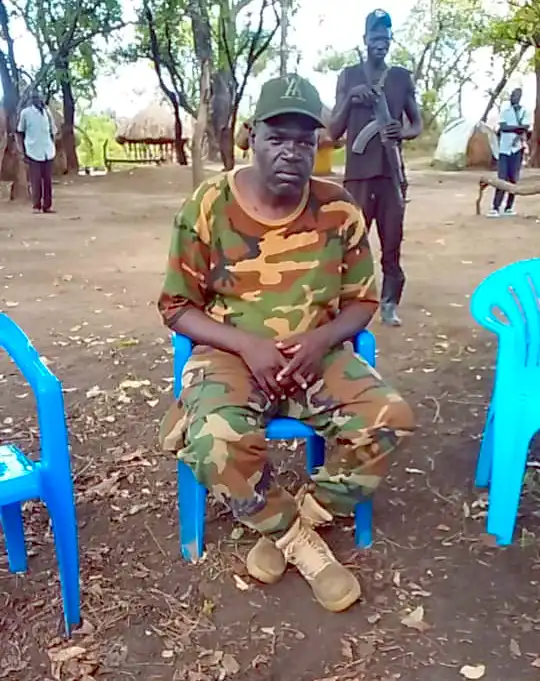
*By Major General John Sunday Martin*
Whatsapp: +211926927268 /
+256791938465
Newer articles:
- South Sudan’s Most Dangerous Path: Ethnic Nationalism — and the Case for a Civic State (Part 9) - 20/04/2026 14:50
- Rebuttal to the So-called SPLM Cadres Forum: In Defense of SPLM-Secretary General, Cde. Dr. Akol Paul Kordit and the Rule of Law - 17/04/2026 14:06
- South Sudan’s Most Dangerous Path: Ethnic Nationalism — and the Case for a Civic State (Part 8) - 17/04/2026 14:03
- Spring Thaw in China-U.S. Relations: Implications for Global Economic Stability and Europe's Strategic Position - 15/04/2026 17:34
- South Sudan’s Most Dangerous Path: Ethnic Nationalism — and the Case for a Civic State (Part 7) - 15/04/2026 17:09
Older news items
- South Sudan’s Most Dangerous Path: Ethnic Nationalism — and the Case for a Civic State (Part 6) - 13/04/2026 14:47
- South Sudan’s Most Dangerous Path: Ethnic Nationalism — and the Case for a Civic State (Part 5) - 10/04/2026 19:08
- The Convergence of Necessity: Why the Bahraini Resolution Must Align with the China-Pakistan Five-Point Initiative - 08/04/2026 14:04
- Unplanned conflict: Trump and the trap of war with Iran - 08/04/2026 14:01
- South Sudan’s Most Dangerous Path: Ethnic Nationalism — and the Case for a Civic State (Part 4) - 08/04/2026 13:58
Latest news items (all categories):
- Ramaphosa presses Kiir to implement peace deal ahead of South Sudan’s first elections - 09/10/2026 12:19
- South Sudan steps up Ebola alert after Kenya case - 09/10/2026 12:17
- Laotian man deported by U.S. to South Sudan leaves for Laos after year in detention - 09/10/2026 12:14
- Bullet and blast injuries … and a constant need for blood: inside South Sudan’s overwhelmed trauma wards - 09/10/2026 12:10
- MTN South Sudan and Regulator Pledge Cooperation to Expand Connectivity - 09/10/2026 12:01
See also (all categories):
Random articles (all categories):
- South Sudan: The corner table in the office - 13/08/2020 06:45
- UN Aid Trucks Held up at South Sudan Border - 27/04/2024 16:37
- Ramaphosa urges caution as AU supports South Sudan elections - 30/09/2026 15:26
- Video chat held for VN peacekeepers in South Sudan - 21/01/2020 03:17
- Sudan-South Sudan agreement on football development a timely move - 24/11/2022 02:04
Popular articles:
- The Final Communique of SPLM-DC Third Session of the National Council - 29/03/2011 01:00 - Read 83249 times
- Roles and Definition of Political Parties - 29/04/2011 01:00 - Read 65007 times
- Agriculture in Southern Sudan: Challenges and Investment Opportunities - 06/10/2010 01:45 - Read 57703 times
- Fashoda Youth Forum Rehabilitation of Drainage Culverts in Malakal town Report - 07/08/2008 16:22 - Read 36013 times
- Creation and establishment of the Local Government Councils ( Counties ) (2) - 28/09/2011 01:00 - Read 33877 times
