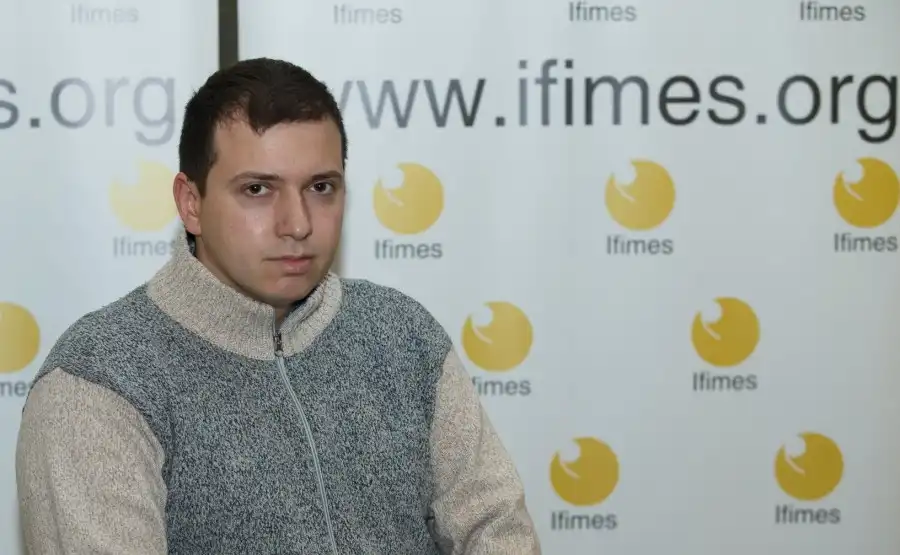
● By: Dejan Azeski, member of the IFIMES International Institute
(Pachodo.org) - Eighty years after the Second World War, the continent is once again facing military uncertainty, economic pressures, and political elites who find it increasingly difficult to find common ground.
When Aleksandar Vučić warns that a third world war in Europe is becoming inevitable, his statement should not be taken as a definitive prediction, but rather as a warning regarding the current situation on the European continent. The war in Ukraine continues to alter security dynamics; European states are increasing their military budgets; Russia and the West increasingly view one another as adversaries; and the diplomatic mechanisms designed to contain tensions remain insufficiently effective.
This raises the question: how did a continent that, following 1945, built institutions aimed at preventing another major war, end up in a situation where there is talk of a global conflict?
The answer does not lie solely in Moscow, Brussels, or Washington. It is the result of years of miscalculations, clashing geopolitical interests, and the conviction among great powers that they could impose their own vision of security without triggering the worst possible reactions from their adversaries.
European rearmament: deterrence or a new spiral of distrust?
Following the escalation of the conflict in Ukraine in 2022 (which, in fact, has been ongoing since 2014), European governments have gained a compelling argument for increasing military spending. Countries in Eastern and Northern Europe, in particular, view Russia’s military policy as a direct threat to their security. From their perspective, further rearmament is necessary to deter potential aggression.
Moscow, on the other hand, has for years portrayed the expansion of NATO and the presence of Western military forces in its neighborhood as a threat to its own security. This perception cannot simply be ignored when analyzing European security—though it certainly does not justify the use of force against other states.
This is precisely the core of the crisis: what one side considers defense, the other often perceives as preparation for an attack. When Russia expands its military capabilities, European states seek additional guarantees. When Europe arms itself, Moscow uses this as a justification for its own military buildup. The result is a security spiral in which all parties claim to be acting in self-defense, yet no one feels sufficiently secure.
At the same time, European political leaders must ask themselves whether this military buildup is accompanied by a sufficiently clear diplomatic strategy. A stronger military may prevent an attack; however, if channels of communication and political mechanisms for de-escalating tensions disappear, that same weaponry could increase the risk of miscalculation.
An energy misstep that is costing European industry dearly
One of the primary challenges Europe has faced is the energy transition, spurred by the war and the collapse of the existing model of cooperation with Russia.
Prior to 2022, Russian energy supplies were a key factor in Europe’s economic competitiveness. German industry, in particular, relied on relatively affordable natural gas for the production of chemicals, fertilizers, metals, and other industrial goods.
European governments believed that economic interdependence would help maintain political stability. Conversely, Moscow had a strong interest in retaining the European market for its energy exports. Ultimately, however, geopolitics prevailed over economic interests.
Following the invasion of Ukraine, Europe rapidly began reducing its dependence on Russian gas and seeking alternative suppliers. While this was understandable from a security perspective, the economic consequences were significant.
Imports of liquefied natural gas (LNG) from the United States, combined with increased supplies from Norway, helped avert a complete supply cutoff. However, diversification did not automatically lead to cheaper energy. The logistics of transporting LNG, global competition for available supplies, and market volatility all contributed to rising costs.
In this regard, European policy is open to criticism. While reducing dependence on Russia may have been justified, the speed and manner in which the energy restructuring was carried out placed significant pressure on both industry and households. Europe has had to pay a price—not only due to its prior dependence but also because of an insufficiently prepared transition.
At the same time, Russia has lost a significant portion of its traditional European market and has faced the need to redirect its energy flows toward other buyers.
The United States, meanwhile, has strengthened its position as a supplier to the European market. While this has helped Europe reduce its reliance on Moscow, it has also raised a new question: has the continent merely shifted the source of its dependence, or has it truly built long-term energy autonomy?
Energy security does not imply complete self-sufficiency. Rather, it means having enough alternatives so that no single supplier can exploit that dependence as a tool for political pressure.
The greatest risk for Europe lies in the possibility that high energy costs could become a long-term obstacle to industrial development, investment, and competitiveness. Combined with rising military expenditures and an aging population, this could place serious strain on the European economic model.
Eighty years after the war: where has the European security balance gone?
Following the Second World War, peace in Europe rested on a combination of American military presence, nuclear deterrence, institutional cooperation, and a balance between the two blocs of the Cold War era.
After the collapse of the Soviet Union, the West believed that the expansion of NATO and the European Union would create a broader zone of stability. For the states of Central and Eastern Europe, joining Western institutions was a conscious choice—a way to safeguard themselves against future threats.
Russia, however, perceived the expansion of Western structures as a gradual narrowing of its strategic space. Instead of building a lasting security architecture that would take into account diverse interests, distrust gradually deepened.
The West often assumed that economic cooperation would limit Russia’s willingness to engage in military confrontation. Conversely, Moscow underestimated Ukraine’s determination to defend its independence, as well as the capacity of Western nations to respond with sanctions and military aid.
The result is the current crisis, in which both sides have increasingly less confidence in the intentions of their adversary.
This does not mean that all parties bear equal responsibility for the war. It does, however, mean that the European security order failed to create a stable mechanism for addressing conflicting interests before they escalated into military conflict.
The greatest error was the belief that security could be built without seriously considering the fears and strategic calculations of the other side.
Donald Trump's America: pragmatism instead of endless war?
The American approach to the war in Ukraine differs from the positions held by certain European leaders. Washington demonstrates a greater willingness to engage in direct negotiations with Moscow and insists on a reassessment of the long-term costs of military support.
This approach is rooted in a rational basis. The United States is a global power with commitments that extend far beyond Europe’s borders. Washington must account for China and the Indo-Pacific region, as well as its own economic and security priorities. From an American perspective, it is unsustainable for Europe to remain permanently dependent on U.S. military power without assuming greater responsibility for its own defense.
Europe is an economically developed continent with the potential to build stronger military capabilities of its own. Therefore, Trump’s demand that European allies shoulder a larger share of the defense burden is not merely a political provocation; it is also an issue that European governments have been putting off for years.
However, American pragmatism also carries certain risks. A significant reduction in support for Ukraine—or vague security guarantees—could embolden Moscow to persist with its military pressure, while simultaneously leading European allies to question the long-term credibility of American commitments. Consequently, negotiations with Russia are necessary, but their success depends on the substance of the agreement itself.
A peace that leaves Ukraine without credible security guarantees might prove to be nothing more than a temporary respite. On the other hand, a strategy that relies solely on the continuation of the war—without a clear political objective—carries the risk of an increased death toll and the danger of a broader escalation of the conflict.
The most rational American approach would consist of a combination of diplomatic pressure, credible deterrence, and a clear strategy for ending the conflict.
Trump could create space for reaching an agreement precisely because he is willing to re-examine existing positions. However, his policy will be successful only if it results in a stable peace, rather than a short-term arrangement that would merely set the stage for a new war.
Is World War III inevitable?
The greatest danger today is not necessarily the existence of a plan for a world war, but rather the possibility of losing control over escalation.
A direct conflict between Russia and NATO could arise from a military incident, a miscalculation, or an attack on critical infrastructure that is interpreted as a deliberate provocation. Under such circumstances, decisions might be made under intense political pressure, before all the facts are known. The presence of nuclear weapons makes this risk particularly serious.
Nevertheless, there is a significant difference between an increased danger and an inevitable war. Diplomacy, military communication channels, and arms control agreements can still serve to limit confrontation.
Europe has the right to strengthen its defenses. Russia has the right to consider its own security interests, and the United States has the right to re-evaluate its commitments—but all parties must take into account the long-term consequences of altering their strategies.
In the Balkans, the consequences of a potential escalation would be primarily economic and political: higher energy prices, a slowdown in the European economy, and increased regional instability. For North Macedonia—as a NATO member with close economic ties to Europe—maintaining regional stability and achieving energy diversification are matters of direct national interest.
Bottom line: peace is not just a matter of military power
Eighty years after the end of the Second World War, Europe is once again confronting the consequences of a clash between geopolitical ambitions, security concerns, and economic interests.
None of these policy approaches is without risk. The true challenge for Europe is not a choice between disarmament and rearmament, nor a choice between Russia and America. Rather, the challenge lies in creating a system in which military power serves to deter aggression, economic policy ensures sustainability, and diplomacy addresses the root causes of conflict.
A Third World War is not inevitable. Yet, peace will not be preserved simply because everyone is aware of how catastrophic such a war would be.
The greatest responsibility of today’s political leaders is to discern the line between necessary preparations for a worst-case scenario and policies that—through persistent confrontation—could turn that scenario into reality.
This article represents the views of the author and does not necessarily reflect the official position of IFIMES.
Ljubljana/Washington/Skopje 20 November 2026
Footnote:
[1] IFIMES - International Institute for Middle East and Balkan Studies, based in Ljubljana, Slovenia, has a special consultative status with the United Nations Economic and Social Council ECOSOC/UN in New York since 2018. The institut is publisher of the international scientific journal "European Perspectives.", link: https://www.europeanperspectives.org/
Older news items
- APEC is finding ways to make cross-border services easier - 21/11/2026 00:45
- Xi Jinping’s push for tech independence: How China is trying to close the gap - 21/11/2026 00:44
- How does regional integrated development become a key driver for rapid growth? - 21/11/2026 00:36
- The power of Africa - 17/11/2026 20:38
- China’s next stage of modernization is beyond infrastructure - 17/11/2026 19:50
Latest news items (all categories):
- Research - Europe between a new world war and geopolitical defeat: strategic energy miscalculations, geopolitical ambitions and American pragmatism - 21/11/2026 00:54
- APEC is finding ways to make cross-border services easier - 21/11/2026 00:45
- Xi Jinping’s push for tech independence: How China is trying to close the gap - 21/11/2026 00:44
- How does regional integrated development become a key driver for rapid growth? - 21/11/2026 00:36
- South Sudan rejects claims US-deported migrants face hunger, poor conditions - 21/11/2026 00:12
See also (all categories):
Random articles (all categories):
- South Sudan Appointed Delegation to UN Questioned - 31/07/2016 11:36
- WHAT DOES FUTURE HOLDS FOR SOUTH SUDAN? - 08/04/2014 23:38
- Eight fishermen shot dead as suspected gunmen from South Sudan raid Moyo - 18/03/2021 23:37
- DRC, South Sudan units top Equity’s earnings in first quarter - 18/05/2024 11:49
- مفهوم الحكم الفدرالي - الاتحادي - 24/06/2014 15:44
Popular articles:
- The Final Communique of SPLM-DC Third Session of the National Council - 29/03/2011 01:00 - Read 83484 times
- Roles and Definition of Political Parties - 29/04/2011 01:00 - Read 65326 times
- Agriculture in Southern Sudan: Challenges and Investment Opportunities - 06/10/2010 01:45 - Read 58076 times
- Fashoda Youth Forum Rehabilitation of Drainage Culverts in Malakal town Report - 07/08/2008 16:22 - Read 36246 times
- Creation and establishment of the Local Government Councils ( Counties ) (2) - 28/09/2011 01:00 - Read 34245 times