
(Image Credit: Shutterstock/File)
By *Amaju Ubur Yalamoi Ayani
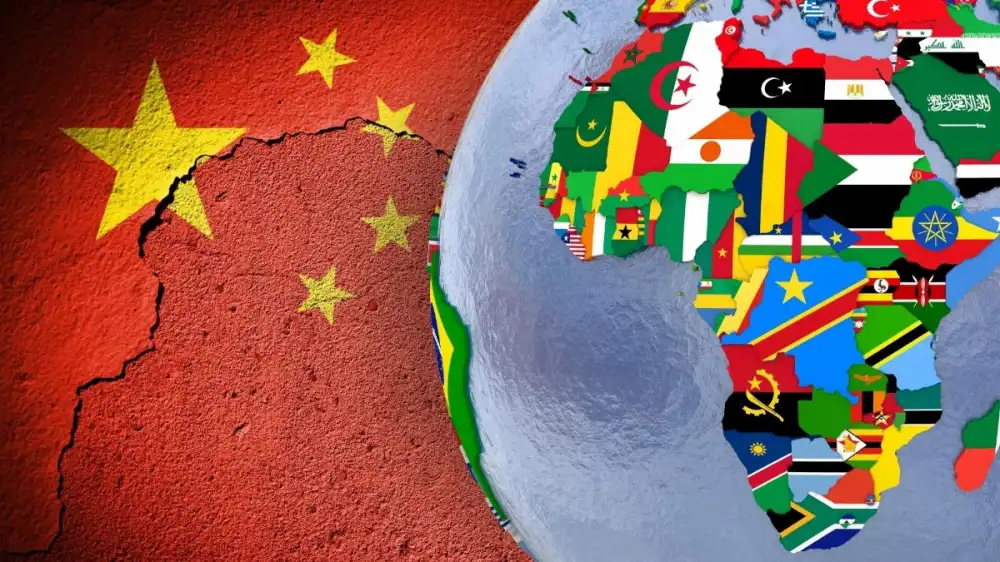
(Pachodo.org) - The structural architecture of Sino-African commerce underwent a paradigm shift since December 1, 2024, when Beijing operationalized a comprehensive zero-tariff regime for all Least Developed Countries (LDCs) maintaining diplomatic ties. For South Sudan, this policy translates into duty-free access for 100 percent of its tariff lines—a “golden ticket” to the world’s most voracious consumer market and a potential escape hatch from the “resource curse” that has long tethered its economy to volatile global oil prices. As of May 2026, this historic opening has expanded to include all 53 African nations aligned with China’s global initiatives, signaling a new era of South-South cooperation where trade, rather than aid, serves as the primary engine for developmental leapfrogging.
However, as the adage goes, “you can lead a horse to water, but you cannot make it drink.” While the removal of fiscal barriers is a watershed moment, it is merely the opening of a door; the arduous journey of walking through it requires a radical overhaul of South Sudan’s domestic productivity. For Juba, the transition from a preferential trade agreement on paper to a tangible economic catalyst remains a Herculean task, hampered by institutional bottlenecks, a nascent industrial base, and the logistical nightmares of a landlocked nation. To truly leverage this zero-tariff windfall, the country must move beyond the celebratory rhetoric of diplomacy and address the grit and grime of standardizing its exports to meet the exacting demands of the Chinese dragon.
A convergence of strategic interests
The 100 percent tariff waiver represents a rare alignment of mutual needs, or what economists call a “positive-sum game.” For China, the policy secures a reliable supply of energy resources while cultivating a captive market for high-value-added industrial exports, such as telecommunications infrastructure, hydrostatic liquid pumps, and specialized metallurgical piping—commodities that currently dominate Chinese shipments to South Sudan. By dismantling trade barriers, China deepens its economic footprint in the East African hinterland, ensuring that South Sudan remains a stable node in its global supply chain. This move also serves as a strategic hedge, positioning China as a predictable partner in a region where Western trade frameworks, such as the African Growth and Opportunity Act (AGOA), often face the “sword of Damocles” in the form of periodic legislative reviews.
For South Sudan, the opportunity lies in radical economic diversification through “Green Lane” non-oil sectors. Beyond the crude petroleum that historically accounts for nearly all its exports to China, the zero-tariff offer makes several sectors instantly price-competitive. The sesame and oilseeds corridor is a prime example. South Sudan possesses vast tracts of arable land that can fill the vacuum left by regional competitors. By shifting from the export of raw primary commodities to registered cleaning and value-added packaging plants, Juba can tap into China's status as a global sink for oilseeds. To quote the late developmental economist Alice Amsden, “Late industrialization is a matter of learning”—and South Sudan must now learn to move up the value chain.
Additionally, the forestry and livestock sectors offer a path toward sustainable industrialization. Situated within the “Gum Belt,” South Sudan can export Gum Arabic—a critical emulsifier in global food and pharmaceuticals—duty-free. Similarly, with a bovine population that is among the largest in Africa, the nation could cater to the burgeoning Chinese middle-class demand for organic, grass-fed beef and high-grade leather. The Nile fish industry in the Sudd wetlands further rounds out this potential, provided there is a big push investment in cold-chain logistics. Collectively, these sectors represent a blueprint for a post-oil economy that leverages South Sudan’s natural comparative advantage.
The policy framework: From tariffs to technical standards
Tariff elimination is a necessary, but insufficient, condition for trade expansion. It is merely the “low-hanging fruit.” To make these preferences functional, both nations have moved toward a “Most Favored Nation” (MFN) status, ensuring that customs procedures and administrative duties remain at the lowest possible threshold. This legal framework aims to mitigate transaction costs by eliminating the discriminatory tax treatments that often paralyze cross-border trade. However, the efficacy of this framework is contingent upon South Sudan’s ability to mirror these efficiencies domestically through the single-window streamlining of export permits and the eradication of bureaucratic red tape.
The primary barrier for South Sudanese exporters is not the fiscal cost of entry, but a capability gap regarding regulatory harmonization. Exporters must now navigate the labyrinthine General Administration of Customs of China (GACC) registration systems, which mandate stringent traceability and quality compliance for all imported food products. Without a robust digital infrastructure to shepherd local firms through this registration process, the 100 percent tariff offer remains a “paper tiger.” The government of South Sudan must prioritize technical vocational training to ensure local enterprises can meet the rigorous electronic filing and sanitary benchmarks demanded by Chinese technocrats.
Equally critical is the mastery of Sanitary and Phytosanitary (SPS) compliance. South Sudan must align its National Bureau of Standards with Chinese Level 1 requirements to ensure agricultural products are not “dead on arrival” at the port of entry. This involves establishing certified disease-free zones for livestock and modern laboratories capable of detecting aflatoxins and pesticide residues. Beyond these technicalities, the state must offer first-mover incentives, such as tax holidays within Special Economic Zones (SEZs), to attract Chinese joint ventures. These partnerships are the missing link for transferring the technology and capital needed to build viable export corridors.
Case study: The sesame blueprint
While South Sudan’s non-oil exports remain in their infancy, regional benchmarks provide a sobering roadmap. Neighboring Sudan was once the standard-bearer for sesame exports to China, but its market share collapsed under the weight of domestic conflict and a lack of price competitiveness against high-efficiency producers like Brazil. This serves as a stark reminder that market access alone cannot insulate a sector from “Dutch Disease” or the fallout of instability. South Sudan must learn from this by prioritizing the peace dividend and securing its trade routes from the farm gate to the port.
In contrast, countries like Ethiopia and Kenya have thrived by professionalizing their supply chains and aggressively pursuing “Single Window” registration with Chinese authorities. Kenya, for instance, registered hundreds of companies and utilized high-profile trade expos to secure multimillion-dollar contracts. These nations did not merely wait for the “invisible hand” of the market; they actively sculpted their domestic industries to align with Chinese consumer trends. For South Sudan, the lesson is that government-led trade missions and a focus on value-added processing are essential to transform raw agricultural potential into a competitive global brand.
The sesame sector specifically highlights the need for quality over quantity. Chinese buyers demand high purity levels and specific moisture content—parameters that can only be achieved through mechanized cleaning and climate-controlled storage. For South Sudanese smallholders to compete, they must abandon traditional harvesting methods that lead to “field-to-fork” contamination. By establishing central processing hubs where sesame can be cleaned, graded, and vacuum-sealed to international specifications, Juba can ensure its products command a scarcity premium in the competitive markets of Shanghai and Qingdao.
Institutional stewardship and the role of stakeholders
Success rests on a coordinated, “all-of-government” strategy involving every level of leadership. The Presidency holds the ultimate responsibility for maintaining the high-level political will that serves as the engine room of the South Sudan-China trade relationship. By ensuring the Strategic Partnership for Shared Development remains a national priority, the Executive Office can insulate trade agreements from the vagaries of domestic political cycles. This high-level oversight is vital to prevent siloed decision-making, ensuring that trade policy is seamlessly integrated into the broader National Development Strategy.
The Ministry of Foreign Affairs and the Ministry of Trade and Industry act as the boots on the ground. Foreign Affairs must empower its diplomatic corps to act as commercial attachés, aggressively marketing South Sudan’s potential in Chinese commercial hubs and negotiating “Green Lane” status to prevent perishable cargo from wilting at the docks. Simultaneously, the Ministry of Trade must be the ground-level operator, establishing a “China Trade Desk” to navigate the GACC portal. This ministry is also responsible for identifying sunrise industries—such as timber and livestock—and facilitating technical matchmaking between local producers and Chinese investors.
Ultimately, the state only sets the stage. The private sector must bring the house down. Local chambers of commerce and cooperatives must lead the charge to professionalize production, aggregating small-holder yields to meet the massive “economies of scale” demanded by the Chinese market. Digital trade platforms can bridge the information asymmetry gap, allowing South Sudanese entrepreneurs to track price fluctuations in real-time. By fostering a culture of quality-first entrepreneurship, the South Sudanese business community can ensure that zero tariffs translate into real-wage growth and a more resilient national economy.
Conclusion
The road to China is paved with zero tariffs, but for South Sudan, the journey remains an uphill battle. This offer is a powerful tool for a nation looking to shed its monocrop dependence on oil. Yet, without a disciplined approach to industrial standards, domestic security, and institutional transparency, the offer risks becoming just another “missed opportunity.” South Sudan has been handed the invitation to the dance; it must now build the infrastructure to perform. The success of this initiative will be the ultimate litmus test of South Sudan’s ability to transform its latent natural wealth into a diversified and sustainable future.
About the writer

*Amaju Ubur Yalamoi Ayani, also known as Amaju Joseph Ubur Ayani, is a South Sudanese teacher, researcher and political analyst. He holds a Master of Arts in International Relations, B.Sc in Political Science, and a Diploma in Civics. He can be reached via
Newer articles:
- HRA Calls on Libya to Release Sudanese Nationals Held in Arbitrary Detention - 18/05/2026 12:09
- US–China Summit: A strategic moment for stabilizing bilateral relations - 15/05/2026 15:35
- From Dialectical Materialism to Peripheral Liberation: A Comparative Analysis of the New Sudan Vision and Marxism - 11/05/2026 20:27
- Iran Conflict: Geoeconomics, Fragmentation, and the possible trajectories - 11/05/2026 20:09
- Adopting Ethiopia’s 2021 electoral model can help end the transition in South Sudan - 06/05/2026 20:00
Older news items
- The Iran–U.S./Israel Conflict One Month After Its Outbreak: The Logic of Controlled Escalation and Systemic Risk - 06/05/2026 19:53
- In Revolution; Don't Fear The State, But Betrayers - 04/05/2026 15:28
- Not All Revolutionary Leaders Want To Save And Serve South Sudan - 04/05/2026 15:25
- When Education Fails… the State Fractures: Why South Sudan’s Reform Must Begin with the Curriculum (2-2) - 01/05/2026 14:47
- Revolution Starts With Your Voice - 27/04/2026 15:08
Latest news items (all categories):
- China’s new Long March: Why its modernization is a demanding journey - 21/10/2026 12:31
- Drone attack in disputed Sudan-South Sudan border region kills at least 153 - 21/10/2026 12:17
- South Korea - 'Smart camp' system built at Hanbit Unit in South Sudan - 21/10/2026 12:09
- Sudanese refugees in Gorom camp, South Sudan, struggle for water, medicines, security - 21/10/2026 12:05
- South Sudan: A Testing Ground For Democracy While Citizens Struggle To Survive - 19/10/2026 14:31
See also (all categories):
Random articles (all categories):
- South Sudan: Red Cross Leaves Violent Town After Threats - 05/10/2015 09:55
- South Sudan Budgeted $850 Million to Crush Rebels, UN Says - 23/08/2015 22:00
- South Sudan: Standoff at Elegu as truck drivers protest extortion - 10/01/2023 06:19
- UN delegation in S.Sudan to push for protection force - 03/09/2016 04:03
- Sudan: The battle for power between two generals - 17/04/2023 02:20
Popular articles:
- The Final Communique of SPLM-DC Third Session of the National Council - 29/03/2011 01:00 - Read 83320 times
- Roles and Definition of Political Parties - 29/04/2011 01:00 - Read 65086 times
- Agriculture in Southern Sudan: Challenges and Investment Opportunities - 06/10/2010 01:45 - Read 57800 times
- Fashoda Youth Forum Rehabilitation of Drainage Culverts in Malakal town Report - 07/08/2008 16:22 - Read 36081 times
- Creation and establishment of the Local Government Councils ( Counties ) (2) - 28/09/2011 01:00 - Read 33960 times
