

Brazil, Russia, India and China originally formed the bloc in 2009 after a series of meetings and understandings. The first BRIC Summit was held in Yekaterinburg, Russia on June 16 of the same year, where the heads of states in question agreed to strengthen dialogue and cooperation between them.
The following year, in Brasilia, Brazil in April 2010, the second Summit was held, where the leaders of these countries emphasized the necessity of a multidimensional global intergovernmental system.
Then, at their third meeting in New York in September 2010, the BRICs agreed on the entry of South Africa. South Africa managed to join after a strong effort as a result of its active foreign policy, this coalition of states changing it from "BRIC" to "BRICS".
At the Fourth Summit in March 2012 in New Delhi, India, a first announcement was made of the establishment of a New Development Bank (NDB), which was formalized at their Fifth Summit in Durban, South Africa in 2013, with the clear intention of independence of BRICS by the International Monetary Fund, the World Bank, the US and the European Union. The agreement for its establishment, after resolving disputes over organizational issues, was finally reached in 2014, during the sixth BRICS meeting in Fortaleza, Brazil.
The BRICS countries comprise 40% of the world's population, which amounts to over 3.1 billion people. BRICS co-exists countries with different degrees of development and different strategies.
Brazil is the largest country in South America, both in population (about 213 million) and in area, since it occupies 1/3 of South America by itself. It is also the fourth richest country in the Americas in terms of GDP. However, it does not have the appropriate infrastructure (inadequate road and rail network, inadequate port infrastructure, etc.) and in combination with extreme economic inequality (1 in 4 citizens lives in absolute poverty) do not allow it to emerge as a economic superpower. According to the World Competitiveness Index of the World Economic Forum, Brazil ranked 108th among 137 economies in 2017 in terms of the general quality of its infrastructure. Corruption scandals are also present in the country. Brazil deals with regional issues.
Russia, which is the world's largest transcontinental country of global influence and a large economy, also possesses the largest nuclear arsenal on the planet and enormous military power, which it has used in Syria and now in Ukraine. Russia provides the best standard of living for its residents, compared to the rest of the BRICS countries, with 3.5% of GDP spent on education and 3.1% on public health. The number of residents living below the poverty line amounts to just 0.2% of its population. The Russian economy suffers, however, from the critical problem of corruption-which exists in all countries to a greater or lesser degree-as well as from the significant lack of banking infrastructure, due to insufficiently developed financial markets, difficulty in obtaining loans and limited investment options.
India is an emerging world power with an ever-growing economy. It is currently the fifth largest economy in the world based on its GDP, while its territory is home to the second largest population in the world, after that of China, reaching close to 1.4 billion people. The country's GDP growth has been among the highest in the world over the past decade, achieving an annual growth of between 6-7%. However, India has one of the lowest per capita incomes in the world, while facing huge social problems at home due to poverty. India has the lowest percentages of GDP spent on education and health among the BRICS, at 2.7% and 1.2% respectively. India is regionally oriented.
China, which is home to 1.4 billion people, is expanding rapidly with economic penetration in Asia, Latin America, Africa and other regions of the world. It is the economic giant of the East with an annual growth rate of 6.6%, thus threatening the economic primacy of the USA. China has been the world's leading exporter since 2014. At the same time, China, although it is the second largest economy in the world, remains a middle-income country as its per capita income is still only about a quarter of that of countries with high income and about 375 million Chinese live below the poverty line of $5.50 a day. Finally, corruption appears at particularly high rates.
South Africa, due to its geographical position at the southern tip of the continent, which gives it access to two oceans, is a hub country. South Africa is China's largest trading partner in Africa. At the same time, hundreds of Chinese companies, both state-owned and private, are currently active in the country. South Africa's economy is the second largest on the African continent behind Nigeria's. It has natural wealth in gold, silver and coal but also one of the highest rates of inequality in the world. The richest 10% of the population owns about 71% of the net wealth, while the bottom 60% owns 7% of the net wealth. It is a country with particular political weight in Africa as the only African member state of the G20 group, which, however, needs a reform effort for its further economic development.
The BRICS are, therefore, the opposing camp of the West, whether this is expressed politically, by the US-Anglo-Saxon countries-European Union alliance, or militarily, with NATO, or economically, with the international economic organizations of American origin, such as the IMF, the World Bank or the World Trade Organization. The bloc's strategic direction is close cooperation to effectively and successfully counter the US-dominated international financial architecture.
After fifteen years, during which many questioned the viability of the scheme, the existing global balances lead to the enlargement of the bloc. Many countries have expressed their desire to become members of BRICS, such as Argentina, Egypt, Venezuela, Mexico, Iran, Vietnam, Bangladesh and others.
In closing, I would like to emphasize that the agenda of the BRICS, which have succeeded in consolidating their position on the global political and economic scene, leads to the reduction of the dominance of the USA and the Western world in general and to the establishment of a new multipolar reality.
Curriculum vitae
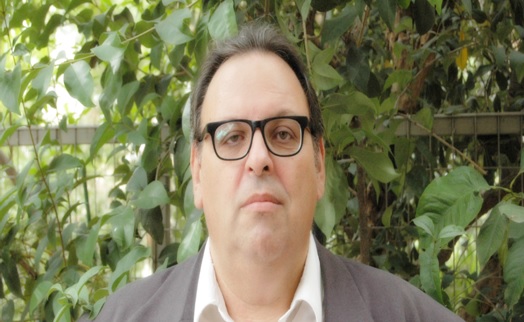
Isidoros Karderinis was born in Athens in 1967. He is a novelist, poet and columnist. He studied economics and completed postgraduate studies in tourism economics. His articles have been published in newspapers, magazines and websites around the world. His poems have been translated into English, French and Spanish and published in poetic anthologies, literary magazines and literary newspaper columns. He has published eight books of poetry and three novels in Greece. His books have been translated and published in the United States, Great Britain, Italy and Spain.
Social media
Facebook: Karderinis Isidoros
Twitter: isidoros karderinis
Linkedin: ISIDOROS KARDERINIS
Gettr: ISIDOROS KARDERINIS
Newer articles:
- M.D, Eng. Bernard Amour Makeny, Salutes the Workers of NilePet on the Occasion of the 2023 International Workers' Day Celebration - 03/05/2023 11:52
- Event (In-person and Virtual) - Marking 20 Years of Conflict in Darfur, Sudan - 19/04/2023 11:17
- Health Concern to all Residents of Juba City, Republic of South Sudan - 14/04/2023 12:52
- Shelter Afrique targets African diaspora in affordable housing delivery - 13/04/2023 00:00
- Let Christ Rule Your Hearts, Gen. Akol Lion Kuch Easter Message - 12/04/2023 00:00
Older news items
- Free Music Lesson for the 9th Annual Teach Music Week -- March 20-26 - 17/03/2023 00:01
- South Sudan is finished, Central African Republic, DRC, Ethiopia, Kenya, Sudan & Uganda be alerted! - 11/02/2023 11:27
- How will Citizens survive with such inflation cost under the current Minister of Finance and Planning in SSD - 19/01/2023 00:32
- Chollo Community Leaders in Diaspora: Urgent call to Stop Ethnic Cleansing and Massacres of Innocent Shilluk (Collo) Civilians by ethnic Nuer Militia in Upper State (South Sudan) - 17/12/2022 12:15
- Collo genocide case must be taken to the International Court of Justice - 09/12/2022 11:15
Latest news items (all categories):
- Canada helping to fund South Sudan vote despite growing repression - 05/10/2026 15:10
- UNMISS patrol reaches remote Ibba communities amidst heavy rains, insecurity, and growing health threats - 05/10/2026 15:07
- WFP Strongly Condemns Attack on Trucks in South Kordofan, Killing One Driver - 05/10/2026 15:03
- Advancing Women’s Land Rights through building capacity of customary institutions in Magwi County, South Sudan - 02/10/2026 13:18
- AU calls for release of political detainees ahead of South Sudan elections - 02/10/2026 13:15
Random articles (all categories):
- S. Sudan demands foreign intervention to resolve dispute with Khartoum - 12/09/2014 05:51
- In Sudan's Nuba Mountains, rebels roll up string of victories - Kansas City Star - 15/04/2012 10:03
- S Sudan turns down proposal to take more UN troops - 10/08/2016 12:02
- South Sudan Misses Deadline to Form New Parliament - 27/07/2020 15:07
- AN ARMY OF MINISTERS. - 28/06/2010 15:07
Popular articles:
- The Final Communique of SPLM-DC Third Session of the National Council - 29/03/2011 01:00 - Read 83236 times
- Roles and Definition of Political Parties - 29/04/2011 01:00 - Read 64986 times
- Agriculture in Southern Sudan: Challenges and Investment Opportunities - 06/10/2010 01:45 - Read 57674 times
- Fashoda Youth Forum Rehabilitation of Drainage Culverts in Malakal town Report - 07/08/2008 16:22 - Read 36004 times
- Creation and establishment of the Local Government Councils ( Counties ) (2) - 28/09/2011 01:00 - Read 33854 times
