
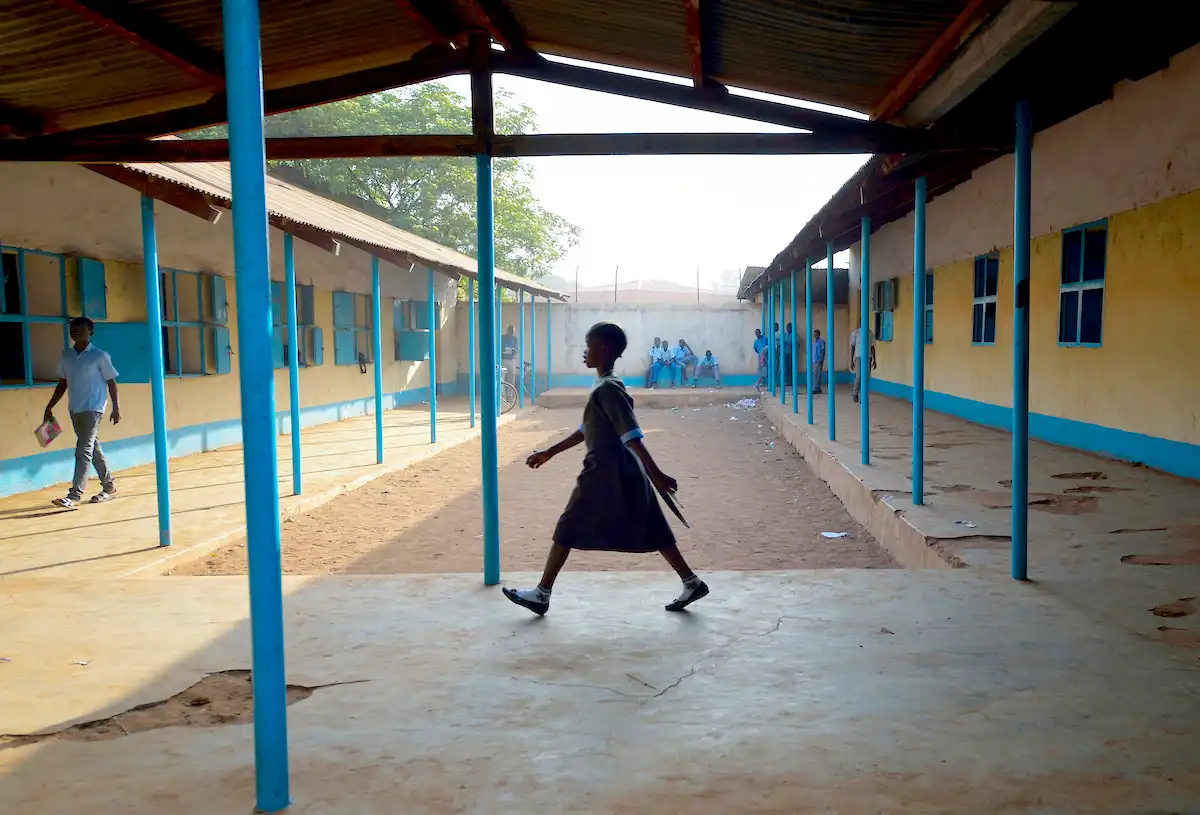
(Photo Credit: Sudan Relief Fund)
By: Ogeryath Oger
(Pachodo.org) - Education is fundamentally meant to equip learners with the practical skills necessary to transform their communities and elevate their social, political, and economic ways of life. Unfortunately, our current education system focuses almost entirely on rote memorization, teaching students merely how to pass examinations rather than how to navigate life. As several colleagues recently pointed out to me, our educational framework is built on an illusion—one that fails to provide learners with actual, tangible skills.
This crisis begins at the foundational level. Teachers themselves are neither well-trained nor adequately supported by the responsible institutions. Compounding the issue, many universities routinely push lower-performing secondary school students into colleges of education.
This practice of redirecting underperforming students into teaching programs has crippled the entire system. As one frustrated observer asked me, “How can a poor performer transform future students?” This is a critical question that demands a transformational answer. Today, the job market is flooded with unemployed graduates—a direct symptom of an educational system that fails to impart practical, market-driven skills.
The Root of Political and Economic Stagnation
Have we ever truly stopped to ask why so many African nations continue to lag behind? While many have asked, few have found real answers. However, if we closely examine the political and economic systems of countries like Sudan and South Sudan, the root cause becomes clear. The politicians and economic advisers managing these nations are ill-equipped; they lack the innovative ideas and depth of knowledge required for true national transformation. This systemic failure traces directly back to poorly structured and badly managed education systems.
Tragically, contemporary governments see little value in employing highly qualified and educated citizens. The focus has shifted away from national development toward political dominance and greed. If we continue down this path, a bright and prosperous future will remain entirely out of reach. We must redirect our collective energy toward combating poverty, tribalism, and bad governance—and the most effective weapon to achieve this is a heavy investment in practical, transformational education.
A Call for Decisive Action
We should not be surprised by our societal failures; we have actively created them. How can a leadership cohort that fails to grasp basic political and economic principles bring about meaningful change? Both Sudan and South Sudan must urgently refocus on reshaping their education systems and hand the affairs of state over to capable, deserving individuals.
Should we continue to lament our circumstances when a viable solution is within reach? Lamentation is the refuge of the weak and helpless. We are fully capable of transforming our countries and equipping our people with the skills necessary to thrive in today's world. But if we choose to fold our hands and wait for external assistance, we will remain dormant forever.
Our current failure is not permanent, nor is our capacity for national transformation imaginary. The power to change our trajectory lies squarely in our hands.
Newer articles:
- Research - USA-China-EU: Between Cooperation and Fragmentation in Global Trade - 20/07/2026 19:07
- INTERNAL MEMO - A Call for Unity and Wisdom in the SPLM/A-IO - 15/07/2026 15:28
- The power struggles among South Sudan’s political leaders are the direct cause of its ongoing conflict - 11/07/2026 14:03
- Celebrating Independence In The Midst Of Sorrow - 11/07/2026 13:41
- Press statement: Strive For National Unity In Honor Of South Sudan's Independence - 10/07/2026 21:23
Older news items
- The Fallacy of Failed Leadership and The True Cause of State Sponsored Chaos In South Sudan - 26/06/2026 19:18
- In foreigners' eyes: What galvanizes young people in a changing China - 26/06/2026 19:10
- UNDER WHAT CONDITION, IF ANY, IS THERE A JUST WAR? - 26/06/2026 17:44
- Research ● Belarus between Hormuz and Zangezur: new geopolitical horizons of Eurasian security and logistics - 17/06/2026 14:06
- (INTERNAL MEMO) - The SPLM/A-IO Belongs To The People, Not To Brokers - 15/06/2026 19:58
Latest news items (all categories):
- Op-Ed - Breaking the Double-Standard Lens on China's Population Shifts - 23/10/2026 14:23
- South Sudan ceasefire monitors warn of rising violence ahead of December elections - 23/10/2026 13:39
- UNMISS SRSG visits Malakal, emphasizes that peace begins with collective action - 23/10/2026 13:36
- How Technology is Accelerating South Sudan’s Next Oil Discovery - 23/10/2026 13:34
- South Sudan’s Patriot make case in their opener against Urunani - 23/10/2026 13:12
See also (all categories):
Random articles (all categories):
- IGAD expresses concern over Ethiopia-Sudan border dispute - 30/06/2022 02:39
- UN Security Council welcomes Abyei 'roadmap' agreement - 25/06/2008 18:02
- Sudans' security committee to discuss accusations of support to rebels in January - 31/12/2014 09:06
- Partnering for Christ in Kenya, South Sudan - OneNewsNow - 14/01/2013 11:13
- Conflict to blame for extreme hunger in South Sudan - 27/02/2019 06:16
Popular articles:
- The Final Communique of SPLM-DC Third Session of the National Council - 29/03/2011 01:00 - Read 83336 times
- Roles and Definition of Political Parties - 29/04/2011 01:00 - Read 65102 times
- Agriculture in Southern Sudan: Challenges and Investment Opportunities - 06/10/2010 01:45 - Read 57818 times
- Fashoda Youth Forum Rehabilitation of Drainage Culverts in Malakal town Report - 07/08/2008 16:22 - Read 36096 times
- Creation and establishment of the Local Government Councils ( Counties ) (2) - 28/09/2011 01:00 - Read 33982 times
