
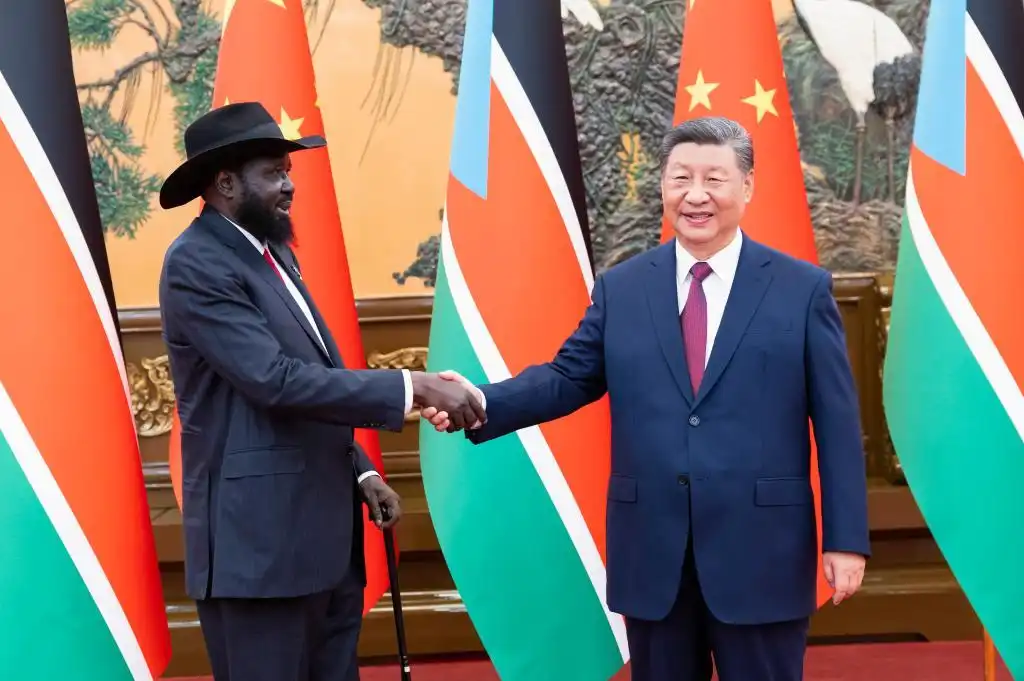
President Salva Kiir Mayardit shaking hand with President Xi Jinping
Credit: Xinhua News Agency, September 6, 2024
By Amaju Ubur Yalamoi Ayani *
(Pachodo.org) - On Friday, September 6, 2024, South Sudanese President Salva Kiir Mayardit met with Chinese President Xi Jinping at the Great Hall of the people in Beijing during the Forum on China-Africa Cooperation (FOCAC) Summit. The high-level meeting between the two heads of state and government marked a turning point in their countries’ major diplomacy. Standing side-by-side, the two leaders promised not only to build substantive and dynamic friendship, but also announced the elevation of China-South Sudan relations to a strategic partnership. President Xi aptly remarked, “Building substantive and dynamic China-South Sudan relations is in line with the common expectations and long-term interests of the two people.”
Historically, the roots of this relationship date back a long time before South Sudan’s independence in 2011. While China’s formal diplomatic ties with the region began with the wider Sudan in the 1950s, its specific engagement with the South gained momentum during the Addis-Ababa Agreement, and got consolidated following the 2005 Comprehensive Peace Agreement. China was among the first to recognize the Republic of South Sudan on its very first day of existence as a sovereign nation, and 193rd member of the United Nations, signalling a commitment that has only deepened over the last 15 years. This bond was tested during difficult times of bitter conflicts in South Sudan (China remains the only largest economy trading with South Sudan despite challenges), but survived, only to emerge as a strategic partnership officially established during the 2024 FOCAC Beijing Summit.
As the partnership is approaching its second anniversary, this article presents some of the crucial steps that have been undertaken by the Government of the People’s Republic of China in building the China-South Sudan community with a shared prosperity. The core aim is to enable us understand how the People’s Republic of China is contributing to South Sudan’s journey toward modernization in the new era.
Modernization through Infrastructure and Trade
The bedrock of this partnership lies in tangible infrastructural transformation, rooted in the strategic Chinese maxim that to get rich, one must first build roads. In South Sudan, this philosophy has transcended rhetoric to become a physical reality that anchors the nation's modernization efforts. The modernization of South Sudan Broadcasting Corporation (SSBC) amenities, completion of the Clement Mboro Bridge in Wau and the comprehensive overhaul of the Air Traffic Management System (ATMS), among others, represent more than just engineering feats; they are the arteries of a sovereign economy.
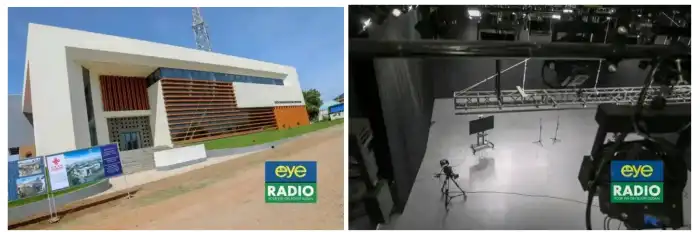
South Sudan Broadcasting Corporation amenities. Photo credit: Eye Radio Aug 22, 2023
Consider the modernization of the South Sudan Broadcasting Corporation (SSBC). Through significant Chinese grant assistance, our national voice has been transformed with world-class TV studios and digital broadcasting facilities. This ensures that the stories of our people, our culture, and our progress are told with the clarity and professional reach they deserve. This investment in our media landscape is an investment in our national identity, far removed from the machinery of oil extraction.
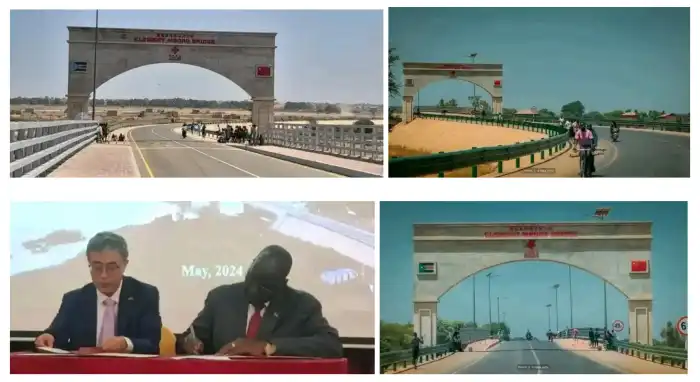
Amb. Ma Qiang handing over the Clement Mboro Bridge. Credit: Wunrok TV, May 6, 2024
Look to the Clement Mboro Bridge in Wau or the Juba-Rumbek Highway. These are not oil pipes designed for export. They are the literal lifelines of our internal economy. These projects, often funded or implemented by China sometimes through the oil-for-development model, allow farmers in rural areas to bring their produces to urban markets and facilitate the movement of traders across state lines. By building these roads and bridges, China is helping create a South Sudan where the economy can eventually thrive independently of the oil sector.
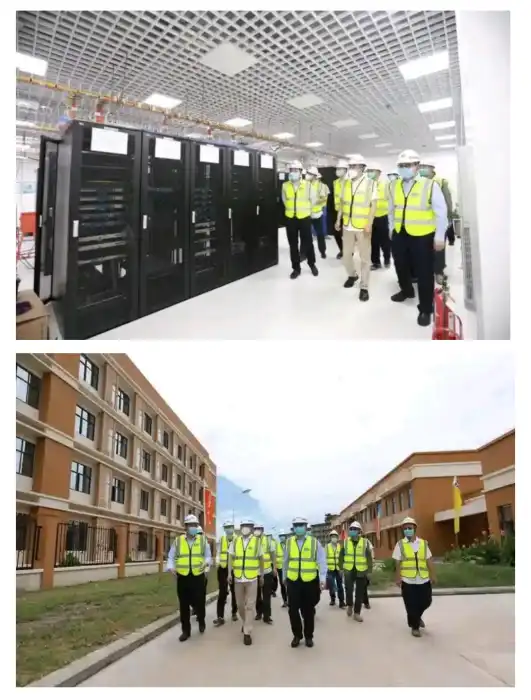
Ambassador Ma Qiang inspecting the Air Traffic Management System project at Juba International Airport. Source: Hot in Juba, Oct 8, 2022
Furthermore, the greatest testament to the respect for South Sudan’s independence is the China-aided Air Traffic Management System (ATMS) at Juba International Airport. For years, our skies were managed from Khartoum, a lingering symbol of a lack of total autonomy. By providing the high-end technology and technical training for this project, China has enabled South Sudan to reclaim its sovereign airspace. Sooner or later, we will be the masters of our own skies, collecting our own overflight fees and registering our own airlines—a concrete victory for national dignity that no amount of external guidance could achieve. Beyond the pride of ownership, the economic impact is staggering. By managing our own Upper Area Control, South Sudan is now positioned to generate millions of dollars in annual revenue from international carriers, funds that can be directly reinvested into our domestic aviation infrastructure.
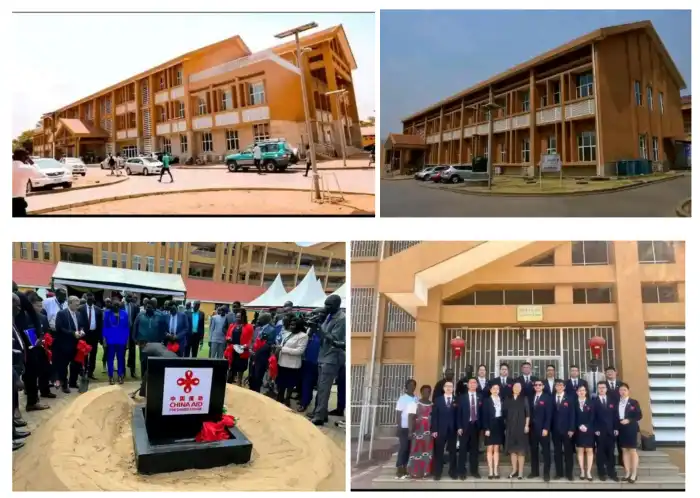
Ambassador Ma Qiang laying a foundation stone at Juba Teaching Hospital. Credit: Official Facebook of JTH.
This partnership is matched by a commitment to social welfare. The ongoing expansion of the Juba Teaching Hospital stands as a brilliant testament to this relationship. With Phase II nearing completion in mid-2027, the facility will introduce modern paediatric and infectious disease units.
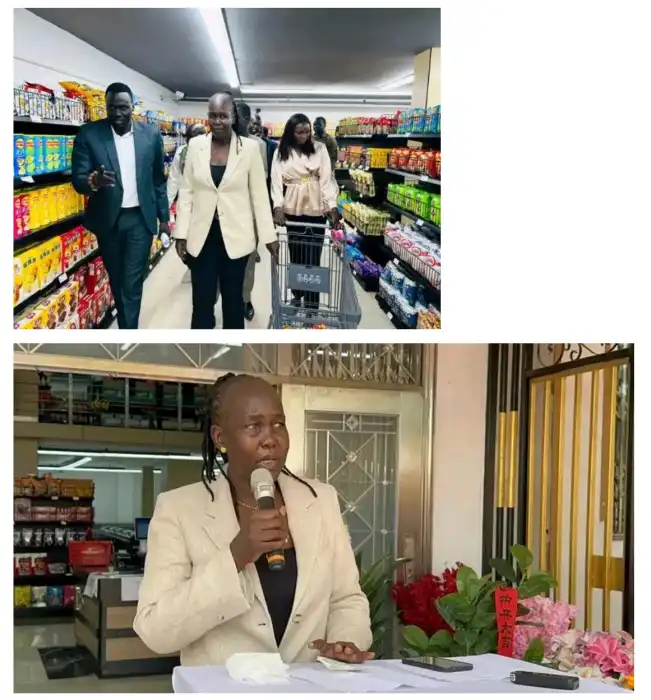
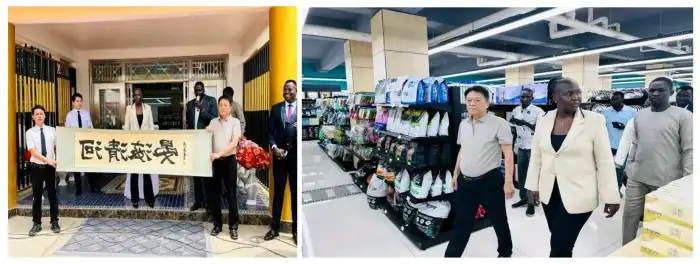
South Sudan’s Minister of Trade and Industry, Hon. Atong Kuol Manyang opens New Beijing Supermarket. Credit: MoT&I, Aug 15, 2025.
This structural evolution is bolstered by a dynamic trade relationship that has reached unprecedented heights. In 2024 alone, bilateral trade volume reached approximately US$466 million, and by the first quarter of 2026, Chinese exports to South Sudan witnessed a staggering increase of over 200 percent. Central to this economic synergy is China’s decision to grant zero-tariff treatment to covering100 percent of tariff lines for all Least Developed Countries (LDCs) having diplomatic ties with China, including South Sudan, which came into effect on December 1, 2024. This initiative will fully cover all 53 African countries by May 1, 2026, marking a historic opening of the second-largest economy to South Sudanese exports. For our nation, this means that products such as sesame, Gum Arabic, and livestock can now enter the vast Chinese market without the burden of import duties, significantly increasing their competitiveness. This trade policy embodies the spirit of empowering a partner through capability rather than weaponizing trade through tariffs imposition.
Modernization through Human Capital and Life-Saving Emergencies
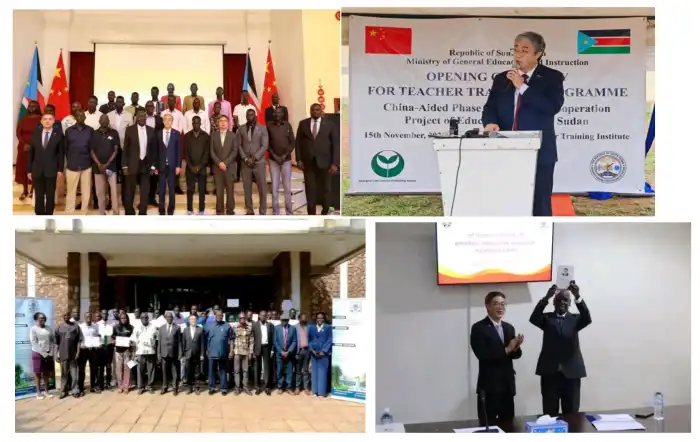
Award ceremony of the 2025 Chinese Ambassador Scholarships held at the University of Juba, scholarships to China and Ambassador speaking during the launch of teachers training phase II. Source: Xinhua Editor: huaxia, Dec 18, 2025,
Education and capacity building are also pillars of this long-term friendship. While some powers focus on short-term fixes, China is investing in the intellectual capital of our youth. Furthermore, following the local wisdom that learning increases the more it is used, China has granted hundreds of fully funded scholarships for the 2026/2027 academic year. These educational seeds ensure that the next generation of South Sudanese engineers and doctors are equipped to lead their nation’s transformation.
Through thousands of scholarships and technical training programs in fields like engineering, medicine, and agriculture, China is training the generation that will lead South Sudan’s future. These students return with the skills necessary to build our own bridges and manage our own hospitals, reducing our long-term dependence on any foreign power. One student who recently returned from a five-year medical scholarship in Beijing shared, “I didn’t just learn medicine; I learned how a nation builds itself from the ground up. I am now back at Juba Teaching Hospital, using my skills to save South Sudanese lives every day.” The friendship between China and South Sudan is a partnership of results. While “guidance” and “challenge” from some countries have their place in our political evolution, a young nation cannot survive on critiques alone. A true friend is the one who helps you build your home, heal your sickness, and provides the tools for you to stand on your own two feet.
Life-Saving Emergencies
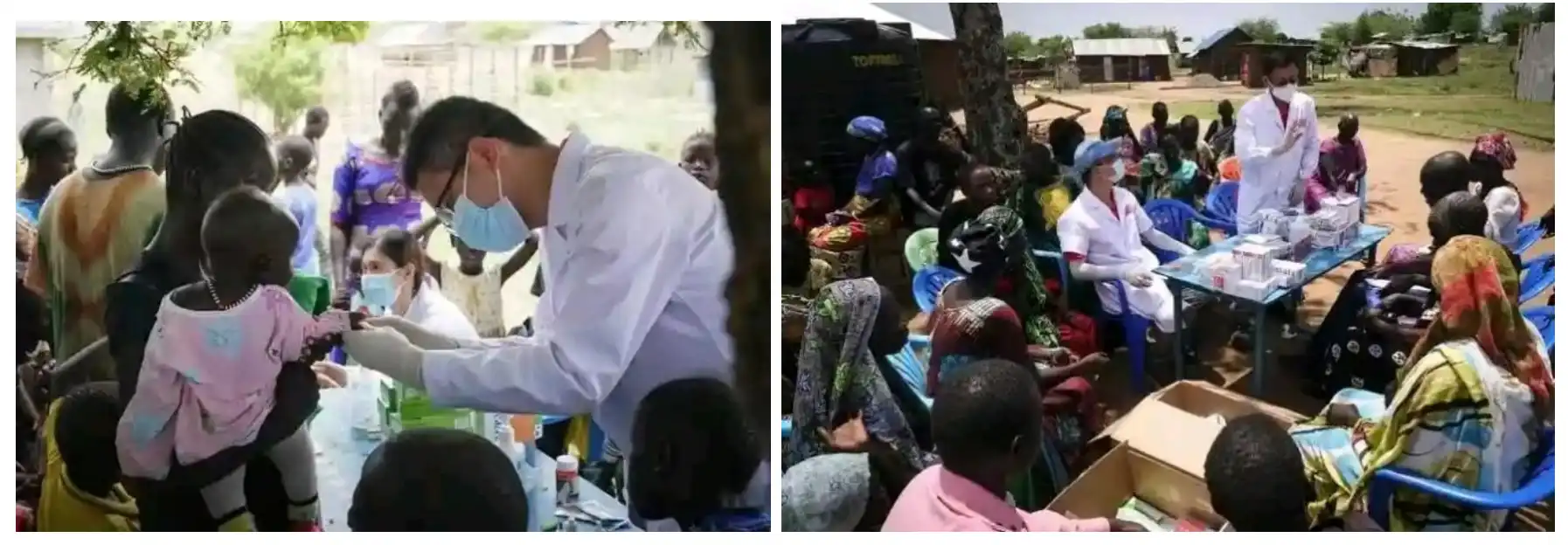 A Chinese medical team providing a free clinic to local villagers at Nakitun Village. Source: Catholic Radio News Agency, April 17, 2024
Perhaps the most life-saving aid China has provided to the people of South Sudan is found in our hospitals and schools. Some people ask what China has done for the people if not supporting the government. The answer is found in the wards of the Juba Teaching Hospital and across the country. Since 2012, thirteen consecutive Chinese medical teams have provided specialist care to nearly 100,000 South Sudanese patients for free. From performing complex surgeries to providing maternal care at the Kiir Mayardit Women's Hospital, these doctors are a daily presence in the lives of our people.
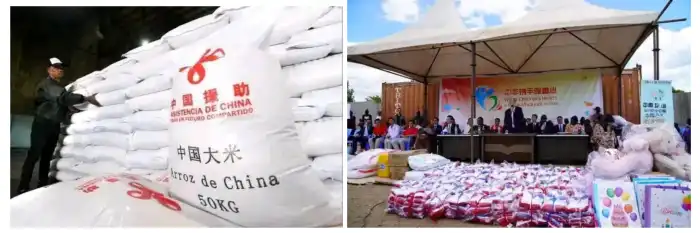
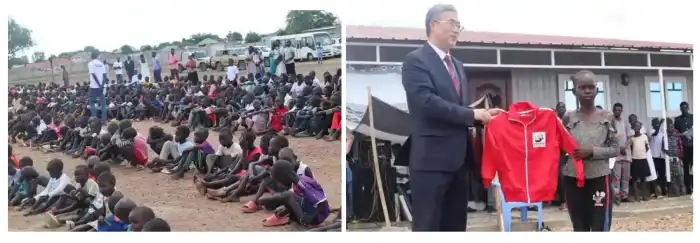
Sacks of rice donated by the Chinese government and Ambassador Ma Qiang handing over food and clothes to orphans in Gudele II. Credit: Borderlines April 18, 2026 and Hot in Juba, May 2023.
While some people suggest that foreign aid is invisible, it is very real to those facing food insecurity. In April 2026, China delivered over 800 metric tons of rice to the Relief and Rehabilitation Commission, part of a massive 3,256-tonne commitment for the year. This aid is specifically targeted at returnees and those displaced by the devastating floods that have plagued our region. This is humanitarianism delivered with a handshake of solidarity, focusing on the immediate survival of the citizens rather than the political alignment of the state. A similar humanitarian assistance was also extended to over 2,000 orphans living in Gudele II Block 4 in 2023.
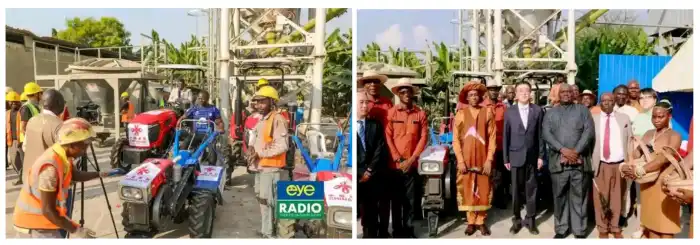
Chinese Ambassador to South Sudan Ma Qiang handing over 20 tractors to the Azandi Kingdom. Source: Eye Radio, Jan 19, 2026
Beyond emergency food, the partnership extends into sustainable rural development through mechanized agriculture. The handing over of 20 tractors to the Azandi Kingdom early this year will help boost agriculture in Western Equatoria State, ensuring food security in the area.
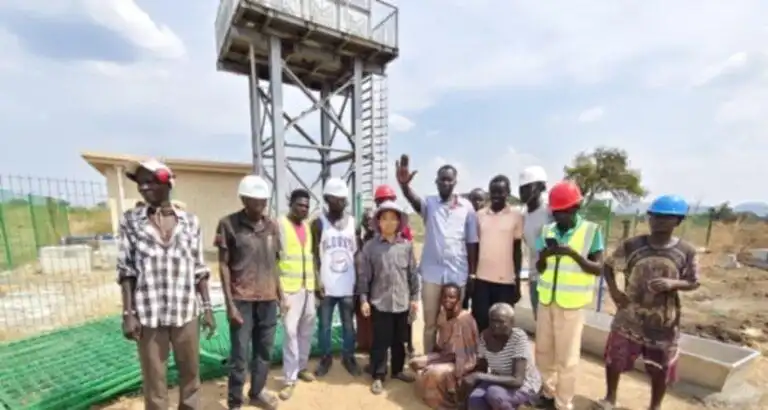
Technicians pose for a group photo at a Chinese-funded water project in Yirol, Lakes State. Source: Radio Tamazuj, April 14, 2026
The introduction of Juncao mushroom technology and the drilling of 47 boreholes in Lakes State and beyond are changing lives at the grassroots level. By providing clean water and new agricultural techniques, China is addressing the root causes of poverty. These are the actions of a partner who sees the human being behind the statistics, proving that their commitment to our stability is measured in lives saved, not just barrels shipped.
The Diplomatic Bond
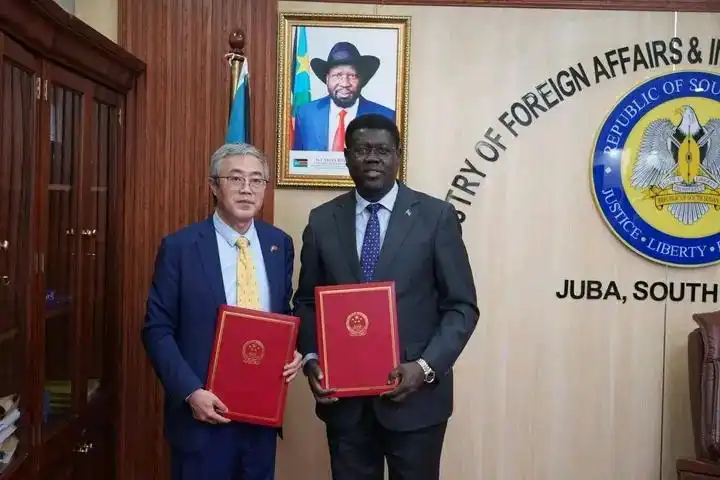
South Sudan’s minister of Foreign Affairs and International Cooperation, Hon. Semaya K. Kumba and Chinese Ambassador to South Sudan, HE Amb. Ma Qiang. Source: MoFA, June 8. 2025.
Beyond the infrastructural and trade ledger, the partnership is defined by a steadfast diplomatic exchanges and a deep investment in human capital. On the global stage, particularly within the UN Security Council, China has remained a persistent defender of South Sudan’s right to self-determination. By consistently advocating against “unwarranted external interference,” Beijing has provided Juba with the necessary political breathing room to implement peace agreements. As Chinese diplomats often remind their counterparts, distance cannot separate true friends whose minds are set on a common goal. Ambassador Ma Qiang has been a vocal proponent of this political space, ensuring that the international community recognizes South Sudan as a land of hope.
Building a Community with a Shared Prosperity
Looking toward the horizon, the China-South Sudan partnership is evolving from transactional assistance into a long-term strategic synergy. During the 2024 FOCAC Beijing Summit, President Xi Jinping aptly observed that the China-Africa relationship is now at its best in history. This sentiment serves as the blueprint for the coming decade, as both nations seek to align their development goals under the Belt and Road Initiative (BRI), Global Development Initiative (GDI), Global Civilization Initiative (GCI) and Global Security Initiative (GSI).
Echoing this spirit of mutual progress, South Sudanese officials have long noted that this cooperation is built on the firmest of foundations. As President Salva Kiir Mayardit has previously emphasized, China is a reliable partner whose support is uniquely tailored to the specific needs and aspirations of the South Sudanese people.
This is the quintessence of a community with a shared future—a world where, as President Xi emphasizes, when the world is good, China is good; and when China is good, the world is even better. As South Sudan marches toward its national goals, it does so with a partner that understands the nuances of its struggle and the magnitude of its dreams. We are connected by our hearts, demonstrating that the banner of true friendship is the most resilient foundation for a shared prosperity.
Conclusion
To understand the weight of this partnership is to recognize that it is rooted in a fundamental belief in the right to development and national dignity. Unlike traditional donor-recipient dynamics, this relationship is built upon the principle of horizontal partnership, where the aspirations of the South Sudanese people are met with the technical prowess and strategic patience of a nation that has mastered its own path to modernization. This “all-weather” friendship has evolved from a nascent diplomatic recognition in 2011 into a multifaceted strategic synergy that impacts every facet of national life—from the infrastructure that stitches the country together to the classrooms where the next generation of leaders is being trained. It is a partnership that seeks not just to provide temporary relief, but to build the permanent foundations of a sovereign, prosperous state.
About the writer

* Amaju Ubur Yalamoi Ayani, aka Amaju Joseph Ubur Ayani is a South Sudanese teacher. He can be reached via
Newer articles:
- Not All Revolutionary Leaders Want To Save And Serve South Sudan - 04/05/2026 15:25
- When Education Fails… the State Fractures: Why South Sudan’s Reform Must Begin with the Curriculum (2-2) - 01/05/2026 14:47
- Revolution Starts With Your Voice - 27/04/2026 15:08
- When Education Fails… The State Fractures: Why Reform in South Sudan Must Begin with the Curriculum (1-2) - 27/04/2026 15:05
- Research: Dr. J. Scott Younger: Global Disorder and the Unravelling of Strategic Certainties: ‘Where Next, and What Next?’ - 27/04/2026 15:02
Older news items
- Rescuing The Cry Of The Text: Why The African Church Needs Expository Preaching - 24/04/2026 19:29
- Repentance And Penance - 24/04/2026 19:28
- South Sudan’s Path To Change Requires Sacrifice - 22/04/2026 14:37
- South Sudan’s Most Dangerous Path: Ethnic Nationalism — and the Case for a Civic State (Part 10) - 22/04/2026 14:34
- End The Transition, No To Extension - 22/04/2026 14:30
Latest news items (all categories):
- Co-operative Bank of South Sudan hosts Co-operatives Forum in Northern Bahr el Ghazal State - 05/06/2026 18:10
- Aid rations replace currency in South Sudan - 05/06/2026 18:06
- UNESCO's training is transforming lives and shaping futures in Yambio, South Sudan - 05/06/2026 18:01
- Major Win for South Sudan Petroleum Sector as GPOC Records Highest Output in Two Decades - 05/06/2026 17:44
- Renewed insecurity and rising displacement in South Sudan’s Jonglei put thousands at grave risk, UNHCR warns - 05/06/2026 17:41
See also (all categories):
Random articles (all categories):
- Aringa Kingdom demands urgent action over renewed Uganda–South Sudan border conflict - 04/08/2025 16:41
- Lieutenant Colonel Kerubino Kuanyin Bol, his Declaration of Scrutiny - 29/05/2022 22:32
- South Sudan Displacement Crisis - Water, Sanitation and Hygiene (WASH), Assessment of Hard-to-Reach Areas in South Sudan, December 2020 - 26/04/2021 20:57
- Do or die for Tanzania’s U-23 squad in re-match with South Sudan - 26/09/2022 00:59
- UN bases in South Sudan are 'a blessing and a curse' - 26/04/2016 03:06
Popular articles:
- The Final Communique of SPLM-DC Third Session of the National Council - 29/03/2011 01:00 - Read 82811 times
- Roles and Definition of Political Parties - 29/04/2011 01:00 - Read 64454 times
- Agriculture in Southern Sudan: Challenges and Investment Opportunities - 06/10/2010 01:45 - Read 55368 times
- Fashoda Youth Forum Rehabilitation of Drainage Culverts in Malakal town Report - 07/08/2008 16:22 - Read 35525 times
- Creation and establishment of the Local Government Councils ( Counties ) (2) - 28/09/2011 01:00 - Read 33231 times
