
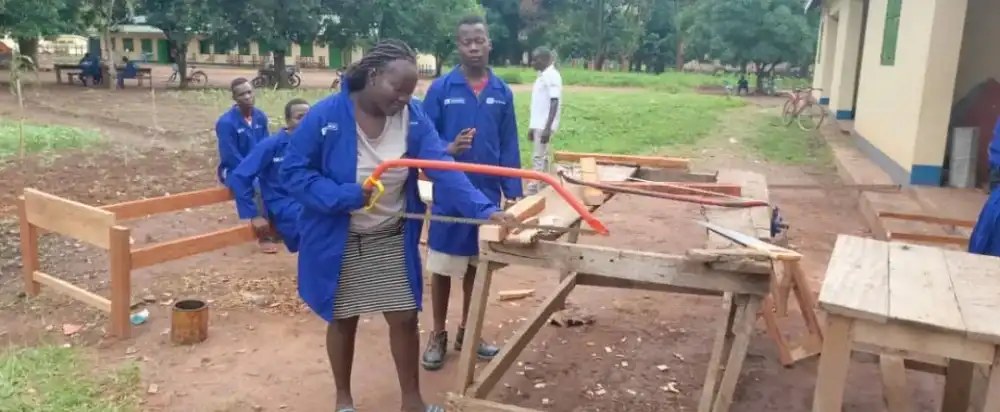
Female carpentry and joinery trainees (© UNESCO)
With support from the Swedish International Development Cooperation Agency (Sida), UNESCO expanded technical and vocational education and training (TVET) to over 5680 men and women across South Sudan. In Wau, graduates are applying those skills to start businesses, access employment and support their community.
For many young people in South Sudan, unemployment and limited access to opportunities define everyday life. Across many communities, youth struggle to find sustainable sources of income, while young women in particular face limited access to employment and vocational opportunities. For some, the future feels uncertain after completing school or dropping out due to financial hardship.
In Yambio, the capital of Western Equatoria State in the southwest of South Sudan, near the borders with the Democratic Republic of the Congo to the west and Uganda to the south-east, many young people have been changing their stories through UNESCO’s Technical and Vocational Education and Training (TVET) program. Known for its fertile land, agricultural activities, and vibrant markets, Yambio is approximately 450 kilometers from Juba, South Sudan’s capital.
Yambio, like many communities across the country, continues to face challenges in accessing employment and sustainable livelihood opportunities, particularly for young people and women. With support from the Swedish International Development Cooperation Agency (Sida), the programme equipped over 5680 youth and women in South Sudan with practical skills that are helping them build livelihoods, support their families, and contribute to their communities.
At the Yambio Vocational Training Centre, 622 people took part in a six to eight-month training in areas such as hairdressing, carpentry and joinery, welding and metal fabrication, building and construction, and more. Beyond classroom training, beneficiaries also completed internships and received start-up support to help them apply the skills they acquired.
Today, more than two years later, the impact of the training continues to be visible across Yambio, where many graduates are running businesses, forming entrepreneurial associations, and supporting their families through their new skills.
Building a business through hairdressing
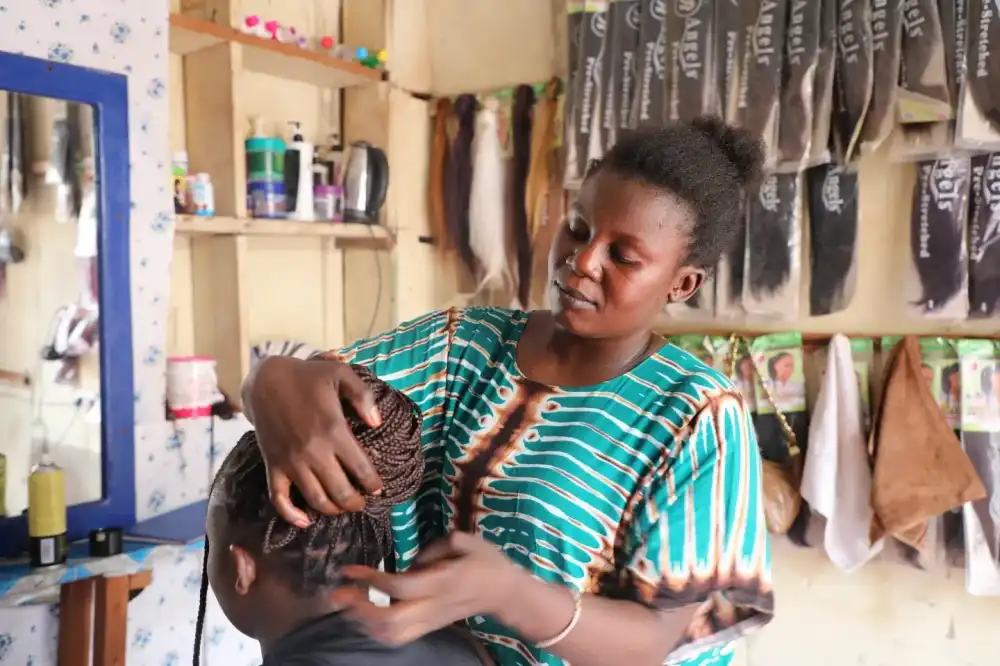
(© UNESCO/ Juan Mule)
In a busy salon in Yambio Town Market, we meet a smiling, confident Hasthy Zengwa, a 27-year-old mother of three. It is around 11:00 a.m. on a Sunday morning, and a regular customer arrives. When asked what she likes about Hasthy’s services, the customer responds:
“She is always happy and does my hair so well. Ever since I met her, I have not gone anywhere else.”
Hasthy was among the first cohort of trainees in the programme. She explains how the training transformed her life, and how the start-up kit provided by UNESCO helped her to open her own salon. She employs three people, creating opportunities for others within her community, and wants to expand her business further.
“The training was very helpful. I acquired skills in hairdressing and, with the start-up support provided by UNESCO, I opened my salon. Today, I have trained three other people who now work with me here,” she says.
“As a single mother, this business helps me take care of my children, pay their school fees, and support myself” - Hasthy Zengwa
From boda-boda Rider to carpentry association leader
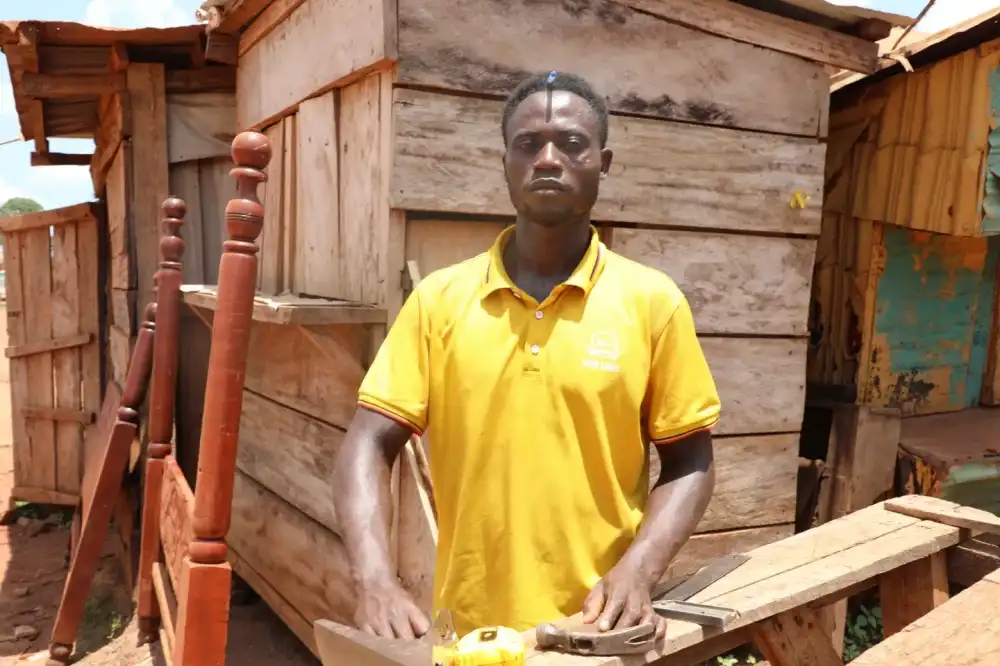
(© UNESCO/ Juan Mule)
Not far from Hasthy’s salon, David Phillip, Chairperson of the Yambio Town Carpentry and Joinery Association, is also building a brighter future through the skills he gained. Together with six other members, he formed an association that produces furniture and supports livelihoods within the community.
“Before, I was a boda-boda rider, and life was difficult. Now, we earn an income through carpentry. We are seven people working here, and we are doing well. We formed the Yambio Town Carpentry and Joinery Association” - David Phillip
David explains that the training not only transformed his own life but also enabled him to pass on skills to other young people in the community.
“I opened this workshop where we now produce beds, chairs, tables, and many other furniture items,” he says.
He encourages other young people to take advantage of vocational training opportunities whenever they arise.
“My message to young people is to take opportunities like this, to attend vocational trainings because it can change their lives,” he emphasized.
New opportunities through welding and metal fabrication
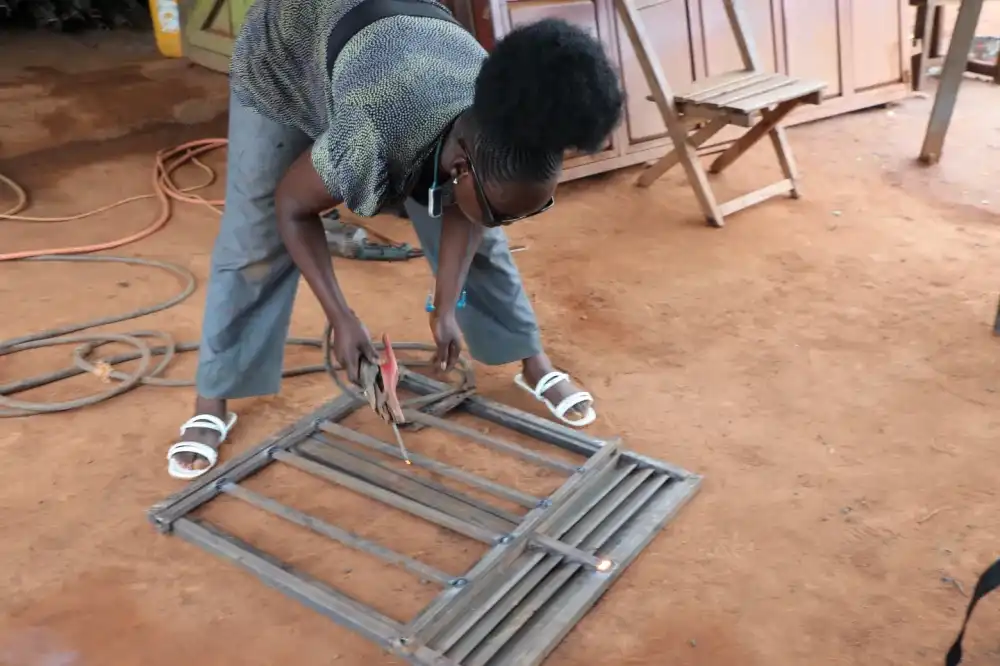
(© UNESCO/ Juan Mule)
For 21-year-old Zereda Lilian, the programme opened a new path after completing secondary school. Before joining the training, she stayed at home uncertain about her future while waiting for examination results.
Today, Lilian works as a welder and metal fabricator, earning an income that supports both herself and her family.
“I can make doors, windows, and large gates. This job is helping me a lot. I earn money to pay my sisters’ school fees, take care of myself, and support my family members” - Zereda Lilian
Newer articles:
- Reformation meets growth with the Green Corrections Initiative in South Sudan - 08/06/2026 15:57
- How Sudan's war became East Africa's crisis – report - 08/06/2026 15:53
- South Africa's Ramaphosa vows crackdown on groups behind xenophobic attacks - 08/06/2026 15:48
- Co-operative Bank of South Sudan hosts Co-operatives Forum in Northern Bahr el Ghazal State - 05/06/2026 18:10
- Aid rations replace currency in South Sudan - 05/06/2026 18:06
Older news items
- Major Win for South Sudan Petroleum Sector as GPOC Records Highest Output in Two Decades - 05/06/2026 17:44
- Renewed insecurity and rising displacement in South Sudan’s Jonglei put thousands at grave risk, UNHCR warns - 05/06/2026 17:41
- St. Theresa Mission Hospital launches Ebola awareness campaign - 05/06/2026 17:38
- UNMISS helps plant hope among youth on World Environment Day - 05/06/2026 17:35
- The Voice of Responsibility: How Young South Sudanese are Saying No to Violence Through Music, Drama, and Digital Content - 03/06/2026 16:56
Latest news items (all categories):
- Op-Ed - Breaking the Double-Standard Lens on China's Population Shifts - 23/10/2026 14:23
- South Sudan ceasefire monitors warn of rising violence ahead of December elections - 23/10/2026 13:39
- UNMISS SRSG visits Malakal, emphasizes that peace begins with collective action - 23/10/2026 13:36
- How Technology is Accelerating South Sudan’s Next Oil Discovery - 23/10/2026 13:34
- South Sudan’s Patriot make case in their opener against Urunani - 23/10/2026 13:12
See also (all categories):
Random articles (all categories):
- انفصال جنوب السودان ودروس لم تتعلمها النخب السودانية - 02/10/2026 13:06
- South Sudan has embarked into peace revitalization - 10/09/2019 10:45
- HEALING AND RECONCILIATION FOR PEACE AND PROGRESS - 01/07/2014 10:26
- South Sudan Marks Anniversary With Hunger Still a Pressing Issue - 09/07/2019 09:54
- Local Authorities and Livestock owners in Melut celebrate UNMISS-funded Veterinary Clinic - 25/02/2022 00:15
Popular articles:
- Who is the darkest person in the world, according to Guinness World Record? - 25/10/2022 02:34 - Read 151196 times
- School exam results in South Sudan show decline - 01/04/2012 17:58 - Read 28340 times
- Top 10 weakest currency exchange rates in Africa in 2023 - 19/07/2023 00:24 - Read 25437 times
- No oil in troubled waters - 25/03/2014 15:02 - Read 24658 times
- NDSU student from South Sudan receives scholarship - In-Forum - 29/09/2012 01:44 - Read 22631 times