
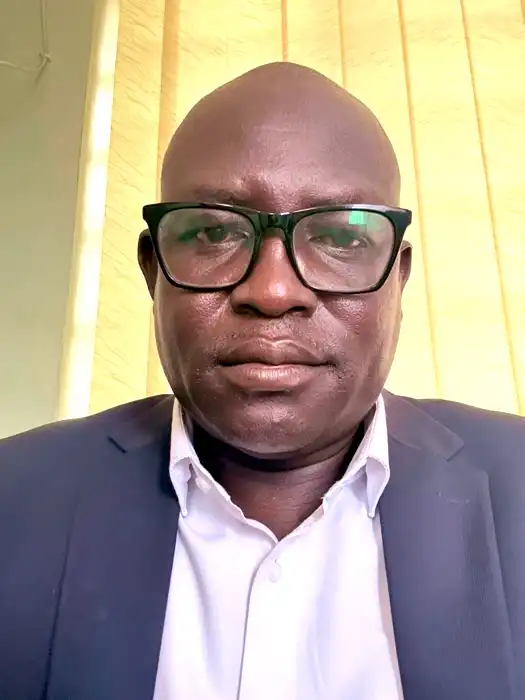
By: James Bidal
(Pachodo.org) - The Cabinet’s approval of a constitutional amendment intended to pave the way for the December 2026 elections is deeply concerning and should be subjected to serious public scrutiny. Although the Government may present the amendment as a necessary legal step to ensure that elections proceed as scheduled, removing constitutional obstacles does not amount to creating the political, security, institutional and civic conditions required for a credible election.
South Sudan does not simply need elections; it needs elections that are free, fair, inclusive, peaceful and legitimate. The proposed amendment risks reducing elections to a procedural exercise in which the priority becomes meeting a political deadline rather than ensuring that citizens can freely exercise their democratic rights.
One particular concern is the decision to proceed with elections when critical transitional benchmarks remain incomplete, including the permanent constitution-making process, national population census, security-sector reforms, political and civic space, and effective electoral dispute-resolution mechanisms. These are not minor technical matters that can simply be pushed aside. They are fundamental pillars of a credible democratic transition.
Holding elections before completing an inclusive permanent constitution-making process also raises serious questions about constitutional legitimacy. The constitution defines the rules under which political power is exercised, protects fundamental rights and establishes the institutional framework of governance. South Sudanese citizens should not be asked to elect leaders under an unresolved constitutional order while the fundamental rules governing their country remain unfinished.
The postponement of the national population census is equally troubling. Without credible and reliable population data, questions about representation, constituency boundaries and equitable political participation will remain unresolved. An election conducted without addressing these fundamental questions risks producing results that are legally defensible but politically contested and socially divisive.
More importantly, a constitutional amendment cannot resolve the country's security and political challenges. Citizens cannot participate freely in elections when insecurity, political restrictions and fear continue to affect communities and political actors. Opposition parties, civil society organisations, journalists and ordinary citizens must be able to speak, organise, campaign, assemble and criticise those in power without fear of retaliation.
There is a serious risk that rushing towards elections without adequate safeguards will deepen the existing imbalance between the ruling establishment and opposition political forces. Where state institutions, public resources and security structures are perceived to favour one political camp, elections can easily become a competition in which the playing field is fundamentally unequal. An election held on an uneven playing field cannot be described as a genuine expression of the people's will.
The Government must therefore resist the temptation to use constitutional amendments as a shortcut around unresolved political and institutional problems. Changing the law to accommodate an election is not the same as preparing the country for an election. The focus should be on creating the conditions under which all political parties can compete equally, voters can make informed choices, electoral institutions can operate independently, and disputes can be resolved through credible and peaceful mechanisms.
South Sudan's leaders must understand that the legitimacy of an election will not be determined merely by whether voting takes place on 22 December 2026. Its legitimacy will depend on whether citizens believe they were able to participate freely, whether political actors had a fair opportunity to compete, whether electoral institutions acted independently, and whether the final results reflect the genuine will of the people.
South Sudan cannot afford an election that becomes another source of political crisis. After years of conflict, delayed transitions and broken political commitments, the country needs an electoral process that strengthens peace, accountability and democratic governance, not one that merely satisfies a political timetable.
The Government, Parliament, political parties, civil society and international partners must therefore prioritise the conditions for credible elections over the convenience of holding elections at all costs. Outstanding provisions of the peace agreement must be addressed; civic and political space must be protected; security-sector reforms must be advanced; electoral institutions must be strengthened; voter registration and civic education must be credible and inclusive; and effective electoral dispute-resolution mechanisms must be established.
South Sudan needs elections, but it must not sacrifice electoral credibility for political expediency. An election without genuine freedom, fairness, inclusion and public confidence risks becoming a mechanism for legitimising existing power rather than an instrument for democratic transformation.
The country must not repeat the mistakes of the past by rushing into elections simply because a constitutional amendment has made them legally possible. The real test is not whether South Sudan can hold elections. The real test is whether it can hold elections that its people, political actors and the international community can trust.
The author, James Bidal, is passionate about defending Human Rights and is a researcher. He can be reached via email at
Newer articles:
- Research - From Gaza to Hormuz: Geopolitical Stalemate and the New Middle East - 07/09/2026 18:04
- The SPLM ruling party is facing a dilemma and Thucydides trap at a pivotal moment - 24/08/2026 14:06
- Shanghai Cooperation Organization (SCO) countries are making green development an engine of growth - 24/08/2026 13:36
- Saad Kassis-Mohamed Center Reports Myanmar Ban on The Kafala System - 14/08/2026 21:17
- From sightseeing to living: A new way to experience China - 12/08/2026 18:34
Older news items
- Press Statement From The South Sudan Human Rights Defenders Network (SSHRDN) - 07/08/2026 22:18
- The Emerging Endgame of the Russo-Ukrainian War - 05/08/2026 22:59
- The changing face of “Made in China” - 05/08/2026 22:41
- Governance Under Siege: Corruption and the Zelensky Presidency - 27/07/2026 13:15
- Taking up the responsibility: Why the new universities of Yei, Kuajok, and Aweil should not depend on the national government - 22/07/2026 13:54
Latest news items (all categories):
- SPLM-IO High Military Command - Call For A Generals' Command Conference - 14/10/2026 19:37
- SOUTH SUDAN: BEYOND THE POLITICAL EXCITEMENTA Civic and Institutional Accountability Statement - 14/10/2026 19:32
- South Korean FM Cho Calls for Attention to Safety of Hanbit Unit in Meeting with South Sudanese Envoy - 14/10/2026 15:54
- Why is South Africa still pursuing a 7-year-old oil deal in South Sudan? - 14/10/2026 15:36
- As South Sudan plans for elections, a town counts the cost of war - 14/10/2026 15:30
See also (all categories):
Random articles (all categories):
- South Sudan: Finance minister to increase taxes on luxury goods - 08/08/2023 06:06
- South Sudan Will Now Charge $10,000 For An Aid Worker Permit. Why? - 07/03/2017 14:42
- South Sudan president names new cabinet: state media - 31/07/2013 14:32
- Women’s basketball guard serves on South Sudan’s first international team - 07/09/2021 01:28
- South Sudan secures 120 mln USD from World Bank for infrastructure growth - 17/03/2022 03:56
Popular articles:
- The Final Communique of SPLM-DC Third Session of the National Council - 29/03/2011 01:00 - Read 83263 times
- Roles and Definition of Political Parties - 29/04/2011 01:00 - Read 65026 times
- Agriculture in Southern Sudan: Challenges and Investment Opportunities - 06/10/2010 01:45 - Read 57733 times
- Fashoda Youth Forum Rehabilitation of Drainage Culverts in Malakal town Report - 07/08/2008 16:22 - Read 36027 times
- Creation and establishment of the Local Government Councils ( Counties ) (2) - 28/09/2011 01:00 - Read 33893 times
