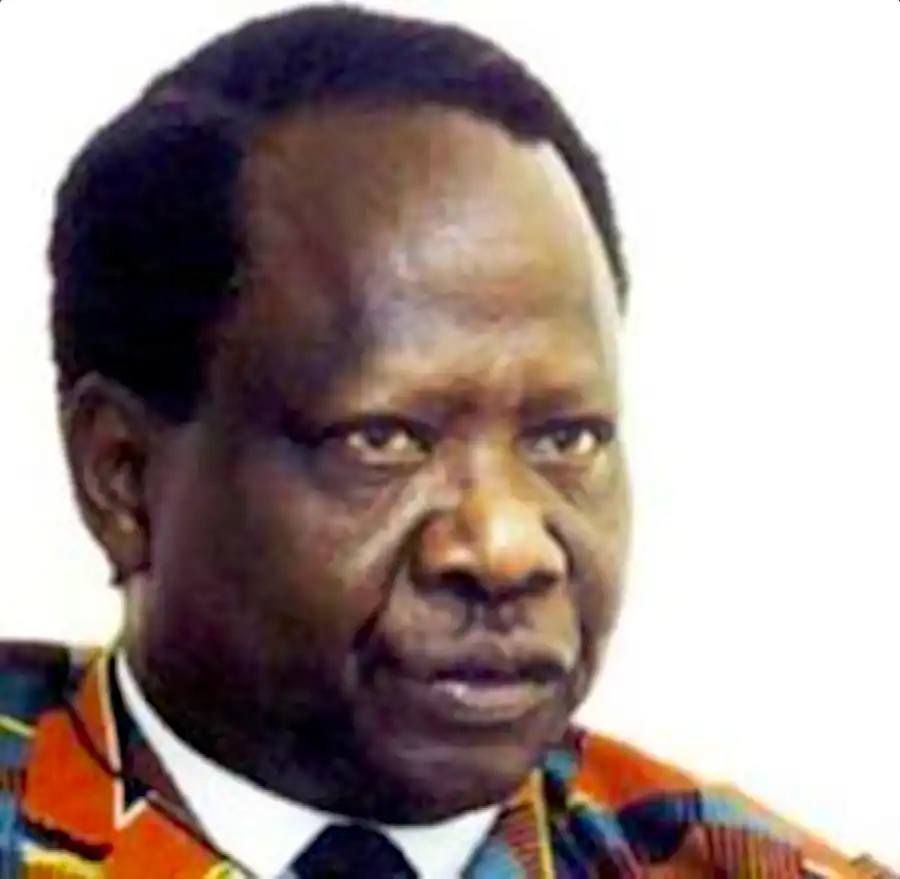
General Joseph Lagu, a foundational figure in South Sudan’s struggle for autonomy and the leader of the Anyanya movement, has died in Juba aged 94 (File Image)
A Defining Figure in the Liberation Struggle
General Joseph Lagu Yanga, the pioneering military commander and statesman who laid the foundational framework for South Sudan’s eventual independence, has died in Juba at the age of 94. President Salva Kiir announced the passing of the veteran leader on Tuesday, October 27, describing his death as a profound loss to the nation. In recognition of Lagu’s monumental contributions to the country's liberation, the government has declared a period of national mourning, directing that all flags at domestic public institutions and diplomatic missions abroad be flown at half-mast until his state funeral is concluded. President Kiir, who issued his tribute while attending a summit in Moscow, characterised Lagu as a towering nationalist who dedicated his entire adult life to dismantling systemic oppression and securing self-determination for the marginalized populations of the south.
The Genesis of the Anyanya Movement
Born in November 1931 in the rural hamlet of Momokwe in the Madi region of Eastern Equatoria, Lagu’s trajectory mirrored the turbulent history of the post-colonial Sudan. He pursued professional military training at the Omdurman Military College, graduating in 1960 and receiving a commission in the Sudanese Armed Forces. However, the escalating political disenfranchisement and targeted marginalization of southern communities by the Khartoum administration compelled a radical shift in his allegiance. In 1963, Lagu defected from the national army to organise the fragmented southern resistance into a cohesive military force. He founded the Anyanya movement, which became the armed wing of the
Southern Sudan Liberation Movement
The mutiny marked a decisive turning point in the struggle against the systemic Arabization and Islamicization policies pursued by the northern political elite. Lagu’s operational strategy involved establishing secure bases in the impenetrable equatorial forests and forging crucial logistical supply lines with sympathetic neighbouring states. Under his disciplined command, the Anyanya transformed from a disparate collection of local militias into a formidable, highly organised guerrilla army capable of sustaining a protracted conflict against a heavily armed national military apparatus.
Negotiating the Addis Ababa Agreement
Lagu’s military acumen was matched by a profound strategic understanding of diplomacy. After nearly a decade of devastating conflict during the First Sudanese Civil War, he recognised that absolute military victory was unattainable for either side and pivoted toward a negotiated political settlement. In 1972, serving as the undisputed leader of the southern resistance, Lagu entered into direct negotiations with the government of President Gaafar Nimeiry. The resulting Addis Ababa Agreement stood as a watershed moment in the region's history, officially ending the seventeen-year civil war and granting Southern Sudan unprecedented regional autonomy.
This historic accord demonstrated Lagu’s capacity to transition from a guerrilla commander to a statesman willing to compromise for peace. Although the agreement was later unilaterally abrogated by Khartoum—triggering the Second Civil War—the constitutional precedent it established became the non-negotiable baseline for all subsequent peace processes, including the landmark 2005 Comprehensive Peace Agreement.
Political Leadership and the National Stage
Following the ratification of the 1972 peace accord, Lagu was integrated back into the national military structure, eventually rising to the rank of Lieutenant General. He transitioned into civilian governance, serving as the President of the High Executive Council of the Southern Sudan Autonomous Region from February 1978 to July 1979. His tenure in the highest echelons of the Sudanese state was characterised by complex political navigation, as he attempted to protect the autonomy of the southern region against increasing encroachment by conservative hardliners in Khartoum.
His political influence extended to the national capital, where he was appointed as the Second Vice President of Sudan in 1982, holding the position until the military overthrow of the Nimeiry government in 1985. In his later career, Lagu represented Sudanese interests on the global stage, serving as the permanent representative to the United Nations in New York during the early 1990s. When South Sudan finally achieved full sovereignty in 2011—realising the core objective of his original rebellion following the internationally monitored self-determination referendum—he returned to Juba to serve as a senior presidential advisor, offering institutional memory and elder statesmanship to the nascent republic.
A Unifying Legacy in a Fractured Nation
The passing of Joseph Lagu removes one of the last surviving architects of the original southern liberation project. At a time when modern South Sudan continues to grapple with severe internal political fractures, ethnic violence, and institutional fragility, Lagu’s historical record offers a compelling counter-narrative of unified purpose. He successfully mobilised diverse ethnic coalitions under a single command structure and demonstrated that entrenched conflicts could be resolved through structured dialogue and mutual concession. As the nation prepares to lay him to rest, historians and political analysts reflect on a legacy defined not merely by battlefield endurance, but by the visionary pursuit of a constitutional architecture that ultimately birthed the world’s youngest nation.
Newer articles:
Older news items
- National average price spreads for maize: Across select East African countries - 28/10/2026 16:56
- South Sudan Opens 14 Oil Blocks, Courts Investors Ahead of SSOP 2026 - 26/10/2026 15:08
- Jambojet Explores South Sudan Expansion After Talks with Juba Regulator - 26/10/2026 15:05
- Kiir swears in 5 officials ahead of South Sudan elections - 26/10/2026 14:53
- South Sudan cattle battles leaves 10 dead: official - 26/10/2026 14:49
Latest news items (all categories):
- Research ● Olga Algayerova: Small-State Diplomacy in an Era of Geopolitical Fragmentation - 28/10/2026 17:44
- The long journey back to the wild: The return of Przewalski’s horses - 28/10/2026 17:38
- South Sudan to begin voter registration in November ahead of December elections - 28/10/2026 17:12
- South Sudanese Liberation Hero Joseph Lagu Dies at 94 as President Kiir Declares National Mourning - 28/10/2026 17:03
- National average price spreads for maize: Across select East African countries - 28/10/2026 16:56
See also (all categories):
Random articles (all categories):
- Petition of Collo Women - 08/08/2010 01:00
- South Sudan president in SA to follow up on oil exploration agreement - 24/05/2019 00:19
- Igad brings Sudan, Ethiopia to the mediation table - 09/07/2022 02:00
- Emaciated children in South Sudan point to looming famine - 21/07/2014 17:51
- One Year After Old Fangak Hospital Bombing, No Accountability as MSF Warns of Healthcare Collapse in Jonglei - 11/05/2026 19:58
Popular articles:
- Who is the darkest person in the world, according to Guinness World Record? - 25/10/2022 02:34 - Read 151320 times
- School exam results in South Sudan show decline - 01/04/2012 17:58 - Read 28402 times
- Top 10 weakest currency exchange rates in Africa in 2023 - 19/07/2023 00:24 - Read 25507 times
- No oil in troubled waters - 25/03/2014 15:02 - Read 24712 times
- NDSU student from South Sudan receives scholarship - In-Forum - 29/09/2012 01:44 - Read 22687 times