
By Amaju Ubur Yalamoi Ayani
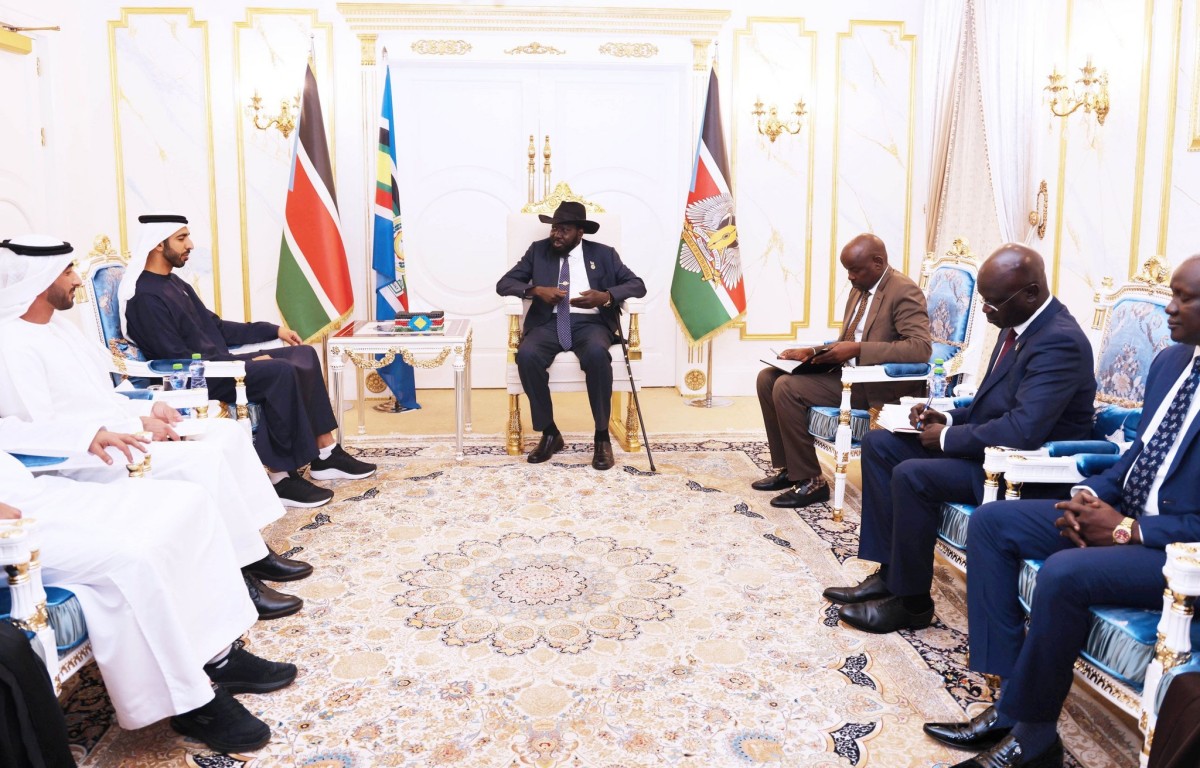
A "new scramble for Africa" is underway, a 21st century parallel to the late 19th century European’s partition, where global powers seek to secure resources, trade routes, and geopolitical influence. In this contemporary contest, the United Arab Emirates (UAE) has emerged as a particularly assertive player, with a rapidly growing and highly controversial footprint in the East and Horn of Africa, especially in South Sudan.
Th UAE’s engagement with South Sudan, framed publicly as investment and humanitarian aid, has increasingly been viewed by both domestic and international observers as a transactional, opaque strategy that prioritizes Emirati interests above South Sudan’s long-term stability, thereby raising critical questions about sovereignty and the genuine potential for sustainable development. The situation in South Sudan is a litmus test for any responsible international engagement.
The Economic Imperative and Opaque Deals
The relationship between the United Arab Emirates (UAE) and South Sudan is a complex and evolving dynamic, primarily driven by economic imperatives, particularly oil, but deeply shadowed by regional geopolitics and the ongoing civil war in neighboring Sudan. For South Sudan, the economic situation is dire, characterized by extreme poverty (an estimated 91percent of the population lives below the poverty line), political instability, and dependence on oil for over 90 percent of government’s revenue. Disruptions to oil production and export routes caused by the civil war in Sudan—including a significant pipeline break in early 2024—have created a desperate need for financial lifelines. The United Arab Emirates (UAE) has leveraged this vulnerability with massive, high-stakes proposals.
The most notable is a proposed €12 billion (US$13 billion) oil-for-cash loan from a Dubai-based company, Hamad Bin Khalifa Department of Projects (HBK DOP). This deal, almost double South Sudan's GDP and five times its current external debt, has sent red flags waving across the international financial community. The terms are highly contentious: Juba would repay the loan with discounted crude oil (around US$10 less per barrel than the international benchmark) over a period of up to 20 years.
However, the opaque nature of this partnership demands closer international scrutiny to ensure it fosters sustainable development and stability, rather than inadvertently fuelling regional tensions or enabling corruption. The situation is a classic case of walking a tightrope for the young nation, balancing economic survival against severe political and ethical considerations.
International bodies like the International Monetary Fund (IMF) and the World Bank have long warned against such non-transparent, resource-backed loans, with IMF Managing Director Kristalina Georgieva stating that they can be "predatory and enslaving". South Sudan's history with similar arrangements is poor. A 2021 UN report found a previous US$446 million loan resulted in a loss of nearly 25 percent potential government’s revenue compared to standard market sales. There are significant concerns this new deal will not move the needle for the average South Sudanese citizens but will instead line the pockets of corrupt officials, effectively mortgaging South Sudan's future for immediate, short-term gain. The lack of approval through official channels like the national parliament further deepens the concern and calls into question the government's commitment to fiscal responsibility.
The UAE's motivation extends beyond simple profit; it is about securing food security through potential agricultural land acquisition and controlling strategic trade routes, including gold smuggling networks that flow into the UAE, and new Red Sea ports, which align with a broader strategy for regional influence. The value of Sudanese gold imported into the UAE surged by 70 percent in 2024 despite the conflict, highlighting a key economic interest at play. This indicates the UAE is not just a dark horse in regional investment but a highly strategic and assertive economic player, when it suits its interests.
The Geopolitical Gambit
The central controversy surrounding the UAE's regional involvement is its alleged deep involvement in the ongoing civil war in Sudan. The UAE has been widely accused by UN experts, human rights groups, and Sudanese officials of providing substantial military support, including drones, weapons, and logistical aid, to the Rapid Support Forces (RSF), the paramilitary group fighting the Sudanese Armed Forces (SAF). These allegations are serious, prompting the Sudanese government to file a case against the UAE at the International Court of Justice (ICJ), although the case was dismissed on jurisdictional grounds as the United Arab Emirates (UAE) does not recognize the court's jurisdiction for such disputes.
Evidence cited in UN expert reports, from human rights groups like Amnesty International, and media investigations points to a clear pattern:
- An air bridge from the UAE to Chad, a transit point for weapons into RSF territory, coinciding with increased RSF drone activity.
- The documented presence of UAE-manufactured armoured vehicles and other weaponry in RSF hands, identified in photos and videos from the front lines.
- The discovery of four Emirati nationals' passports in a captured RSF vehicle.
The United Arab Emirates (UAE) vehemently denies these claims, stating that it adheres to international law and is actively involved in humanitarian efforts. Since the start of the war, the UAE has provided over US$600 million in aid to the Sudanese people. However, letters exchanged between Emirati officials and the UN panel show that investigators continue to examine the UAE's role in the conflict. The world has largely chosen to turn a blind eye to the potential atrocities and the UAE's alleged role, illustrating how geopolitical power can influence the application of international law.
Notwithstanding, the South Sudan government is placed in a precarious position, forced to walk a tightrope between managing a crucial economic partnership with the United Arab Emirates and maintaining a fragile neutrality in a war on its doorstep that directly impacts its own oil infrastructure. Juba relies entirely on pipelines running through Sudan to Port Sudan for its exports. The government has an interest in protecting these facilities, and some reports suggest it had to bite the bullet and agree to a secret deal with the RSF, facilitated by the UAE, to prevent attacks on the oil infrastructure in exchange for payments.
The True Cost of Influence
The "new scramble" metaphor is potent because it captures the essence of external powers leveraging their capital and military might to secure interests in developing nations, often with little regard for the long-term stability or democratic aspirations of the local population. The UAE's approach often involves transactional, personalized relationships with power brokers, which can exacerbate internal divisions and regional rivalries, as seen with their competition against Qatar and others in the East and Horn of Africa. The international community, which has been largely silent on the UAE's alleged activities due to its own strategic and financial ties to the Gulf nation, must step up to the plate.
For this partnership to pass muster and truly benefit the South Sudanese people, it requires a fundamental shift towards transparency and accountability. The focus must move the needle toward long-term infrastructure and agricultural development that benefits the South Sudanese people, rather than solely concentrating on short-term resource extraction and cash injections that risk falling prey to corruption. The recent banking Memorandum of Understanding (MoU) between the UAE and South Sudan could pave the way for more modern and transparent financial systems, but only if fully implemented and monitored.
The UAE has the opportunity to turn a new leaf in its engagement with Africa, moving from controversial, transactional deals to a model that fosters genuine, shared prosperity. Only through rigorous monitoring and a commitment to responsible, transparent engagement can the UAE's growing footprint avoid repeating the exploitative patterns of the past and genuinely foster peace and prosperity in the volatile Horn of Africa.
About the author
Amaju Ubur Yalamoi Ayani aka Amaju Joseph Ubur Ayani is a teacher and political commentator. He holds a Master of Arts Degree in International Relations a BSc Degree in Political Science and a Diploma in Civics. He can be reached via
Newer articles:
- Unity State and Ruweng; First Fight Hatred, Tribalism, and Division, Not Internal Boundaries - 13/12/2025 22:28
- Election Won't Fix South Sudan's Problem - 11/12/2025 14:55
- President Kiir's Call For Political Dialogue, Is Rubbish - 10/12/2025 12:55
- The Abyei Dispute: Who is Right? - 10/12/2025 12:40
- Avoiding a New Front: South Sudan’s Vital Interest in De-escalating Heglig Tension - 09/12/2025 18:43
Older news items
- Breaking the Shackles: How South Sudan Can Find Its Own Way to the Sea - 08/12/2025 17:20
- Madan Päri Ruling Age-set Should Steer The Päri Community Towards Modernization - 08/12/2025 12:49
- The Pipeline Politics: Why South Sudan’s Economic Future Cannot Depend On Sudan - 08/12/2025 12:31
- The Revolutionary Call - 03/12/2025 21:25
- Amb. Assoc. Prof. Dr. Arben Cici - Digital Sovereignty Diplomacy: Structural Challenges for Small States in the Technological Era - 03/12/2025 21:18
Latest news items (all categories):
- Ramaphosa presses Kiir to implement peace deal ahead of South Sudan’s first elections - 09/10/2026 12:19
- South Sudan steps up Ebola alert after Kenya case - 09/10/2026 12:17
- Laotian man deported by U.S. to South Sudan leaves for Laos after year in detention - 09/10/2026 12:14
- Bullet and blast injuries … and a constant need for blood: inside South Sudan’s overwhelmed trauma wards - 09/10/2026 12:10
- MTN South Sudan and Regulator Pledge Cooperation to Expand Connectivity - 09/10/2026 12:01
See also (all categories):
Random articles (all categories):
- South Sudan signs oil deals with Israeli companies: Petroleum minister - Press TV - 21/01/2013 12:02
- Civil society groups in Western Bahr El Ghazal receive human rights training from UNMISS - 24/11/2021 23:40
- "هيومن رايتس ووتش": الإمارات تحتجز كاتبا من جنوب السودان منذ عام دون تهمة - 02/10/2026 12:51
- ‘7.7m face food crisis in South Sudan’ - 11/04/2022 01:04
- South Sudanese refugee finds a home in Geraldton - The West Australian - 25/03/2016 15:35
Popular articles:
- The Final Communique of SPLM-DC Third Session of the National Council - 29/03/2011 01:00 - Read 83247 times
- Roles and Definition of Political Parties - 29/04/2011 01:00 - Read 65003 times
- Agriculture in Southern Sudan: Challenges and Investment Opportunities - 06/10/2010 01:45 - Read 57700 times
- Fashoda Youth Forum Rehabilitation of Drainage Culverts in Malakal town Report - 07/08/2008 16:22 - Read 36011 times
- Creation and establishment of the Local Government Councils ( Counties ) (2) - 28/09/2011 01:00 - Read 33870 times
