
By Amaju Ubur Yalamoi Ayani
South Sudan’s very existence as an independent nation was meant to mark a decisive escape from the manipulations of Khartoum. Yet, years after the jubilant celebrations of independence in 2011, the landlocked nation remains inextricably tethered to its northern neighbor by a few critical arteries of steel. The economic promises of sovereignty have consistently run aground on the hard reality of geographical dependence. To achieve true independence and economic stability, South Sudan must bite the bullet, transcend its perpetual state of crisis management, and prioritize securing its own unhindered access to the sea, while simultaneously diversifying its economy.
The current arrangement is an albatross around Juba's neck. Over 90 percent of South Sudan government’s revenue comes from oil, all of which must transit through the Sudanese territory to Port Sudan for export. This grants Sudan immense leverage, obstinately used to exert political pressure and extract hefty transit fees, at times around US$24 per barrel. The vulnerability of this single point of failure has been starkly highlighted by the Sudanese civil war that erupted in April 2023. Damage to the pipeline infrastructure in February 2024, caused by conflict-related disruptions and a lack of essential chemicals, led to a near year-long shutdown of the Dar Blend pipeline, which carries nearly two-thirds (63 percent) of South Sudan's oil.
This disruption, according to the World Bank’s report, caused South Sudan's economy to contract by an estimated 23.8 percent in FY2025, pushing nearly 91 percent of the population into extreme poverty. When the pipelines seize up, the entire South Sudanese economy grinds to a halt, a sobering reminder that beggars can't be choosers when it comes to export routes. In May 2025, even after a temporary resumption of flows, drone attacks near the Heglig oil hub quickly reignited uncertainty and demonstrated the existential threat posed by the conflict in Sudan. Prior to the shutdown, South Sudan was producing around 150,000 barrels per day (bpd), but upon partial resumption in January 2025, this was a mere 90,000 bpd, highlighting the significant loss in output.
The LAPSSET Corridor: A Path to Economic Independence
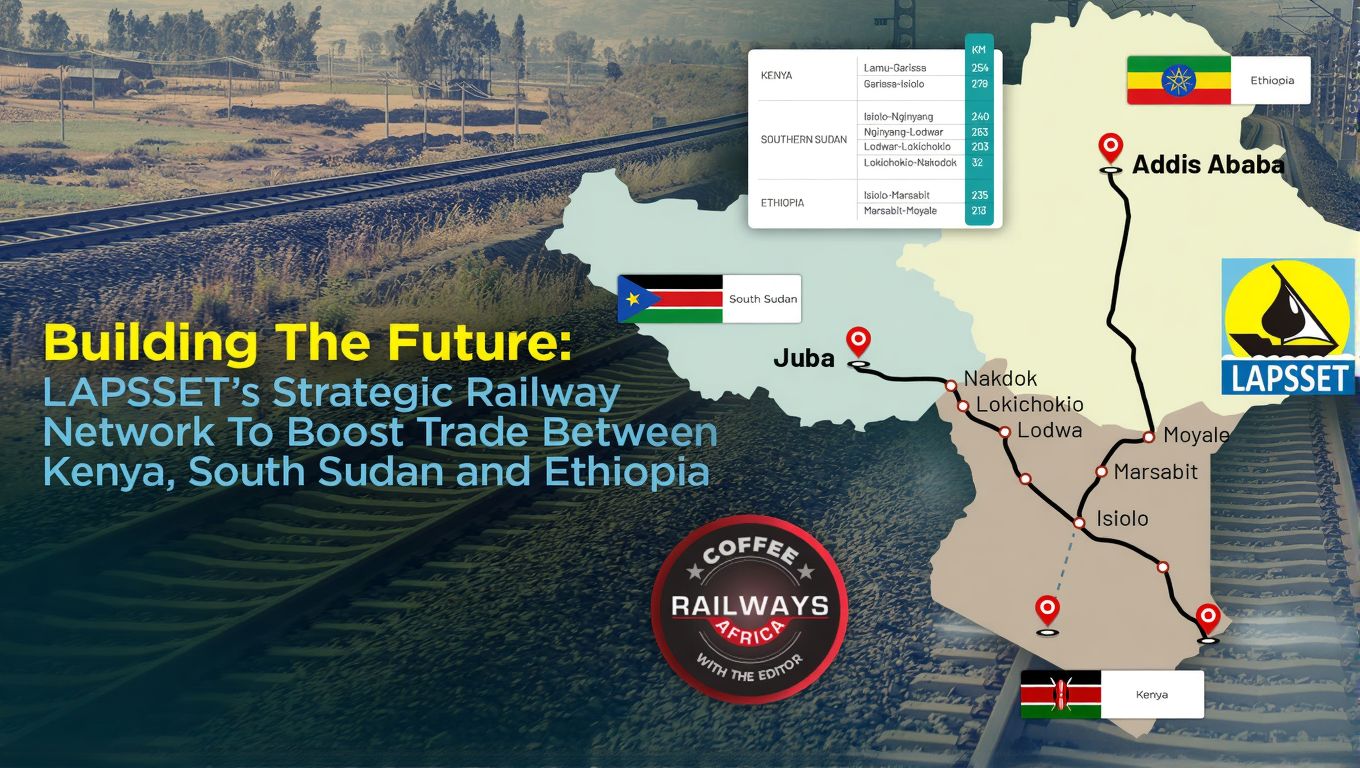
The path to breaking free is clear, though fraught with challenges: the accelerated development of alternative export routes, primarily through Kenya or Djibouti. The most tangible plan remains the Lamu Port-South Sudan-Ethiopia Transport (LAPSSET) corridor project, which includes a proposed pipeline to the new Kenyan deep-sea port of Lamu.
This project has been discussed for years, and feasibility studies and engineering designs have been completed. The Kenyan government has shown renewed commitment, with the first three berths of the Lamu port operational as part of the wider LAPSSET initiative. An alternative route to Djibouti is also on the table, a key corridor for crude oil transport that the South Sudanese cabinet has recently revisited. Officials from both nations met in late 2024 to discuss the potential benefits of developing this alternative corridor, with the World Bank even earmarking US$90 million in 2024 to finance aspects of the broader DESSU (Djibouti, Ethiopia, South Sudan, and Uganda) corridor.
The economic rationale is sound: an independent export route would eliminate the geopolitical risk inherent in relying solely on Sudan. It would provide market stability and allow South Sudan to negotiate transport fees on a level playing field. It is a matter of national security that South Sudan is no longer putting all its eggs in one basket. The LAPSSET project, while ambitious (the entire corridor project is estimated around US$25 billion, with the oil pipeline a substantial component), offers the long-term strategic resilience that South Sudan desperately needs.
Incapacitating the Obstacles
Building an alternative pipeline is easier said than done. The primary hurdles are financial, logistical, and security-related. The LAPSSET oil pipeline component carries an immense price tag, with estimates around US$4 billion for the pipeline from the oil fields to Lamu. Securing this financing has been a perennial challenge due to perceived high investment risks, including security threats from groups like Al-Shabaab and persistent political instability within South Sudan itself.
However, the current crisis, which saw oil earnings of about US$100 million per month reduced to a trickle and the national currency depreciated by 198 percent in FY2025, making the status quo untenable.
The costs of inaction now demonstrably outweigh the risks of investment. The government must make this as its paramount infrastructure priority, channeling political will and seeking innovative financing deals—perhaps mirroring the successful model of the East African Crude Oil Pipeline (EACOP) connecting Uganda and Tanzania. They may have to secure oil-backed loans, a practice that carries its own risks but might be necessary to kick-start the project.
International partners, including the World Bank and IMF, have consistently stressed the urgent need for governance and structural reforms to bolster resilience and lay the foundations for sustainable development. Investor confidence remains low due to legal disputes and frequent leadership changes in the oil sector, a major obstacle that needs to be addressed to attract the necessary foreign direct investment. The failure to establish a stabilization account and future-generations fund, as required by law, highlights a "collapse of governance" that needs urgent attention.
Diversification: The Long-Term Imperative
Even with a new pipeline, oil remains a volatile commodity subject to global price swings and eventual depletion. The long-term stability of South Sudan hinges on genuine economic diversification. The nation possesses vast potential in non-oil sectors, including agriculture and livestock. The World Bank notes that projects in this area have already improved agricultural productivity for over 244,000 small-holder farming households and vaccinated 1.4 million livestock.
Success in these areas requires improved governance, the rule of law, and a massive investment in basic infrastructure like roads and electricity, currently severely underdeveloped, with only 2 percent of roads paved and electricity access for only 5 percent of households. Non-oil growth is constrained by recurrent conflict, climate shocks, and chronic underinvestment. Modest improvements in the management of fisheries and forestry could potentially generate tens or hundreds of millions of dollars per year in added value.
South Sudan stands at a critical juncture. It can continue to live hand-to-mouth, subject to Khartoum's whims and regional instability, or it can take the bull by the horns. By securing its own path to the sea and nurturing a diversified economy, Juba can finally break the shackles of dependency and secure a truly independent and sustainable future for its people. The dream of full economic independence remains a journey, and for South Sudan, the only way out is through the challenging but necessary path of self-reliance and strategic vision.
About the author
Amaju Ubur Yalamoi Ayani, aka Amaju Joseph Ubur Ayani, is a teacher and political commentator. He holds a Master of Arts Degree in International Relations, a BSc Degree in Political Science and a Diploma in Civics. He can be reached via
Newer articles:
- Election Won't Fix South Sudan's Problem - 11/12/2025 14:55
- President Kiir's Call For Political Dialogue, Is Rubbish - 10/12/2025 12:55
- The Abyei Dispute: Who is Right? - 10/12/2025 12:40
- Avoiding a New Front: South Sudan’s Vital Interest in De-escalating Heglig Tension - 09/12/2025 18:43
- The United Arab Emirates And South Sudan: A Partnership Under The Microscope - 09/12/2025 18:30
Older news items
- Madan Päri Ruling Age-set Should Steer The Päri Community Towards Modernization - 08/12/2025 12:49
- The Pipeline Politics: Why South Sudan’s Economic Future Cannot Depend On Sudan - 08/12/2025 12:31
- The Revolutionary Call - 03/12/2025 21:25
- Amb. Assoc. Prof. Dr. Arben Cici - Digital Sovereignty Diplomacy: Structural Challenges for Small States in the Technological Era - 03/12/2025 21:18
- A Call For Unity, Moral Leadership And New Revolution Vision - 03/12/2025 21:08
Latest news items (all categories):
- Western Equatoria prepares for voter registration - 14/09/2026 15:11
- South Sudanese Women Reclaim Their Lives after Fistula Surgery - 14/09/2026 15:10
- Digitel Launches Voice and Social Media Bundles in South Sudan - 14/09/2026 15:07
- Nearly 100,000 displaced in Sudan’s Blue Nile state since January amid fighting: UN agency - 14/09/2026 15:03
- جنوب السودان يرفض طلبًا لـ”حميدتي” بمنحه الحصة الأكبر من عائدات النفط - 14/09/2026 14:51
See also (all categories):
Random articles (all categories):
- Sudan party official killed, north-south tension - 18/08/2009 16:02
- الحركة الشعبية تؤيد فتوى علماء السودان بعدم سفر الرئيس - 26/03/2009 19:13
- S. Sudan religious chiefs call for protection force - 03/09/2016 06:06
- South Sudan expects Uganda backing vs. Sudan - Fox News - 07/05/2012 16:51
- South Sudan Displacement Crisis - Food Security and Livelihoods (FSL), Assessment of Hard-to-Reach Areas in South Sudan, December 2022 - South Sudan - 27/02/2023 01:30
Popular articles:
- The Final Communique of SPLM-DC Third Session of the National Council - 29/03/2011 01:00 - Read 83167 times
- Roles and Definition of Political Parties - 29/04/2011 01:00 - Read 64903 times
- Agriculture in Southern Sudan: Challenges and Investment Opportunities - 06/10/2010 01:45 - Read 57558 times
- Fashoda Youth Forum Rehabilitation of Drainage Culverts in Malakal town Report - 07/08/2008 16:22 - Read 35941 times
- Creation and establishment of the Local Government Councils ( Counties ) (2) - 28/09/2011 01:00 - Read 33783 times
