
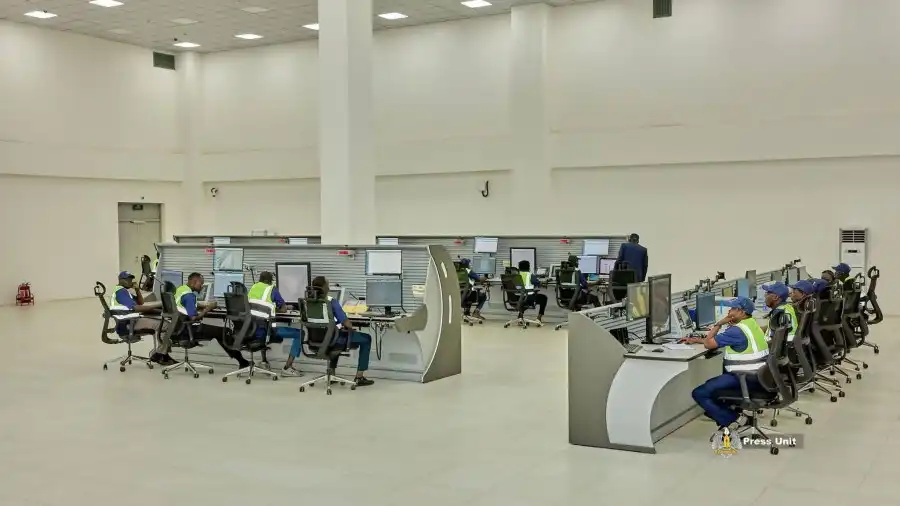
(Photo Credit: South Sudan Presidential Press Unit)
By: Alfadil Attiya Abuanja
JUBA, May 18, 2026 — Salva Kiir Mayardit on Monday officially inaugurated South Sudan’s first fully independent Air Traffic Management (ATM) System, marking a major milestone in the country’s efforts to strengthen sovereignty, modernize aviation infrastructure, and take full operational control of its national airspace.
The system, now operating from the newly upgraded control tower at Juba International Airport, represents the first time since independence in 2011 that South Sudan has been able to independently monitor, regulate, and coordinate all aircraft movements within its airspace without relying on external management support.
For years, portions of South Sudan’s airspace management services were handled through neighboring Sudan, particularly during the early post-independence years when the country lacked the technical infrastructure and trained personnel required to operate a modern sovereign air navigation system. Officials say the operationalization of the ATM network now enables South Sudan to directly oversee flight operations, improve aviation safety, and independently collect revenues from aircraft overflying its territory.
Speaking during the inauguration ceremony attended by senior government officials, diplomats, aviation specialists, and regional representatives, President Kiir described the achievement as a landmark moment for the country and a clear indication of South Sudan’s institutional and technological progress.
“This is a proud moment for all South Sudanese. We have finally reclaimed full control over our airspace,” President Kiir said.
He added that the project reflects the government’s long-term commitment to investing in strategic national infrastructure and strengthening sectors considered essential to economic transformation and national security.
According to officials from South Sudan’s Civil Aviation Authority, the newly launched system includes six radar installations — three primary radars and three secondary surveillance radars — designed to provide advanced monitoring and coordination of aircraft movements across a large section of East and Central African airspace.
Authorities said the radar network is among the most advanced currently operating on the continent and that its surveillance range extends beyond several neighboring aviation systems, including parts of Kenya’s operational coverage. The system is expected to enhance aircraft tracking capabilities, improve communication and navigation services, and significantly increase the efficiency of air traffic coordination.
Aviation experts say the development will reduce South Sudan’s dependence on foreign-controlled aviation infrastructure while positioning the country to meet international civil aviation standards more effectively. The upgrade is also expected to support future expansion of commercial aviation services and strengthen investor confidence in the country’s transport sector.
More than 80 South Sudanese engineers, technicians, and aviation specialists were trained under the project with support from Chinese experts and technical partners. Officials say the personnel received extensive operational and technical instruction to ensure the country can independently manage and maintain the system going forward.
Representatives from the African Civil Aviation Commission (AFCAC), who attended the launch ceremony, commended South Sudan for investing in modern aviation infrastructure and described the project as an important contribution to regional aviation safety and integration.
AFCAC officials noted that improved coordination of regional flight operations would help strengthen compliance with international aviation standards while facilitating smoother air transport connectivity across Africa.
Government officials also acknowledged the role of the Senior Presidential Envoy on Special Programs, crediting him with supporting the initiative during its early planning and implementation phases and helping ensure the successful completion of the project.
During the ceremony, South Sudan’s Civil Aviation Authority presented President Kiir with a certificate of recognition and an appreciation award in honor of what officials described as his continued support for the development of the country’s aviation sector.
Analysts say the independent ATM system could provide South Sudan with a new stream of revenue through overflight charges paid by international airlines and cargo operators using its airspace. The country’s strategic geographic position between East, Central, and North Africa gives it the potential to become an increasingly important regional aviation corridor.
The launch of the system comes amid broader government efforts to rehabilitate key national infrastructure sectors, including transport, energy, telecommunications, and logistics, as part of wider plans aimed at accelerating economic growth, regional integration, and state-building initiatives across the country.
Newer articles:
- East Africa ramps up Ebola response as Uganda, DRC and South Sudan hold crisis talks in Kampala - 22/05/2026 14:28
- UNMISS peacekeepers donate blood to help protect and prolong the lives of those they serve - 22/05/2026 14:25
- Alert - South Sudan: Increasing humanitarian needs in Unity State amid flooding and access constraints (May 2026) - 22/05/2026 14:23
- Situation in South Sudan - Report of the Secretary-General (S/2026/316) [EN/AR] - 22/05/2026 14:17
- President Kiir Launches Upgraded Presidential Website to Strengthen Government Communication - 20/05/2026 16:04
Older news items
- Central Bank of South Sudan and FSD Discuss Cross-Border Payment System for East Africa - 20/05/2026 14:03
- Cry our beloved Gaza, but what about South Sudan? - 20/05/2026 13:59
- US Imposes Strict 30-Day Travel Ban on South Sudan and Neighbors Amid Rising Ebola Fears - 20/05/2026 13:26
- MSF Accuses South Sudan Forces of Weaponizing Aid - 20/05/2026 13:24
- Electricity Blackout Disrupts Court Session in Machar trial - 18/05/2026 14:28
Latest news items (all categories):
- Canada helping to fund South Sudan vote despite growing repression - 05/10/2026 15:10
- UNMISS patrol reaches remote Ibba communities amidst heavy rains, insecurity, and growing health threats - 05/10/2026 15:07
- WFP Strongly Condemns Attack on Trucks in South Kordofan, Killing One Driver - 05/10/2026 15:03
- Advancing Women’s Land Rights through building capacity of customary institutions in Magwi County, South Sudan - 02/10/2026 13:18
- AU calls for release of political detainees ahead of South Sudan elections - 02/10/2026 13:15
See also (all categories):
Random articles (all categories):
- South Sudan: Full oil production could take 1 year - Newsday - 30/08/2012 11:00
- Beyond the Podium: Examining the Responsibility of Public Speakers in South Sudan – The Case of Junior William Deng - 21/10/2024 18:48
- South Sudan denies division over potential candidate for vice-president post - 26/07/2013 23:07
- South Sudan’s crisis: Mass killings and the international response - 03/02/2017 11:33
- كيف يمكن إقناع الجنوبين على التصويت للوحدة؟ - 12/05/2010 09:29
Popular articles:
- Who is the darkest person in the world, according to Guinness World Record? - 25/10/2022 02:34 - Read 150522 times
- School exam results in South Sudan show decline - 01/04/2012 17:58 - Read 28179 times
- Top 10 weakest currency exchange rates in Africa in 2023 - 19/07/2023 00:24 - Read 25293 times
- No oil in troubled waters - 25/03/2014 15:02 - Read 24521 times
- NDSU student from South Sudan receives scholarship - In-Forum - 29/09/2012 01:44 - Read 22478 times
