
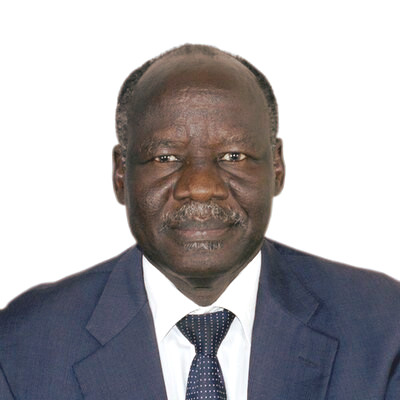
Dr. Lam Akol (File/Supplied)
Mr David Shearer,
Special Representative of the
UN secretary General, UNMISS,
Mr Kamal Kamaluddeen,
Resident Representative, UNDP
Ms Pauline Chiwangu,
Acting UN Women Representative, South Sudan,
Mr Adebayo Olukoshi,
Regional Director,
International IDEA,
IGAD representative,
RJMEC Representative,
Colleagues, representatives of the Political Parties,
Distinguished Guests,
Ladies and Gentlemen.
It gives me singular pleasure to address you today on this extremely important topic, the Permanent Constitution Making in South Sudan. I begin by extending my thanks and appreciation to UNMISS, UNDP, UN Women, IDEA who through their collaboration made this sitting possible and I express my gratitude to them for having asked me to give keynote remarks. I also appreciate the presence of representatives of the political parties and other guests who have come to take part in this dialogue.
Constitution making process is a complex and challenging matter, especially in a country like South Sudan which has no firm tradition of democratic discourse. The process must involve seeking consensus on contentious issues that must form the basis of our constitution. Many actors have different political views on such matters. Hence, a sober and responsible dialogue with a spirit of compromise and accommodation is called for.
My assumption is that this workshop is meant to serve as a forum for brainstorming in order to identify broad issues that can form the agenda for the more representative and broad-based dialogue that will take place in the National Constitutional Conference envisaged in the Revitalized Peace Agreement 2018. It is not meant, in my view, to take resolutions on the design, form nor the content of the permanent constitution. In this sense it is important for the participants to put forward their points of view on the various issues of importance in order to be included in the agenda for upcoming deliberations on the constitution with a view that a healthy discussion can take place so that at the end of the workshop the participants are better informed on how to proceed.
Distinguished Organizers,
Ladies and Gentlemen,
To help focus our discussion, it is imperative to look back to our recent past in constitution making as part of Sudan and as South Sudan so as to draw lessons that can help us in our dialogue. The tone for constitution making in Sudan was set by the “Anglo-Egyptian Agreement Concerning Self-Governance and Self-Determination” for Sudan which came into force in 1953. It stipulated that the Constituent Assembly, that will be elected once the Sudanese parliament has requested the two co-domini to set in motion the process of self-determination, was to adopt the permanent constitution for Sudan. As we know that parliament declared Sudan’s independence and in December 1957 formed a Constitutional Committee to prepare a draft constitution. The Southerners pulled out of that committee because of the insistence of the North on a unitary state. Subsequent, Constituent Assemblies elected in 1957, 1965, 1968 and 1986 also failed to agree on a permanent constitution because of the insistence of the North on an Islamic constitution and a unitary state. No consideration was given to the demand of the South for a federal system and a secular state. Now, after more than sixty years of independence the Sudan remains without permanent constitution. The reason is obvious; lack of national consensus on such a critical matter. It can be argued that it was that lack of consensus that contributed enormously to the secession of South Sudan.
In South Sudan, the Interim Constitution for Southern Sudan 2005, demanded a review of the same after the referendum on self-determination so as to have a Transitional Constitution for South(ern) Sudan. In preparation for the referendum all the Southern Sudan political parties held the “All Southern Sudan Political Parties Conference” on 13 – 17 October 2010 in Juba. It came up with resolutions on what to do after the referendum including how to proceed with the constitution-making process. It will be recalled that the outcome of the referendum was in favour of a sovereign and independent South Sudan. The SPLM reneged on the agreement of the ASSPPC and appointed a Constitutional Review Committee from its members only. After protest from the other parties, a few of their members were included but they later withdrew from the committee because of the heavy-handed way the SPLM wanted to impose its will. It was against genuine devolution of power and for concentrating all powers in the hands of the President. No consideration was given for voices that called for federalism and devolution of powers. It seems no lesson has been learnt from the Sudanese experience. This one-sided view was reflected in the Transitional Constitution of the Republic of South Sudan 2011, especially on the chapter concerning the constitution-making process.
The Revitalized Agreement on the Resolution of Conflict in the Republic of South Sudan (R-ARCSS) signed on 12 September 2018 devoted one chapter to the constitution making process. Here, the National Constitutional Conference was given prominence as the forum in which the parties and other stakeholders in the country will discuss and agree on the design, form and content of the permanent constitution. The process was to begin with a workshop to discuss the parameters of the constitution, just like this one. The workshop was to be convened on or before 22 June 2020, that is five months ago! But we are encouraged by the steps taken by RJMEC in this regard. We trust that there will be synergy between this forum and the upcoming workshop being organized by RJMEC.
The implementation of the agreement as a whole has been slow, sluggish and selective. To date 71 activities that should have been implemented in the last nine months of the Transitional Period are still outstanding. Clearly, there is a goodwill deficit.
Colleagues,
Ladies and Gentlemen,
This workshop is timely coming as it does at a time when the implementation of the peace agreement is facing a lot of challenges. We need to remind ourselves that the R-ARCSS remains the only document that enjoys the support of all the political parties, civil society organizations and the other stakeholders in the country. It is our joint programme for running the Transitional Period including the constitution-making process. Any attempt from any Party to the agreement to create a parallel forum under whatever guise is not only a detraction from this national consensus but is also bound to pull us apart in unnecessary discord at a time we must strive to maintain the peace and focus our full attention on going forward with the faithful implementation of the peace agreement.
This initiative by UNMISS and its partners to bring us here today is commendable. Let us make full use of the opportunity, learn from our past lessons, embrace candidness in our dialogue and be accommodative of other points of view for there can never be consensus without compromises and moving to the middle ground.
Once more I thanked you all and wish you the best in your deliberations.
Dr Lam Akol,
Chairman of NDM.
Newer articles:
- Ethiopia is Atlantis! - undisputed proof - 23/11/2020 10:57
- Biography of Dr. John Garang Mabior - 22/11/2020 14:24
- Appointment Of Gen. Johnson Olony Under The SPLM-IO Nomination Automatically Makes Him The Splm-io Nominee & The Member. - 22/11/2020 09:22
- Public Updates: The long-awaited moment for the people of Sudan has finally come - 20/11/2020 21:53
- Governor Manytuil donated over ten thousand US Dollars to the Unity State's students in Uganda - 20/11/2020 10:46
Older news items
- Stability in Sudan is our stability here in south Sudan - 16/11/2020 09:10
- Response To South Sudan Media Outlets For Circulating Counterfeit News Against H.E President Salva Kiir Mayardit And South Sudan Presidential Advisor On National Security Affairs Hon. Tut Gatluak Manime - 14/11/2020 11:06
- Conflict gold flooding into Dubai from Africa - money laundering, mass violence linked - 10/11/2020 21:16
- Generous And Philanthropic Support Of Mrs. Achai Wiir Is Important - 09/11/2020 13:18
- People’s power Equals NAS - Be like a tree, drop the dead leave (Rumi) - 03/11/2020 11:34
Latest news items (all categories):
- The SPLM ruling party is facing a dilemma and Thucydides trap at a pivotal moment - 24/08/2026 14:06
- Shanghai Cooperation Organization (SCO) countries are making green development an engine of growth - 24/08/2026 13:36
- President Salva Kiir in Pretoria Seeking Support Ahead of South Sudan’s December Elections - 24/08/2026 12:48
- Tambura’s fragile path from conflict to recovery - 24/08/2026 12:45
- South Sudan’s Yei Joint Stars advance to semi final stage of Zonal qualifiers - 24/08/2026 12:43
Random articles (all categories):
- Kiir accuses Sudan of being 'source of weapons' in South Sudan war - 02/11/2017 09:05
- 'GIS travel ban' escalates tensions between Sudan govt’s military and civilian components - 14/10/2021 13:14
- South Sudan has embarked into peace revitalization - 10/09/2019 10:45
- UN says South Sudan not ready for elections despite assurances by political actors - 11/08/2023 07:48
- Uganda–South Sudan Security Cooperation Recovers 24 Stolen Cattle - 10/04/2026 18:34
Popular articles:
- The Final Communique of SPLM-DC Third Session of the National Council - 29/03/2011 01:00 - Read 83115 times
- Roles and Definition of Political Parties - 29/04/2011 01:00 - Read 64827 times
- Agriculture in Southern Sudan: Challenges and Investment Opportunities - 06/10/2010 01:45 - Read 57418 times
- Fashoda Youth Forum Rehabilitation of Drainage Culverts in Malakal town Report - 07/08/2008 16:22 - Read 35857 times
- Creation and establishment of the Local Government Councils ( Counties ) (2) - 28/09/2011 01:00 - Read 33678 times
