
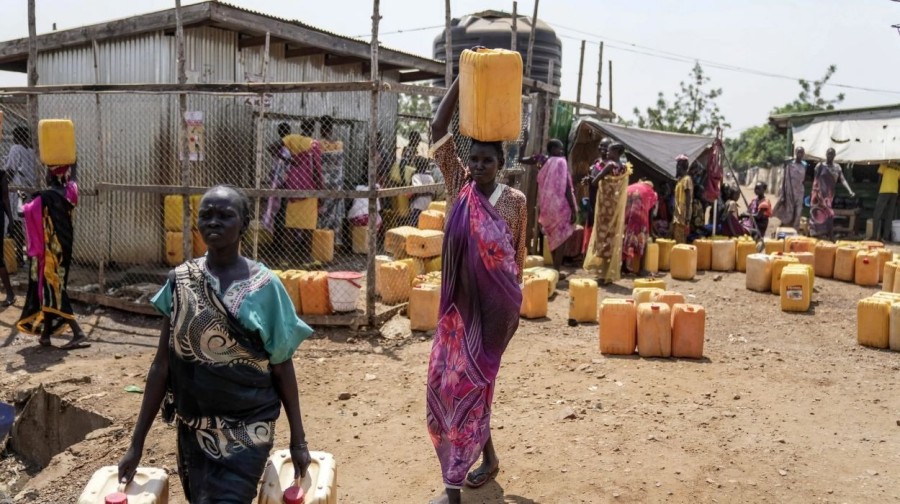
South Sudan's crisis deepens with relentless violence since early 2025 across Upper Nile, Jonglei, Central Equatoria, and Western Equatoria, involving government forces, opposition SPLA-IO, and militias. Airstrikes like the December 29 attack near Lankien, which wounded 12 civilians near an MSF facility, market, and airstrip—one fatally—and the December 3 bombardment of a Nyirol school injuring a student, underscore the human cost. Juba's forced child and adult recruitment plus arbitrary arrests of opponents, journalists, and activists reflect entrenched impunity, as 9.3 million people need assistance and 7.7 million face acute food insecurity amid Sudan's refugee influx of 1.2 million.
Escalating Violence and Impunity
The Hybrid Court for South Sudan (HCSS), mandated by the 2015 peace agreement and 2018 Revitalized Agreement (R-ARCSS), aims to prosecute crimes since 2013, including killings, rape, sexual violence, child recruitment, and displacements.
“It is taking long because the formation of the Hybrid Court is not in our hands. It is the AU that is supposed to give us the terms and conditions for the enactment of the law,”
highlights procedural hurdles blocking progress despite 2024 parliamentary approval of transitional justice laws like the Commission for Truth, Reconciliation, and Healing (CTRH) and Compensation and Reparation Authority (CPRA). Aerial and ground attacks from April to July 2025 displaced 300,000 and killed hundreds, destroying infrastructure in a nation at a "turning point" with collapsed trust and Riek Machar's house arrest.
Human Rights organizations decry this as a betrayal of airstrike victims, where domestic courts fail complex war crimes, leaving civilians exposed. The AU's sequential approach prioritizes CTRH and CPRA first, as
“These mechanisms are interdependent and must be implemented sequentially,”
tying HCSS to financial and logistical readiness despite a May 2023 conference and recent roadmaps. Delays, nearly a decade long, coincide with elections postponed to December 2026, amid unimplemented security and constitutional reforms.
Policy Failures Fuel Atrocities
Impunity from stalled HCSS perpetuates cycles, enabling current abuses like explosive weapons in populated areas.
“The delay in establishing the hybrid court has severely impacted victims, many of whom continue to suffer from trauma, displacement, and loss without any acknowledgment. Justice is not about punishing perpetrators. It is about recognition, healing, and ensuring non-recurrence,”
captures the human toll, as
“The entire responsibility for establishing the hybrid court of South Sudan lies within the transitional government of national unity, which has deliberately obstructed progress.”
Human Rights Watch notes South Sudan's truth and reparations bills stemmed from civil society pressure but insists “much more remains to be done to ensure credible processes to advance justice and uphold victims’ rights, notably setting up a hybrid court,” amid AU hesitation despite its unilateral authority.
Policy gaps extend to aid access and sanctions, with HRW urging the AU Peace and Security Council on January 19 to end civilian attacks, ban explosives in populated zones, ensure humanitarian corridors, sanction abusers, retain the UN arms embargo, and launch HCSS.
“South Sudan’s regional and international partners should ensure a comprehensive truth and justice process that would address systemic and entrenched impunity,”
reinforces calls for holistic accountability. South Sudan's representative frames detentions as "criminal accountability" while affirming peace cooperation, yet low trust post-2018 accord collapse hinders progress.
Regional Inaction and Humanitarian Crisis
The AU's
“This is a process. It has huge financial implications”
rationale clashes with urgency, as
“There is a legal dictum that justice delayed is justice denied,”
but optimism persists:
“But history shows that justice, even if delayed, will eventually be realized.”
“Good things take time, but South Sudanese must continue demanding their rights and holding authorities accountable,”
urges continued pressure, though half-hearted commitment raises doubts after 2016 draft statute and 2017 MOU stalls. OHCHR's November 2024 push for revived HCSS efforts alongside commissioner selections highlights ongoing policy inertia.
9.3 million in crisis reflect broader fallout, with food insecurity and displacement surging from 2025 violence. Global advocates stress AU empowerment to act independently, noting transitional justice gaps erode election legitimacy and peace buy-in.
“We must implement the peace agreement in our own way and in our own time,”
defends government pacing, but victims suffer eroded recognition and healing.
Urgent Path to Justice
Hybrid Court delays amid airstrikes betray South Sudan's vulnerable, emboldening perpetrators as President Kiir's unilateral moves undermine the 2018 pact. AU's January 19 meeting presents a policy pivot; inaction risks escalation toward 2026 polls.
Comprehensive Human Rights mechanisms—prosecutions, truth-telling, reparations—are vital for non-recurrence, yet sequential delays and resources obstruct. International resolve must enforce HCSS operationalization, transforming betrayal into accountability for healing a fractured nation.
Source: https://impactpolicies.org/news/757/hybrid-court-delay-betrays-south-sudans-victims-of-airstrikes
Newer articles:
- South Sudan After the Pilgrimage: When Moral Attention Isn’t Enough - 21/01/2026 17:48
- South Sudan Erupts - 21/01/2026 17:44
- South Sudan president fires interior minister, sparking fears of peace deal collapse - 21/01/2026 17:39
- DRC, South Sudan Exchange Prisoners to Boost Security Cooperation - 21/01/2026 17:32
- South Sudan: Humanitarian Access Snapshot (December 2025) - 21/01/2026 17:21
Older news items
- UN Commission urges immediate political de-escalation as renewed fighting in Jonglei puts civilians at grave risk - 19/01/2026 12:29
- South Sudan Mine Action Delegation Learns About Mine Action at CMAC - 19/01/2026 12:23
- Under-Secretary-General for Peace Operations Visits South Sudan - 19/01/2026 12:19
- South Sudan FA announce financial support for Premier League clubs - 19/01/2026 12:14
- EU, foreign envoys urge urgent action to rescue South Sudan peace process - 16/01/2026 13:14
Latest news items (all categories):
- China’s new Long March: Why its modernization is a demanding journey - 21/10/2026 12:31
- Drone attack in disputed Sudan-South Sudan border region kills at least 153 - 21/10/2026 12:17
- South Korea - 'Smart camp' system built at Hanbit Unit in South Sudan - 21/10/2026 12:09
- Sudanese refugees in Gorom camp, South Sudan, struggle for water, medicines, security - 21/10/2026 12:05
- South Sudan: A Testing Ground For Democracy While Citizens Struggle To Survive - 19/10/2026 14:31
See also (all categories):
Random articles (all categories):
- Deportation from Israel puts an end to high school hoop dreams of South Sudan ... - Haaretz - 06/08/2012 05:51
- Aid worries rise for South Sudan refugees inside Sudan - 01/03/2017 02:39
- UN details 'horrendous' human rights situation in South Sudan - 11/03/2016 03:18
- South Sudan's Kiir to visit Sudan for oil flow in May - 03/05/2013 23:27
- Sudanese air strike hits South Sudan, breaking pact - 14/02/2012 08:36
Popular articles:
- Who is the darkest person in the world, according to Guinness World Record? - 25/10/2022 02:34 - Read 151175 times
- School exam results in South Sudan show decline - 01/04/2012 17:58 - Read 28327 times
- Top 10 weakest currency exchange rates in Africa in 2023 - 19/07/2023 00:24 - Read 25421 times
- No oil in troubled waters - 25/03/2014 15:02 - Read 24646 times
- NDSU student from South Sudan receives scholarship - In-Forum - 29/09/2012 01:44 - Read 22617 times
