
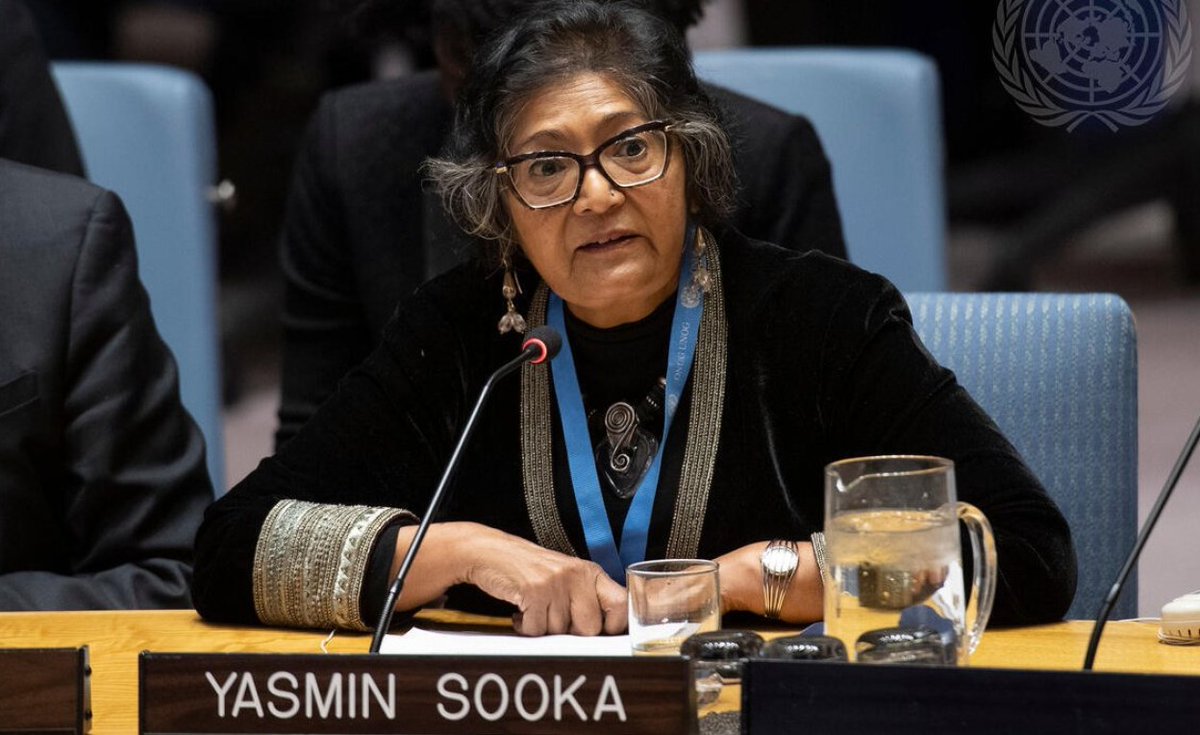
JUBA/GENEVA – The UN Commission on Human Rights in South Sudan today expressed alarm at the deteriorating political and security situation in the country and condemned the renewed fighting in Jonglei State, warning that the escalation marks a grave erosion of the Revitalized Agreement on the Resolution of the Conflict in South Sudan (R-ARCSS) and places civilians at risk of death, displacement and deprivation.
The Commission called for the immediate de-escalation and cessation of hostilities in civilian-populated areas, including airstrikes, ground offensives and military operations. It urged the immediate return to the pathways, obligations and guarantees of the peace agreement.
As a new year dawned, the deliberate sabotage and resulting erosion of the Revitalized Agreement is directly driving renewed conflict, with catastrophic consequences for civilian lives and the stability of the country and the wider region. The indiscriminate aerial bombardments, ground fighting, and obstruction of humanitarian access reflect a callous pattern documented repeatedly by the Commission and signal the near-total disregard for the safety and well-being of citizens and communities.
As the political impasse has continued, over the past few weeks, intensified hostilities in Jonglei State have involved direct and indiscriminate attacks on civilian populations, including repeated aerial bombardments by the South Sudan People’s Defence Forces (SSPDF), clashes with SPLM/A-IO and the reported mobilisation of armed civilian militias. An already dire humanitarian and human rights crisis is compounded by a blatant disregard for the protection afforded to civilians under international law. Humanitarian partners estimate that more than 100,000 people, predominantly women, girls, older persons and persons with disabilities, have been forcibly displaced across the state since late December 2025, many fleeing without shelter, food or access to medical care.
“The protection of civilians is not optional — it is a binding legal obligation of the government,” said Yasmin Sooka, Chair of the Commission. “The renewed airstrikes in civilian areas, combined with restrictions on humanitarian access imposed by parties to the conflict, including the SSPDF and SPLM/A-IO, are again placing lives at immediate risk, while systematically eroding the peace agreement and condemning civilians to fear, displacement and death. These actions are unlawful and must stop now: humanitarian actors must be allowed safe passage to reach those in desperate need.”
The Commission expressed deep alarm at the reports of repeated airstrikes in parts of Jonglei, including Uror, Ayod and Nyirol counties, which have killed and injured civilians, destroyed homes, markets, and medical facilities, and triggered large-scale displacement. At the same time, medical facilities have been forced to suspend operations or evacuate staff, leaving critically ill patients stranded without lifesaving care.
“What we are witnessing in Jonglei is not an isolated security incident; it is a dangerous escalation which is manifesting in other parts of the country as well, and which could potentially bring far-reaching political and security consequences,” said Commissioner Barney Afako. “As usual, South Sudanese civilians are paying the heaviest price for the political miscalculations of their leaders, and the deliberate unravelling of the peace agreement. The actions in Jonglei could put the country into another dangerous spiral of violence. Yet, in the face of sustained violation of the peace agreement and human rights violations, regional and international actors have failed to dissuade South Sudan’s leaders from their zero-sum politics. Without urgent de-escalation and renewed political engagement, another tragic and brutal cycle of war will be inflicted upon the long-suffering people of South Sudan.”
The Commission underscored that all parties to the conflict – state forces, organized armed groups and affiliated militias – are bound by international humanitarian law, including the principles of distinction, proportionality and precaution, and by international human rights law. Attacks directed against civilians or civilian objects, indiscriminate airstrikes, and the denial of humanitarian access are strictly prohibited. It warned that continued fighting, combined with the denial or obstruction of humanitarian assistance, risks further large-scale civilian loss of life and may amount to serious violations of international humanitarian and human rights law.
“Denying access to medical care, forcing the evacuation of health facilities, or carrying out airstrikes in civilian areas raises serious concerns under international human rights law and international humanitarian law,” said Commissioner Carlos Castresana Fernández. “If such acts are committed deliberately or recklessly, they may amount to war crimes. Continued obstruction of humanitarian access and attacks harming civilians must cease immediately, and those responsible must be held to account.”
The Commission reminded the Government of South Sudan that it bears the primary responsibility under international law to protect civilians within its territory, including by exercising effective control over its forces, preventing violations by its armed forces and allied militias, and ensuring safe, rapid and unimpeded humanitarian access. Non-state armed groups are equally bound by international humanitarian and human rights law, and all parties must immediately cease hostilities affecting civilians. The Government has the primary political responsibility to ensure the stability of South Sudan and create the conditions in which citizens enjoy their full human rights.
The Commission called for:
- Immediate political de-escalation and a return to and full implementation of the Revitalized Peace Agreement.
- An immediate halt to all airstrikes and military operations in civilian areas.
- Unconditional, safe and unimpeded humanitarian access, including medical evacuations.
- Urgent de-escalation measures to prevent further spread of the conflict.
- Accountability for serious violations of international humanitarian and human rights law.
- Renewed regional and international engagement to ensure a return to inclusive transition.
The Commission called upon regional and international partners to intensify coordinated diplomatic engagement to prevent further deterioration, a return to consensus-based politics, and to ensure that civilian protection and humanitarian access are treated as non-negotiable priorities.
“South Sudan’s people cannot continue to pay the price yet again for political and military failure,” Sooka said. “Every violation further dismantles the peace agreement and deepens human suffering. The fighting must stop now; civilians must be protected. The parties must return without delay to the commitments they made to peace.”
ENDS
Background: The Commission on Human Rights in South Sudan is an independent body mandated by the UN Human Rights Council. First established in March 2016, its mandate has been renewed annually since. The commissioners were appointed by the President of the UN Human Rights Council; they are not UN staff and do not receive a salary for their work as Commissioners. They are supported by a Secretariat based in Juba, South Sudan.
More information about the Commission on Human Rights in South Sudan can be found here. Follow the Commission on X, on Facebook, and on YouTube.
For media queries, please contact: In Juba: Rajeev PS, Public Information Officer/Media Adviser,
Newer articles:
- South Sudan Erupts - 21/01/2026 17:44
- South Sudan president fires interior minister, sparking fears of peace deal collapse - 21/01/2026 17:39
- DRC, South Sudan Exchange Prisoners to Boost Security Cooperation - 21/01/2026 17:32
- South Sudan: Humanitarian Access Snapshot (December 2025) - 21/01/2026 17:21
- Hybrid Court Delay Betrays South Sudan's Victims of Airstrikes - 19/01/2026 12:33
Older news items
- South Sudan Mine Action Delegation Learns About Mine Action at CMAC - 19/01/2026 12:23
- Under-Secretary-General for Peace Operations Visits South Sudan - 19/01/2026 12:19
- South Sudan FA announce financial support for Premier League clubs - 19/01/2026 12:14
- EU, foreign envoys urge urgent action to rescue South Sudan peace process - 16/01/2026 13:14
- South Sudan: A Drop in the Ocean - 16/01/2026 13:04
Latest news items (all categories):
- Op-Ed - Breaking the Double-Standard Lens on China's Population Shifts - 23/10/2026 14:23
- South Sudan ceasefire monitors warn of rising violence ahead of December elections - 23/10/2026 13:39
- UNMISS SRSG visits Malakal, emphasizes that peace begins with collective action - 23/10/2026 13:36
- How Technology is Accelerating South Sudan’s Next Oil Discovery - 23/10/2026 13:34
- South Sudan’s Patriot make case in their opener against Urunani - 23/10/2026 13:12
See also (all categories):
Random articles (all categories):
- South Sudanese man who posed as high school student seeks release from jail - 02/05/2016 15:56
- Is Machar aiming for the presidency in South Sudan, as a guest on SA soil? - 10/08/2017 14:32
- South Sudan army colonel quits, cites discontent - 30/12/2018 04:06
- Sudan masses troops on border to secure oil facilities - 15/07/2015 03:10
- SPLM should not Coalesce with Anti CPA Parties - 07/04/2008 21:08
Popular articles:
- Who is the darkest person in the world, according to Guinness World Record? - 25/10/2022 02:34 - Read 151198 times
- School exam results in South Sudan show decline - 01/04/2012 17:58 - Read 28340 times
- Top 10 weakest currency exchange rates in Africa in 2023 - 19/07/2023 00:24 - Read 25438 times
- No oil in troubled waters - 25/03/2014 15:02 - Read 24658 times
- NDSU student from South Sudan receives scholarship - In-Forum - 29/09/2012 01:44 - Read 22632 times
