
(Photo Credit: Alfadil Attiya Abuanja / File)
By: Alfadil Attiya Abuanja
May 29, 2026 | UNITED NATIONS
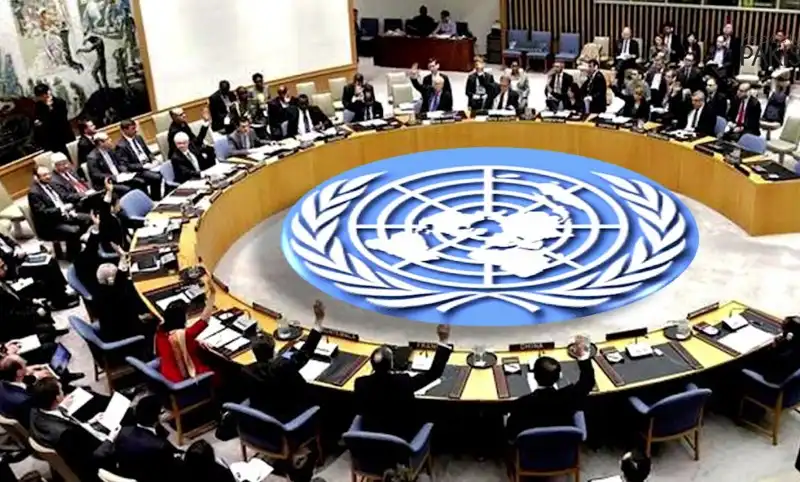
The United Nations Security Council on Thursday called on Sudan and South Sudan to urgently revive stalled political and security mechanisms on Abyei, warning that escalating violence and worsening insecurity are threatening stability in the disputed region.
Briefing the Council, Assistant Secretary-General for Political and Peacebuilding Affairs Martha Ama Akyaa Pobee said conditions in Abyei had deteriorated significantly over the past six months due to criminality, weapons proliferation and the growing presence of unauthorized armed groups.
She said the United Nations Interim Security Force for Abyei (UNISFA) recorded 196 security incidents and 58 fatalities during the reporting period, a sharp increase compared to previous months.
Pobee noted that South Sudan People’s Defence Forces and National Police Service personnel continued to maintain unauthorized checkpoints and occupy civilian infrastructure in southern Abyei, while the presence of Sudan’s Rapid Support Forces around Goli and Diffra in northern Abyei remained a serious concern.
She warned that the absence of the Abyei Police Service and weak law enforcement structures were leaving civilians vulnerable, forcing local community protection committees, supported by UNISFA, to assume policing responsibilities.
Pobee also described the December 2025 drone attacks on UNISFA’s logistics base in Kadugli, Sudan, as a “major operational setback” for the Joint Border Verification and Monitoring Mechanism. The attacks killed six Bangladeshi peacekeepers and injured nine others.
Following the attacks, UNISFA relocated its operations and closed all monitoring team sites in the Safe Demilitarized Border Zone, suspending its physical presence there for the first time since the mechanism was established.
UN Special Envoy for the Horn of Africa Guang Cong told the Council that the ongoing war in Sudan continued to heavily influence relations between Khartoum and Juba.
Since conflict erupted in Sudan in 2023, more than 1.3 million refugees and returnees have fled into South Sudan, increasing pressure on already limited food supplies, healthcare and education services, he said.
Despite tensions, Cong said both governments had maintained “constructive bilateral engagement” through meetings held in late 2025 and early 2026, focusing on border security, oil infrastructure and trade cooperation.
However, he stressed that Abyei’s final political status remained one of the most unresolved issues between the two countries.
During a recent visit to Abyei, Cong said local authorities, traditional leaders, civil society groups, women and youth representatives expressed frustration over the lack of political progress and called for the deployment of additional UN police personnel.
Security Council members renewed calls for Sudan and South Sudan to demonstrate stronger political commitment towards resolving the dispute through dialogue.
The United States criticized what it described as a lack of determination by the parties to fully utilize UNISFA as an opportunity to consolidate peace, while China stressed that a durable solution could only be achieved through political negotiations and respect for the 2011 Agreement on Temporary Arrangements for the Administration and Security of Abyei.
Russia said any reduction of UNISFA forces before an agreement on Abyei’s final status would be premature, while several countries warned that operational restrictions and budget cuts were weakening the mission’s effectiveness.
The United Kingdom condemned the drone attacks on UN peacekeepers and called for accountability, while Pakistan cautioned against limiting resources needed for the safety of peacekeeping personnel.
Several Council members also expressed concern over the humanitarian impact of the insecurity, particularly on women and children, citing reports of grave human rights violations and conflict-related sexual violence.
Sudan’s representative accused the United Arab Emirates of supplying drones to the Rapid Support Forces involved in attacks against UNISFA, describing the UAE as “an accomplice in this war crime”.
He said Khartoum remained committed to implementing the 2011 Agreement and supporting the deployment of authorized police units in Abyei.
South Sudan rejected accusations of non-compliance with the peace agreement, saying its forces entered Abyei following deadly intercommunal violence in 2022 to stabilize the area and protect civilians.
Juba reaffirmed its commitment to dialogue and peaceful coexistence, insisting that long-term stability in Abyei would depend on cooperation and mutual respect between all stakeholders.
Although both governments reiterated support for Abyei’s demilitarized status and existing peace mechanisms, no meeting of the Joint Political and Security Mechanism or the Abyei Joint Oversight Committee was held during the reporting period.
Newer articles:
- UNMISS Says Budget Pressures Force Base Closures Despite Ongoing Violence - 01/06/2026 19:43
- U.S. Blames South Sudan Leaders for Lack of Peace Progress, Supports Renewal of UN Sanctions - 01/06/2026 14:36
- South Sudan: Renewal of UN arms embargo is key to protecting civilians - 01/06/2026 14:34
- South Sudan U17 Girls Kicks Off Training Ahead of CECAFA Tournament - 01/06/2026 14:30
- DR Congo, South Sudan and Uganda banned from attending World Cup 2026 Tournament in the U.S - 01/06/2026 14:28
Older news items
- South Sudan MPs Receive $5,000 Medical Allowance as Civil Servants Go Months Without Salaries - 29/05/2026 19:57
- Western Equatoria Battles Rising Mpox Cases Amid Medical Shortages and Ebola Fears - 29/05/2026 15:42
- Powerful call for dialogue and compromise to secure peace in South Sudan issued on International Peacekeepers Day - 29/05/2026 15:27
- Canada, U.S., Mexico announce Ebola travel measures for FIFA World Cup - 29/05/2026 15:15
- Thai army moves to protect troops in South Sudan amid Ebola risk - 25/05/2026 13:44
Latest news items (all categories):
- Independent human rights investigators: Human cost of violence in South Sudan ‘continues to grow’ - 11/09/2026 10:43
- Displaced women build resilience through new livelihoods in Tambura - 11/09/2026 10:38
- Officially: Egypt lose their star for Angola and South Sudan clashes - 11/09/2026 10:36
- VP Nyandeng’s Critique And The Splintered Politics Of South Sudan - 09/09/2026 13:34
- UN rights Commission begins four-day South Sudan mission amid renewed conflict - 09/09/2026 13:25
See also (all categories):
Random articles (all categories):
- Kenyan Doctors Arrested After Fistfight On a Plane to Aweil - 17/03/2022 04:42
- Kenya Shippers Say South Sudan Trade Increases Border Congestion - BusinessWeek - 26/03/2012 15:50
- Days before end of oil deadline, Kiir rushes to cool down tensions with Khartoum - 01/09/2013 12:41
- South Sudan president writes to Uganda president over troops withdrawal - 24/09/2015 02:35
- 100 Bangladeshi navy crew leave for UN peace mission in South Sudan - 05/10/2022 08:34
Popular articles:
- Who is the darkest person in the world, according to Guinness World Record? - 25/10/2022 02:34 - Read 149536 times
- School exam results in South Sudan show decline - 01/04/2012 17:58 - Read 28108 times
- Top 10 weakest currency exchange rates in Africa in 2023 - 19/07/2023 00:24 - Read 25187 times
- No oil in troubled waters - 25/03/2014 15:02 - Read 24458 times
- NDSU student from South Sudan receives scholarship - In-Forum - 29/09/2012 01:44 - Read 22411 times
