
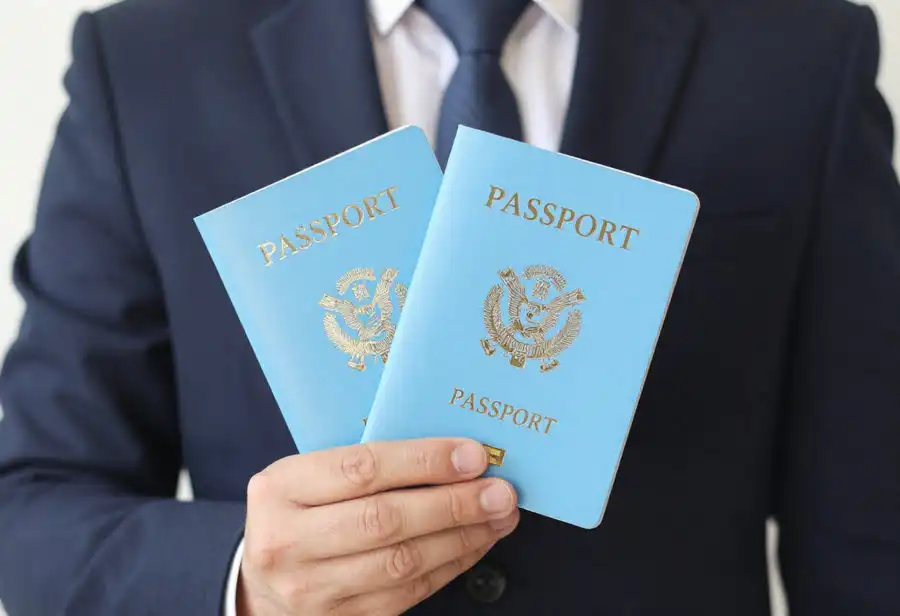
EAC Passport Image (Generated with Ai)
In a groundbreaking move, Tanzania has joined its East African neighbors—Uganda, Rwanda, Kenya, Burundi, and South Sudan—as Somalia officially unveils the East African Community (EAC) Passport, a new era in regional collaboration and international mobility. This initiative aims to reshape the dynamics of trade partnerships, foster economic growth, and open doors to limitless opportunities across East Africa. With the EAC Passport, citizens of these countries will now enjoy seamless travel across borders, boosting trade, tourism, and cultural exchange. The new passport serves as a catalyst for economic integration, offering not only improved mobility but also a stronger, united voice on the global stage. This move underscores the growing significance of East Africa as a key player in international business, and it holds the potential to fuel sustainable development across the region. The unveiling marks a pivotal milestone in East Africa’s shared future.
Somalia has reached a significant milestone in its quest for regional integration and enhanced global mobility for its citizens with the official launch of the East African Community (EAC) passport. This momentous move was celebrated by the Somali government as a historic step towards greater connectivity with neighboring countries, strengthening Somalia’s position within the East African bloc, and improving the prospects for Somali citizens on the global stage.
In March 2024, Somalia became the eighth member of the East African Community (EAC), an important regional integration organization in Africa. The EAC, established in 1999, originally began with Kenya, Uganda, and Tanzania, and has since expanded to include Rwanda, Burundi, South Sudan, and the Democratic Republic of Congo. Somalia’s admission to the bloc marked a new chapter in its relationship with its East African neighbors, which has been characterized by a shared commitment to enhancing regional trade, security, and infrastructure development.
The decision for Somalia to apply for membership in the East African Community was based on the shared goals of promoting economic integration and regional stability. Somalia’s entry into the EAC is viewed as a sign of progress for the country as it seeks to rebuild its economy, strengthen its diplomatic relations, and achieve long-term political stability. The EAC has long been an engine for economic development in the region, fostering cooperation in areas such as infrastructure, trade, environmental sustainability, and security. By joining the bloc, Somalia aims to harness these benefits, which will play a crucial role in its future development.
One of the most significant outcomes of Somalia’s membership in the East African Community is the issuance of the EAC passport. For Somali citizens, this passport provides easier access to travel within the region and, by extension, more opportunities for education, business, and tourism across East Africa. The EAC passport is designed to facilitate the movement of citizens between member states, enabling smoother travel and better integration across the region. It is expected to significantly reduce barriers that have traditionally hindered regional mobility, such as visa requirements and long waiting times at border points.
Beyond the regional advantages, the Somali government views the EAC passport as a tool to improve the global standing of its citizens. In a world where international mobility has become increasingly important for both personal and professional development, the EAC passport will grant Somali nationals access to more travel opportunities, helping to foster greater engagement with the global community. This aligns with the country’s broader goals of opening up its economy, enhancing its international partnerships, and ensuring that its citizens can participate more fully in the global economy.
The launch of the EAC passport also comes at a time when Somalia’s global passport ranking has seen notable improvement. In recent years, the Somali passport has gained ground in terms of its strength and accessibility. According to official reports, Somalia’s global passport ranking has risen from 111th place in 2021 to 96th in 2024, marking a remarkable 15-position leap. This improvement reflects the progress Somalia has made in strengthening its diplomatic and international relationships, as well as the broader strides the country has taken toward economic and political stability.
The better ranking of Somalia’s passport can be attributed to several factors, including the country’s growing engagement in international trade, its diplomatic efforts to strengthen ties with neighboring and global powers, and the reform of its internal systems, which have helped to build trust and confidence among the international community. The introduction of the EAC passport is seen as further proof of Somalia’s commitment to improving its global mobility and creating a more favorable environment for its citizens to travel, work, and engage with the world.
The rollout of the EAC passport is not just about improving the mobility of Somali citizens—it is also a reflection of the country’s dedication to regional integration and long-term economic development. The Somali government has made it clear that joining the East African Community and introducing the EAC passport aligns with its broader vision for the country’s future. Through regional integration, Somalia hopes to increase trade, investment, and sustainable development, all while creating job opportunities for its population.
The government sees Somalia’s active participation in the EAC as a crucial component of the country’s economic strategy. By engaging in regional trade agreements, Somalia can tap into the growing markets of East Africa and work toward building a more diversified and resilient economy. The EAC is an important economic and political platform that offers Somali businesses the opportunity to expand their reach, benefit from regional infrastructure projects, and access a larger pool of resources and talent.
Furthermore, the government views regional integration as a means of addressing some of Somalia’s most pressing challenges, such as unemployment, poverty, and infrastructure gaps. By participating in the EAC framework, Somalia aims to leverage collaborative projects that focus on sustainable development, improved transportation networks, energy access, and investment in education and healthcare. The introduction of the EAC passport is an expression of this broader commitment to creating an environment where Somali citizens can thrive both within the region and globally.
Tanzania joins Uganda, Rwanda, Kenya, Burundi, and South Sudan as Somalia unveils the EAC Passport, revolutionizing regional collaboration, boosting trade, economic growth, and enhancing international mobility, creating vast opportunities across East Africa.
Somalia’s official launch of the East African Community passport is a significant achievement that underscores the country’s commitment to regional integration, global mobility, and long-term economic development. By becoming a member of the EAC, Somalia has opened new doors for its citizens, providing them with easier access to travel within the region and beyond. The rise in the global ranking of the Somali passport also reflects the positive changes occurring within the country, from improved diplomatic relations to a more stable economy. As Somalia continues to embrace its role in the East African Community, it is poised to take full advantage of the opportunities that membership offers, fostering stronger regional cooperation, sustainable development, and greater prosperity for its citizens.
Newer articles:
- Nearly 170 people killed in attack in South Sudan’s Ruweng, officials say - 02/03/2026 14:23
- South Sudan peace agreement unraveling, moving to total war, says UN Commission - 02/03/2026 14:20
- 636 Former Muslims Embrace Christianity in South Sudan - 02/03/2026 14:17
- South Sudan at risk of sliding into full-scale civil war - 27/02/2026 20:52
- South Sudan mourns Anglican Bishop Nathaniel Garang, towering figure of peace and reconciliation - 27/02/2026 20:42
Older news items
- Funding shortfall threatens 1.9 million displaced in South Sudan - 25/02/2026 19:30
- President Salva Kiir Assures UN of Full Humanitarian Access - 25/02/2026 19:27
- First South Sudan national team coach Malish Soro passes away - 25/02/2026 19:24
- Egypt intelligence chief discusses cooperation with South Sudan on Nile water - 25/02/2026 19:21
- Chad shuts border with Sudan in bid to stop conflict spreading - 25/02/2026 19:04
Latest news items (all categories):
- South Sudan Opens 14 Oil Blocks, Courts Investors Ahead of SSOP 2026 - 26/10/2026 15:08
- Jambojet Explores South Sudan Expansion After Talks with Juba Regulator - 26/10/2026 15:05
- Kiir swears in 5 officials ahead of South Sudan elections - 26/10/2026 14:53
- South Sudan cattle battles leaves 10 dead: official - 26/10/2026 14:49
- Churches urge world 'not to forget South Sudan' ahead of first elections - 26/10/2026 14:47
See also (all categories):
Random articles (all categories):
- Exclusive - South Sudan rebel leader says government derailing peace talks - 31/01/2014 16:37
- SSNMC refutes Bakosoro's defection to South Sudan rebels - 19/02/2019 13:56
- WFP SOUTH SUDAN VACANCY ANNOUNCEMENTS (18/10/2022) - 18/10/2022 11:09
- Heavy Clashes Shatter Sudan’s Capital, Despite Extension Of Truce - 28/04/2023 03:32
- Amid outcry, South Sudan backtracks on threat to expel foreign workers - 17/09/2014 19:33
Popular articles:
- Who is the darkest person in the world, according to Guinness World Record? - 25/10/2022 02:34 - Read 151290 times
- School exam results in South Sudan show decline - 01/04/2012 17:58 - Read 28385 times
- Top 10 weakest currency exchange rates in Africa in 2023 - 19/07/2023 00:24 - Read 25491 times
- No oil in troubled waters - 25/03/2014 15:02 - Read 24695 times
- NDSU student from South Sudan receives scholarship - In-Forum - 29/09/2012 01:44 - Read 22671 times
