
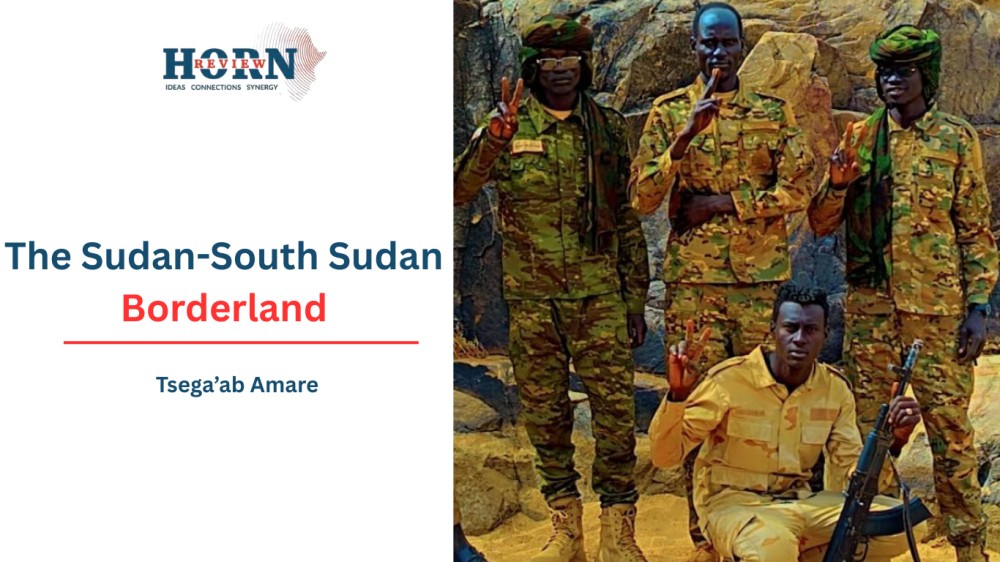
As the conflict in Sudan reaches its 1,000-day milestone in January 09, 2026, the war has evolved from a domestic power struggle into a borderless theater of regional attrition. The capture of South Sudanese combatants by the Sudanese Armed Forces (SAF) in North Kordofan on January 1, 2026, provides empirical weight to claims of a mercenary pivot by the Rapid Support Forces (RSF).
On January 1, 2026, the SAF announced the capture of over ten South Sudanese nationals following high-intensity engagements in Kazqil and Al-Rayash in North Kordofan. Kazqil, situated approximately 45 kilometers south of the strategic capital of El Obeid, represents a vital logistical node on the highway linking North and South Kordofan. The area has been a primary flashpoint in the SAF’s offensive, which utilized over 300 combat vehicles and integrated drone platforms to disrupt RSF supply lines.
The presence of South Sudanese combatants in a frontline engagement so far from the border is not an isolated tactical anomaly. Rather, it is a symptom of the RSF’s reliance on foreign manpower to sustain its overstretched defensive perimeters in the Kordofan corridor. The integration of skilled foreign fighters—including technicians, drone operators, and veteran infantry—has allowed the RSF to compensate for the technical limitations of its tribal recruits and maintain its offensive momentum. For the SAF, however, these captures serve as documented evidence of Juba’s failure to secure its borders, prompting Khartoum to prepare a formal diplomatic file to pressure the South Sudanese government.
The Kordofan region has superseded Khartoum and Darfur as the primary theater where the war’s trajectory will be determined. Following the fall of El Fasher in late October 2025, the RSF successfully redeployed veteran units toward the Kordofan axis to consolidate control over the parallel governing authority, which was formally established in Nyala earlier in the year.
The military dynamics in Kordofan are defined by a strategy of attrition. The SAF, recognizing its own manpower limitations, has prioritized remote violence like the use of drone strikes and long-range artillery to deplete RSF resources without committing large infantry formations to urban warfare. This doctrine has forced the RSF into a recruitment trap; to maintain its sieges on cities like Kadugli and Dilling, it must refresh its ranks through transnational ethnic and tribal networks that transcend national borders.
The RSF’s military capabilities are sustained by a sophisticated, multi-continental mercenary infrastructure. While regional recruitment from Chad and Niger has been documented since 2023, the conflict in 2025 and 2026 has seen a significant professionalization of these networks.
Investigations have identified a recruitment pipeline funneling former Colombian military personnel into Sudan via Abu Dhabi-based security firms. These ‘specialized fighters’ provide the RSF with technical expertise in operating advanced Chinese-made drones and specialized artillery, compensating for the limitations of tribal recruits. A critical logistics discovery in late 2025 involved the use of Bosaso airport in Somalia as a transit hub. Foreign fighters arrive at UAE-run sections of the airport before being flown to the Sudanese border via Chad and Niger. Recruitment from South Sudan primarily targets areas in Northern Bahr el Ghazal and Western Equatoria. The RSF exploits the “faza’a” tradition, an ancient custom of tribal mobilization, to rally fighters across the border under the guise of protecting shared Arab or pastoralist interests.
The most significant driver of South Sudanese recruitment into the RSF is the collapse of the domestic economy. In early 2024, the rupture of the Petrodar pipeline, which was the primary artery for South Sudan’s oil exports, led to a 14-month halt in salary payments for civil servants and the military. This suspension has produced a large reservoir of unemployed, militarized young men with prior combat experience.
The RSF, which has controlled sections of the border between Northern Bahr el Ghazal and East Darfur since before the war, utilizes this control to manage the smuggling of goods and the recruitment of labor. Reports from the Rift Valley Institute indicate that while agricultural laborers have migrated to Darfur and Kordofan for decades, the current conflict has transformed these labor migration patterns into military recruitment pipelines. In December 2025 alone, over 2,700 returnees arrived in Aweil East following the RSF’s capture of Babanusa and the Heglig oil field. These returnees often arrive with nothing, dependent on an overstretched and underfunded international aid system.
This socio-economic collapse has placed acute strain on President Salva Kiir’s “big tent governance model,” which depends on oil revenues to co-opt rivals and manage elite fragmentation. With fiscal resources depleted, patronage networks are contracting, heightening the risk of political rupture and a renewed descent into internal conflict.
The Kazqil captures have accelerated an already fragile deterioration in Sudan–South Sudan relations, transforming long-standing structural tensions into an overt diplomatic confrontation. In January 2026, Sudanese diplomatic sources indicated that Khartoum is preparing to submit a “comprehensive file” to Juba, including the names of detainees and documented recruitment routes. Sudanese officials have accused South Sudan of continued transgressions along the borderlands, arguing that the persistence of recruitment networks operating from Northern Bahr el Ghazal and Western Equatoria reflects systemic negligence rather than administrative incapacity.
As Sudan enters 2026, the prospect of a negotiated peace appears remote. The war has settled into a permanent political system, where armed actors profit from chronic instability. The RSF’s project of dismantling the ‘1956 state’ has resulted in the creation of borderless fiefdoms run by warlords and foreign patrons.
The mercenary pivot in Kordofan is a symptom of this regional breakdown. If Khartoum identifies Juba as a hostile actor, the resulting termination of oil cooperation would likely trigger a financial collapse in South Sudan, reigniting its dormant civil war and creating a contiguous zone of conflict from the Red Sea to Central Africa.
The Horn of Africa, already grappling with protracted conflicts in Sudan and Somalia, cannot absorb another systemic shock without risking further fragmentation. Whether the Red Sea corridor avoids a generation of decentralized violence will depend on the international community’s capacity to disrupt the transnational financing, recruitment, and logistics networks sustaining the war in Sudan.
By Tsega’ab Amare, Researcher, Horn Review
Newer articles:
- South Sudanese Doctors Continue Father Lee's Mission - 14/01/2026 12:18
- As humanitarian crises mount, Sudan and South Sudan church leaders urge sustained global attention - 14/01/2026 12:02
- UN launches 1 bln USD humanitarian response plan for South Sudan - 14/01/2026 11:57
- Indian woman peacekeeper in South Sudan wins UN award for gender-inclusive project - 14/01/2026 11:53
- South Sudan Country Refugee Response Plan (At a glance 2026) - 14/01/2026 11:47
Older news items
- Don Bosco Morobo has new Land Cruiser for mission outreach thanks to donor funding from Salesian Missions - 12/01/2026 11:13
- Rwanda: Musanze’s ‘Tshabalala’ joins South Sudan’s El Merriekh Bentiu - 12/01/2026 11:08
- Sudan’s Burhan orders release of 400 female inmates accused of cooperating with RSF - 12/01/2026 11:02
- South Sudan denies U.S. accusations of obstructing humanitarian assistance - 12/01/2026 10:58
- Trump administration halts foreign assistance in South Sudan’s Ayod County amid abuse claims - 09/01/2026 13:20
Latest news items (all categories):
- Western Equatoria prepares for voter registration - 14/09/2026 15:11
- South Sudanese Women Reclaim Their Lives after Fistula Surgery - 14/09/2026 15:10
- Digitel Launches Voice and Social Media Bundles in South Sudan - 14/09/2026 15:07
- Nearly 100,000 displaced in Sudan’s Blue Nile state since January amid fighting: UN agency - 14/09/2026 15:03
- جنوب السودان يرفض طلبًا لـ”حميدتي” بمنحه الحصة الأكبر من عائدات النفط - 14/09/2026 14:51
See also (all categories):
Random articles (all categories):
- South Sudan team to head to Sudan this week ahead of meeting between presidents - 20/03/2012 20:06
- SPLM Call for Mass Demonstration is a Joke - 15/10/2009 14:44
- U.S. to support good governance in South Sudan - 04/06/2013 00:01
- Famine-hit South Sudan sharply raises foreigners' work fees - 04/03/2017 09:09
- Turkish Airlines to start Juba Flights from June 2022 using B737 MAX - 08/02/2022 18:04
Popular articles:
- Who is the darkest person in the world, according to Guinness World Record? - 25/10/2022 02:34 - Read 149556 times
- School exam results in South Sudan show decline - 01/04/2012 17:58 - Read 28111 times
- Top 10 weakest currency exchange rates in Africa in 2023 - 19/07/2023 00:24 - Read 25191 times
- No oil in troubled waters - 25/03/2014 15:02 - Read 24461 times
- NDSU student from South Sudan receives scholarship - In-Forum - 29/09/2012 01:44 - Read 22414 times
