
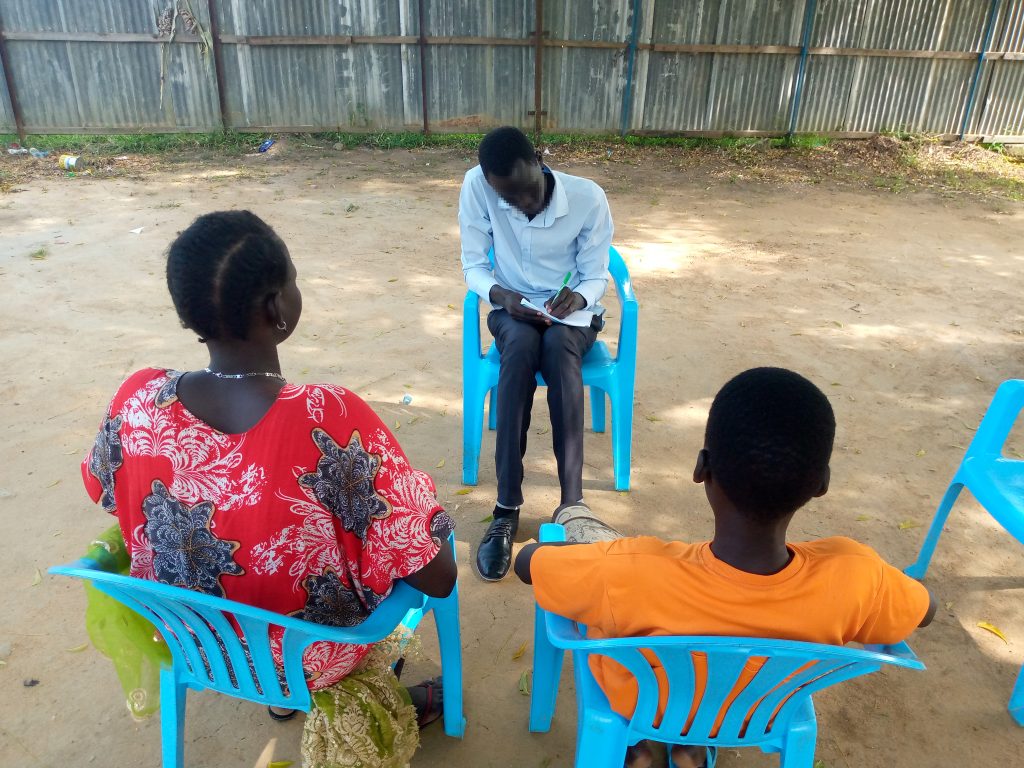
In the world’s youngest country, South Sudan, the development towards a more democratic society has proven difficult. The need to build a stronger and more independent civil society is critical for the democratic future of the country. But change is underway. And it is built from the bottom up.
The autocratic leadership in South Sudan has resulted in a weak rule of law, monopolisation of positions of power and militarisation. It has been difficult to set up and maintain a democratic system. Many human rights organisations are also working at a low capacity due to underfunding and gaps in know-how.
“You are in a constant state of challenges if you are not building the capacity of your organisation,” says Isak Hussein*, executive director for a human rights organisation in South Sudan.
The tense political situation and the militarized governance in South Sudan have forced civil society to operate under restrictions where they must adapt to thematic interests that are not considered a threat to the ones in power. It has been hard for Isak Hussein’s organisation to do anything besides documenting the cases, which put a strain on the organisation and the staff.
“Before we were able to build our capacity with the help from Civil Rights Defenders, our biggest challenge was the accountability aspect of documenting and reporting on human rights violations. The victims that we interviewed wanted justice; they wanted their case taken to court, but we did not have the capacity to do that,” says Isak Hussein.
How do you strengthen organisations?
To be able to operate efficiently, the human rights organisation needed financial support. This is to be able to rent office space, hire staff, and conduct their human rights work.
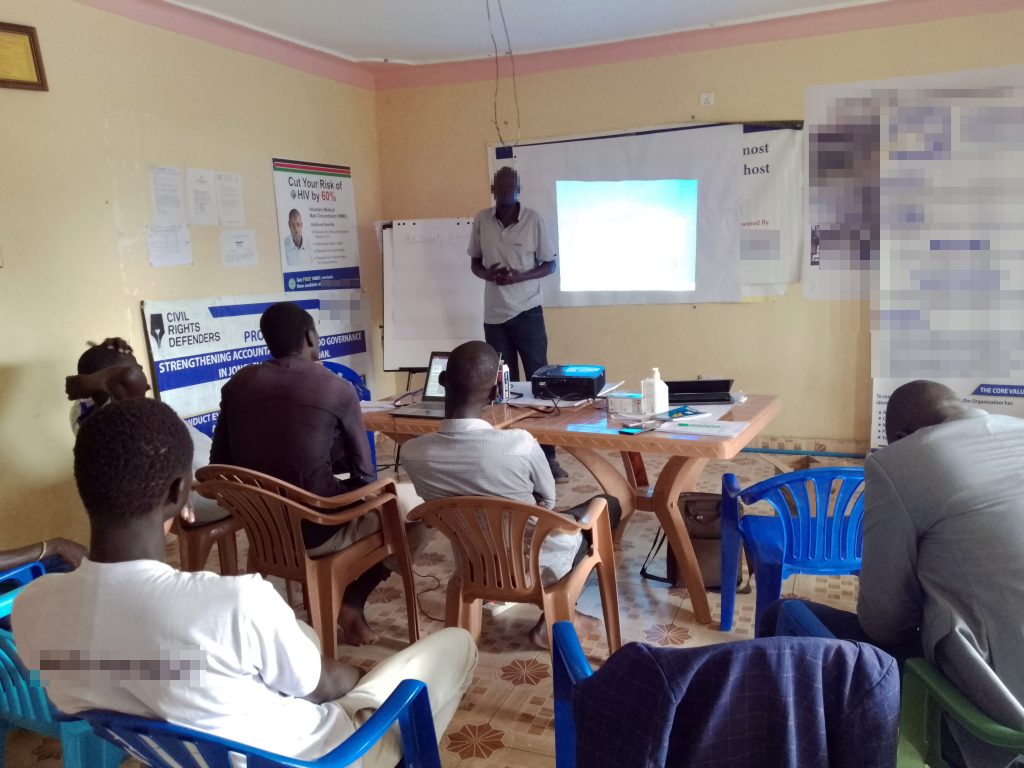
The staff has undergone legal training to learn how to submit and argue for cases in the East African Courts. It strengthened their technical capabilities, but more is needed to strengthen an organisation as a whole. Building the internal organisational capacity is important to develop sustainable and efficient operations. Therefore, their financial team has also been trained in accounting and digital systems.
With the new Civil Rights Defenders’ office opening in South Sudan, they now have someone to turn to for assistance nearby.
“We have support from the Civil Rights Defenders’ team in South Sudan, which is great because we have backup support when we need help with something or have questions,” says Isak Hussein.
What does the future of South Sudan look like?
According to Isak Hussein, training courses, additional help with accounting and support from Civil Rights Defenders legitimise their organisation to be recognised by the government. This enables them to collaborate more closely with the government to reach their human rights goals.
However, there is still much work to be done.
“Our organisation was established in 2021. Issues such as human rights, ensuring community rights and domestic rights are areas we have been working on since then. But our country just came out of a civil war. There are a lot of issues with accountability and protecting democratic rights,” says Isak Hussein.
In recent times, there has been some improvement. Despite the troubles, a more equitable society is underway. This spring, South Sudanese President Salva Kiir signed four human rights conventions into law. That gives civil society something to build from.
* The name used in this article has been changed to protect the security of the organisation and its staff.
Newer articles:
- Malaysian policeman goes on a UN peacekeeping mission in South Sudan - 06/10/2023 05:00
- Experienced coach Antonio Flores eyes South Sudan national football head coach role - 06/10/2023 04:42
- Cholera, Dengue Fever, Malaria Outbreak in Sudan - 06/10/2023 03:42
- US resumes some food aid deliveries to Ethiopia after assistance was halted over 'widespread' theft - 06/10/2023 01:53
- World Bank backs Kenya's pause on rate increases - 06/10/2023 01:45
Older news items
- New UN report cites media censorship, restriction on civic activities in South Sudan - 05/10/2023 06:52
- UNMISS Force Commander visits Yambio, Tambura to evaluate the mission’s ongoing protection efforts - 05/10/2023 06:51
- Nearly 8 Million People Are Starving in South Sudan as War Intensifies - 05/10/2023 05:27
- WFP: ‘Looming emergency hunger crisis’ along Sudan-South Sudan border - 05/10/2023 04:39
- UN struggling to reach 18 million people in need in war-torn Sudan - 05/10/2023 03:50
Latest news items (all categories):
- Western Equatoria prepares for voter registration - 14/09/2026 15:11
- South Sudanese Women Reclaim Their Lives after Fistula Surgery - 14/09/2026 15:10
- Digitel Launches Voice and Social Media Bundles in South Sudan - 14/09/2026 15:07
- Nearly 100,000 displaced in Sudan’s Blue Nile state since January amid fighting: UN agency - 14/09/2026 15:03
- جنوب السودان يرفض طلبًا لـ”حميدتي” بمنحه الحصة الأكبر من عائدات النفط - 14/09/2026 14:51
Random articles (all categories):
- It is Your Tribe Versue My Tribe - 18/03/2009 20:19
- Stopping South Sudan’s downward spiral - 20/05/2015 17:47
- Bashir threatens to ban SPLM in north Sudan if parties not allowed in the south - 31/05/2009 17:16
- Lalley: Follow South Sudan journey - Sioux Falls Argus Leader - 28/09/2012 04:03
- Chinese tech Huawei, ignored by the West, is taking over Africa's cyberspace - 22/07/2021 04:08
Popular articles:
- Who is the darkest person in the world, according to Guinness World Record? - 25/10/2022 02:34 - Read 149548 times
- School exam results in South Sudan show decline - 01/04/2012 17:58 - Read 28110 times
- Top 10 weakest currency exchange rates in Africa in 2023 - 19/07/2023 00:24 - Read 25189 times
- No oil in troubled waters - 25/03/2014 15:02 - Read 24460 times
- NDSU student from South Sudan receives scholarship - In-Forum - 29/09/2012 01:44 - Read 22413 times
