
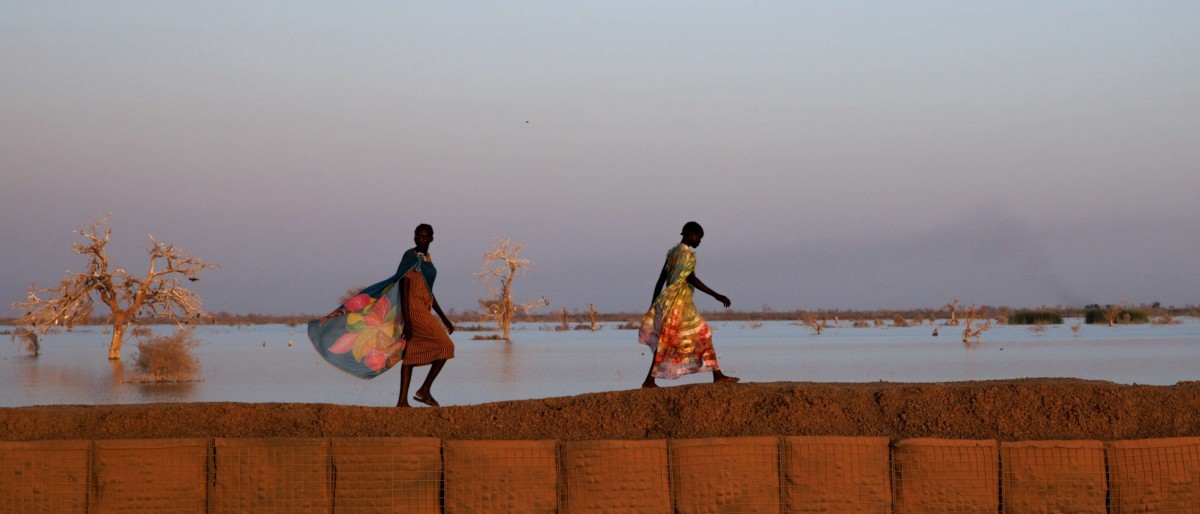
South Sudan is the world’s youngest country, gaining independence in 2011. However, hopes for stability were quickly undermined: a brutal civil war from 2013 to 2018 killed hundreds of thousands of people, displaced millions and devastated the economy.
Today, South Sudan is once again at a dangerous crossroads. Political tensions are rising, violence continues in parts of the country and repeated climate shocks—including years of severe flooding—have destroyed crops and livelihoods. At the same time, economic collapse has sent food prices soaring, leaving many families unable to afford even basic meals.
As a result, 10 million people—84% of the country’s population—urgently need humanitarian support. Projections show that nearly half of South Sudan’s counties will face emergency levels of food insecurity, at which point death by starvation is a daily risk.
These overlapping crises have landed South Sudan on the International Rescue Committee’s (IRC) 2026 Emergency Watchlist, which identifies countries most at risk of a deteriorating humanitarian emergency. South Sudan ranks third globally—behind only Sudan and the Occupied Palestinian Territory (oPt).
The Watchlist not only highlights the drivers of crisis, but also where urgent action can save lives. The IRC is on the ground in South Sudan, delivering health care, protection, education and economic recovery support to communities affected by conflict, displacement and hunger.
What is happening in South Sudan?
South Sudan is facing a severe humanitarian crisis driven by conflict, hunger, climate shocks and economic collapse. Years of violence and political instability have disrupted farming, markets and essential services. At the same time, repeated flooding, rising food prices and the arrival of refugees fleeing a brutal civil war in neighboring Sudan have left millions of people unable to meet their basic needs.
Together, these pressures are fueling widespread food insecurity and increasing the risk of famine in parts of the country.
Why is the risk of famine growing?
The risk of famine in South Sudan is growing as families struggle to afford enough food to survive. Five consecutive
years of economic decline, culminating in the economy shrinking by 30% in 2025 alone, have made it difficult for nearly all families to afford enough nutritious food. The cost of essential food supplies has quadrupled, leaving millions of people—including Sudanese refugees—unable to feed themselves.
Rising insecurity is making the situation even worse. Violence and access constraints regularly disrupt aid delivery, suspending food assistance and forcing the evacuation of humanitarian staff. Some households are already projected to face famine conditions, at which point death by starvation is a daily possibility.
“South Sudan is at a breaking point,” says IRC South Sudan Country Director Richard Orengo. “Women and children are bearing the brunt of this crisis. We are seeing alarming levels of acute malnutrition across the country, driven by conflict, unreliable climatic conditions, rising prices and repeated interruptions to aid.”
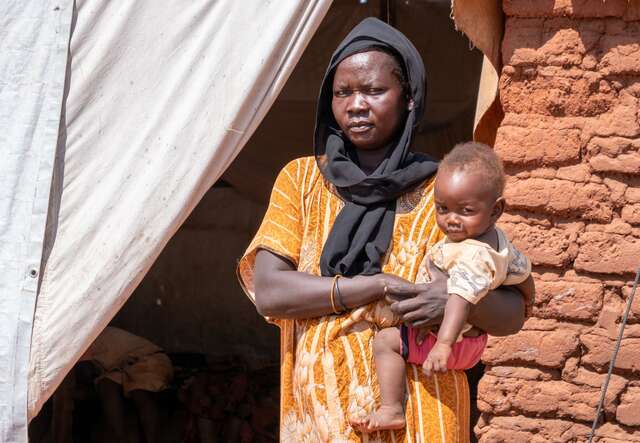
Nearly half of South Sudan’s counties are projected to face famine conditions. By the time a famine is declared, it’s already too late: children and their families are already dying of hunger (Photo: Florence Miettaux for the IRC)
Is South Sudan at risk of civil war?
South Sudan’s fragile peace is under serious threat. A 2018 peace agreement ended a five-year civil war that killed nearly 400,000
people and forced millions from their homes. However, many of the deal’s key commitments—including security reforms and preparations for national elections—were never fully implemented.
With elections delayed and an economic crisis deepening tensions, the risk of renewed conflict is growing. For civilians, a return to widespread fighting would likely mean new displacement, further disruption to food production and dangerous interruptions to humanitarian aid—pushing already vulnerable families closer to famine.
How the war in Sudan impacts South Sudan
The civil war in neighboring Sudan is compounding South Sudan’s crisis. It has created the largest humanitarian crisis in recorded history, pushing 15.8 million people into humanitarian need as civilians bear the brunt of the violence.
More than one million
refugees and returnees have crossed from Sudan to South Sudan, often with little more than they can carry. These new arrivals urgently need food, shelter, health care and protection. At the same time, the communities hosting them—many already struggling to feed their own families—are under immense strain. Substantial international support is needed to deliver the required humanitarian aid.
The war has also created severe economic consequences for South Sudan. The country depends on oil exports that pass through Sudan, and damage to the oil pipeline in 2024 caused daily losses of $7 million, driving up prices of all goods for South Sudanese families.
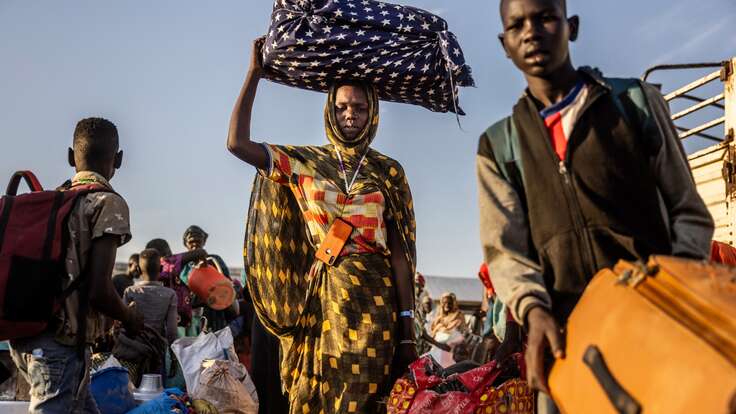
Humanitarian needs in South Sudan are overwhelming. Urgent international support is needed to deliver aid to South Sudanese communities and refugees fleeing the war in neighboring Sudan (Photo: Luis Tato/AFP via Getty Images)
Forecasts highlight risk of flooding and disease outbreak
Climate shocks continue to deepen South Sudan’s humanitarian crisis. The country suffered its sixth consecutive year of severe flooding in 2025, affecting over 900,000 people.
Flooding has also fueled a growing public health emergency. Contaminated water sources and overcrowded displacement sites have contributed to South Sudan’s longest-running
cholera outbreak of over 100,000 cases. These shocks also come with significant economic impacts for the 95% of the population that depends on agriculture and pastoralism.
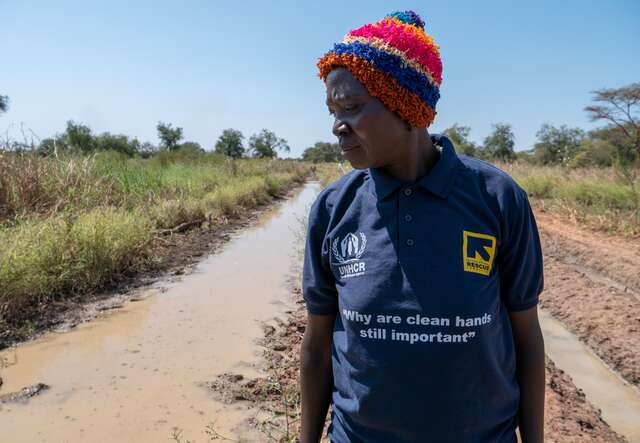
Mary, a refugee from Sudan, walks through a portion of her farm that has been destroyed by flooding. Thanks to the IRC’s Economic Recovery and Development program on climate-resilient agriculture, part of her harvest is safe (Photo: Florence Miettaux for the IRC)
How the IRC is responding in South Sudan
For over three decades, the IRC has stood as a lifeline for communities across South Sudan, responding to the urgent needs of those affected by conflict, displacement and disaster. As one of the country’s largest humanitarian actors, we reach over one million people with health, protection, education and economic empowerment services. In an unstable nation, the IRC’s work is not only lifesaving, it is life-restoring, helping individuals and families rebuild with dignity and hope.
How can I help people affected by the crisis in South Sudan?
You can help families in South Sudan survive, recover and rebuild. The IRC relies on generous donors to deliver lifesaving food, health care, education, and protection services in some of the country’s most vulnerable communities.
Source: https://www.rescue.org/article/whats-happening-south-sudan-10-million-people-need-help
Newer articles:
- Chinese peacekeeping engineers to repair key supply route in South Sudan - 02/02/2026 18:13
- WFP calls for safe humanitarian access as conflict escalates in South Sudan's Jonglei State - 30/01/2026 20:50
- UK: South Sudanese Asylum seeker jailed for 29 years for Rhiannon Whyte murder - 30/01/2026 20:40
- Ruto meets South Sudan Presidential Special Envoy Tut Gatluak Manime - 29/01/2026 15:44
- The Chairperson of the African Union Commission Calls for De-escalation and Respect for the Revitalized Peace Agreement in South Sudan - 29/01/2026 15:41
Older news items
- Dozens killed in RSF drone attack in war-torn Sudan’s South Kordofan - 29/01/2026 15:28
- 13 killed, 6 injured in gold mine collapse in South Kordofan state in southern Sudan - 29/01/2026 15:25
- South Sudan orders UN personnel, civilians to leave parts of Jonglei State - 26/01/2026 12:09
- Kenya on High Alert as UN Warns of Escalating Conflict in South Sudan - 26/01/2026 12:06
- UN experts warn of mass violence against civilians in South Sudan - 26/01/2026 12:03
Latest news items (all categories):
- China’s new Long March: Why its modernization is a demanding journey - 21/10/2026 12:31
- Drone attack in disputed Sudan-South Sudan border region kills at least 153 - 21/10/2026 12:17
- South Korea - 'Smart camp' system built at Hanbit Unit in South Sudan - 21/10/2026 12:09
- Sudanese refugees in Gorom camp, South Sudan, struggle for water, medicines, security - 21/10/2026 12:05
- South Sudan: A Testing Ground For Democracy While Citizens Struggle To Survive - 19/10/2026 14:31
See also (all categories):
Random articles (all categories):
- Gold fever sweeps South Sudan ahead of new mining law - BusinessWorld Online Edition - 13/11/2012 15:02
- EU calls Sudan, South Sudan to task - 22/07/2013 07:54
- Save South Sudan and the entire world by electing Hillary Rodham Clinton President! - 07/11/2016 23:08
- John Luk Joak Is Not Fit To Become the Speaker of South Sudan Parliament - 28/08/2013 19:00
- South Sudan seeks to revise petroleum law - 24/06/2022 09:11
Popular articles:
- Who is the darkest person in the world, according to Guinness World Record? - 25/10/2022 02:34 - Read 151175 times
- School exam results in South Sudan show decline - 01/04/2012 17:58 - Read 28327 times
- Top 10 weakest currency exchange rates in Africa in 2023 - 19/07/2023 00:24 - Read 25423 times
- No oil in troubled waters - 25/03/2014 15:02 - Read 24646 times
- NDSU student from South Sudan receives scholarship - In-Forum - 29/09/2012 01:44 - Read 22617 times
