
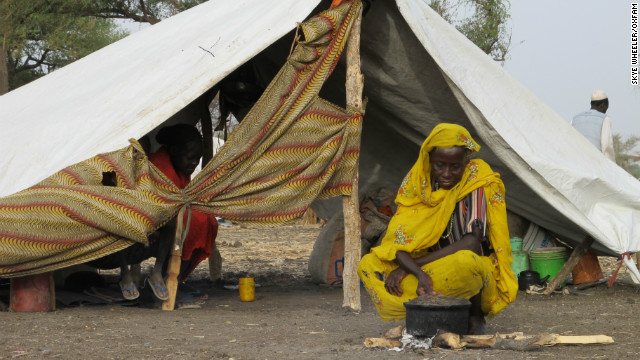
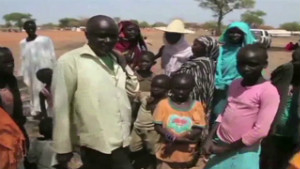
 Thousands of people fleeing the bitter conflict in the border areas of Sudan and South Sudan have found a temporary home in the Jamam refugee camp.
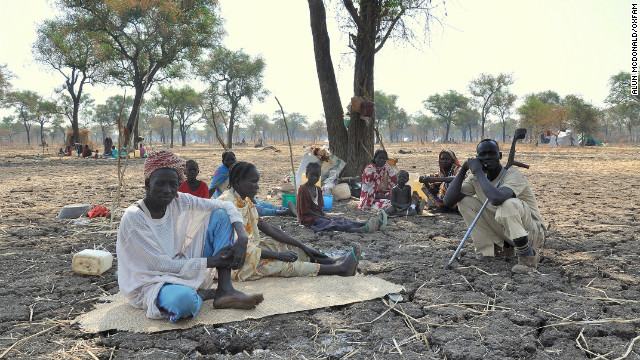 New arrivals reach the camp every day, displaced from their homes in troublespots across the two countries.
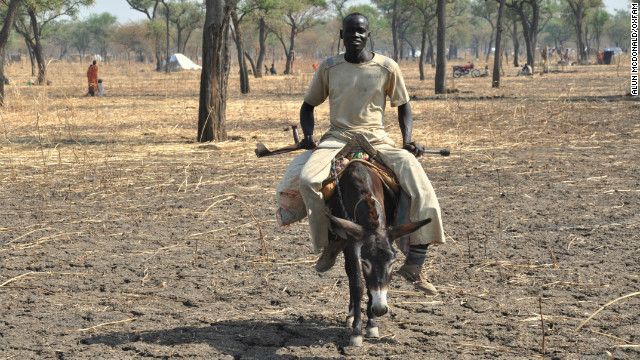 Hussein, who is disabled and unable to walk, travelled from the Blue Nile region of Sudan to Jamam on a donkey.
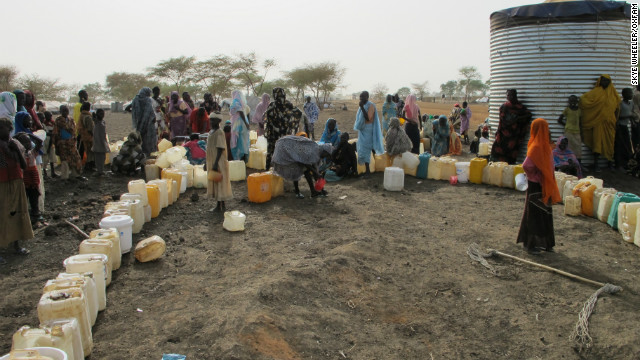 But the huge numbers of people seeking refuge at the camp has placed huge pressure on resources, including water.
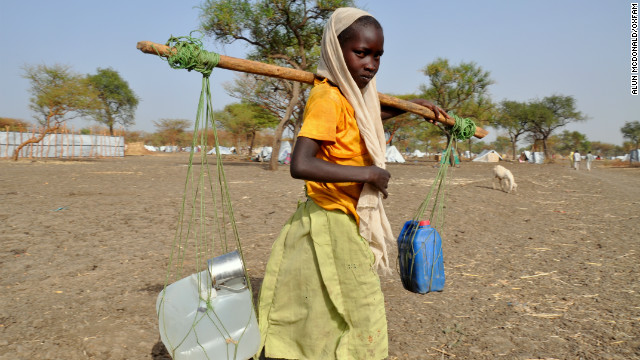 Women and girls wait in the hot sun for up to four hours, twice a day, to collect their families' water rations.
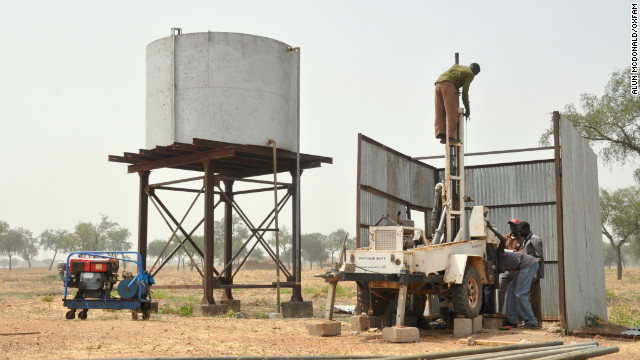 One of the four boreholes at the camp collapsed last week -- aid workers are now desperately drilling to try and find new water sources.
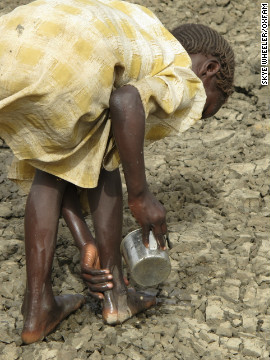
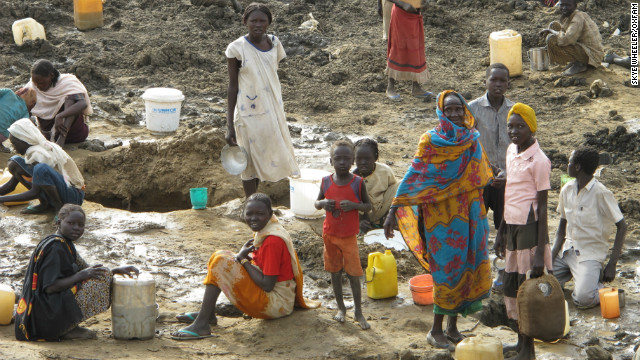 Refugees are left digging around the bottom of a dried-up cattle pond to try and supplement their meager water supplies.
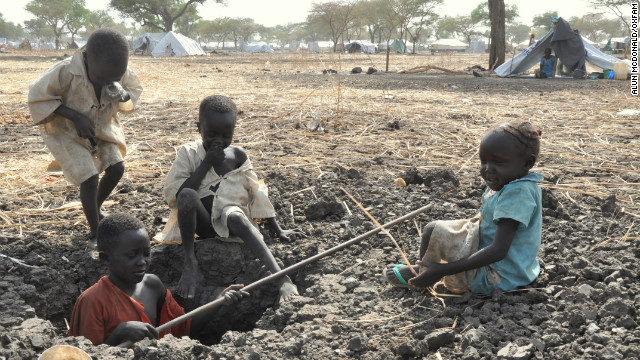 But aid workers fear the shrinking natural resources available may throw those living in the camp into conflict with local residents.
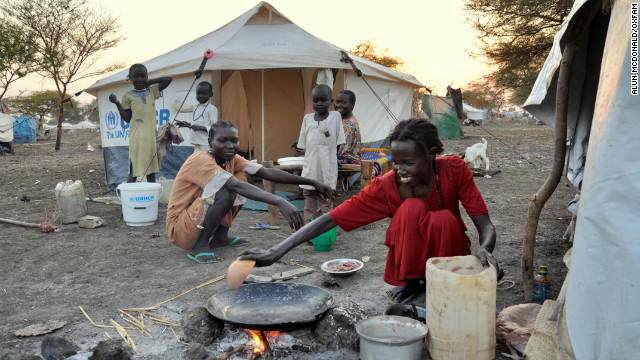 And the heavy rains, due to hit the region soon, are adding to their worries -- downpours can quickly destroy the refugees' flimsy shelters.
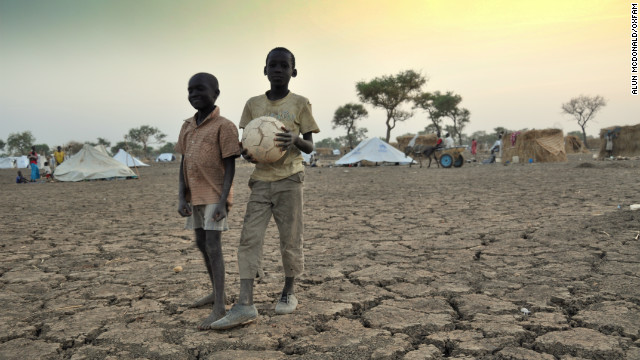 Humanitarian agencies are examining the possibility of relocating large numbers of refugees to a new site, and building a water pipeline.
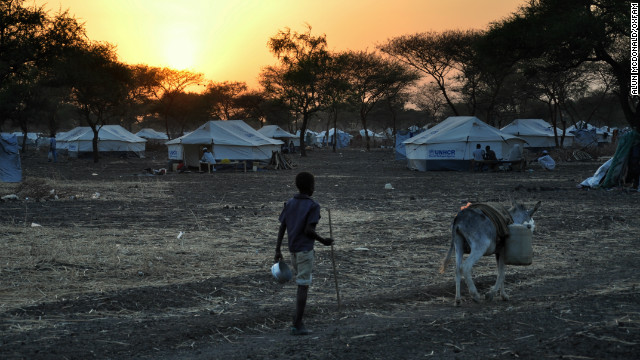 But Pauline Ballaman, of Oxfam, says the only real solution will be for a peace deal to be signed, allowing the refugees to return to their homes.
South Sudan refugee camp faces crisis
South Sudan refugee camp faces crisis
South Sudan refugee camp faces crisis
South Sudan refugee camp faces crisis
South Sudan refugee camp faces crisis
South Sudan refugee camp faces crisis
South Sudan refugee camp faces crisis
South Sudan refugee camp faces crisis
South Sudan refugee camp faces crisis
South Sudan refugee camp faces crisis
South Sudan refugee camp faces crisis
South Sudan refugee camp faces crisis
<<
<


>
>>
Editor's note: Editor's note: Pauline Ballaman heads Oxfam's emergency response in the Jamam refugee camp in South Sudan. The world's newest nation was created in July 2011 when it declared independence from Sudan: now the two nations are in conflict. Nearly 37,000 refugees have fled to the camp since late last year, escaping the ongoing conflict in Sudan's Blue Nile state, with more expected as the fighting spreads along the border. More than 100,000 refugees from the bloodshed and the parallel conflict in Southern Kordofan are now in South Sudan and Ethiopia. Hundreds of thousands more have been internally displaced within Sudan.
Jamam refugee camp, South Sudan (CNN) -- The dried up cattle pond is only a few meters off the red road that runs through Jamam refugee camp. It's a huge hole in the ground, long emptied by the blazing sun. At the bottom of this pit women and children dig with cups and bowls in the smelly, spongy mud for the little dirty water that seeps into their shallow wells.
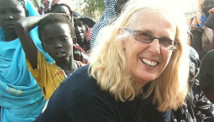
Oxfam's Pauline Ballman works in the Jamam Refugee Camp in South Sudan
Jamam refugee camp is in a desperate situation. All day Oxfam trucks water from the very few working boreholes in or near the camp to tanks close to the road. Women wait in the heat for up to four hours twice a day, next to their long queues of buckets and jerry cans. Men with sticks and whips police the lines. Fights break out all the time. No one has to ask why. There is simply not enough water and we are running out of options and we are running out of time.
This is the daily struggle that is the human face of peace failing in the Sudans. The conflict in Blue Nile has been going on for months, and now in the past few weeks fighting between Sudan and South Sudan threatens to further destabilize the wider border region these refugees still live in.
Like a cruel reminder of the conflict that the refugees fled, unidentified Antonovs -- the kind of planes that bombed their villages in Blue Nile -- flew over Jamam camp three times in the past few weeks. In a panic, refugees ran and sought safety in holes in the ground.

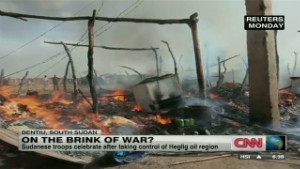 Sudan and South Sudan tensions escalate
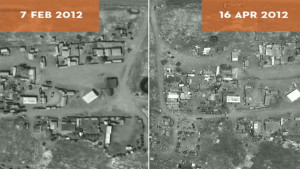 'Bombs and bombast' in Sudan conflict
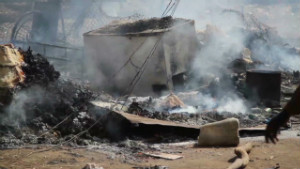 Sudan teeters on the edge of war
To truly understand why peace is so important, the world needs to remember it's not just the fighting that matters but also the enormous suffering it causes those who have already been forced to flee it. The interrupted lives, deadened by displacement in the hot, unblinking heat. In barely established camps like Jamam there's nothing to do but wait.
In Jamam -- where water is rationed well below people's needs, enough only for cooking and bathing - that struggle has become a crisis that is about to deepen as the rainy season approaches.
How to get enough water? That is the burning question, but the ground here has few answers. There is just not enough water to cope with so many new people -- and now there are fears that more may arrive as conflict spreads. We've done a hydro-geological survey and we've drilled for new boreholes. We have even resorted to water divining -- a traditional method using metal rods in the hope of detecting ground water. Only one drill has produced any water, but very little.
We were completely reliant on four overworked boreholes pumping 22 hours a day. One of these collapsed last week, and now there are just three. Rationing has been tightened again. It was a grim evening in our base in the camp that night. We ate our meal to the loud hum of the generator with our hearts in our stomachs.
The refugees were settled here partly because the host community was welcoming. But as water sources run out or dry up and more and more refugees arrive, competition for water is beginning to cause conflict here too. Fights break out at water points. The pressure is intense and I fear it will get worse.
The heavy rains are coming, bringing fresh problems. It rained last week for three hours, long enough to destroy many of the flimsy shelters of plastic sheeting, sheets, or straw the refugees have constructed under trees. Whole families were left exposed.
Sudan teeters on the edge of war
To truly understand why peace is so important, the world needs to remember it's not just the fighting that matters but also the enormous suffering it causes those who have already been forced to flee it. The interrupted lives, deadened by displacement in the hot, unblinking heat. In barely established camps like Jamam there's nothing to do but wait.
In Jamam -- where water is rationed well below people's needs, enough only for cooking and bathing - that struggle has become a crisis that is about to deepen as the rainy season approaches.
How to get enough water? That is the burning question, but the ground here has few answers. There is just not enough water to cope with so many new people -- and now there are fears that more may arrive as conflict spreads. We've done a hydro-geological survey and we've drilled for new boreholes. We have even resorted to water divining -- a traditional method using metal rods in the hope of detecting ground water. Only one drill has produced any water, but very little.
We were completely reliant on four overworked boreholes pumping 22 hours a day. One of these collapsed last week, and now there are just three. Rationing has been tightened again. It was a grim evening in our base in the camp that night. We ate our meal to the loud hum of the generator with our hearts in our stomachs.
The refugees were settled here partly because the host community was welcoming. But as water sources run out or dry up and more and more refugees arrive, competition for water is beginning to cause conflict here too. Fights break out at water points. The pressure is intense and I fear it will get worse.
The heavy rains are coming, bringing fresh problems. It rained last week for three hours, long enough to destroy many of the flimsy shelters of plastic sheeting, sheets, or straw the refugees have constructed under trees. Whole families were left exposed.
 Sudan's civilian casualties growing
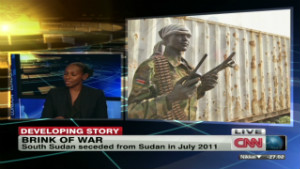 Sudan, South Sudan's bitter divisions
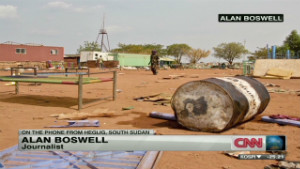 Oil dispute engulfs Sudan, S. Sudan
The rains will flood large parts of the camp, bringing the threat of disease and making trucking water in very difficult -- perhaps impossible as the roads deteriorate into impassable mud slicks. Drilling in the rains is also near impossible.
It is hard to express how miserable the mud of Upper Nile is. It's a kind of black clay that sticks to everything, the stuff of quagmires. Largely impermeable, water sits on top of it, a massive health risk not just encouraging malaria but also water-borne diseases including cholera.
Humanitarian agencies working in the camp are looking into options including relocating a large number of the refugees to a new site, and putting in a pipeline that will hopefully mean the water can reach the camp more reliably when the roads fall apart.
But there's only one real solution. People need peace and people need to be able to go home.
Unless all parties involved in the fighting stop and focus on long-term peace then I fear that the situation in Sudan and South Sudan will reverse to how it was during wartime, Africa's longest civil war, the most recent phase of which lasted 22 years and left around 2 million people dead.
All that progress made in the years following the 2005 peace agreement risks being lost. The international community played a major role in brokering that peace -- now is the time to make sure it lasts. The people in Jamam, and across the two countries, deserve to be free from the constant threat of crisis.
The opinions expressed in this commentary are solely those of Pauline Ballaman.
Oil dispute engulfs Sudan, S. Sudan
The rains will flood large parts of the camp, bringing the threat of disease and making trucking water in very difficult -- perhaps impossible as the roads deteriorate into impassable mud slicks. Drilling in the rains is also near impossible.
It is hard to express how miserable the mud of Upper Nile is. It's a kind of black clay that sticks to everything, the stuff of quagmires. Largely impermeable, water sits on top of it, a massive health risk not just encouraging malaria but also water-borne diseases including cholera.
Humanitarian agencies working in the camp are looking into options including relocating a large number of the refugees to a new site, and putting in a pipeline that will hopefully mean the water can reach the camp more reliably when the roads fall apart.
But there's only one real solution. People need peace and people need to be able to go home.
Unless all parties involved in the fighting stop and focus on long-term peace then I fear that the situation in Sudan and South Sudan will reverse to how it was during wartime, Africa's longest civil war, the most recent phase of which lasted 22 years and left around 2 million people dead.
All that progress made in the years following the 2005 peace agreement risks being lost. The international community played a major role in brokering that peace -- now is the time to make sure it lasts. The people in Jamam, and across the two countries, deserve to be free from the constant threat of crisis.
The opinions expressed in this commentary are solely those of Pauline Ballaman.
Newer articles:
- South Sudan frees prisoners; clashes abate - Reuters - 25/04/2012 22:36
- South Sudan troubles not unique among new nations - Albany Times Union - 25/04/2012 18:10
- South Sudan troubles not unique among new nations - Ocala - 25/04/2012 18:00
- South Sudan troubles not unique among new nations - ksl.com - 25/04/2012 17:13
- South Sudan troubles not unique among new nations - Fox News - 25/04/2012 17:11
Older news items
- South Sudan president cuts short trip to China amid dispute with Sudan - CNN International - 25/04/2012 14:48
- AU gives Sudan, South Sudan three months to sign deal - Ahram Online - 25/04/2012 14:43
- South Sudanese Leader Shortens China Trip - Voice of America - 25/04/2012 14:36
- South Sudan leader cancels part of China trip - Fox News - 25/04/2012 10:37
- South Sudan president in China seeking diplomatic support in conflict with ... - Sudan Tribune - 25/04/2012 07:25
Latest news items (all categories):
- Juba commissioner denies chasing foreigners - 07/10/2026 14:36
- Australia: 19-year-old from South Sudan arrested over a wild joy ride - 07/10/2026 14:33
- South Sudan’s aid crisis deepens as food stocks run low - 07/10/2026 14:29
- South Sudan’s Juba warns foreigners against running small-scale businesses - 07/10/2026 14:25
- Peace Dialogues foster social cohesion in Nyirol County after persisting tensions - 07/10/2026 14:23
See also (all categories):
Random articles (all categories):
- Op-Ed: Sudan’s Bashir one step closer to the ICC - 13/02/2020 07:07
- Poverty disallows former child soldiers to return to schools in South Sudan - 11/06/2021 04:57
- قصيدة بعنوان امة شلو - 03/03/2011 00:00
- Programme Development Advisor South Sudan (Monitoring, Research and Learning) - 18/09/2013 13:12
- South Sudan student’s kin bury her in Mumbai, ask for footage of railway accident - 18/07/2018 17:37
Popular articles:
- Who is the darkest person in the world, according to Guinness World Record? - 25/10/2022 02:34 - Read 150745 times
- School exam results in South Sudan show decline - 01/04/2012 17:58 - Read 28193 times
- Top 10 weakest currency exchange rates in Africa in 2023 - 19/07/2023 00:24 - Read 25305 times
- No oil in troubled waters - 25/03/2014 15:02 - Read 24533 times
- NDSU student from South Sudan receives scholarship - In-Forum - 29/09/2012 01:44 - Read 22492 times
