
 (csmonitor.com)
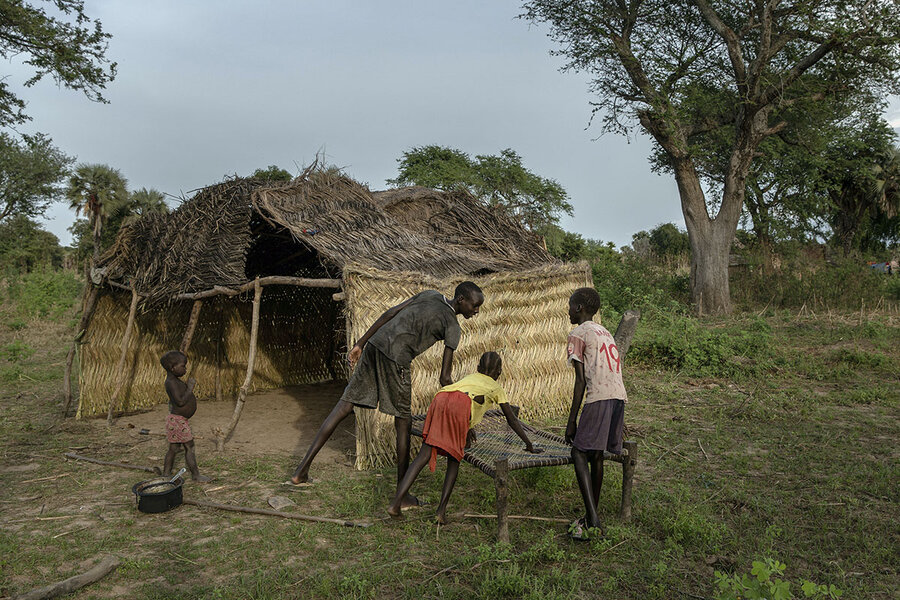
In many countries, the census is a regular and unremarkable feature of life, expected and ordinary. But in much of the world, counting people remains an extraordinary task and one with extraordinarily high stakes.
In South Sudan, the challenges of conducting a census are numerous. The country is still wracked by violent conflict. It has only a few hundred miles of paved roads. For large sections of the calendar, whole regions are inaccessible due to rain. Censuses cost money, a lot of it. And even figuring out where people are to count them can be difficult, given the churn of migration. Nevertheless, the country is preparing a long-awaited census for next year. In the absence of one, governments have to do guesswork, as one population expert puts it. And then resources go to the wrong places.
Globally, the census is most difficult to organize in places where the results have the highest stakes because scarce government resources and international aid depend on the results. “You need to get a count of the population first and all the other work follows,” says Julius Sebit Daniel, a survey manager at the National Bureau of Statistics in Juba.
In South Sudan, a national census means much more than just numbers. With population data, resources go where they are most needed, helping rebuild a country fragile from civil war.
JOHANNESBURG
When South Sudan became independent in 2011, the new country needed the world’s help.
Hollowed out by decades of war and poverty, it didn’t have enough of many things fundamental to making a country work: schools and roads, hospitals and cell towers, sewers and water pipes.
But how many of those things it needed was fuzzy, because there was no up-to-date record of how many people actually lived in South Sudan, let alone who or where they were. The Sudanese government had conducted a census in 2008, but war and migration meant its figures went quickly stale. And as another civil war roiled the new country over the next several years, those numbers became more jumbled.
In South Sudan, a national census means much more than just numbers. With population data, resources go where they are most needed, helping rebuild a country fragile from civil war.
So the government made a deceptively simple decision: It would count its people. The long-awaited census is currently scheduled to begin next year.
In many countries, the census is a regular and unremarkable feature of life, expected and ordinary. But in much of the world, counting people remains an extraordinary task and one with extraordinarily high stakes.
“It’s a fundamental question. You need it for almost everything,” says Chris Jochem, a geographer with the WorldPop project, which collects and analyzes global population data, who has also worked on population counts in South Sudan.
Censuses inform a wide variety of decisions, from the contentious boundaries of political districts and the number of COVID-19 vaccines a government needs to buy, to whether or not a company should build its next potato chip factory in a certain area, given available workers.
“In the absence of a census, governments have to do guesswork. Resources go to the wrong places,” says Fredrick Okwayo, a technical adviser at the United Nations Population Fund (UNFPA) who has advised governments around the world about population counts.
But countries like South Sudan pose major challenges for the world’s people-counters. How, for instance, do you count people constantly moving around because of conflict and hunger? How does a census worker with a clipboard or an iPad move around in an active war zone? And how do you get to people living not only “off the grid” but hundreds of miles from the nearest paved road?
Earlier this year, South Sudan completed a “population survey,” a kind of mini-census designed as a stopgap measure until the real thing could be done. Census workers counted people in about 1,500 sites across the country, previewing many of the challenges of doing a full census.
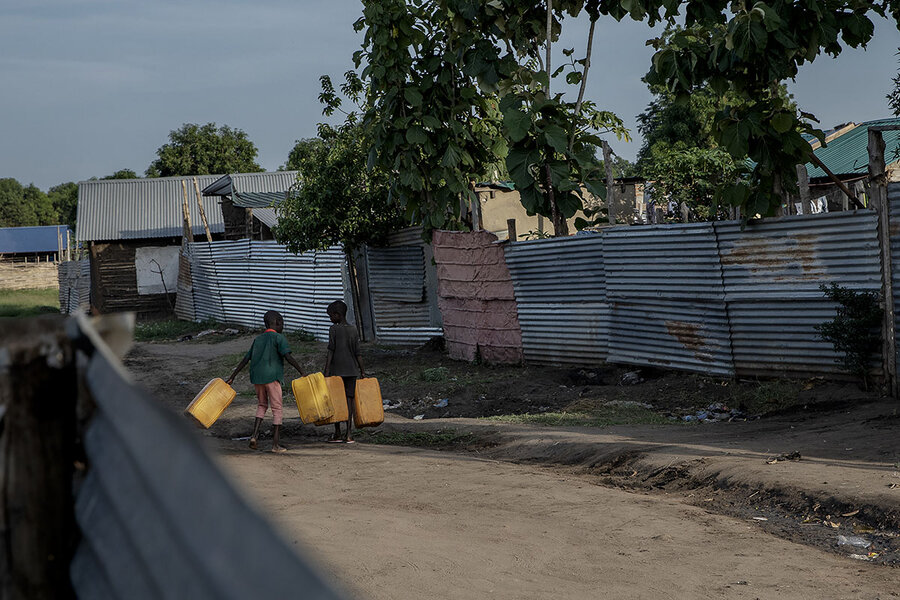
“We had a lot of snakebites” among census workers, says Julius Sebit Daniel, the survey manager for the population survey at the National Bureau of Statistics in Juba. In some areas, flooding meant enumerators had to wade through chest-deep water, holding their census-taking iPads over their heads.
“So there were many big challenges,” says Mr. Daniel, who got his own start in the field in 1983 as a high school student with a part-time job counting people for the Sudanese census. He remembers walking miles between each house, lugging jugs of water on his back.
Globally, the census is most difficult to organize in places where the results have the highest stakes because scarce government resources and international aid depend on the results. “You need to get a count of the population first and all the other work follows,” Mr. Daniel says.
Advances in satellite and cellular technology have made it easier for demographers like those from the WorldPop team to estimate populations, even when a census can’t be done. But estimates can only go so far, Dr. Jochem notes. “Counting every single person is still the most accurate way, and an important job,” he says.
South Sudan is far from the only country to have wrestled with these questions in recent years. Afghanistan and Myanmar emerged from decades of conflict, with donors knocking on their doors, only to find out they didn’t know how many people they had. In northern Nigeria and eastern Congo, meanwhile, ongoing conflict has meant demographers have had to get creative with their methods, using satellites, mathematical models, and even cellphone usage to shape their best guess at who lives where. And then there is Eritrea and North Korea, where governments simply refuse to count their people.
In South Sudan, multiple challenges are stacked on top of each other. The country is still wracked by violent conflict. It has only a few hundred miles of paved roads. For large sections of the calendar, whole regions are simply inaccessible due to rain. Censuses cost money, a lot of it. And even figuring out where people are to count them can be difficult, given the churn of migration because of other crises.
“You have these zones from the 2008 census, and then you go there and there are no people there anymore,” says Mr. Daniel.
South Sudan has been trying to hold a complete census since 2014, but war, funding, and a pandemic have stood in its way, Mr. Daniel says. The timeline of next year’s census remains murky.
“People here have been waiting for a census,” hoping it will mean more resources in the poorest places, says Wellington Mbithi, a UNFPA technical specialist who worked on the population estimation survey in South Sudan.
Of course, having data doesn’t always translate to changing lives. But it’s a start, Mr. Daniel says.
He still remembers what it was like to stop and sit with residents of each house he visited as an enumerator back in high school, asking them about the fundamentals of their lives: Where do you come from? Are you married? Do you have kids? Did you go to school?
The work changed his life. Before that, he’d been thinking of studying engineering. Instead, he studied statistics and became a demographer. He’d seen what the lives of South Sudan residents looked like close up, and he wanted to figure out what they looked like as a whole.
“For the benefit of our people, we need to do this,” he says.
Newer articles:
- Insecurity Rampant in Sudanese Nuba Mountains - 30/11/2021 22:40
- China’s Meddling in Africa in the Midst of the Global Pandemic - 30/11/2021 13:21
- Omicron brings COVID-19 vaccine inequity ‘home to roost’ - 30/11/2021 02:43
- Ndizeye joins South Sudan's Cobra Sport ahead of BAL qualifiers - 30/11/2021 00:44
- South Sudan coalition partners differ on electoral programme - 29/11/2021 23:25
Older news items
- Sudan: 6 soldiers killed in border fight - 29/11/2021 01:59
- Ethiopia's army retakes northern Afar town of Chifra from Tigrayan rebels - 29/11/2021 01:10
- E. Equatoria CSOs demand accountability for GBV cases - 29/11/2021 01:09
- South Sudan’s regulator under EU pressure on air safety oversight - 29/11/2021 01:06
- EAC bans dumping of electronic waste, calls for recycling - 28/11/2021 21:02
Latest news items (all categories):
- The SPLM ruling party is facing a dilemma and Thucydides trap at a pivotal moment - 24/08/2026 14:06
- Shanghai Cooperation Organization (SCO) countries are making green development an engine of growth - 24/08/2026 13:36
- President Salva Kiir in Pretoria Seeking Support Ahead of South Sudan’s December Elections - 24/08/2026 12:48
- Tambura’s fragile path from conflict to recovery - 24/08/2026 12:45
- South Sudan’s Yei Joint Stars advance to semi final stage of Zonal qualifiers - 24/08/2026 12:43
Random articles (all categories):
- Sudan says to release ships seized from South Sudan - 28/01/2012 11:04
- قصيدة بعنوان امة شلو - 03/03/2011 00:00
- Sudan opens border with South for first time since 2011 secession: report - 27/01/2016 14:55
- South Sudan government sued over alleged sexual assault - 06/12/2018 05:25
- Slidell man abducted in South Sudan to appear in court Thanksgiving Day - NOLA.com - 09/11/2012 18:23
Popular articles:
- Who is the darkest person in the world, according to Guinness World Record? - 25/10/2022 02:34 - Read 148858 times
- School exam results in South Sudan show decline - 01/04/2012 17:58 - Read 27990 times
- Top 10 weakest currency exchange rates in Africa in 2023 - 19/07/2023 00:24 - Read 25081 times
- No oil in troubled waters - 25/03/2014 15:02 - Read 24389 times
- NDSU student from South Sudan receives scholarship - In-Forum - 29/09/2012 01:44 - Read 22334 times
