
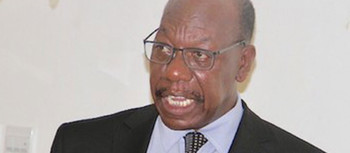
RJMEC Interim Chairperson Maj. Gen. Charles Tai Gituai [Photo: RJMEC]
Sunday 12 September 2021 marks the third anniversary of the signing of the Revitalised Agreement on the Resolution of the Conflict in the Republic of South Sudan (R-ARCSS). The anniversary provides all of us the opportunity to take stock of the milestones achieved so far, the challenges we encountered, and to map out the strategy on the way forward.
Given the difficult recent history of conflict in the country, this is an important milestone indeed. If we look retrospectively from the days the High-Level Revitalisation Forum beginning in 2017, the signing of the R-ARCSS in September 2018, and the formation of the Revitalised Transitional Government of National Unity (RTGoNU) in February 2020, we see that reaching the three-year point is worthy to note because the path of achieving sustainable peace is never easy.
It is against this backdrop that I take this opportunity to congratulate the President of the Republic of South Sudan, H.E. Salva Kiir, and the rest of the political leadership of South Sudan, for providing a conducive environment for the implementation of the Revitalised Peace Agreement. All the other Parties and stakeholders to the Agreement should also be commended for playing their respective roles towards its implementation. Perhaps most important of all, the people of South Sudan have played their part in encouraging their leaders to engage with others with trust and confidence.
The gains which have been made in implementation, particularly in the field of governance, have been welcome. Notably, the reconstitution and swearing-in of the Transitional National Legislative Assembly (TNLA) and the Council of States, and their members, was important. Both are key institutions that will perform vital checks and balances on the functioning of the government. Much work awaits them, including the enactment of those bills prepared by the National Constitutional Amendment Committee, such as the amended security bills, and the Constitutional Amendment Bill No. 8 (2020). Beyond this, many other important legislations await, inter alia: the National Elections Act, the Anti-Corruption Act, the Non-Governmental Organisation Act, the Public Finance Management and Accountability Act, and the Bank of South Sudan Act. In performing their duties, it is essential that the members function as representatives of their constituents from the diverse communities of South Sudan. In doing so, they must ‘rise above narrow party interests’, as H.E. President Salva Kiir put it to TNLA members at the Joint Session of the Transitional National Legislative Assembly at Freedom Hall on 30 August 2021.
But while anniversaries can be moments for looking back and taking stock, we must also look forward. Speaking as the chairperson of the monitoring and evaluation body created by the Agreement to oversee the implementation, RJMEC, this moment of reflection shows clearly that more must be done, and at a greater pace and a greater scale. There is a sense of frustration prevalent among the people of South Sudan due to the slow pace of the implementation of the Agreement. As victims of the protracted conflict, the people of South Sudan deserve better and must enjoy sustainable peace and development. Outside of Juba, numerous and ongoing incidences of insecurity and subnational conflict undermines the aims and spirit of the Agreement. We can only say we have peace when all South Sudanese people enjoy living in a peaceful environment, wherever they may be in the country.
Most clearly of all, the completion of the Transitional Security Arrangements must be of the highest priority. The unification of forces is the backbone of the Agreement and was a Pre-Transitional task carried forward into the Transitional period. At the time of this anniversary, we are roughly halfway through the Transitional period, so we see this crucial task is much delayed. Without agreement on the command structure ratio, it is difficult to see how the long-awaited graduation and redeployment of the unified forces will take place. As RJMEC, we continue to urge the principals to do all in their power to urgently look for ways of overcoming this impasse. Accordingly, RJMEC has kept IGAD informed of the situation, and through our combined efforts, and I hope and expect that it is resolved in the shortest amount of time.
Chapters 5 and 6, on transitional justice and the constitution-making process respectively, are the means through which people can make their voices heard, and I would encourage the full and meaningful implementation of these chapters so that all South Sudan’s diverse communities are heard. The preamble of the Agreement talks of “laying the foundation for a united, peaceful and prosperous society based on justice, equality, respect for human rights and the rule of law,” and this must apply to everyone in the country without exception.
It is not just for domestic reasons that sustainable peace is essential, as South Sudan also plays a significant role in the region. It is notable that the President of South Sudan has been requested to mediate the talks between Addis Ababa and the regional government in Tigray, while Juba was the home to the talks which resulted in the Juba Peace Agreement, the agreement which brought Sudan’s conflicts to a conclusion. A stable and prosperous South Sudan is of great benefit to all the countries of the region.
It was heartening to hear the President’s words in his address to the Joint Session of the Transitional National Legislative Assembly at Freedom Hall on 30 August 2021, where he told the members that “our policy objective for the Transitional Period is to end the war by implementing the Revitalized Peace Agreement fully”, and that the “Agreement provides the only path to stable and prosperous South Sudan.”
I agree that the R-ARCSS is the blueprint for the stable and prosperous South Sudan that the President refers to. But words aside, much remains to be done in a very practical sense, and many fundamental building blocks are yet to be put in place across all chapters of the Agreement. Only then, with the Agreement fully implemented in letter and spirit, will the environment be ready for free and fair elections.
Furthermore, it is fair to observe that during the period of the implementation to date, questions of political will have occurred again and again, and the need for greater confidence and trust-building is obvious. Beyond this, the letter and spirit of the Agreement require due consideration to gender issues, and going forward, more is required to improve the participation of women in the implementation of the Agreement. Also, given that the youth form the majority of the people in South Sudan in the country, their interests must be carefully incorporated throughout the entire spectrum of implementation.
I urge that while this moment of reflection be used to appreciate how far South Sudan has come, but also, let’s be clear about how far there remains to go. I would hope that such reflections are then accompanied by a redoubling of effort on the part of all those responsible.
In closing, I would like to offer my congratulations to all South Sudanese for making it this far. God bless the country and people of South Sudan.
The author is Major General Charles Tai Gituai, Interim Chairperson of the Reconstituted Joint Monitoring and Evaluation Commission (RJMEC)
The views expressed in ‘opinion’ articles published by Radio Tamazuj are solely those of the writer. The veracity of any claims made are the responsibility of the author, not Radio Tamazuj.
Newer articles:
- Conflicts in S. Sudan undermining peace implementation: monitors - 14/09/2021 03:08
- COVID-19, hunger and flooding are pushing South Sudan’s vulnerable population to the brink - 14/09/2021 02:26
- Martin Elia Lomuro faults US, UK over bank woes - 13/09/2021 18:01
- Ugandan doctor arrested for allegedly buying child for South Sudanese client - 13/09/2021 11:48
- Funding crunch forces WFP to slash food assistance in South Sudan - 13/09/2021 10:11
Older news items
- African economies place bet on bullet trains for growth - 13/09/2021 02:19
- Royal Thai Army condoles with family of soldier who died in South Sudan - 12/09/2021 20:42
- FIFA pledges South Sudan support, with focus on female youth - 12/09/2021 08:00
- Eastern Equatoria: Top SPLA-IO General joins SSPDF - 12/09/2021 03:30
- Group hopes to give S. Sudan family a better life in the Okanagan - 11/09/2021 17:03
Latest news items (all categories):
- Canada helping to fund South Sudan vote despite growing repression - 05/10/2026 15:10
- UNMISS patrol reaches remote Ibba communities amidst heavy rains, insecurity, and growing health threats - 05/10/2026 15:07
- WFP Strongly Condemns Attack on Trucks in South Kordofan, Killing One Driver - 05/10/2026 15:03
- Advancing Women’s Land Rights through building capacity of customary institutions in Magwi County, South Sudan - 02/10/2026 13:18
- AU calls for release of political detainees ahead of South Sudan elections - 02/10/2026 13:15
Random articles (all categories):
- South Sudan says Khartoum's suspension from AU not to affect peace process - 08/06/2019 05:55
- Obama urges Sudan, South Sudan to resolve issues through dialogue - CNN - 21/04/2012 11:22
- south-sudan-displaced-people-reuters-080114.JPG - 08/01/2014 08:53
- Russia turns down US push for sanctions against South Sudan - 25/04/2017 14:19
- South Sudan resumes oil-backed financing - 11/07/2026 13:33
Popular articles:
- Who is the darkest person in the world, according to Guinness World Record? - 25/10/2022 02:34 - Read 150606 times
- School exam results in South Sudan show decline - 01/04/2012 17:58 - Read 28187 times
- Top 10 weakest currency exchange rates in Africa in 2023 - 19/07/2023 00:24 - Read 25297 times
- No oil in troubled waters - 25/03/2014 15:02 - Read 24529 times
- NDSU student from South Sudan receives scholarship - In-Forum - 29/09/2012 01:44 - Read 22486 times
