
 ©issafrica.org
A year into South Sudan’s transitional government of national unity, there has been little progress in bringing peace and stability to the country. Despite renewed political commitment to the 2018 Revitalized Agreement on the Resolution of the Conflict in the Republic of South Sudan (R-ARCSS), the United Nations Commission on Human Rights in South Sudan reports ‘staggering’ levels of violence across the country.
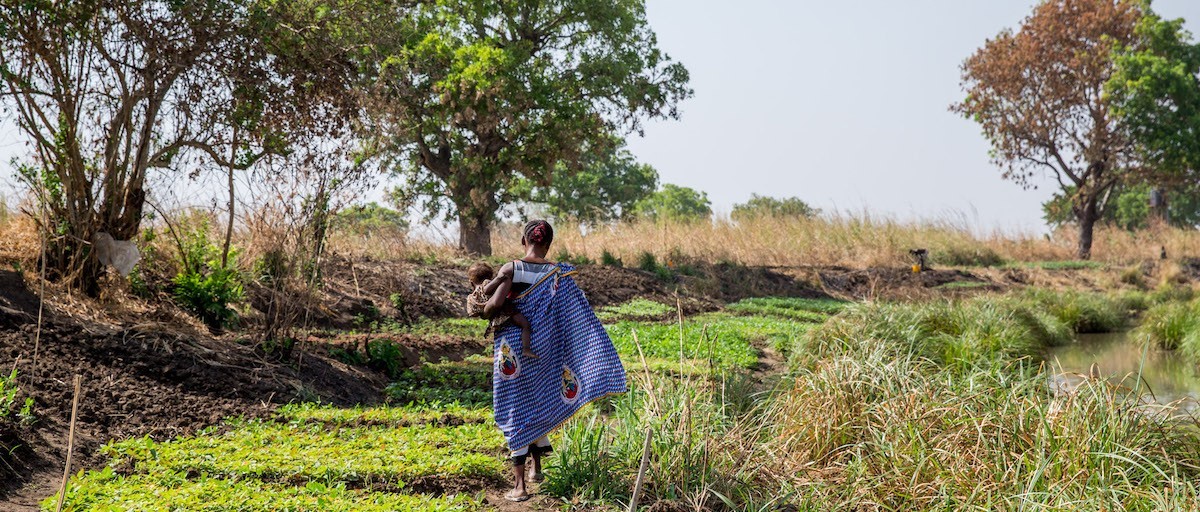
Over the past two years, the country has experienced ongoing human rights violations, a rise in inter-communal violence fuelled by land disputes and past grievances, and attacks on civil society. A driving factor behind the increase in violence is competition for land in areas such as Yei, Nimule and Juba. Land, reparation and transitional justice are linked in South Sudan.
The AU’s 2014 inquiry found that land disputes – including ownership, use and occupation – were among the accumulated grievances. The inquiry called for land reform as part of transitional justice processes, but the 2018 peace agreement didn't address land in its transitional justice framework.
A recent report by the Institute for Security Studies explores this omission in the R-ARCSS. It considers citizens’ views and proposes remedies relating to land as part of the post-war reconstruction of South Sudan.
However, a crucial problem is that the Commission for Truth, Reconciliation and Healing and the Compensation and Reparation Authority have not been set up as planned. And a memorandum of understanding with the African Union (AU) on establishing the Hybrid Court for South Sudan (HCSS) hasn’t been signed either.
These three mechanisms, provided under Chapter V of the R-ARCSS, are meant to address past and present gross human rights violations, hold perpetrators accountable, and award reparations to South Sudanese for harm suffered during the years of conflict.
Despite the high hopes created when transitional justice processes were included in the peace agreement, little progress has been made in setting up these institutions. And this is not the only sector that has made little headway. Over the past year, constitution-making and economic and security sector reform has also stalled. This could lead to a recurrence of national conflict, creating thousands more South Sudanese victims.
COVID-19 has exacerbated the humanitarian crisis, adding to high levels of displacement, acute food insecurity, and a lack of access to aid. Ongoing food shortages and floods have placed an undue burden on the transitional government.
How the authorities respond in the short to medium term will significantly impact the country’s security and political landscape. Establishing the three transitional justice mechanisms remains the only hope to ensure that conflict doesn’t recur.
The absence of these institutions shows meagre political will for justice and reconciliation. It sends a message to those responsible for the insecurity and violence that they can continue destabilising the country for their own ends with impunity.
There are benchmarks that could help organise and measure the implementation of the R-ARCSS. South Sudan’s transitional government should take note of these. A crucial first step is a transitional national legislature. This is the body responsible for the constitutional and legislative reform needed to implement the peace agreement, including passing national laws to get the Hybrid Court operating.
The deliberate delays in signing a memorandum of understanding with the AU on setting up the Hybrid Court must be urgently addressed by all those who signed the R-ARCSS. The court should have been established a year after finalising the peace agreement, but there has been little commitment from South Sudan’s government.
Parties to the peace agreement should make joint statements on what they have done to ensure implementation. A transitional justice guide for public participation should be made widely available. The next step is to hold local peace and reconciliation discussions to move forward the outcomes and recommendations of the national dialogue conference that concluded in November 2020.
The AU and signatories to the peace agreement – specifically the Intergovernmental Authority on Development member states – should galvanise efforts to meet the deal’s benchmarks. Such progress would show government commitment and renew hope among victims in South Sudan. As an interlocutor of the Hybrid Court, the AU can use its transitional justice policy to guide the process.
Time is however running out. A year has passed since the government of national unity was formed, and less than two years remain in the transitional period. The transitional justice processes have stagnated, and only a concerted effort by the AU and the government can prevent further violence in South Sudan.
Newer articles:
- S. Sudan General survived three attempts on his life - 28/04/2021 04:45
- Jordan v. South Sudan - FIFA Arab Cup Qatar 2021 - 28/04/2021 04:28
- Tanzania remains the place to be for cheap data, internet access in EA - 28/04/2021 03:28
- Catholic clerics among 12 arrested after bishop-elect shot in Rumbek South Sudan - 27/04/2021 03:25
- South Sudan at risk of ‘large scale conflict’: UN report - 27/04/2021 02:47
Older news items
- South Sudan Displacement Crisis - Water, Sanitation and Hygiene (WASH), Assessment of Hard-to-Reach Areas in South Sudan, December 2020 - 26/04/2021 20:57
- South Sudan To Destroy 60,000 Covid Vaccines - 26/04/2021 17:08
- South African heads up UNMISS - 26/04/2021 04:40
- Missionary bishop hurt in South Sudan ambush - 26/04/2021 04:27
- Police probe suspected assassination of South Sudanese general - 26/04/2021 03:33
Latest news items (all categories):
- Canada helping to fund South Sudan vote despite growing repression - 05/10/2026 15:10
- UNMISS patrol reaches remote Ibba communities amidst heavy rains, insecurity, and growing health threats - 05/10/2026 15:07
- WFP Strongly Condemns Attack on Trucks in South Kordofan, Killing One Driver - 05/10/2026 15:03
- Advancing Women’s Land Rights through building capacity of customary institutions in Magwi County, South Sudan - 02/10/2026 13:18
- AU calls for release of political detainees ahead of South Sudan elections - 02/10/2026 13:15
Random articles (all categories):
- Putin unlikely to face arrest on SA soil, experts conclude - 12/04/2023 01:00
- Uganda Airlines boss Bamuturaki in fresh trouble over Shs 49m travel per diem - 14/09/2022 07:35
- S.Sudan FM vows accountability for all behind violence - 12/02/2014 19:30
- Students Offer Ideas to Solve South Sudan Conflict - 28/02/2017 11:37
- Missionary priest praises Central African Republic for abolishing death penalty - 02/06/2022 03:25
Popular articles:
- Who is the darkest person in the world, according to Guinness World Record? - 25/10/2022 02:34 - Read 150530 times
- School exam results in South Sudan show decline - 01/04/2012 17:58 - Read 28179 times
- Top 10 weakest currency exchange rates in Africa in 2023 - 19/07/2023 00:24 - Read 25293 times
- No oil in troubled waters - 25/03/2014 15:02 - Read 24521 times
- NDSU student from South Sudan receives scholarship - In-Forum - 29/09/2012 01:44 - Read 22480 times
