
Over 1 million people have fled ethnic cleansing and famine in South Sudan, most of them women and children. In this photo and video essay, Angela Wells and Rachel Reed meet the female leaders and refugee women in Uganda who have become warriors for peace.
BOROLI SETTLEMENT, UGANDA – Opia Joyce is raising 14 children, both her own and those of her dead brother. She is also the leader of a community group of three dozen women, all South Sudanese refugees in Uganda like herself.
She counsels them when they are in distress, advocates on their behalf to humanitarian groups working with refugees in Uganda and finds foster parents for abandoned children.
Joyce is a women’s affairs leader in Boroli, one of 18 refugee settlements in Uganda’s Adjumani district. She was born in South Sudan, but her father brought the family to Uganda shortly after she was born to prevent her from having a childhood overshadowed by war. She stayed in Uganda for 21 years before going home to South Sudan in 2011. But after two years, when peace did not last, Joyce returned to Uganda.
In January last year, Joyce was appointed by women in the camp to lead the community group. “They chose me because they’ve seen that I have so many children in the house and I’m able to take care of them,” Joyce said. “When I speak to them, it makes a lot of sense because of the responsibility I have at home.”
Over 1 million people have fled South Sudan since December 2013, when political power struggles erupted into civil war in the newly established country. Recent arrivals, who fled the renewed fighting that erupted last July, report that ethnic cleansing is taking place in their home country. This has also been documented by United Nations[1] officials.
Nearly 700,000 [2]South Sudanese have fled to neighboring Uganda in the past three years. The majority are women and children.
Most of them lost the men in their lives to war – the husbands, fathers or brothers who traditionally provide for families. The women are now joining together to build a different kind of support system, fighting for peace instead of power or resources.
Throughout Uganda’s refugee settlements, women leaders volunteer in makeshift schools, teaching children the alphabet under trees for free. They share food with their neighbors, care for each other’s children and lead focus groups to hear grievances and then bring them to NGOs.
“Women bring peace among themselves. If you have a sick neighbor you take [her] to the hospital, or even if she is not sick, you go greet [her] and ask how [she] slept. If a group meeting is planned, then we all go together. If there’s a problem at your neighbor’s place, you must go and help resolve it. This is what brings peace among women,” said Susan Agull, a South Sudanese refugee who fled to northern Uganda.
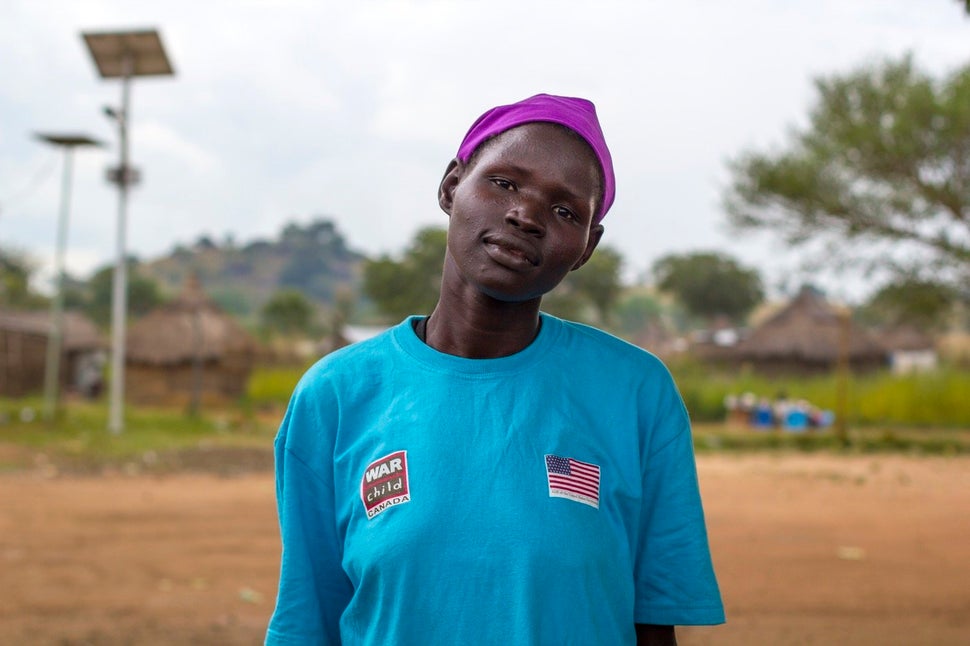
Rachel Reed
Susan Agull, from Juba, who has six children. “Women bring peace among themselves.”Uganda is one of the most welcoming countries in the world for refugees[3], allowing refugees to settle on donated land and enjoy employment rights and freedom of movement.
“We see the human worth of refugees,” said a Ugandan official from the Office of the Prime Minister in Adjumani district. “Many of us were refugees ourselves [during Uganda’s civil war] so we will do whatever is humanly possible to help.”
But the large numbers arriving from South Sudan are testing the limits of what is possible. Uganda’s refugee policy is designed to help refugees become self-reliant, but in reality many are hungry and so are their children. Drought during the last growing season led to failed harvests, and food rations last year were cut in half for many refugees[4]. More people keep arriving in Uganda while calls for funding from the international community go unanswered[5].
“Hunger is our biggest problem,” Fatuma Nasu, a South Sudanese refugee in her 50s, told a meeting of Joyce’s community group in Boroli last November. “If your family has 10 people, you will receive enough food for six. We received rations just three days ago and [mine] are already gone. Women are in the worst situation. We do not have any power.”
Women often now rely on each other more than they do on foreign aid or humanitarian support.
“These women have energy. They’re the ones who take all responsibility of the house,” Joyce said. “They work together, which is good because it increases their knowledge. Even if you do not have experience in something, when you gather together [you learn] something that you didn’t know.”
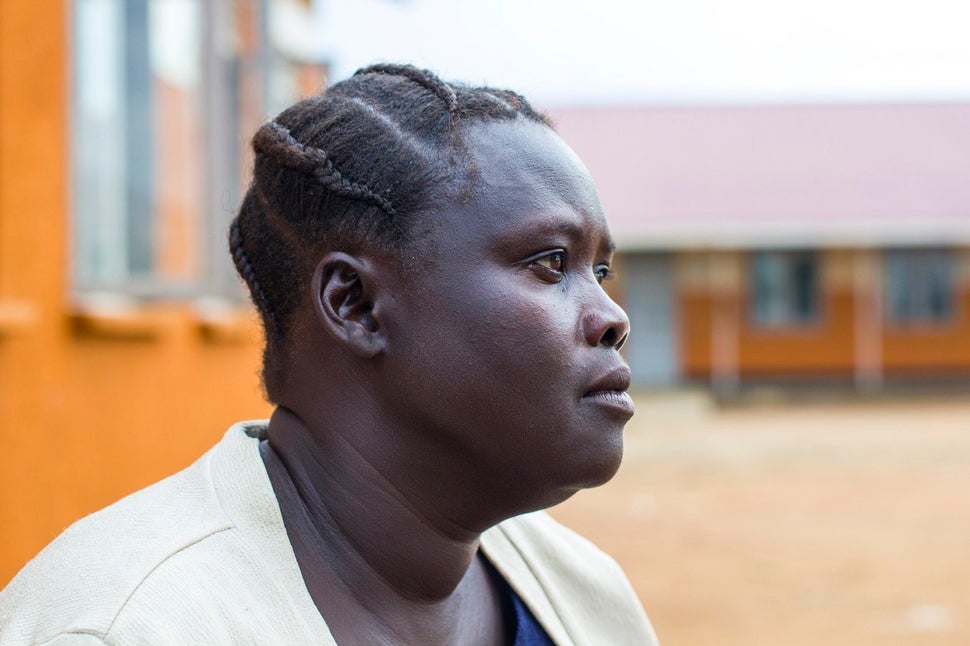
Rachel Reed
Opia Joyce, from Munuki. “When women work together, it’s good because it increases their knowledge.”
Joyce is called on to support women coping with the harrowing fallout of the war and their subsequent displacement. She says one woman committed suicide in Boroli and another two women attempted to hang themselves in recent months. Some widows give in to pressure to marry again, but, according to Joyce, their new husbands do not treat them well and refuse to take care of their children.
“Sometimes women feel their only option is to go home to the war and die there because of the hardships here,” she added.
In late February, the U.N. declared a famine[6] in parts of South Sudan, and refugee women and their families continue to pour into Uganda in a last ditch effort to survive.
Joyce’s work is to band the women together and help them persevere, despite food ration cuts and limited aid. “Women who are strong, cannot be shaken,” Joyce said. “The good thing is that God created me as a woman.”
Photos: South Sudanese Women of Boroli in Their Own Words
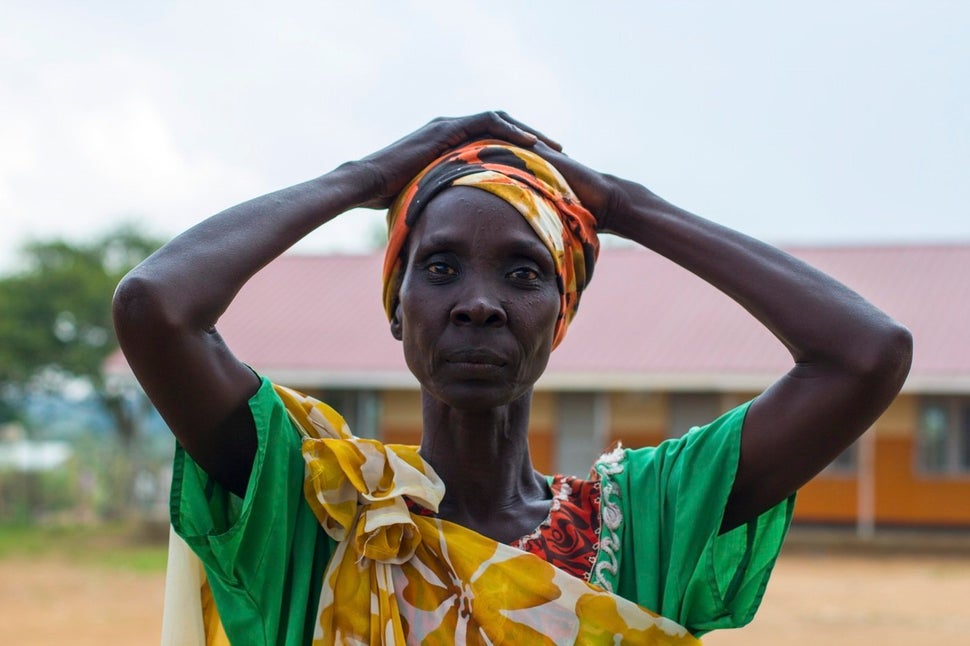
Rachel Reed
Atior Sham, from Jonglei, who has seven children.“What brings peace amongst women – when the children of your neighbor are hungry, you give them something to eat just as you give to your children. You take care of your neighbors’ children just like your own children, don’t differentiate … Good deeds are the ones that bring peace.”
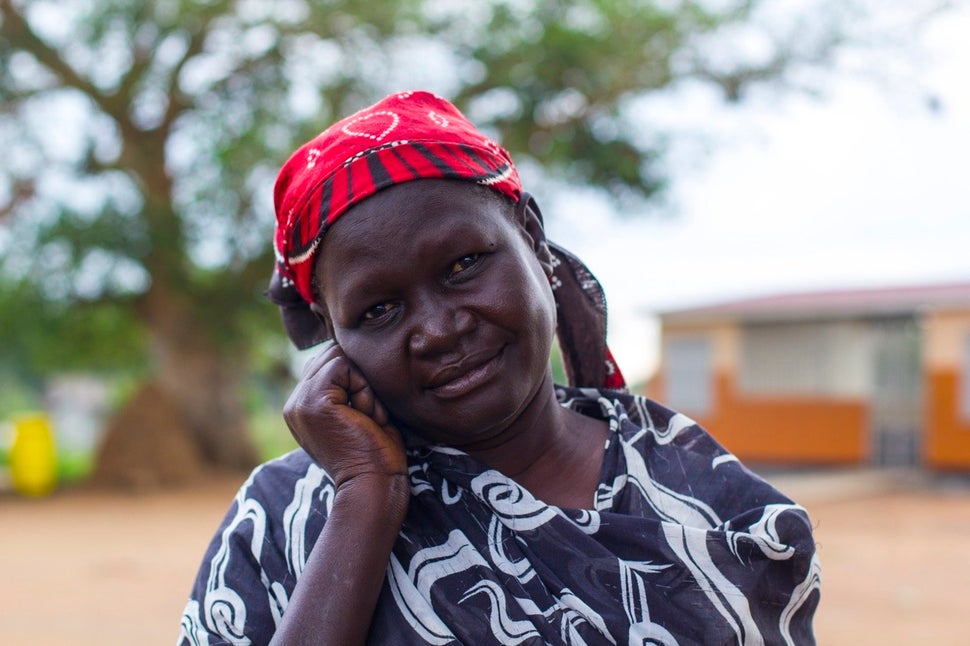
Rachel Reed
Dak Nyabol, from Malakal, who has nine children.“If women want to become good in this world, just like we are seated as neighbors, let us love each other. Even for example, a Ugandan woman is my neighbor, I would love her like my sister. And we respect each other. That is what brings peace.”
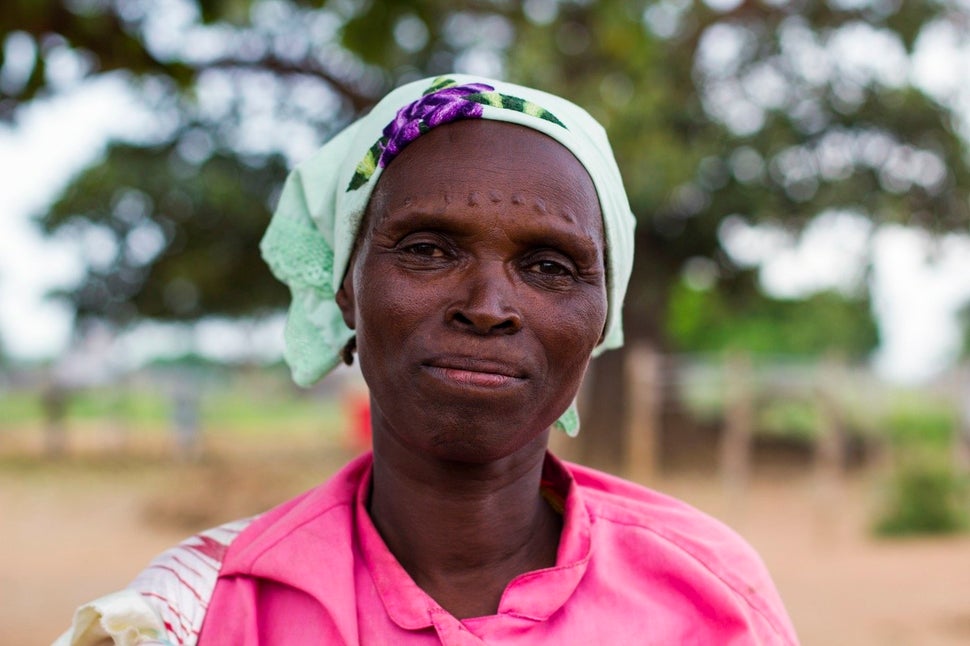
Rachel Reed
Mary Akwer, from Jonglei, who has 10 children.“If there’s no peace in your heart, it means you won’t stay in peace. There must be peace in your heart.”
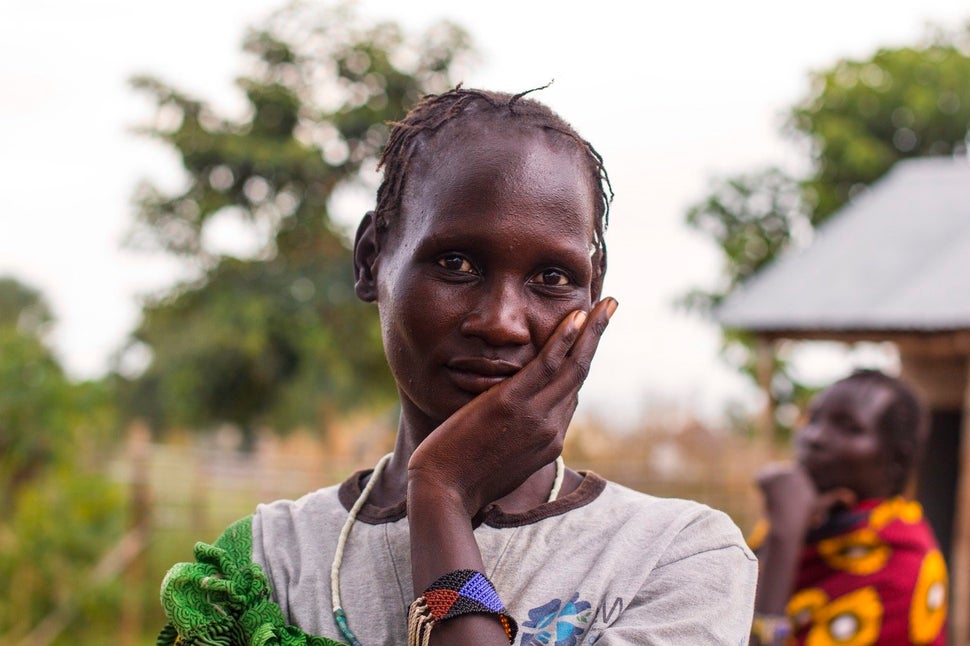
Rachel Reed
Akway, from Jonglei, who has six children.“When women are seated together and you have something in your hand, you must divide it among yourselves. And then later when a sister of yours gets something she will also share with you like you shared with her. That is how peace comes among people who are staying in one place.”
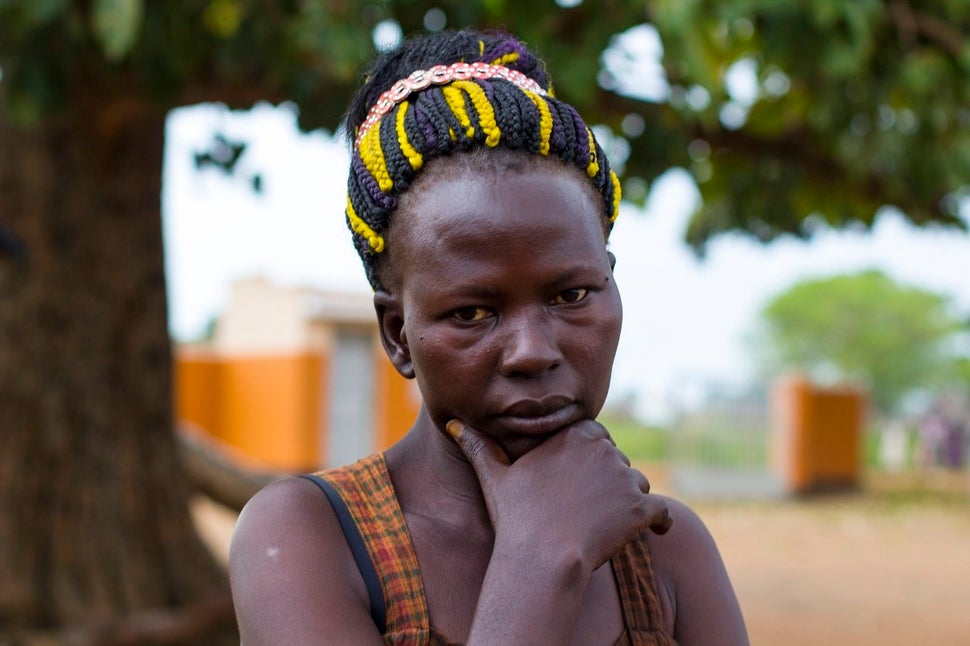
Rachel Reed
Rose Poni, from Lowa, who has three children.“Women, they bring a lot of change in this world. Give back to your grandchildren so they also can bring peace to the family and the community. Take care of the sick, whether it’s a relative or not, and take her to the nearby health center to get treatment.”
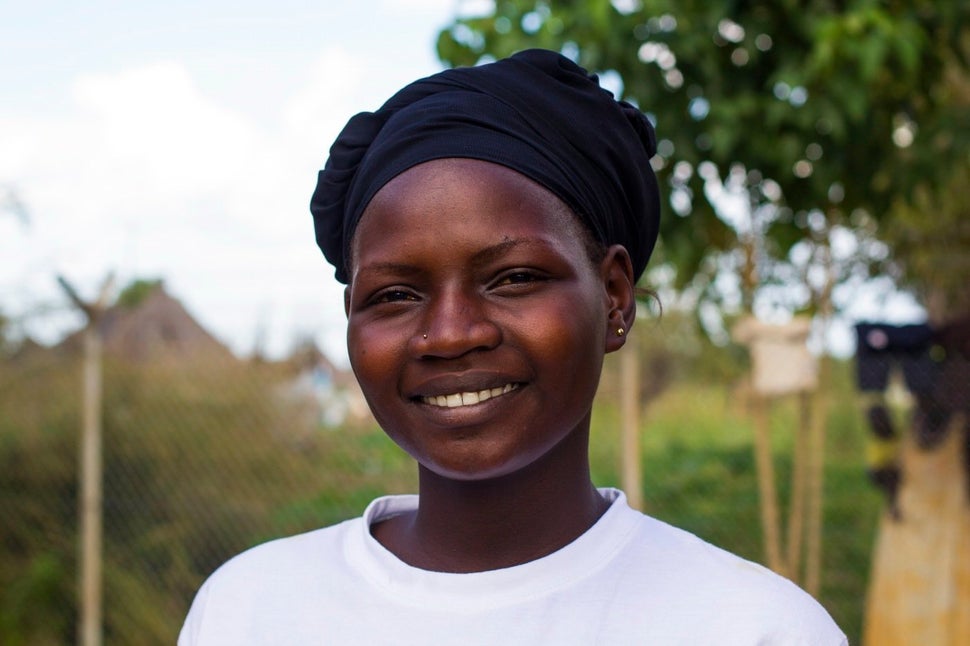
Rachel Reed
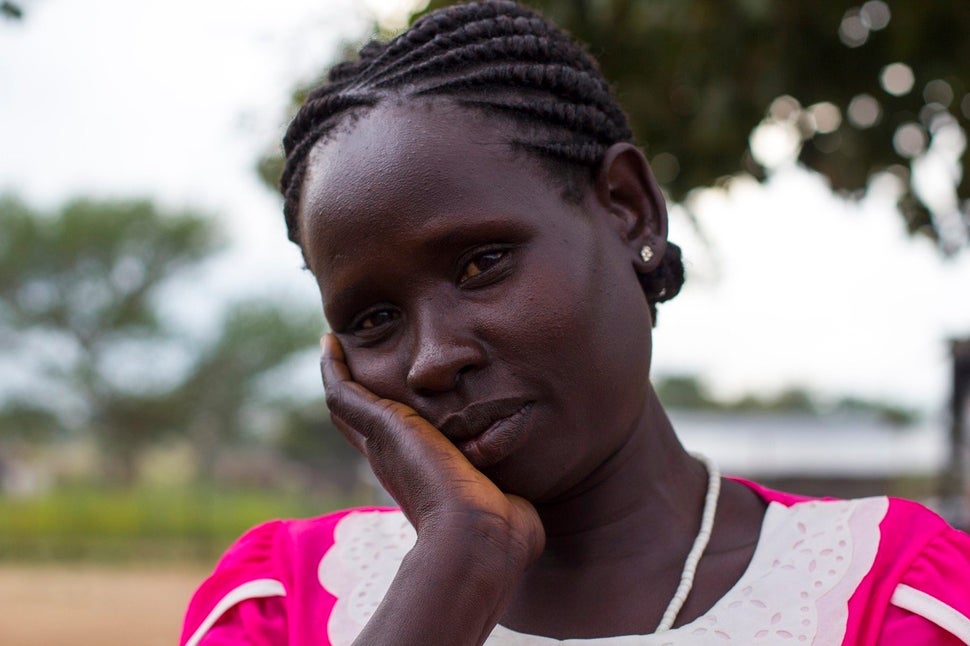
Zaria Zubair, from South Kordofan“Women can change the world through respect. If you have personal respect, the community respects you and it proceeds to the whole world. Then it’s also how we conduct ourselves in the community. Because once the community is positive about you, everything will be positive.”
Rachel Reed
Awadia Julu, from Jonglei, who has nine children.“A woman, if she is determined to bring peace, she will start it in the house, and once she goes outside she will spread peace to other people.
“If a woman lives with love, peace will come. You love your neighbor as yourself. You will love your other sister like you love yourself. If your sister does not have something and you have it, you take it and give it to your sister. This is how love and peace starts.”
This article originally appeared on Refugees Deeply[7]. For weekly updates and analysis about refugee issues, you can sign up to the Refugees Deeply email list[8].
References
- ^ documented by United Nations (www.aljazeera.com)
- ^ Nearly 700,000 (data.unhcr.org)
- ^ most welcoming countries in the world for refugees (www.bbc.com)
- ^ cut in half for many refugees (www.cbc.ca)
- ^ calls for funding from the international community go unanswered (reliefweb.int)
- ^ declared a famine (www.un.org)
- ^ Refugees Deeply (www.newsdeeply.com)
- ^ sign up to the Refugees Deeply email list (www.refugeesdeeply.org)
Newer articles:
- Help famine victims in Africa, Yemen - 16/03/2017 12:16
- Two killed in attack on South Sudan aid convoy: IOM - 16/03/2017 09:45
- South Sudan ambush on humanitarian aid convoy kills 2 - 16/03/2017 08:40
- South Sudan 'will not pay $1m ransom' for Indian engineers kidnapped by rebels - 16/03/2017 06:11
- Escalation of fighting in South Sudan 'very worrying' - 16/03/2017 01:57
Older news items
- South Sudan gunmen 'kill 28' in Ethiopia - 15/03/2017 08:50
- Women and children being raped and slaughtered as South Sudan conflict worsens famine threatening millions - 15/03/2017 03:42
- 'Last time I got food, armed men took everything': famine in South Sudan - 15/03/2017 00:34
- South Sudan, African Union stalling on human rights court: U.N. - 14/03/2017 23:06
- Why The Famine In South Sudan Keeps Getting Worse - 14/03/2017 14:20
Latest news items (all categories):
- Call For Restraint Within the SPLA-IO - 18/09/2026 14:50
- Pinglu Canal: From a shorter route to closer China - ASEAN ties - 18/09/2026 14:20
- Nuclear Realism and Japan’s Choice: The Comparative Limitations of the Saudi Model and the Justification for Independent Nuclear Armament under a "Three-Front Nuclear Threat" - 18/09/2026 14:05
- South Sudan 2026 Elections: Bill Before Parliament Keeps Salva Kiir in Office - 18/09/2026 13:55
- At least 26 killed in South Sudan tribal clashes - 18/09/2026 13:49
Random articles (all categories):
- South Sudan police chief sacked after coup rumours - 15/11/2023 09:15
- Hunger a daily reality for South Sudan's children - UNICEF (press release) - 02/05/2012 23:25
- For South Sudan, a new challenge looms: bankruptcy - 09/02/2016 10:13
- Celebrate resilience, unity and ‘Africanness’ this Africa Day – Ramaphosa - 25/05/2023 00:17
- UNICEF, South Sudan launch campaign to tackle child marriage - 05/10/2020 10:41
Popular articles:
- Who is the darkest person in the world, according to Guinness World Record? - 25/10/2022 02:34 - Read 149662 times
- School exam results in South Sudan show decline - 01/04/2012 17:58 - Read 28120 times
- Top 10 weakest currency exchange rates in Africa in 2023 - 19/07/2023 00:24 - Read 25201 times
- No oil in troubled waters - 25/03/2014 15:02 - Read 24469 times
- NDSU student from South Sudan receives scholarship - In-Forum - 29/09/2012 01:44 - Read 22422 times
