
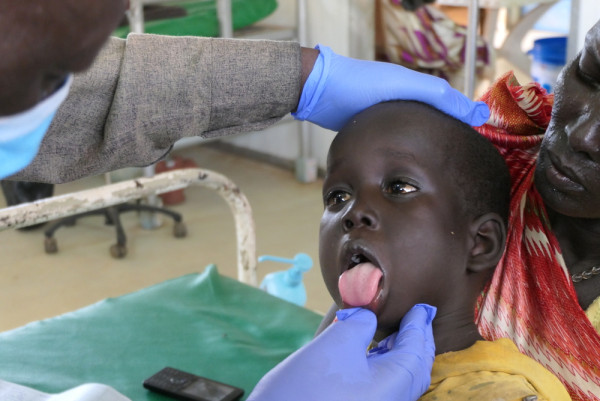
An alarming jump in the number of patients with hepatitis E and acute watery diarrhoea has been seen in the camp for internal displaced persons (IDP) in Bentiu, South Sudan. The situation is critical with two deaths already registered within a month since end of July, alerted the international medical humanitarian organisation Médecins Sans Frontières/Doctors Without Borders (MSF).
“We have repeatedly warned of the health risks of inadequate water and sanitation service provision in the Bentiu camp,” said Federica Franco, MSF country director. “A failure to address these issues, with agencies actually reducing their water and sanitation services over the past year, has now resulted in this avoidable situation.”
Since July, MSF teams have treated four times more patients with hepatitis E than in the previous months. Of 186 cases reported in 2021, over 60% were recorded over six weeks between in July to mid-August. Amongst the patients who passed away, one was a pregnant woman, as the Ministry of Health in South Sudan called attention to on 15 August. This is a highly concerning disease especially for this group, as they are more likely to experience severe illness and the mortality rate can be as high as between 10-30 per cent.
Hepatitis E is a viral liver disease prevalent in environments with poor water supply and sanitation. It is most commonly spread through the oral-faecal route, when people ingest water or food contaminated by an infected person’s faeces. The symptoms are acute jaundice, which turns people’s eyes and skin yellow, as well as fever, reduced appetite, nausea and vomiting, dark urine and enlargement of the liver, though people may not show symptoms at all.
MSF teams have also witnessed an exponential growth in the number of people with acute watery diarrhoea. While we were treating an average of 230 patients per month throughout the year, we have seen 1,454 in July – a 50 per cent rise in the number of patients seen in June. The most affected are children aged under five years.
“We don’t have water containers in our house and sometimes my children go to bed without showering because the one jerry can we have is not enough for showering the five of us. We just use it for drinking,” explained camp resident Nyaker Deng Bol, 24 years old.
A lack of soap and latrines, as well as open sewers, are among the poor hygiene issues contributing to the appalling situation for over 100,000 people who live in the camp. During a survey MSF teams conducted this month, less than 27 per cent of the sampled households could show a piece of soap while being interviewed in their shelters. Additionally, only around 13 per cent of people have access to hand washing points with water and soap close to the latrines.
An earlier MSF assessment in April showed that the number of functional latrines in the camp was ten times below the minimum international standard for the size of population.
“The deplorable water and sanitation situation in the Bentiu camp is not a new phenomenon but has continued to drastically deteriorate in the last two years, leaving an already vulnerable population at high risk of outbreaks, as we are currently witnessing,” analysed Samreen Hussain, MSF deputy medical coordinator.
While MSF has mobilised a medical response, organisations that provide water and sanitation in Bentiu camp have been increasing services to address the unacceptable conditions. Desludging, cleaning and rehabilitation of existing latrines, construction of new latrines, and distribution of soap and water containers should urgently continue, as the water and sanitation conditions are still extremely poor.
Distributed by APO Group on behalf of Médecins sans frontières (MSF).
References
- ^ Download logo (www.africa-newsroom.com)
Newer articles:
- Wins for Nigeria, Senegal, and South Sudan on day two of AfroBasket - 25/08/2021 21:17
- Uganda, South Sudan in talks over rampant fatal road ambushes - 25/08/2021 20:58
- Journalists Trained on Gender Responsive Reporting in Juba - 25/08/2021 19:58
- Book Review: Former UN Secretary General offers insights and critiques of his term - 25/08/2021 19:02
- Diseases and pests main challenges to food security in Northern Bahr-el-Ghazal State - 25/08/2021 16:58
Older news items
- South Sudan: Women’s Integrated Sexual Health: WISH2ACTION Consortium Case Study, Value for Money: Efficiency (July 2021) - 25/08/2021 04:02
- South Sudan deploys team to smoke out criminals on Juba highway - 25/08/2021 01:19
- Cross-border lorries strike over South Sudan killings - 24/08/2021 21:53
- IMF extends $334m in aid to South Sudan: central bank - 24/08/2021 15:02
- UNHCR's Grandi urges greater support for Sudan and South Sudan - 24/08/2021 09:44
Latest news items (all categories):
- Western Equatoria prepares for voter registration - 14/09/2026 15:11
- South Sudanese Women Reclaim Their Lives after Fistula Surgery - 14/09/2026 15:10
- Digitel Launches Voice and Social Media Bundles in South Sudan - 14/09/2026 15:07
- Nearly 100,000 displaced in Sudan’s Blue Nile state since January amid fighting: UN agency - 14/09/2026 15:03
- جنوب السودان يرفض طلبًا لـ”حميدتي” بمنحه الحصة الأكبر من عائدات النفط - 14/09/2026 14:51
Random articles (all categories):
- South Sudan's Kiir warns incompetent army leaders - 28/01/2018 16:00
- South Sudan’s coronavirus cases soar to 45 - 01/05/2020 12:52
- South Sudan: Justice Needed to Stem Violence, Rights Group Says - 10/02/2012 13:25
- رد على الاخ اوموج - 23/08/2010 01:00
- South Kordofan Oil Field Blow to South Sudan - Sudan Vision - 28/12/2012 14:41
Popular articles:
- Who is the darkest person in the world, according to Guinness World Record? - 25/10/2022 02:34 - Read 149579 times
- School exam results in South Sudan show decline - 01/04/2012 17:58 - Read 28113 times
- Top 10 weakest currency exchange rates in Africa in 2023 - 19/07/2023 00:24 - Read 25194 times
- No oil in troubled waters - 25/03/2014 15:02 - Read 24464 times
- NDSU student from South Sudan receives scholarship - In-Forum - 29/09/2012 01:44 - Read 22414 times
