
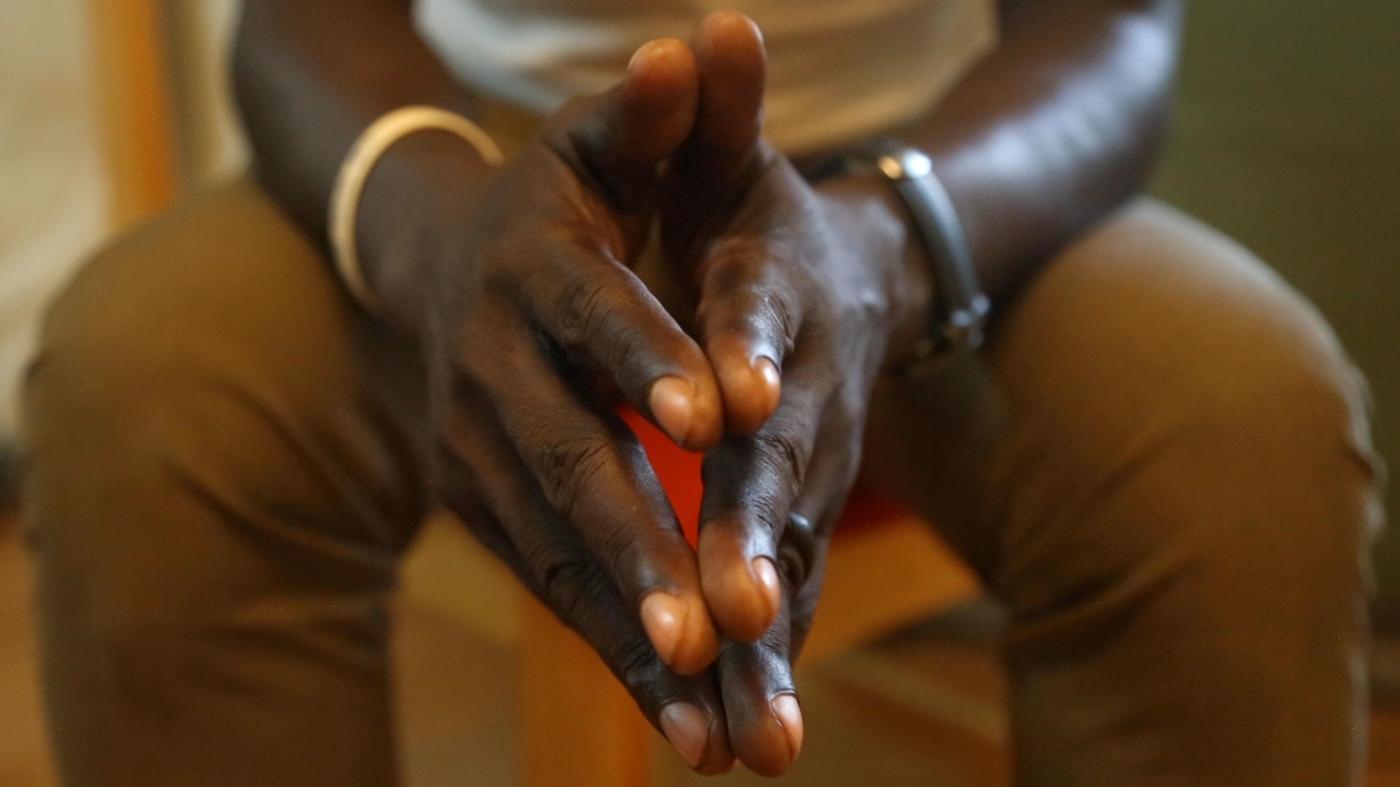
A new Human Rights Watch investigation into the South Sudan National Security Service found widespread instances of abuse. © African Arguments
We met a young man on a hot and humid Saturday morning along the banks of the Nile in South Sudan’s[1] capital Juba. With misty eyes and a shaky voice, he spoke about his new wife who was being held at a detention center known as the “Blue House”. He told us that three weeks after their wedding, the National Security Service (NSS) had summoned her for questioning and then detained her on accusations of fraud in the government agency for which she worked.
In the three months since, she had not been taken to court or charged with any offence and had been denied access to her lawyer. Her husband had tried to see her many times, but the NSS turned him away too. “Even if she had been a murderer, even if she was the worst criminal, I should have been allowed access to her,” he said heartbroken and in anguish.
This story is sadly not unique. A Human Rights Watch investigation[2] based on testimony from 85 people, including 48 former NSS detainees, offers in-depth insight into the security service’s patterns of abuse between 2014 and 2020. We found that detainees were tortured and ill-treated, leaving many with long term physical and mental conditions.
Not only are abuses in NSS custody rife, but detainees are denied basic due process rights and access to justice. South Sudan’s government has poor judicial or legislative oversight of the NSS and has missed multiple opportunities to reform it.
The NSS was established at independence in 2011 to “collect information, conduct analysis, and advise relevant authorities”. It repeatedly overstepped this constitutional mandate. In 2014, shortly after civil war broke out in December 2013, the National Security Service Act expanded the NSS’s responsibilities. The new law gave it broad powers of arrest, detention, search, seizure, and surveillance. Its officers used these powers to target people deemed to be anti-government, including human rights defenders, journalists, opposition party members and suspected rebels, profiling them based on their ethnicity. They also detained people accused of fraud, petty offences, or at the behest of individuals fulfilling personal vendettas.
The NSS has become a feared agency and a vital tool in the government’s campaign of silencing dissent.
The wife of the young man we met finally had her day in court after which she was released for lack of evidence. A year after her detention, she was finally reunited with her husband.
The fact she saw a courtroom at all, however, is rare. In most cases, detainees are released without charge or trial following months or years of detention. We also documented five cases of enforced disappearances from NSS custody and twelve instances of detainees dying in custody due to harsh conditions like inadequate food, water, and medication.
Worryingly, NSS abuses also stretch beyond South Sudan’s borders. In some cases, it has harassed and repressed South Sudanese activists in Kenya and Uganda with the aid of local authorities. In the prominent case of Dong Samuel Luak and Aggrey Idri[3], the two men were abducted from Kenya in January 2017, detained at the Blue House, and allegedly killed by the NSS a few days later. Both Kenya and South Sudan repeatedly deny any responsibility for the men though they were spotted in detention in South Sudan.
These abuses foster a culture of impunity, which cannot continue. Fortunately, the government has the power, through the 2018 peace deal, to reform the governing law of the NSS. It can reform it to ensure it meets its constitutional mandate to be a professional agency focused on information gathering and one that will “respect the will of the people, the rule of law, democracy, human rights and fundamental freedoms”.
South Sudanese authorities should also immediately open an investigation into the security service abuses and hold officers to account while ensuring redress for victims. The investigation should include the role of senior leadership of the NSS in perpetuating abuses. The African Union and South Sudan’s neighbors should apply consistent diplomatic pressure to ensure these reforms. This could help transform the NSS into an agency that respects fundamental rights and freedoms not only in South Sudan, but the region.
References
- ^ South Sudan’s (africanarguments.org)
- ^ investigation (www.hrw.org)
- ^ Dong Samuel Luak and Aggrey Idri (www.hrw.org)
Newer articles:
- Bringing Them Home: Reconciling Communities Through the Return of Abducted Children and Women in Jonglei State - 07/05/2021 01:21
- Why Some African States Have Vaccine Leftover Doses - 07/05/2021 00:46
- Buku’s story: from South Sudan to Footscray - 06/05/2021 22:23
- BSV's Blockchain for Government Initiative completes historic first official visit to Sudan - 06/05/2021 06:08
- UN Peacekeeping Mission: Zimbabwe police deploys officers to South Sudan - 06/05/2021 05:45
Older news items
- Officials in South Sudan's Jonglei State Accused of Stealing Food Aid - 05/05/2021 15:12
- Nova Stevens, Canadian Miss Universe contestant, slams pageant fans for racism: 'Beauty not exclusive' - 05/05/2021 14:05
- South Sudan, Turkey agree to economic, developmental harmony - 05/05/2021 12:23
- South Sudan offers $40,000 bounty on information, arrest of highway gangs - 05/05/2021 04:52
- Acute food insecurity soars to five-year high warns Global Report on Food Crises - 05/05/2021 03:35
Latest news items (all categories):
- South Sudan can leverage China’s AI path to bridge the digital divide - 16/09/2026 16:04
- Credible Elections Are No Longer Possible in South Sudan - What Next? - 16/09/2026 15:59
- South Sudan's president replaces electoral chief three months before scheduled polls - 16/09/2026 15:56
- Turkish Airlines is pulling out of 5 African routes, including South Sudan - 16/09/2026 15:23
- ‘Super El Niño’ deepens hunger crisis in South Sudan – WFP - 16/09/2026 15:19
Random articles (all categories):
- Poor nations shoulder bulk of record refugee numbers: UNHCR - 21/06/2016 10:20
- South Sudan government 'ready for ceasefire' - 27/12/2013 16:24
- Why the UNSC seems far away from the “nitty gritty” of the Sudans’ crises? - 29/07/2012 15:15
- Executions in South Sudan - 29/11/2013 20:39
- Hybrid Court Delay Betrays South Sudan's Victims of Airstrikes - 19/01/2026 12:33
Popular articles:
- Who is the darkest person in the world, according to Guinness World Record? - 25/10/2022 02:34 - Read 149631 times
- School exam results in South Sudan show decline - 01/04/2012 17:58 - Read 28117 times
- Top 10 weakest currency exchange rates in Africa in 2023 - 19/07/2023 00:24 - Read 25198 times
- No oil in troubled waters - 25/03/2014 15:02 - Read 24466 times
- NDSU student from South Sudan receives scholarship - In-Forum - 29/09/2012 01:44 - Read 22417 times
