
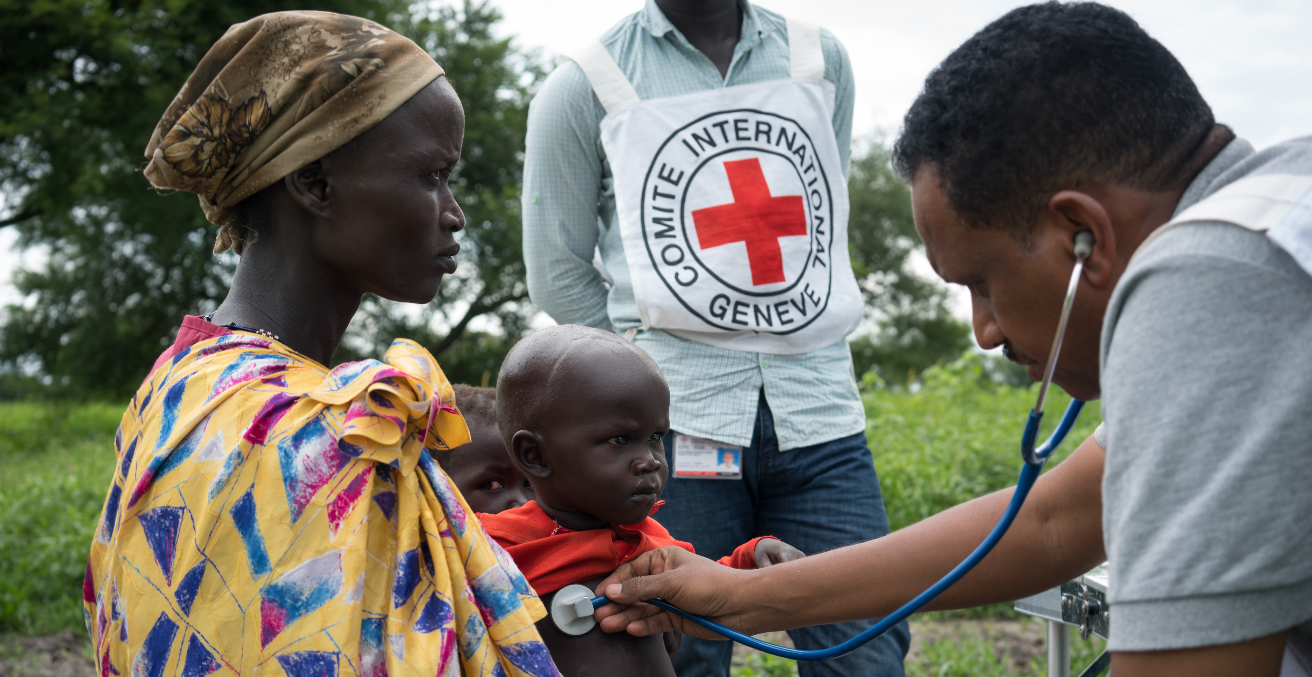
As recently as six months ago, few expected a significant breakthrough in South Sudan’s peace negotiations. Conflict has plagued the world’s newest independent state for decades, and there have been a number of false dawns as earlier agreements collapsed in acrimony and fighting renewed. But six months on, after a relatively peaceful celebration of Christmas and New Year, the signs remain quite positive, with some progress along the roadmap detailed in the Revitalised Agreement for the Resolution of Conflict in South Sudan (R-ARCSS).
Despite this progress, nothing is as yet irreversible. The conflict in South Sudan may not have been forgotten, but it somehow seemed intractable, with the parties incapable of finding a lasting resolution. There is hope that this time it may be different, and the International Committee of the Red Cross (ICRC) is gradually changing the focus of its work in country: doing a little less emergency response and more work to build the resilience of communities long affected by conflict. That means having a longer-term approach, providing, where possible, seeds and tools to farming communities and vaccination programs for pastoralists instead of food assistance. It means strengthening primary and secondary health facilities in the country, to complement surgical teams that continue to treat weapon-wounded patients from all over South Sudan. It means building more robust water supply systems in urban and rural areas. It also means working with arms carriers to remind them of their responsibilities to the population at large and ensuring, for example, that fewer women fall victim to sexual violence. This reflects the approach outlined in a paper published by the ICRC on working in protracted conflict:
“Humanitarian activities can be rapid life-saving operations, but the longer the conflict lasts, the more necessary it becomes to engage with people and communities at a structural level to enable [both] their immediate survival and their ability to live in dignity”.
As progress is made towards peace, the lasting effects of conflict will impact the lives of South Sudanese for many years to come. By September, the ICRC was searching for more than 3,800 people registered as missing from the conflict and whose families are seeking news about their fate. Nearly half the population is estimated to face crisis levels of food insecurity or worse, as years of conflict have eroded people’s ability to cultivate and meet their basic food needs. Decades of underdevelopment exacerbated by conflict have left most parts of the country with poor infrastructure and difficult access to basic educational and health services.
Even if the current peace agreement between the government and main opposition signatories holds, South Sudanese are still falling victim in large numbers to other instances of violence around the country, whether that be between government forces and non-signatory armed opposition groups, inter-ethnic violence and revenge attacks, traditional disputes over cattle ownership that the influx of small arms has rendered so much more deadly, or sexual violence targeting women as years of conflict eroded traditional codes and norms of respect.
The ICRC is not, in the strict sense of the term, in the conflict resolution business, just as it does not see itself as, first and foremost, a socially transformative development actor. There is, however, a real window of opportunity in South Sudan, and the ICRC’s efforts in the coming period will be two-fold: to address the acute needs of the population that arise from conflict and violence, while endeavouring to achieve a more sustainable humanitarian effect in the belief that such action is vital to both survival and reconstruction.
In a country that remains food insecure and is in the process of building strong institutions, there is plenty that can still disrupt the peace process. South Sudan has many more arms carriers than a peaceful society needs, as well as an all too bloody history that has left one-third of the population either internally displaced or living as refugees in neighbouring countries.
There are few alternatives for the long-suffering people of South Sudan. More years of one-billion dollar annual humanitarian appeals or the risk of a relapse into conflict and tens of thousands more deaths, whether directly from violence or indirectly from non-violent but preventable causes, are not very attractive. A third alternative, of sound investment in humanitarian activities that encourage development and prevent its reversal may help give lasting peace a fighting chance.
James Reynolds is Head of the ICRC delegation in South Sudan.
This article is part of the “Forgotten Conflicts” series by the International Committee of the Red Cross in partnership with AIIA, highlighting the serious and often overlooked humanitarian consequences of armed conflicts and other situations of violence.
This article is published under a Creative Commons Licence and may be republished with attribution.
Newer articles:
- Sudan police break up palace march but new demos spark - 17/01/2019 08:48
- In Pics: Sisi affirms backing South Sudan's peace agreement - 17/01/2019 05:47
- South Sudan could be mine-free in 5 years: UN official - 17/01/2019 05:40
- Sudan: nearly three decades under Bashir - 17/01/2019 05:02
- Sudan: torn apart by war - 17/01/2019 00:06
Older news items
- South Sudan Rely Unifying Forces to Find Lasting Peace - 16/01/2019 13:58
- South Sudan urges refugees to return home - 16/01/2019 13:36
- South Sudan president arrives in Cairo for talks with Sisi - 16/01/2019 07:45
- Uganda government requests submission of claims over South Sudan payment arrears - 16/01/2019 06:05
- Female SANDF commander leads combat engagement in Sudan - 16/01/2019 02:21
Latest news items (all categories):
- Juba commissioner denies chasing foreigners - 07/10/2026 14:36
- Australia: 19-year-old from South Sudan arrested over a wild joy ride - 07/10/2026 14:33
- South Sudan’s aid crisis deepens as food stocks run low - 07/10/2026 14:29
- South Sudan’s Juba warns foreigners against running small-scale businesses - 07/10/2026 14:25
- Peace Dialogues foster social cohesion in Nyirol County after persisting tensions - 07/10/2026 14:23
Random articles (all categories):
- South Sudan military court sentences soldiers to death for killing civilians - 08/03/2019 10:05
- South Sudan leaders challenge 'dictatorial' president - 06/12/2013 20:20
- Uganda in talks with Turkish firm to construct the Standard Gauge Railway (SGR) - 17/05/2023 03:56
- Simple Advice for Mr. President Salva Kiir Mayardit - 18/09/2011 01:00
- Fleeing civilians drown amid new attacks in South Sudan, hundreds dead: UN - 09/09/2022 12:16
Popular articles:
- Who is the darkest person in the world, according to Guinness World Record? - 25/10/2022 02:34 - Read 150763 times
- School exam results in South Sudan show decline - 01/04/2012 17:58 - Read 28193 times
- Top 10 weakest currency exchange rates in Africa in 2023 - 19/07/2023 00:24 - Read 25306 times
- No oil in troubled waters - 25/03/2014 15:02 - Read 24534 times
- NDSU student from South Sudan receives scholarship - In-Forum - 29/09/2012 01:44 - Read 22492 times
