
More than a million people have fled South Sudan since fighting erupted in late 2013. They have taken refuge in many countries – including Ethiopia, Democratic Republic of Congo and Sudan – but Uganda, directly to the south, has received the most. Uganda now hosts about 600,000 refugees, with more than half arriving after July 2016 following the outbreak of fighting[1] in Juba between forces loyal to President Salva Kiir and former Vice President Riek Machar.
The ongoing conflict has led to ethnically targeted mass killings, rapes, torture, forced displacement, and destruction of property. The world's youngest country has experienced ethnic cleansing and teeters on the brink of genocide, according to the United Nations. Award-winning photographer Paula Bronstein spent some time at the Nyumanzi transit facility and the Pagarinya refugee camp in northern Uganda to document the plight of Sudanese refugees.
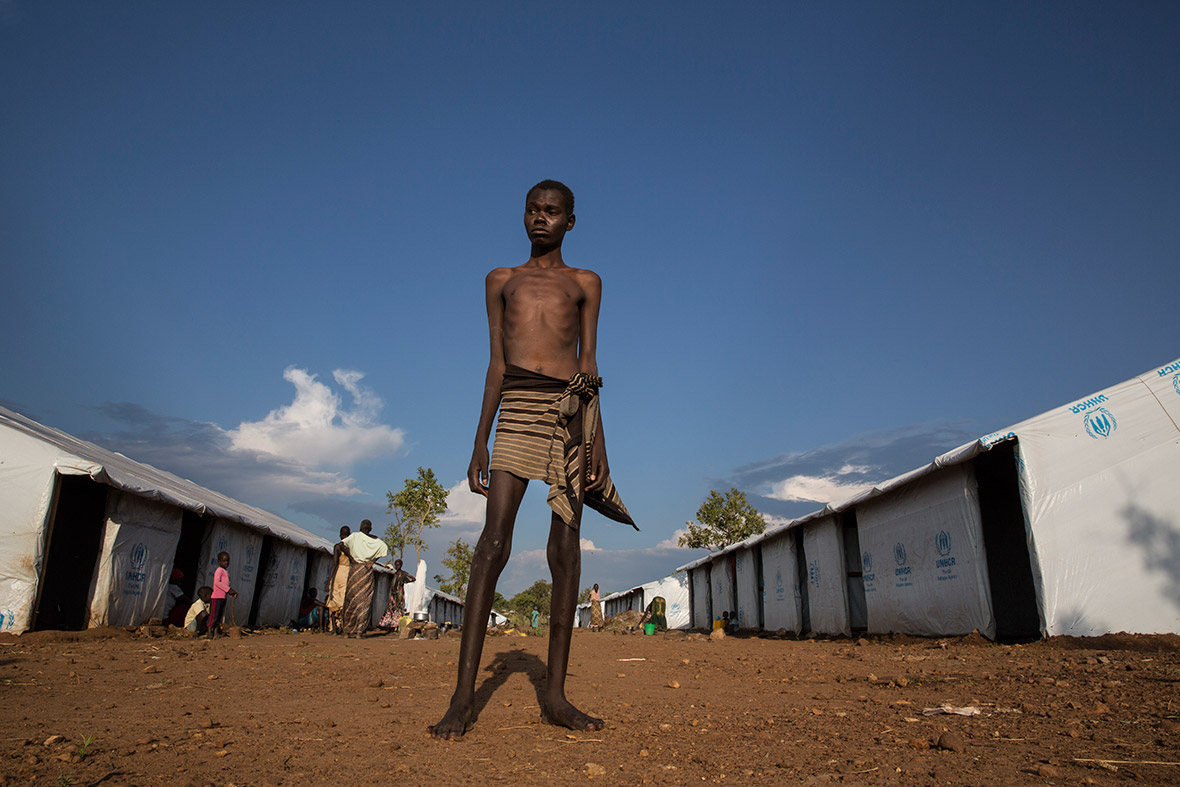 Jeffrey Michael, an 18-year-old mentally disturbed youth, stands outside the basic structures provided by UNHCR to house hundreds of Sudanese refugees at the Pagarinya campPaula Bronstein
South Sudan now joins Syria, Afghanistan and Somalia as countries which have produced more than a million refugees. While some South Sudanese may attempt to head for Europe[2], the numbers within Uganda, in East Africa are comparable in scale to recent refugee flows to Europe from the Middle East, and their traumatic experiences due to war are horrific. They left their home with no idea of when they can ever go back.
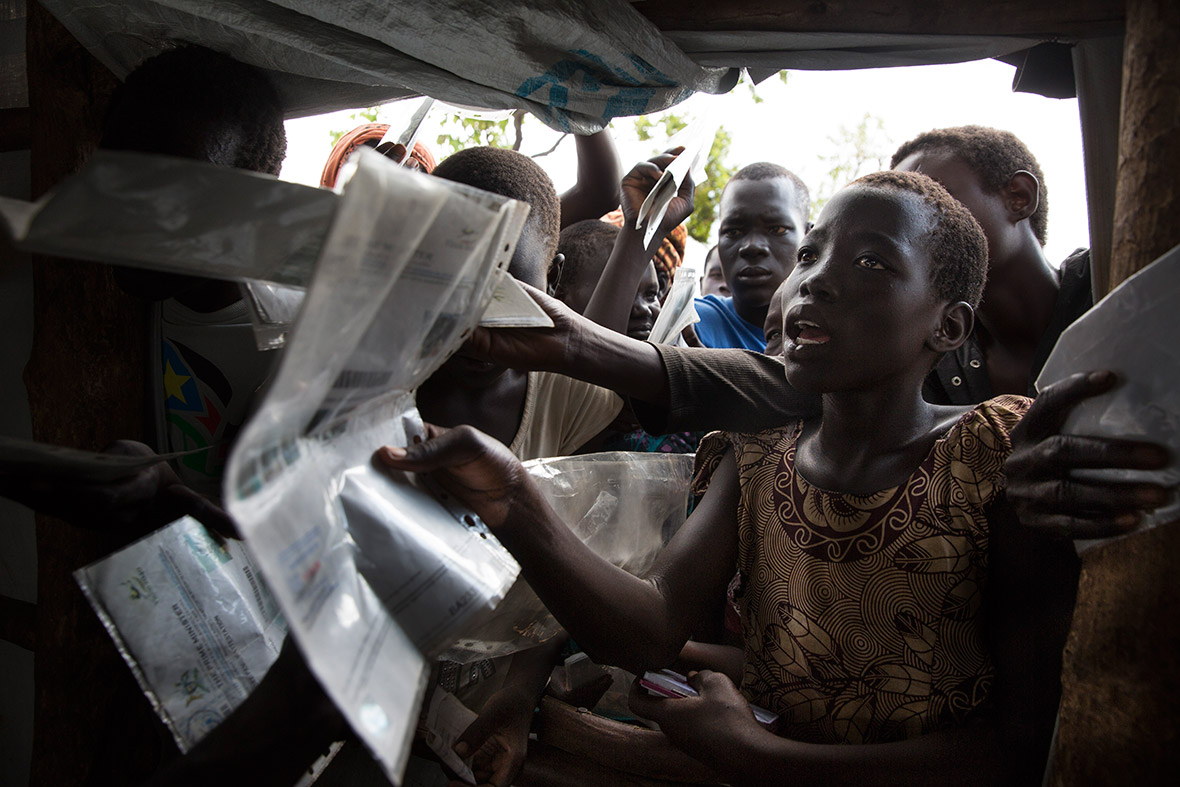
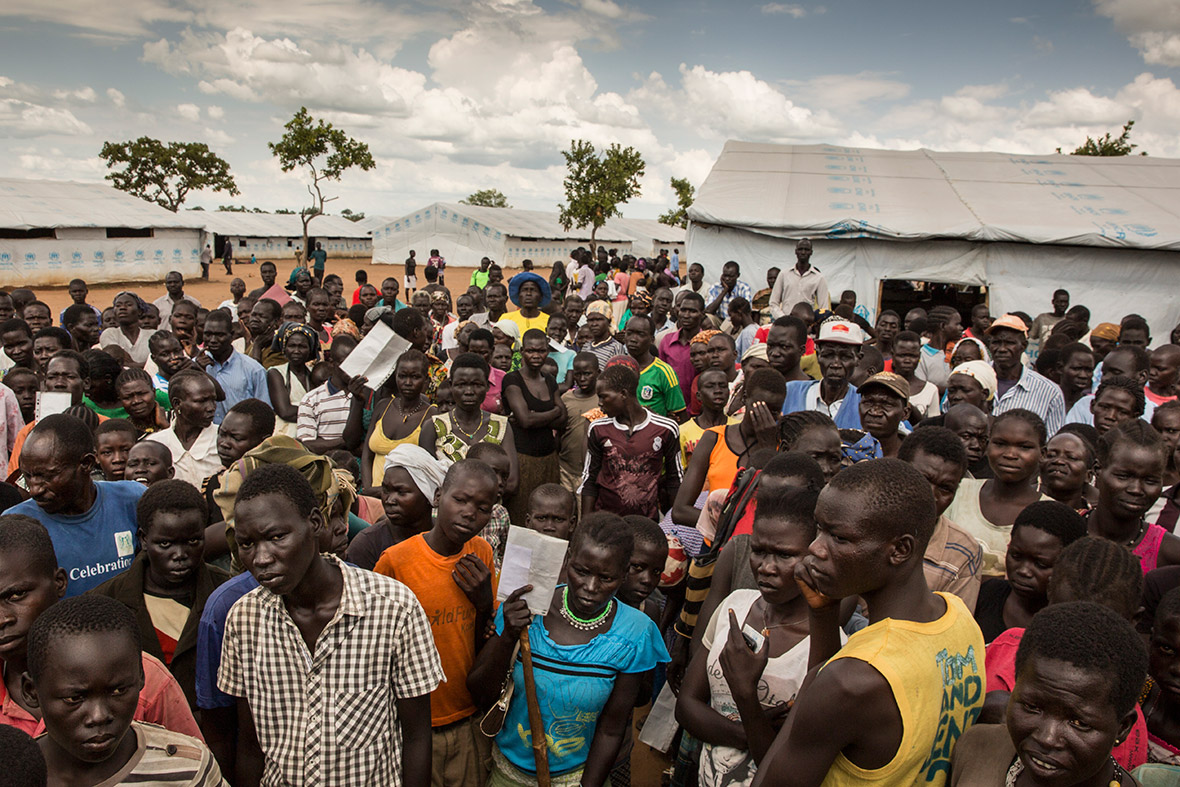 Hundreds of Sudanese refugees wait to hear about getting solar lamps and other badly needed assistance at Pagarinya camp in northern UgandaPaula Bronstein
More than 85% the refugees in this recent influx are women and children, to make matters worse many children have lost one or both of their parents, some forced to become primary caregivers to siblings. Displaced people arriving in Uganda in recent months come mostly from South Sudan's equatorial regions where waves of ethnic killings, sexual violence, looting, burning and opportunistic crime have turned villages and towns into death traps. Buses ferry in new arrivals daily: haggard and hungry children, women cuddling small babies, elderly women and just a few middle-aged men.
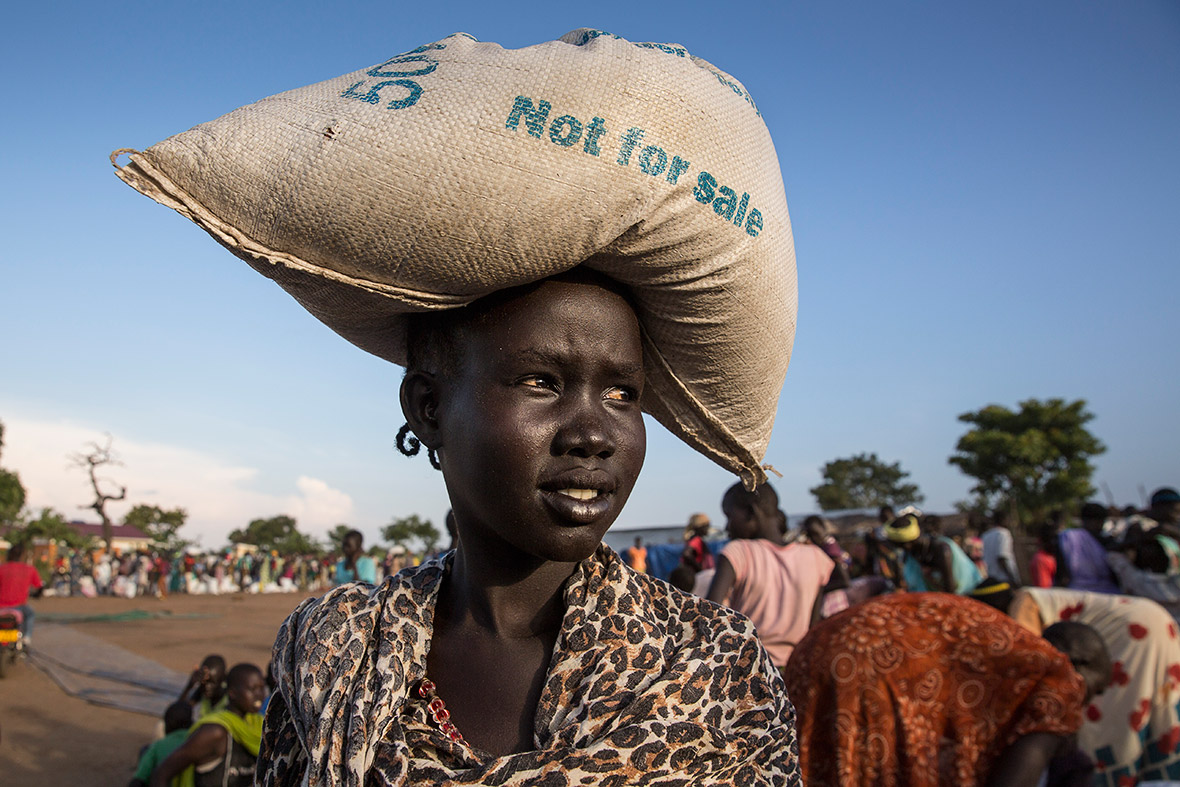
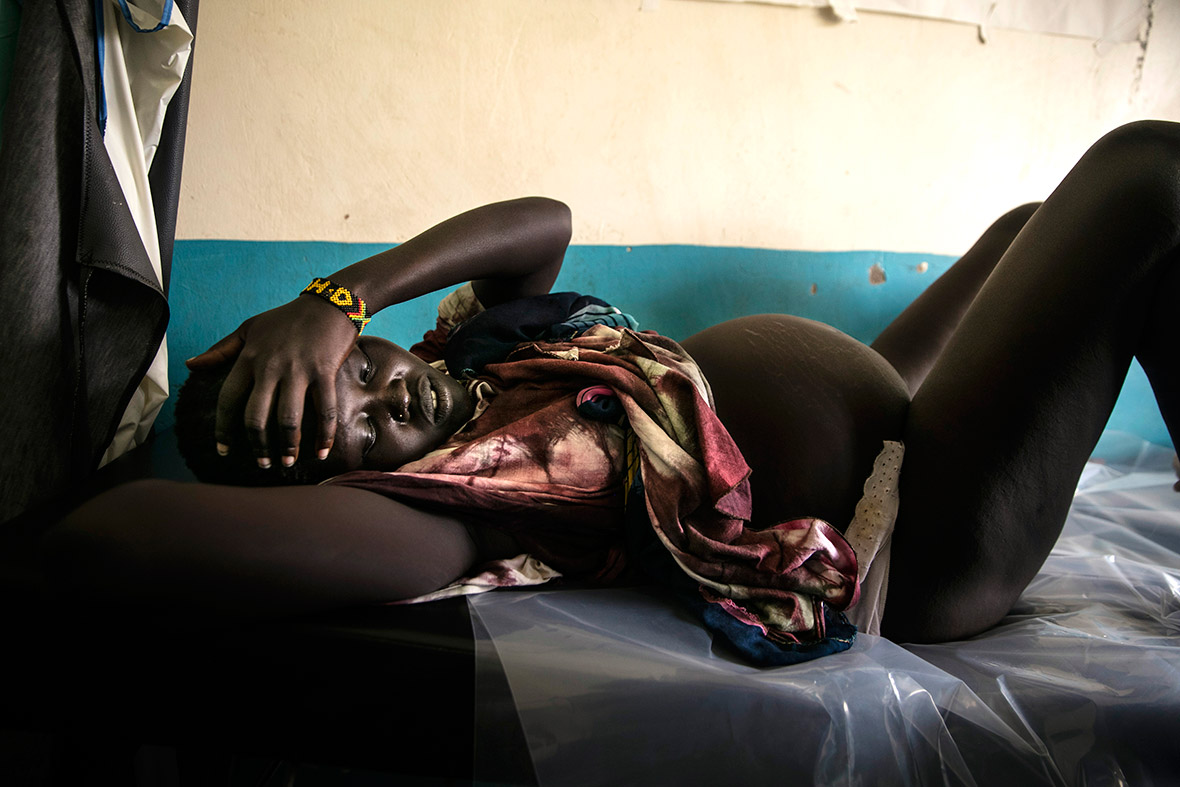
A Sudanese woman collects monthly food aid provided by the World Food ProgrammePaula Bronstein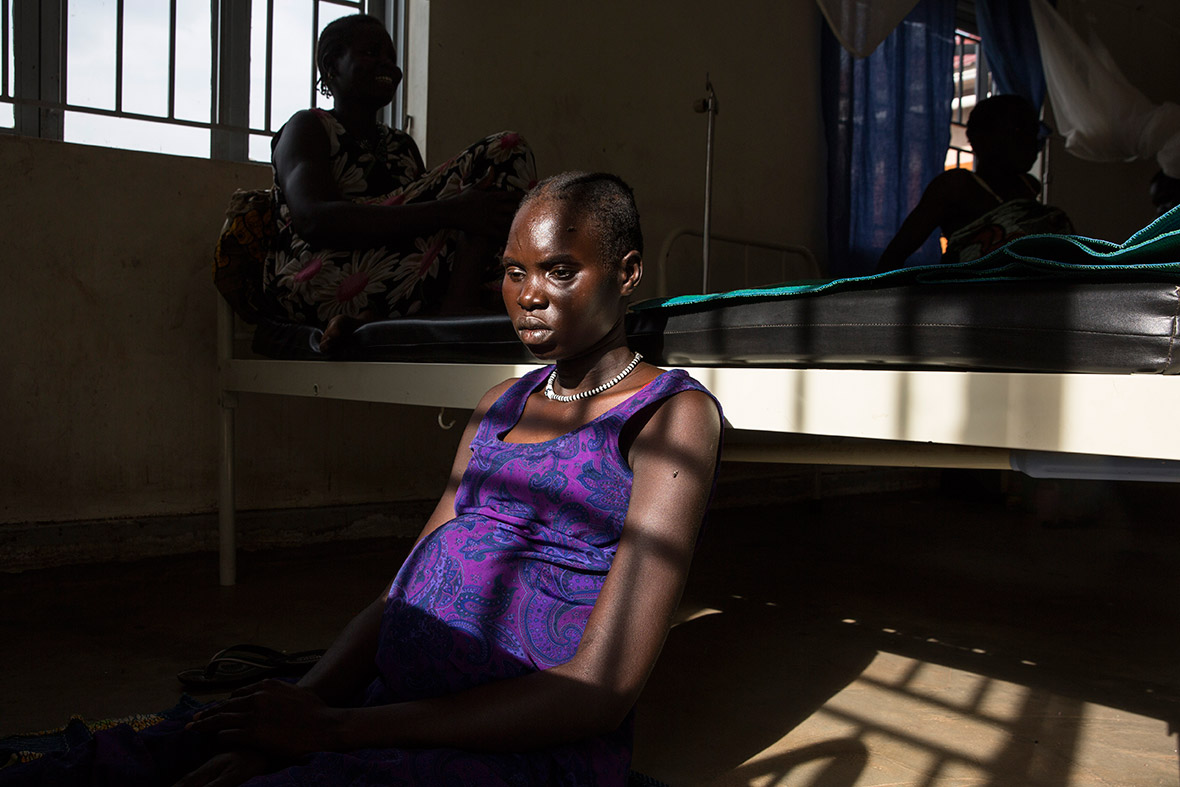 Maria Adol, aged 20, prepares to give birth to her first child at the Nyumanzi maternity clinicPaula BronsteinMaria Adol, aged 20, deals with labour pains as she is about to give birth to her first child at the Nyumanzi maternity clinicPaula Bronstein
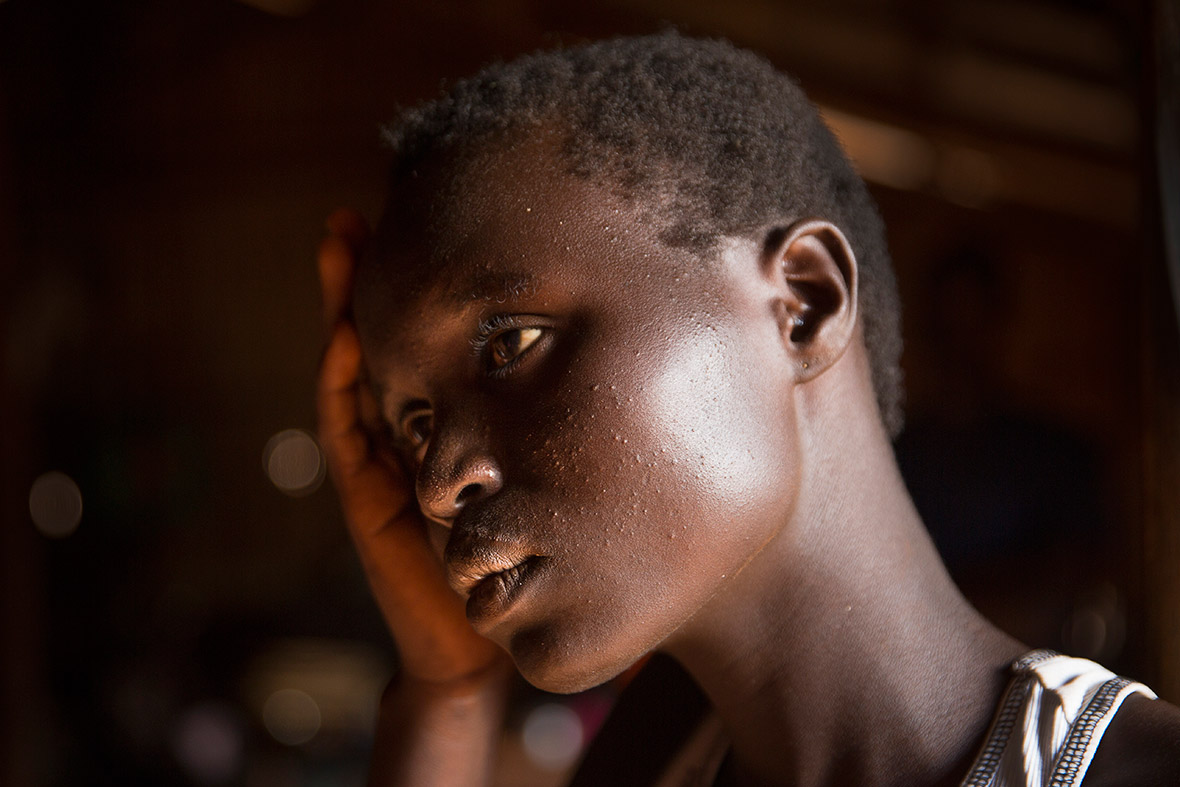
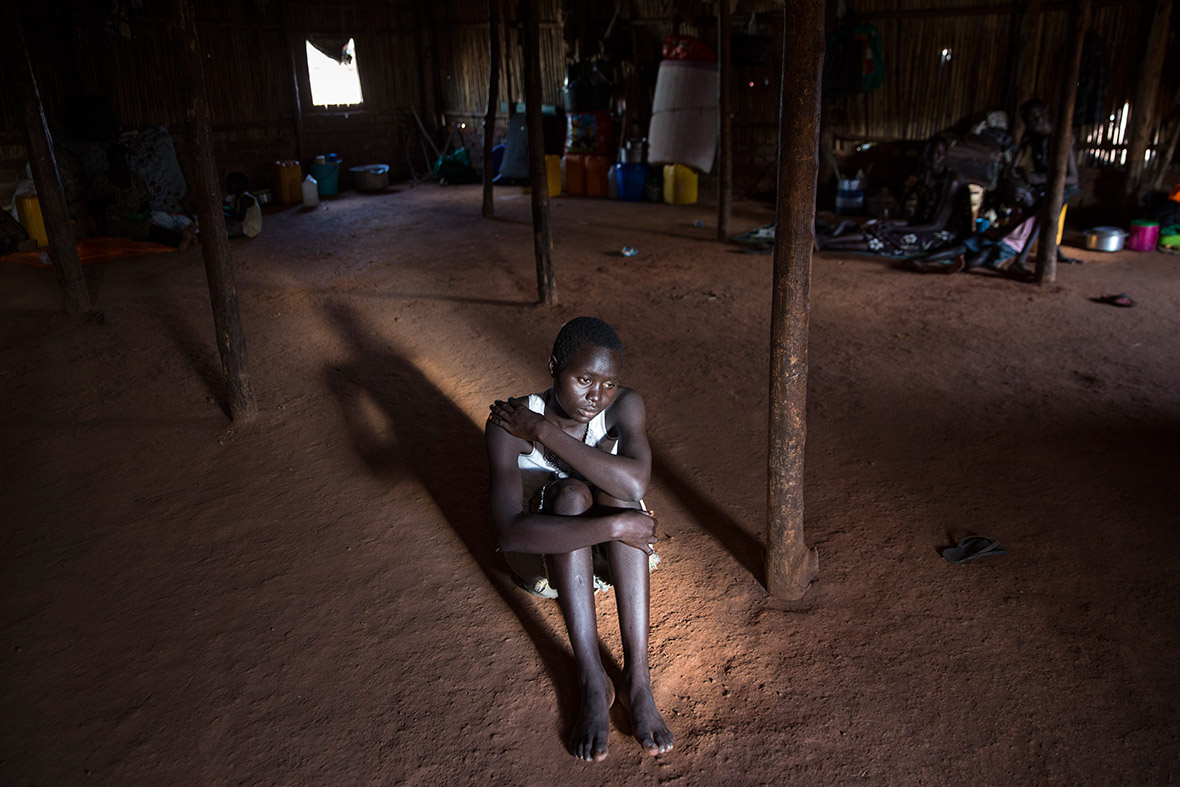 Esther Ababiku, 16, sits on the floor at the Nyumanzi transit camp...Paula Bronstein...Esther Ababiku, 16, is one of the many girls who lost their parents, forced to flee on their own unaccompanied and vulnerable to sexual attacks. She lives with other orphans of the war at the Nyumanzi transit campPaula Bronstein
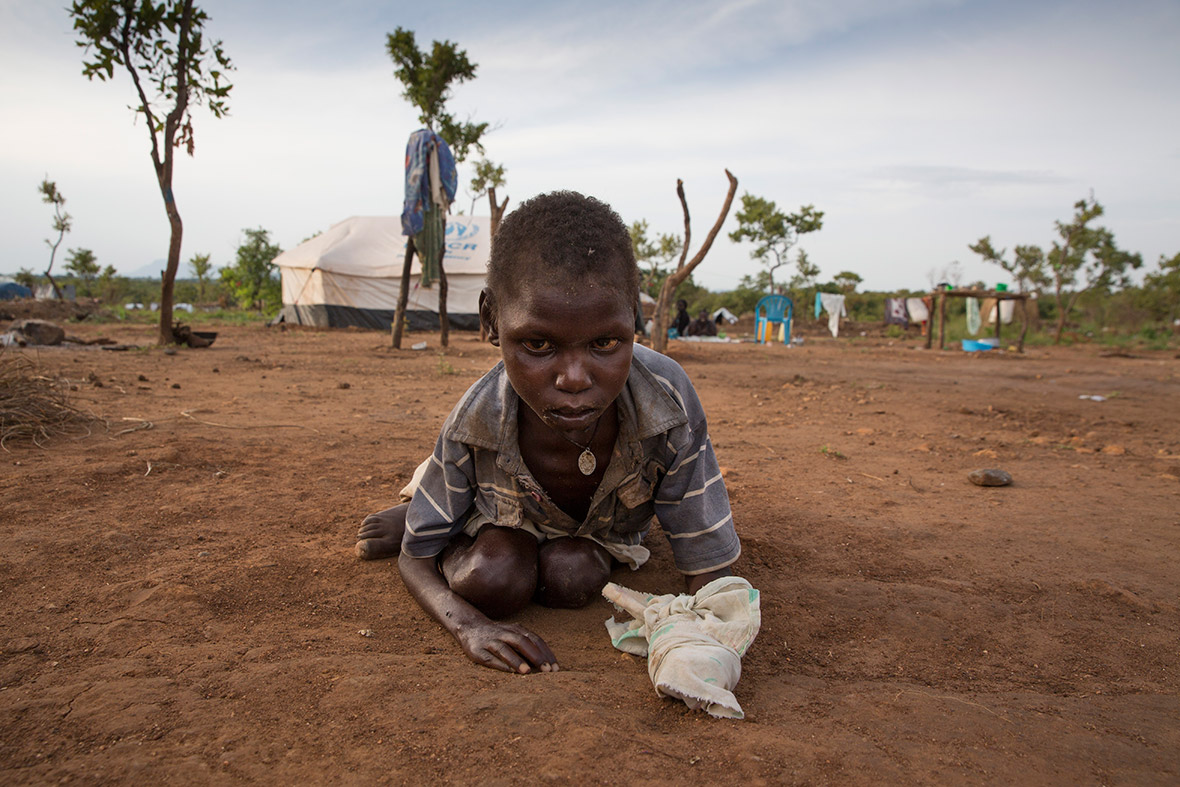
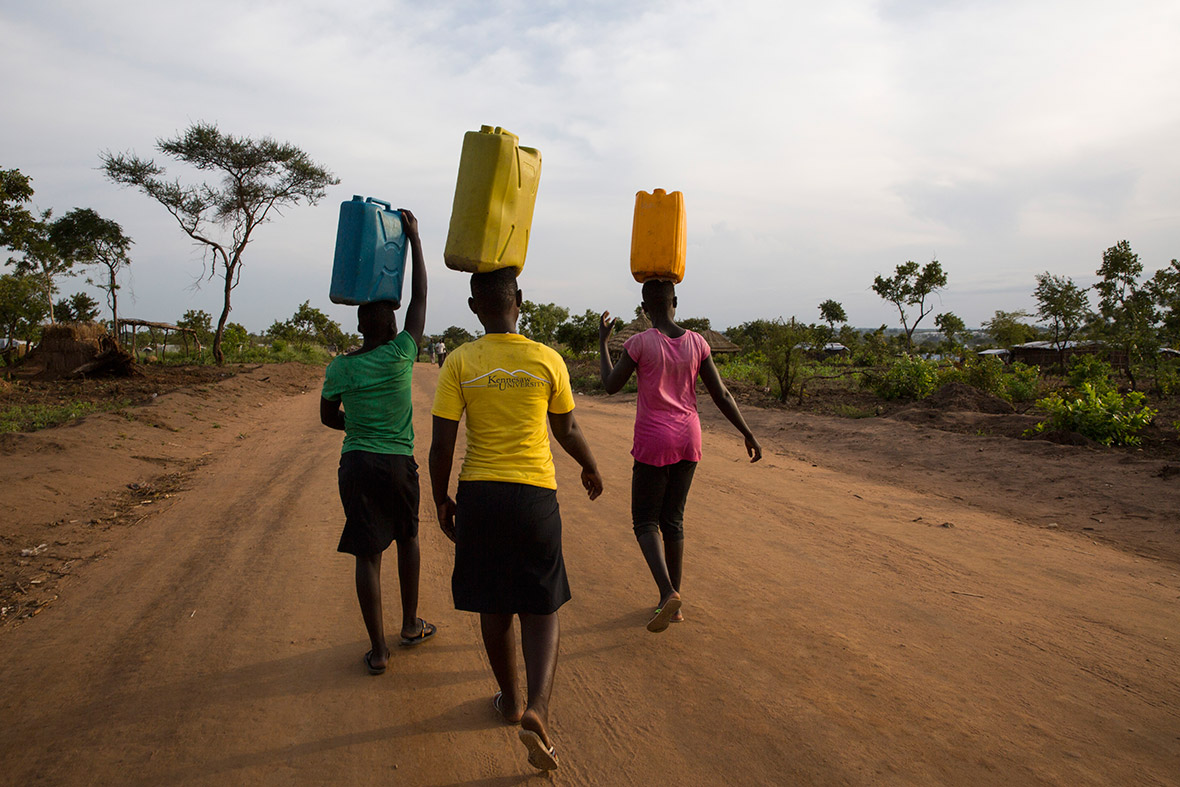 Women carry water back to her tents at the Pagarinya campPaula BronsteinA severely disabled boy crawls in the dirt near his tent at the Pagarinya refugee campPaula Bronstein
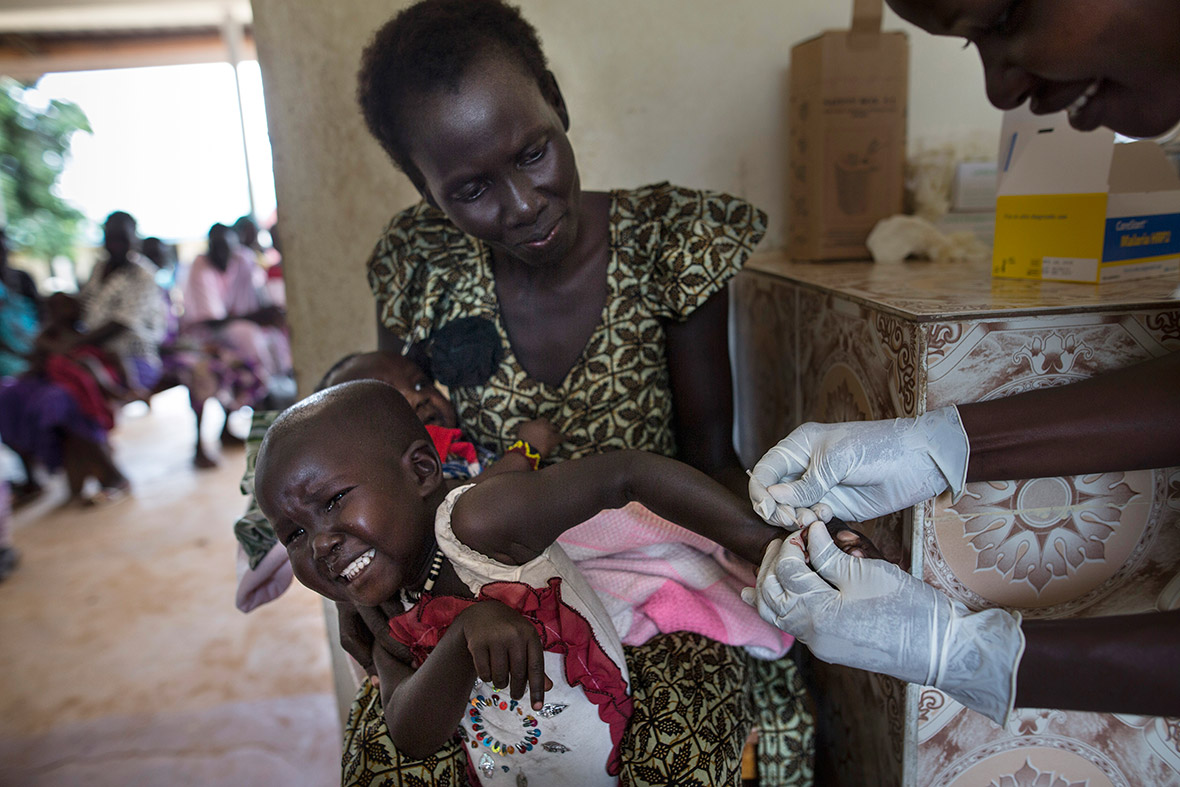
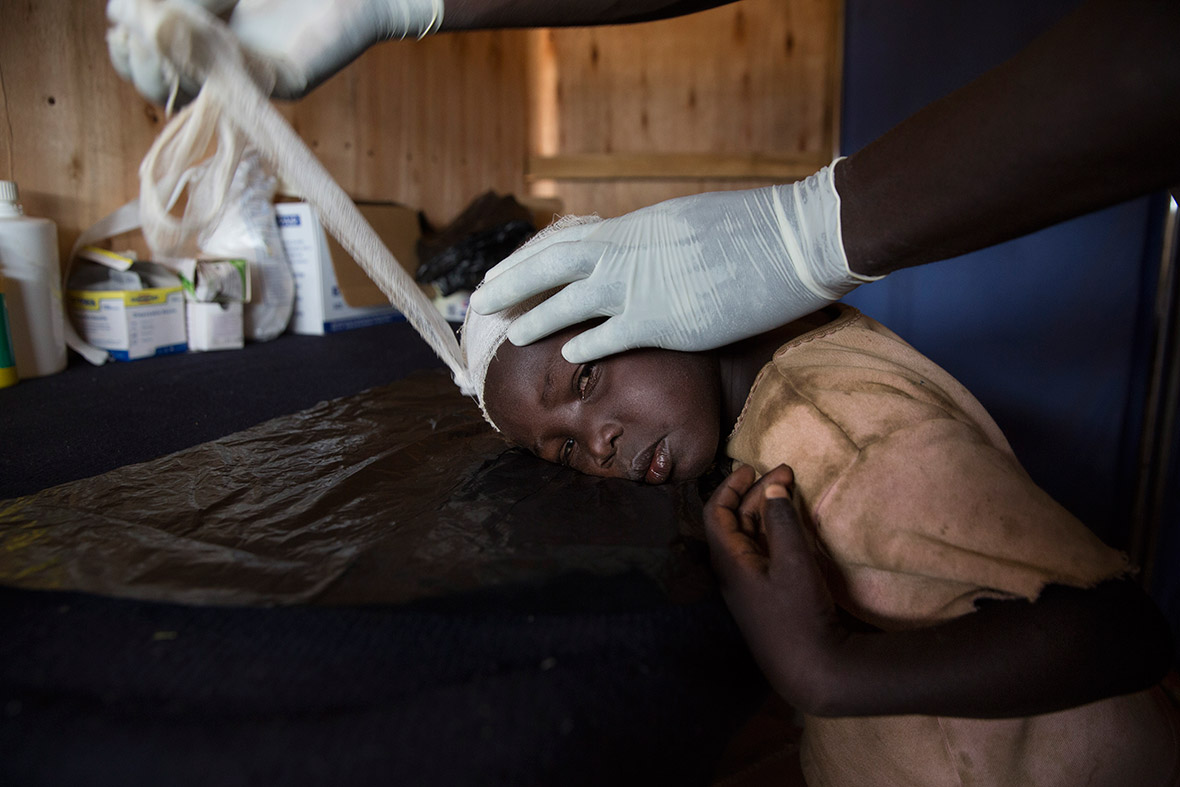 Akol Mathiang, aged 7, is treated for a head injury at the Pagarinya camp clinicPaula BronsteinA child is tested for malaria at a Medical Teams International clinic at the Nyumanzi camp. Many Sudanese refugees arrive suffering from the diseasePaula Bronstein
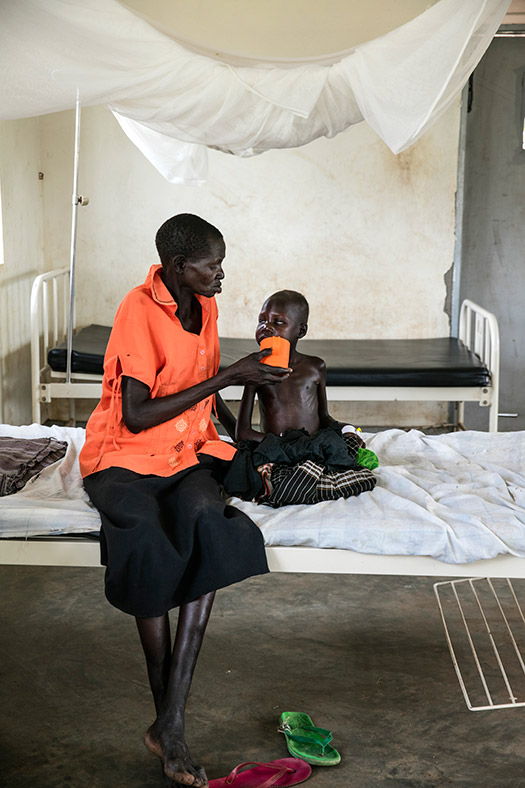
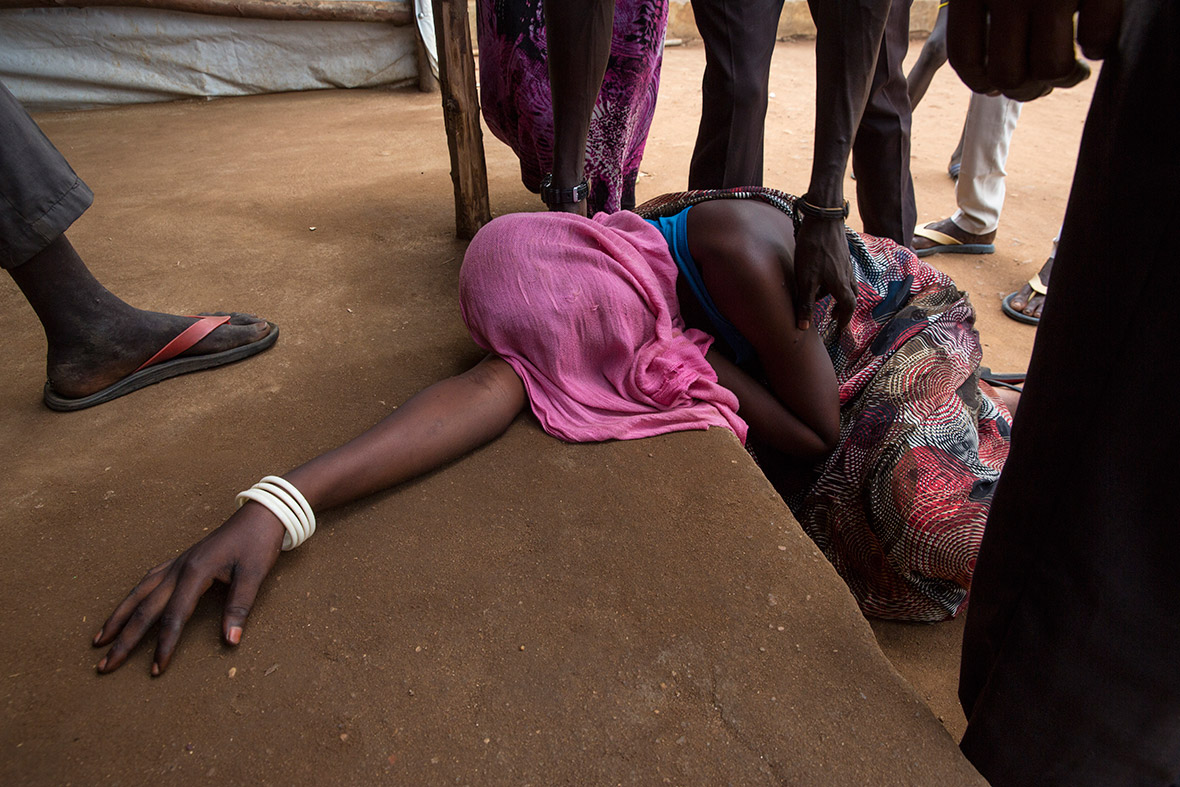 A woman collapses with a high fever from malaria at the Pagarinya camp medical clinicPaula BronsteinA mother feeds her severely malnourished child at the Nyumanzi clinicPaula Bronstein
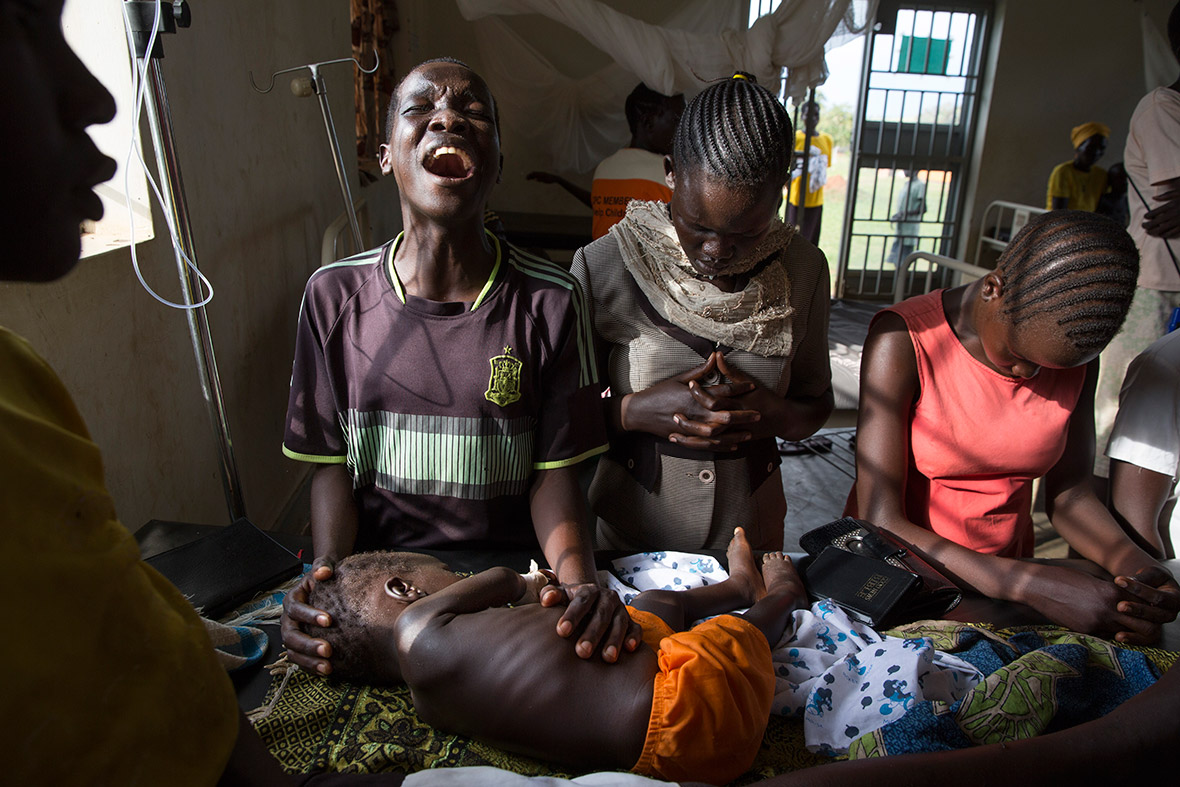 An evangelical religious group prays for a five-year-old boy with malaria, attempting to chase the demons away, at the Nyumanzi medical clinicPaula Bronstein
More than 2,000 Sudanese refugees are entering Uganda every day[3]. The UN estimates 300,000 more people will arrive this year in the biggest cross-border exodus from any central African conflict since the 1994 Rwandan genocide. Those fleeing have turned Uganda's northwest from an empty bushland into a sprawling complex of refugee settlements. Unable to cope with the huge influx, relief agencies have had to implement stringent food rationing[4] in the camps.
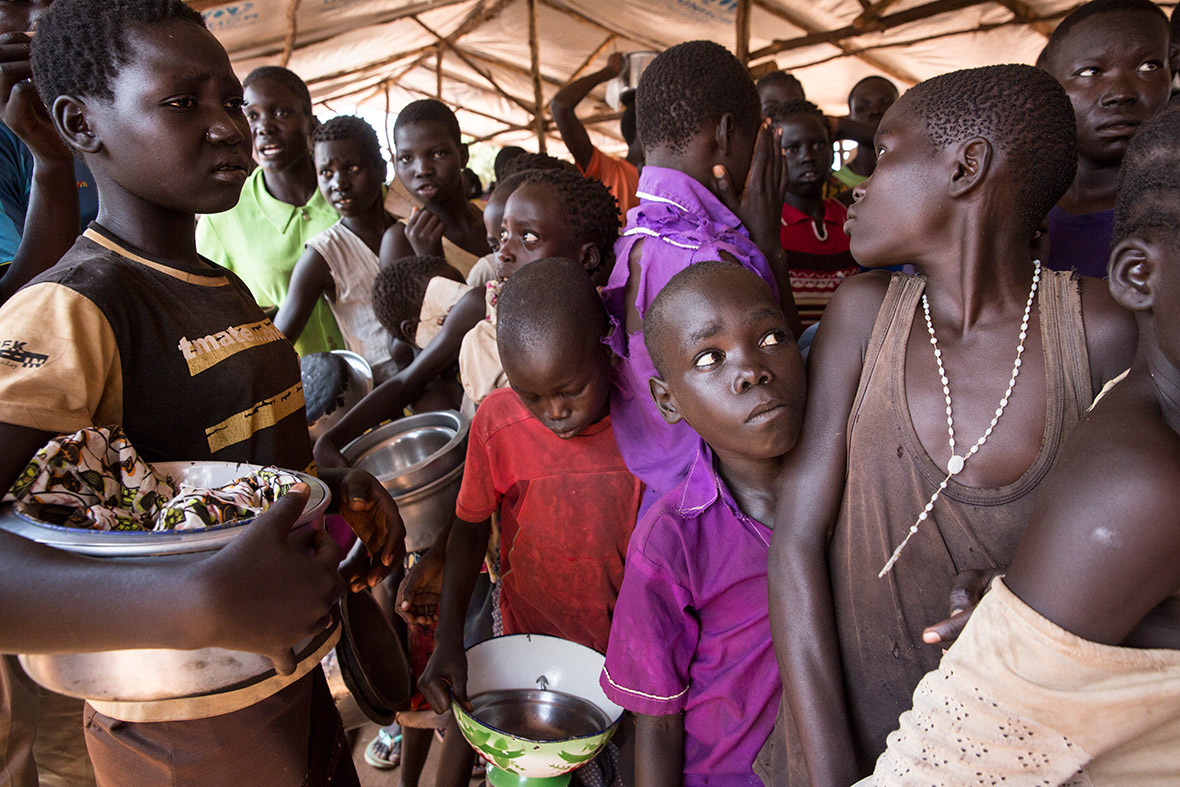
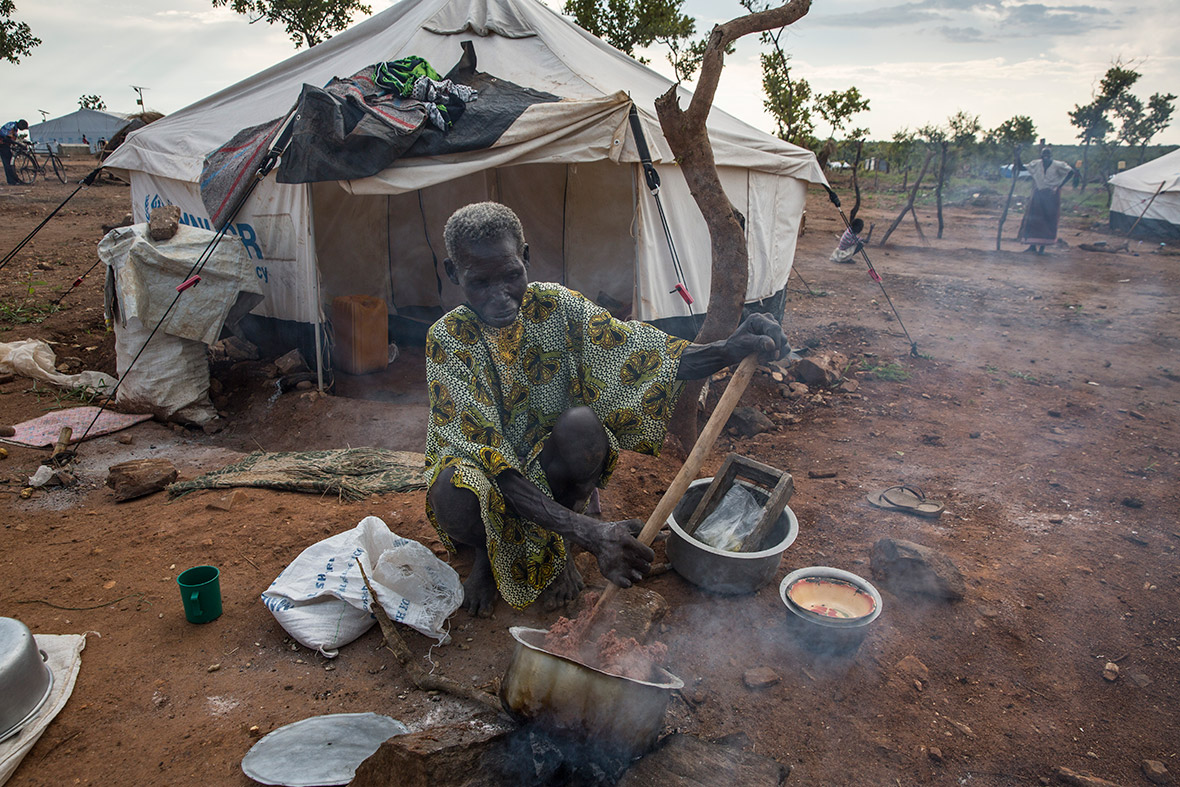
Refugees at the Nyumanzi transit camp queue for hours to receive a hot meal from World Food Programme, a UN humanitarian organisationPaula Bronstein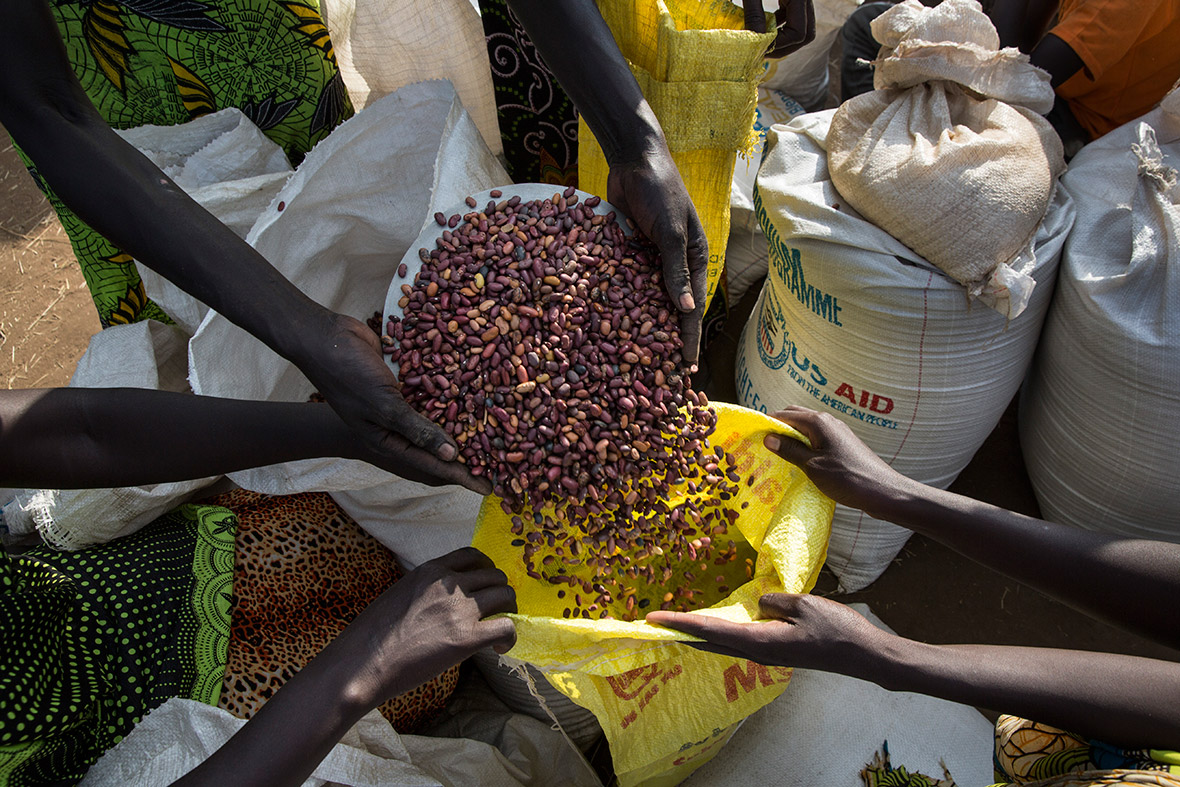 Sudanese refugees collect food aid delivered every month by the World Food ProgrammePaula BronsteinAn elderly woman cooks outside her tent at the Pagarinya campPaula Bronstein
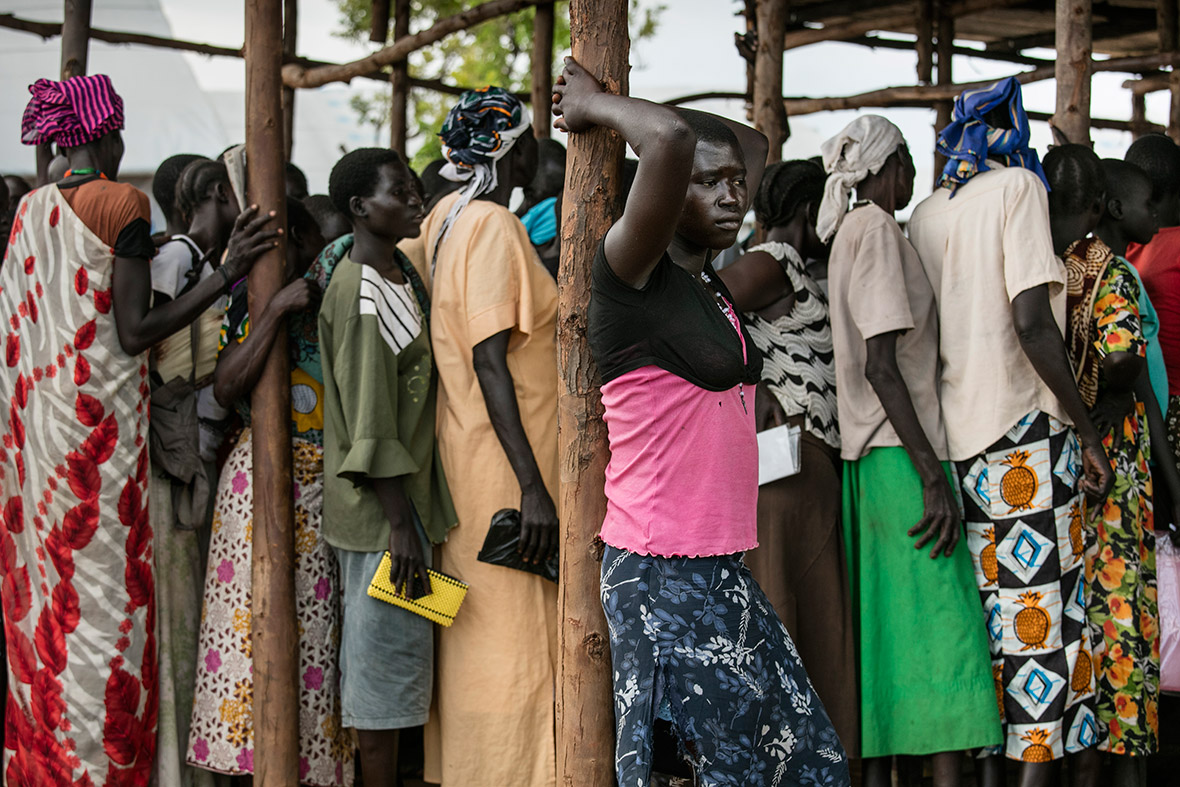 Hundreds of Sudanese refugees wait to get solar lamps and other badly needed assistance at the Pagarinya campPaula BronsteinSudanese refugees show their papers as they queue for solar lamps and other badly needed assistance at the Pagarinya campPaula Bronstein
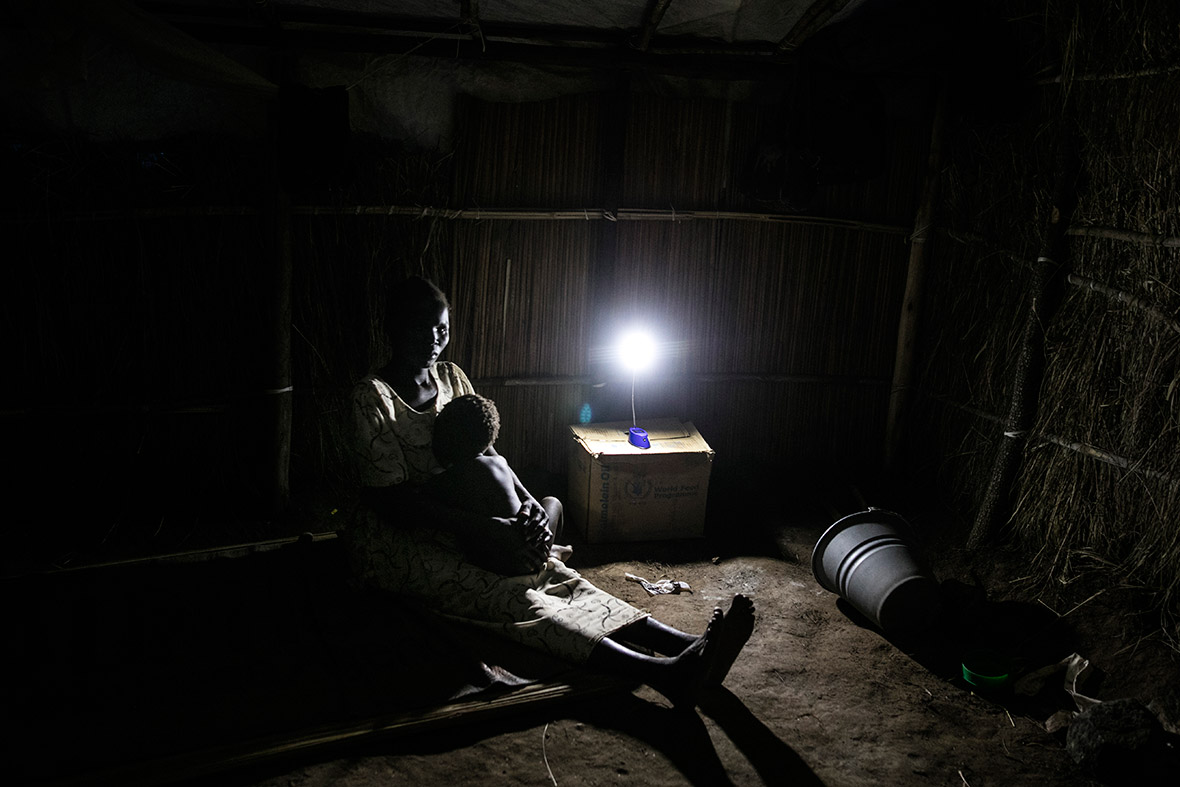 A mother holds her baby at the Pagarinya camp, lit by a dim solar lamp that is the only light source given to the refugeesPaula Bronstein
When South Sudan gained independence from Sudan in 2011 it was hoped it would end decades of civil war between the largely Arab, Muslim north and the predominantly African, Christian or animist south. However, conflict erupted in 2013 when Kiir, a member of Sudan's largest and dominant ethnic group, the Dinka, fired Machar, a Nuer[5].
The fighting has spilled south and west from Juba, laying waste to towns and villages and uprooting their inhabitants. Most of those arriving in Uganda are from smaller tribes in the southern part of the country, and have personal accounts of ethnic pillage, rape and murder - in many cases at the hands of Dinka militiamen.
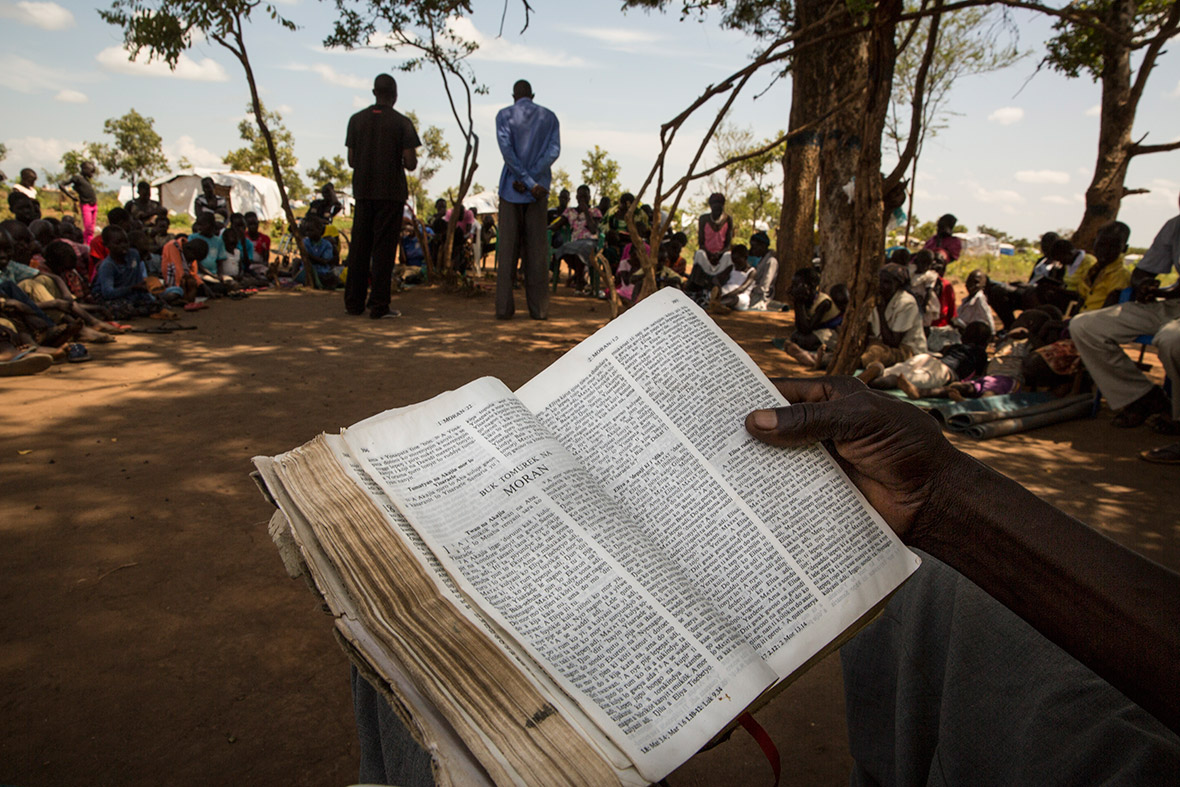
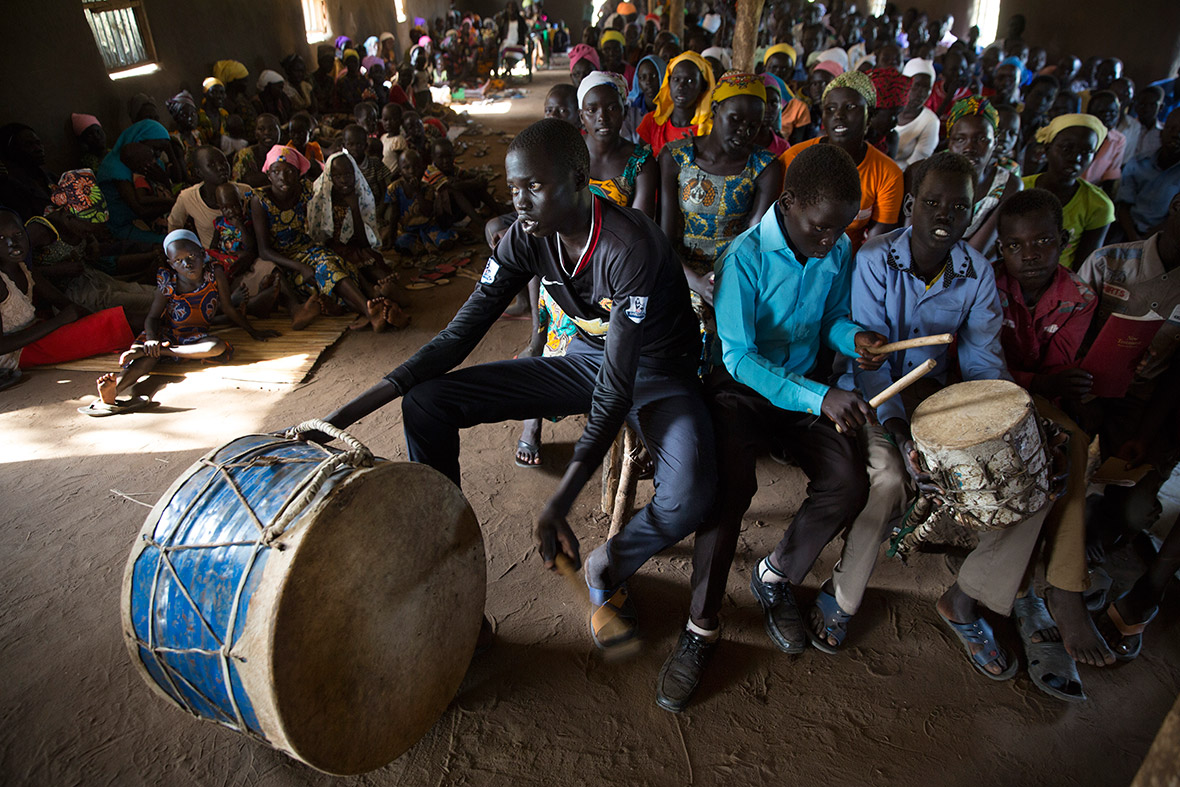
Refugees sit and pray as priests deliver their sermon during a Catholic service held under the shade of a treePaula Bronstein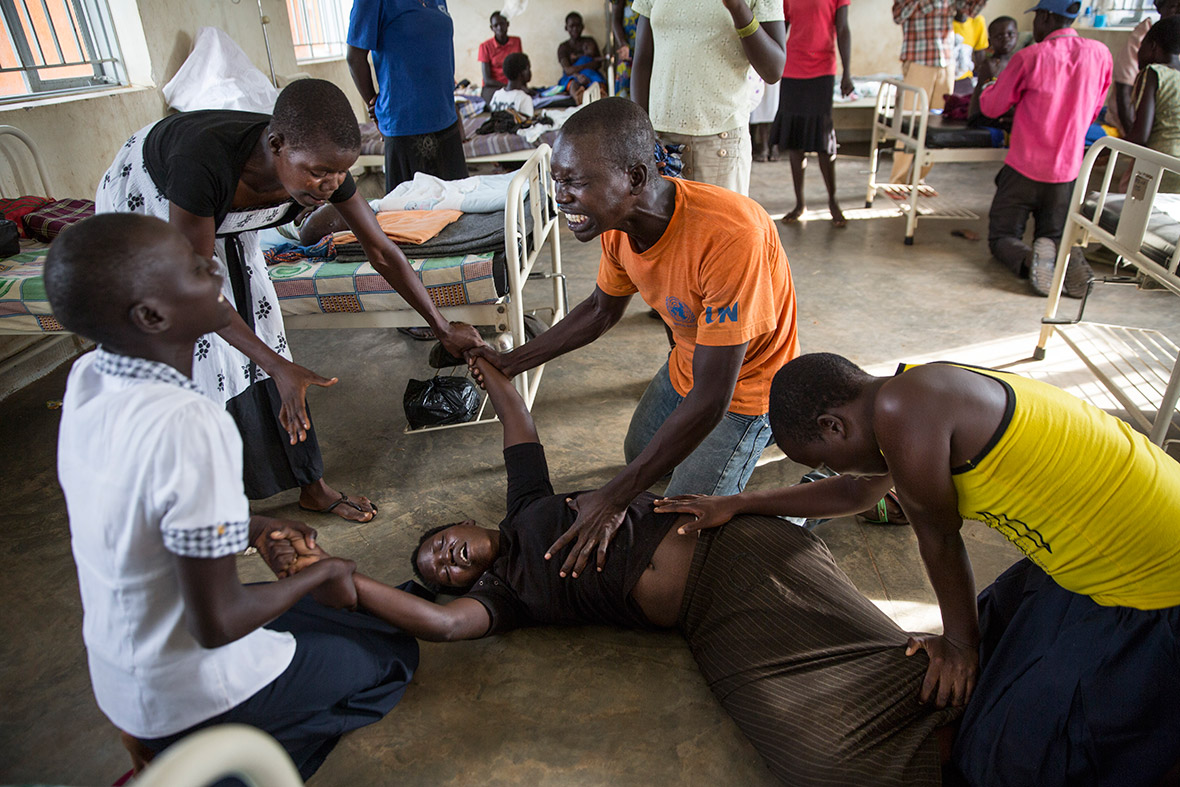 A Catholic evangelical group prays for a woman, attempting to chase her demons away, at the Nyumanzi medical clinicPaula BronsteinSudanese refugees gather for a religious service at the Seventh Day Adventist churchPaula Bronstein
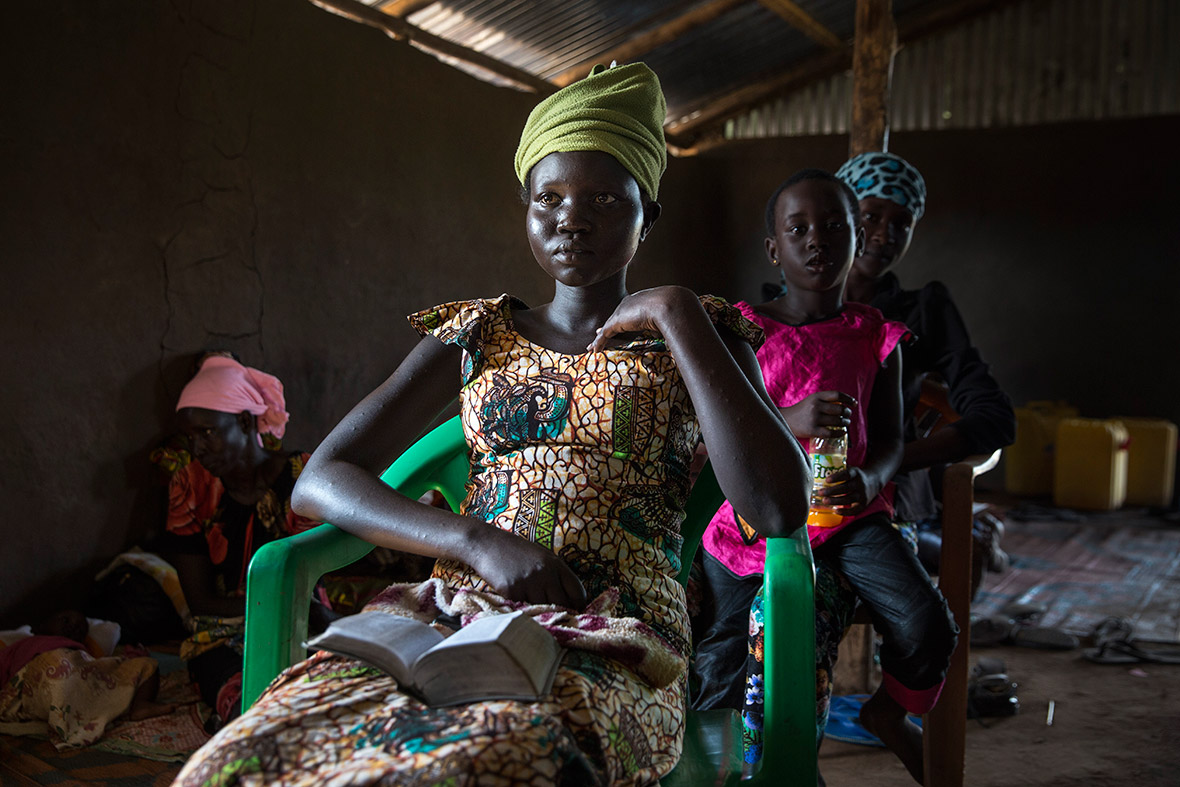
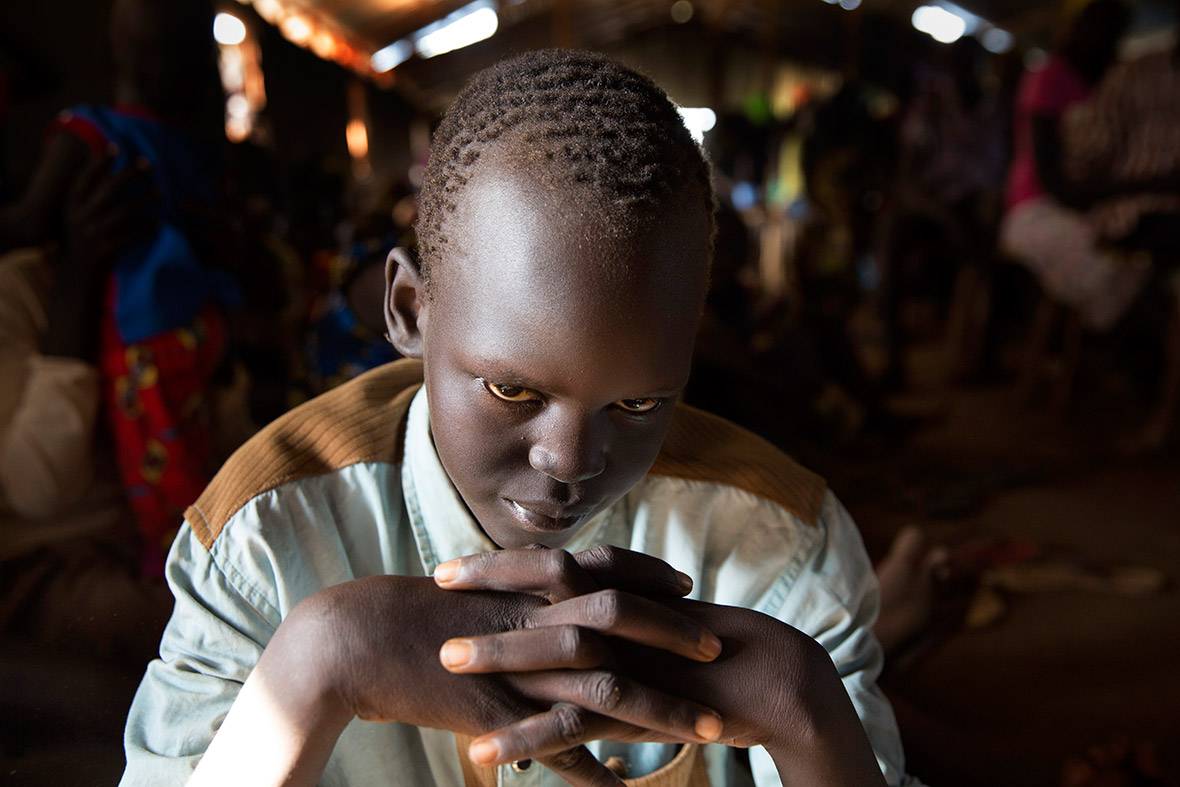 A Sudanese boy listens to a sermon during a religious service at the Seventh Day Adventist churchPaula BronsteinA Sudanese woman listens to a sermon during religious service at the Seventh Day Adventist churchPaula Bronstein
So far, Uganda is keeping its doors open to the humanitarian disaster, and sticking by its policy of granting refugees freedom of movement and work, and access to public services such as schools and clinics. Unlike other countries in the region, Uganda has embraced the refugees, according to Charlie Yaxley, a spokesman for the UN refugee agency. "Many Ugandans themselves have previously been refugees, and you typically hear expressions of solidarity from the Ugandan people," Yaxley said.
The United Nations Human Rights Council has reminded Kiir's government of its responsibility for protecting the population against genocide and the government has said it will let a 4,000-strong regional protection force bolster the UN's existing peacekeeping mission.
Reporting for this story was made possible by the International Women's Media Foundation African Great Lakes Reporting Initiative[6].
References
- ^ Tensions rise in South Sudan as opposition leader Riek Machar replaced after fleeing Juba (www.ibtimes.co.uk)
- ^ World's most dangerous border crossing: Photos of dramatic rescues in Mediterranean sea (www.ibtimes.co.uk)
- ^ Uganda now home to 450,780 people fleeing war-torn South Sudan (www.ibtimes.co.uk)
- ^ UN forced to cut food rations to thousands of refugees in Uganda amid funding shortfall (www.ibtimes.co.uk)
- ^ South Sudan: Radio journalist allegedly gunned down by armed men 'for being Nuer' (www.ibtimes.co.uk)
- ^ International Women's Media Foundation African Great Lakes Reporting Initiative (www.iwmf.org)
Newer articles:
- South Sudan media in tatters as economic crisis deepens - 08/01/2017 23:17
- South Sudan: World’s youngest nation faces bleak future - 06/01/2017 11:19
- In Turbulent South Sudan, Doctor Keeps HIV Clients Supplied with ARVs - 06/01/2017 10:26
- South Sudan renews oil deals with China, Malaysia - 06/01/2017 06:50
- South Sudan: Bishop of Yei ready to meet with rebel fighters in the bush - 06/01/2017 05:37
Older news items
- South Sudan’s civil war pushes the country toward famine - 05/01/2017 09:39
- South Sudan plans to increase oil production - 04/01/2017 16:00
- Illiteracy, Child Soldiers and Death - 04/01/2017 05:12
- South Sudan: Hope for South Sudan as Fund Offers President Kiir U.S.$105 Billion Budget Support - 04/01/2017 01:39
- As OPEC Cuts Take Effect, South Sudan Plans Output Increase - 03/01/2017 16:04
Latest news items (all categories):
- Ramaphosa presses Kiir to implement peace deal ahead of South Sudan’s first elections - 09/10/2026 12:19
- South Sudan steps up Ebola alert after Kenya case - 09/10/2026 12:17
- Laotian man deported by U.S. to South Sudan leaves for Laos after year in detention - 09/10/2026 12:14
- Bullet and blast injuries … and a constant need for blood: inside South Sudan’s overwhelmed trauma wards - 09/10/2026 12:10
- MTN South Sudan and Regulator Pledge Cooperation to Expand Connectivity - 09/10/2026 12:01
Random articles (all categories):
- ثروات السودان.. من فرصة اقتصادية كبرى إلى وقودٍ لحربٍ مستمرة - 07/11/2025 11:39
- The World Bank’s Latest South Sudan Economic Monitor Forecasts Mild Economic Recovery for South Sudan in FY2021/2022 - 02/03/2022 16:00
- Catholics in South Sudan voice ‘frustration, shock’ for missing priest and driver - 06/05/2024 08:07
- .:Middle East Online:::. - 20/10/2013 17:05
- MTN telecom to expand South Sudan coverage - 30/04/2018 08:49
Popular articles:
- Who is the darkest person in the world, according to Guinness World Record? - 25/10/2022 02:34 - Read 150795 times
- School exam results in South Sudan show decline - 01/04/2012 17:58 - Read 28197 times
- Top 10 weakest currency exchange rates in Africa in 2023 - 19/07/2023 00:24 - Read 25309 times
- No oil in troubled waters - 25/03/2014 15:02 - Read 24535 times
- NDSU student from South Sudan receives scholarship - In-Forum - 29/09/2012 01:44 - Read 22494 times
