
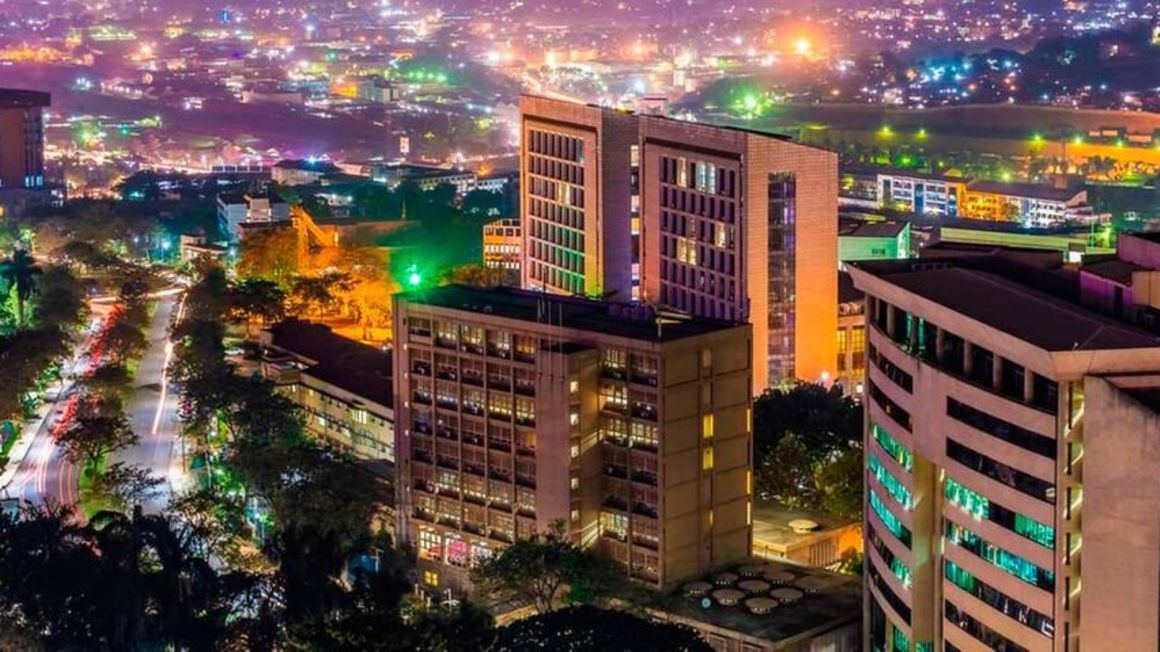
Last weekend St Gabriels, the Eritrean Orthodox Cathedral in Uganda, was commissioned in Kansanga, a well-spoken suburb in the capital Kampala. It is a grand building.
Speaking at the event, the Eritrean ambassador to Uganda,
Mr Mohammed Sulieman Ahmed, said, “Eritreans came to Uganda in 2006, you do not see this kind of church in the rest of Africa, it is very unique. Wherever Eritreans go, the first thing they do is to build a Cathedral. We do have in Juba, Kenya, Sudan, Tanzania, US, and Europe. The church is a gathering place for all Eritreans worldwide.”
In Nairobi, you have the Eritrean Orthodox Tewahido Church on the edge of Nairobi Kilimani suburb. And where you have the Eritreans, you also have their Ethiopian cousins not too far away. In Nairobi, there have a handful of Ethiopian Orthodox churches.
The Eritreans and Ethiopians are unique among Africans in that churchy sense; wherever they gather, they soon build an orthodox, which is the mainstream and far-out dominant church in both churches. The rest of the Africans usually have a sharp one among setting up his own thing, with him as pastor. Usually a prosperity gospel affair, they shift between shaking down their flock with a spirituality that pays homage to home in a passing way, and the miracles of the Lord.
In that sense, contemporary Eritreans and Ethiopians are akin to the European missionaries who landed in Africa in the 19th century and, of course, the Muslims.
Additionally, the Eritrean and Ethiopian Orthodox churches, as the ambassador in Uganda said, perform a secular purpose; a meeting place.
It is as “meeting place” that the churches reveal a fascinating development in the Eritrean and Ethiopian nations outside its geographical borders. Both Horn of Africa nations, their fortunes almost mirror that of its restive neighbour Somalia.
Perhaps there are no other African peoples today who have reshaped other African countries, or entire sectors in them, like the Eritreans, Ethiopians, and Somalis.
Until about 28 years ago, the Kansanga suburb where the St. Gabriels is located was a melting pot of African peoples but was dominated by South Africans. That followed the relocation of South Africa’s then-liberation movement African National Congress (ANC), especially its armed wing uMkhonto we Sizwe, to Uganda from Mozambique and Angola, in the dying years of apartheid.
The Eritreans started arriving earlier than the ambassador said, most during the 1998-2000 Ethiopian-Eritrean war. They eventually took over a slice of the place, and Ethiopians too arrived. Today, it looks like little Asmara or Addis Ababa. The two deadly simultaneous bomb blasts by Somali extremist group Al-Shabaab in Kampala on July 12, 2010, World Cup final night, hit an Ethiopian restaurant and a rugby club. The Ethiopian restaurant was down the street in nearby Kabalagala.
However, it is in South Sudan that perhaps the Eritrean footprint in Eastern Africa is most striking. They are ubiquitous in the construction and hospitality industry, and in trade – much like the Somalis in Kenya.
In Uganda, they are running away with the real estate sector, and the second generation, the children of the arrivals of the late 20th century Eritrean arrivals have become remarkably Ugandan.
In the countries with a national Somali population, as in Kenya (which also shares Ethiopian nationalities at its border), and more marginally in Uganda where a notable population formed in the early 18th century in, of all places, the northeastern part of the country where the Karamojong are located (it was the cattle, stupid) the combination of the diasporic and refugee Somali population, has been like an economic accelerant.
This “Horn-of-Africanisation” of Eastern – and southern – Africa, and the spread of the broad Orthodox church, unlike the Christian variety, did not come at the hands of crusaders and missionary civilisers. Nearly all the Horn of Africa folk were fleeing strife and certain death and they arrived with little apart from the shirts and blouses on their backs.
This arrival as weak, underdog “missionaries”, who didn’t have an imperial power with gunboats docked off the coast, or without sacks full of money to oust local capital, helped win early entry because there was no defensive wall put up by “indigenous” folk. Latter-day success, however, has often unleashed xenophobic resentment and pushback. It will not hold back the revolution, though.
Most importantly, nevertheless, that context also meant that this Horn-of-Africanisation has come with a salt of the earth quality about it. Together with entrenched cultures that were never scuttled by European colonial occupation or overwhelmed by it (how much of Italy is in Somalia?), it brought us to the place where we are today; an African people, taking root in another part of Africa, with their religion, food, dress, music, mingling in interesting ways with the host culture.
If you asked me what urban African society (which will be most of Africa) will look like in 2100, I would say look to Eastleigh, Hurlingham or Nairobi West, or Kansanga in Kampala. In other places, you’ll just have to scratch out Eritreans or Ethiopians, and write in Kenyans, Congolese, Nigerians, Ugandans…
Newer articles:
- South Sudan signs up for Ethiopia dam power - 14/05/2022 00:01
- UJOSS, RJMEC, and UNDP train journalists on reporting peace deal - 13/05/2022 05:08
- Biden urges world to renew COVID fight as US nears 1M deaths - 13/05/2022 00:01
- 16 children die of meningitis in Northern Bahr el Ghazal - 12/05/2022 07:51
- EU Commission Publishes Consolidated List of Travel Bans & Other Sanctions - 12/05/2022 03:10
Older news items
- Two Ugandans among three people shot dead in South Sudan ambush - 12/05/2022 00:59
- Kenya Special Envoy to South Sudan Kalonzo meets vice presidents of South Sudan in ongoing peace process - 11/05/2022 15:55
- South Sudan urged to implement economic reforms to get IMF, World Bank loans - 11/05/2022 15:54
- KTN Interview Lands Kenyan Ambassador to South Sudan in Trouble - 11/05/2022 10:10
- Kiir and Machar: insights into South Sudan’s strongmen - 11/05/2022 09:59
Latest news items (all categories):
- South Sudan can leverage China’s AI path to bridge the digital divide - 16/09/2026 16:04
- Credible Elections Are No Longer Possible in South Sudan - What Next? - 16/09/2026 15:59
- South Sudan's president replaces electoral chief three months before scheduled polls - 16/09/2026 15:56
- Turkish Airlines is pulling out of 5 African routes, including South Sudan - 16/09/2026 15:23
- ‘Super El Niño’ deepens hunger crisis in South Sudan – WFP - 16/09/2026 15:19
Random articles (all categories):
- South Sudan horror at deadly cattle vendetta - 16/01/2012 12:24
- Aweil: Law Forum addresses challenges faced by Sudanese refugees - 13/06/2023 02:48
- WFP VACANCY ANNOUNCEMENT - Logistics Officer, NOB and Administration Officer, NOA - 16/07/2022 09:46
- Africa Day: ‘We are free and independent states’ – Ramaphosa - 24/05/2021 00:37
- RDF Army Chief of Staff visits Rwandan peacekeepers in South Sudan - 03/05/2024 12:42
Popular articles:
- Who is the darkest person in the world, according to Guinness World Record? - 25/10/2022 02:34 - Read 149591 times
- School exam results in South Sudan show decline - 01/04/2012 17:58 - Read 28115 times
- Top 10 weakest currency exchange rates in Africa in 2023 - 19/07/2023 00:24 - Read 25198 times
- No oil in troubled waters - 25/03/2014 15:02 - Read 24464 times
- NDSU student from South Sudan receives scholarship - In-Forum - 29/09/2012 01:44 - Read 22415 times
