
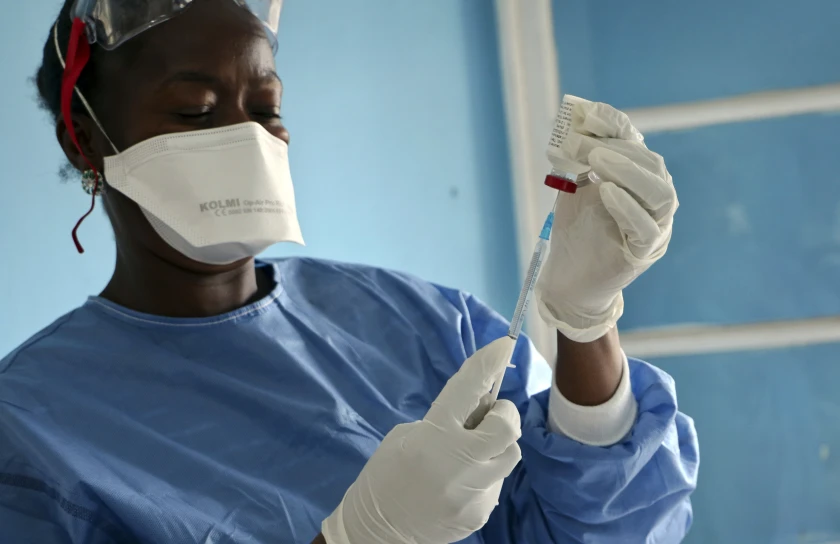
The COVID-19 pandemic is far from over. The Delta variant that devastated India has spread worldwide — and the next variant could be even more deadly. The pandemic will continue unchecked unless we support campaigns in fragile states such as South Sudan and Yemen to get more people vaccinated.
But vaccine availability does not automatically translate into shots in arms. The final stretch of a vaccine’s journey to its destination can involve complex logistics, including keeping it at a consistent cold temperature during transportation — the “cold chain.” Maintaining the integrity of this chain can be especially challenging when delivering medicines to remote areas mired in conflict and instability. Other barriers, such as extreme weather and displacement caused by conflict and climate change, can arise unexpectedly.
Nongovernmental organizations, or NGOs, can ensure that vaccine doses make it from airports to arms — using some of the same infrastructure, knowledge and clinical staffers that the sector has used to help eradicate wild polio in Africa, provide cholera vaccinations in Haiti, treat malaria in Yemen and battle Ebola in Africa. This same foundation could help to deploy a newly approved malaria vaccine[1] or other new medicines.
However, last-mile delivery involves more than logistics and cold-chain support. There also is the need to counter misinformation and vaccine hesitancy.
Communities themselves must embrace vaccination programs to reach the needed levels of immunity. Unfortunately, the experience of NGOs has shown that populations in conflict zones and humanitarian aid settings don’t always embrace preventive measures such as masking and vaccination. Therefore, merely making vaccines available in these regions won’t be enough. Addressing hesitancy toward vaccination and educating communities on preventive measures requires a community-centered approach that engages hearts and minds.
For example, International Medical Corps — the humanitarian aid organization that I lead — recruited and trained community volunteers in Somalia at the onset of the pandemic to identify myths and misinformation there, and to counter them with accurate information. We set up a hotline that enabled community members to discuss with our staff the rumors they had heard. We eventually got feedback from 5,625 people, many of whom asked about home remedies — for example, whether garlic or black pepper could cure or prevent COVID-19.
We also produced informational videos that played in health facility waiting areas, went door to door sharing COVID-19 information and supported a popular call-in radio program hosted by a doctor to answer COVID-related questions and correct misinformation about the disease. Since its launch in June 2020, this wide-ranging campaign has reached almost 850,000 people with accurate information about the virus and helped build confidence in the vaccines. A survey that we conducted in February showed that 89% of the target population could recall two or more protective measures against COVID-19.
In our studies of vaccine hesitancy around the world, we’ve seen hesitancy higher in three groups: refugees and other displaced people; women; and young people. The first two groups — who feel marginalized and disconnected from the healthcare system — lack confidence in the efficacy, safety and administration of the vaccine. Measures like the ones described above help increase confidence in vaccines and the healthcare system.
For younger age groups, the main issue is complacency. They feel that they are healthy and don’t need the protection that the vaccine provides. And they’re not alone — with the pandemic projected to continue well into 2022, many people are tired of quarantines, of wearing masks and of the promise posed by vaccines that they believe may never reach them. To break through this complacency, we don’t just bring vaccines to vaccination centers. We make it convenient for people to come to these centers.
In Azraq and Zaatari refugee camps in Jordan, a full-spectrum, community-based approach — including registering people for vaccines, providing medical prescreening and transportation to vaccination centers, educating communities about the virus and administering vaccines — has directly resulted in more shots in arms.
To overcome hesitancy, we must instill confidence, battle complacency and provide convenience. But there is another “C” involved here: cash. Donors must invest now in vaccine delivery in low- and middle-income countries to ensure that future campaigns are effective — and to discourage future variants. In addition, humanitarian aid groups must be included in setting distribution strategy with the U.N. and national governments. Otherwise, vaccines could spoil in warehouses, and the pandemic could go on indefinitely.
Nancy A. Aossey is president and chief executive of International Medical Corps.
References
- ^ newly approved malaria vaccine (www.nytimes.com)
Newer articles:
- Multisectoral health emergency risk profiling for health security in South Sudan - 18/10/2021 07:02
- HRW - The situation of human rights and impunity in South Sudan remains of deep concern - 18/10/2021 05:17
- IRC launches emergency response for over half a million people affected by conflict, Hepatitis E and severe flooding in South Sudan - 18/10/2021 01:26
- Mistrust, cries of unfairness as states fall out over EAC job vacancies - 18/10/2021 00:37
- South Sudan to roll out mass COVID-19 testing - 17/10/2021 14:55
Older news items
- South Sudan’s Malong denies severing ties with Amum - 17/10/2021 02:10
- Visit of Indian Minister of State for External Affairs Shri V. Muraleedharan to the Republic of the Sudan and Republic of South Sudan (October 18-22, 2021) - 16/10/2021 08:25
- Strengthening yellow fever laboratory testing capacities in South Sudan - 16/10/2021 06:45
- UNSC Expresses Concern Over Working Conditions Of UN Peacekeeping Force In South Sudan - 16/10/2021 02:34
- South Sudan doing business with sanctioned firms - 15/10/2021 23:57
Latest news items (all categories):
- Ramaphosa presses Kiir to implement peace deal ahead of South Sudan’s first elections - 09/10/2026 12:19
- South Sudan steps up Ebola alert after Kenya case - 09/10/2026 12:17
- Laotian man deported by U.S. to South Sudan leaves for Laos after year in detention - 09/10/2026 12:14
- Bullet and blast injuries … and a constant need for blood: inside South Sudan’s overwhelmed trauma wards - 09/10/2026 12:10
- MTN South Sudan and Regulator Pledge Cooperation to Expand Connectivity - 09/10/2026 12:01
Random articles (all categories):
- South Sudan army: 'Not in control of Bor town' - 19/12/2013 02:36
- South Sudan Conflict: Five Things You Should Know - 21/01/2014 13:20
- Why Should Sudan Hurry With Ending Citizenship of South Sudanese? - AllAfrica.com - 09/04/2012 10:48
- DR Congo - Nairobi Process Making Progress, Says Kenyatta - 05/04/2023 01:16
- A man and his machine in Africa — and his quest to bring healthcare to his people - 05/10/2017 04:05
Popular articles:
- Who is the darkest person in the world, according to Guinness World Record? - 25/10/2022 02:34 - Read 150825 times
- School exam results in South Sudan show decline - 01/04/2012 17:58 - Read 28204 times
- Top 10 weakest currency exchange rates in Africa in 2023 - 19/07/2023 00:24 - Read 25312 times
- No oil in troubled waters - 25/03/2014 15:02 - Read 24537 times
- NDSU student from South Sudan receives scholarship - In-Forum - 29/09/2012 01:44 - Read 22500 times
