
 (vmcdn.ca)
SARE GIBEL, Gambia (AP) — The health outreach workers who drove past Lama Mballow’s village with a megaphone handed out T-shirts emblazoned with the words: “I GOT MY COVID-19 VACCINE!”
By then, the women in Sare Gibel had heard the rumors on social media: The vaccines could make your blood stop or cause you to miscarry. Women who took it wouldn’t get pregnant again.
Lama Mballow and her sister-in-law, Fatoumata Mballow, never made the 3.4-mile trip (5.5 kilometers) to town for their vaccines, but the family kept the free shirt. Its lettering is now well-worn, but the women’s resolve has not softened. They share much — meal preparation duties, child care, and their outlook on the vaccine.
“I definitely need a lot of children,” said Lama Mballow, 24, who has a 4-year-old son, another child on the way and no plans to get vaccinated. And Fatoumata Mballow, 29, struggling to get pregnant for a third time in a village where some women have as many as 10 children, quietly insists: “I don’t want to make it worse and destroy my womb.”
As health officials in Gambia and across Africa urge women to be vaccinated, they’ve confronted unwillingness among those of childbearing age. Many women worry that current or future pregnancies will be threatened and, in Africa, the success of a woman’s marriage often depends on the number of children she bears. Other women say they’re simply more afraid of the vaccine than the virus: As breadwinners, they can’t miss a day of work if side effects such as fatigue and fever briefly sideline them.
Their fears are hardly exceptional, with rumors proliferating across Africa, where fewer than 4% of the population is immunized. Although data on gender breakdown of vaccine distribution are lacking globally, experts see a growing number of women in Africa’s poorest countries consistently missing out on vaccines. Officials who already bemoan the inequity of vaccine distribution between rich and poor nations now fear that the stark gender disparity means African women are the least vaccinated population in the world.
This story is part of a yearlong series on how the pandemic is impacting women in Africa, most acutely in the least developed countries. AP’s series is funded by the European Journalism Centre’s European Development Journalism Grants program, which is supported by the Bill & Melinda Gates Foundation. AP is responsible for all content.
“We do see, unfortunately, that even as COVID vaccines arrive in Africa after a long delay, women are being left behind,” said Dr. Abdahalah Ziraba, an epidemiologist at the African Population and Health Research Center.
Delays in getting vaccines to impoverished countries allowed misinformation to flourish and, with female literacy a challenge across Africa, women have long relied on word of mouth for information.
Despite the rampant concerns about pregnancy and fertility, there is no evidence that vaccines affect a woman’s chances of getting pregnant. The U.S. Centers for Disease Control and Prevention tracked tens of thousands of immunized women and found no difference in their pregnancy outcomes. And the CDC, World Health Organization and other agencies recommend pregnant women get vaccinated due to a higher risk of severe disease and death.
In Gambia, like many African countries, AstraZeneca was the only vaccine available initially. Publicity of the links between that shot and rare blood clots in women during a fumbled rollout in Europe set back vaccination efforts. Many Gambians believed the shot would stop their blood from flowing altogether, thanks to poor translation of news into local languages.
Officials also confronted a deep mistrust of government and a belief that Africans were getting shots no one else wanted. Rumors swirled that the vaccine was designed to control the continent’s birth rate.
Health officials have since made strides getting Gambian women vaccinated; they now make up about 53 percent of those who’ve had the jabs, up several percentage points from just a few months ago. But there’s been a lag among those of child-bearing age, despite how frequently they’re in contact with maternity clinic workers.
Across Africa, officials report similar trends. In South Sudan, Gabon and Somalia, fewer than 30% of those who received at least one dose in the early stages of COVID-19 immunization campaigns were women.
In those countries — as elsewhere in the world, especially impoverished nations in parts of the Middle East and Asia — women face other obstacles accessing vaccines. Some need their husbands’ permission or lack the technology to make appointments.
Sarah Hawkes, director of the Centre for Gender and Global Health at University College London, said some hope exists that initial imbalances in COVID-19 immunization rates between men and women will continue to even out in Gambia and other countries once they have steady vaccine supplies. Most rich countries where vaccines have been freely available report a nearly even split between the numbers of men and women getting inoculated.
But it’s particularly difficult to push vaccines in areas that haven’t had explosive outbreaks of the virus, such as parts of Gambia and South Sudan.
“Women here are worried their children will get pneumonia or malaria,” said nurse Anger Ater, who works on immunization campaigns in South Sudan. “They are not worried about COVID-19.”
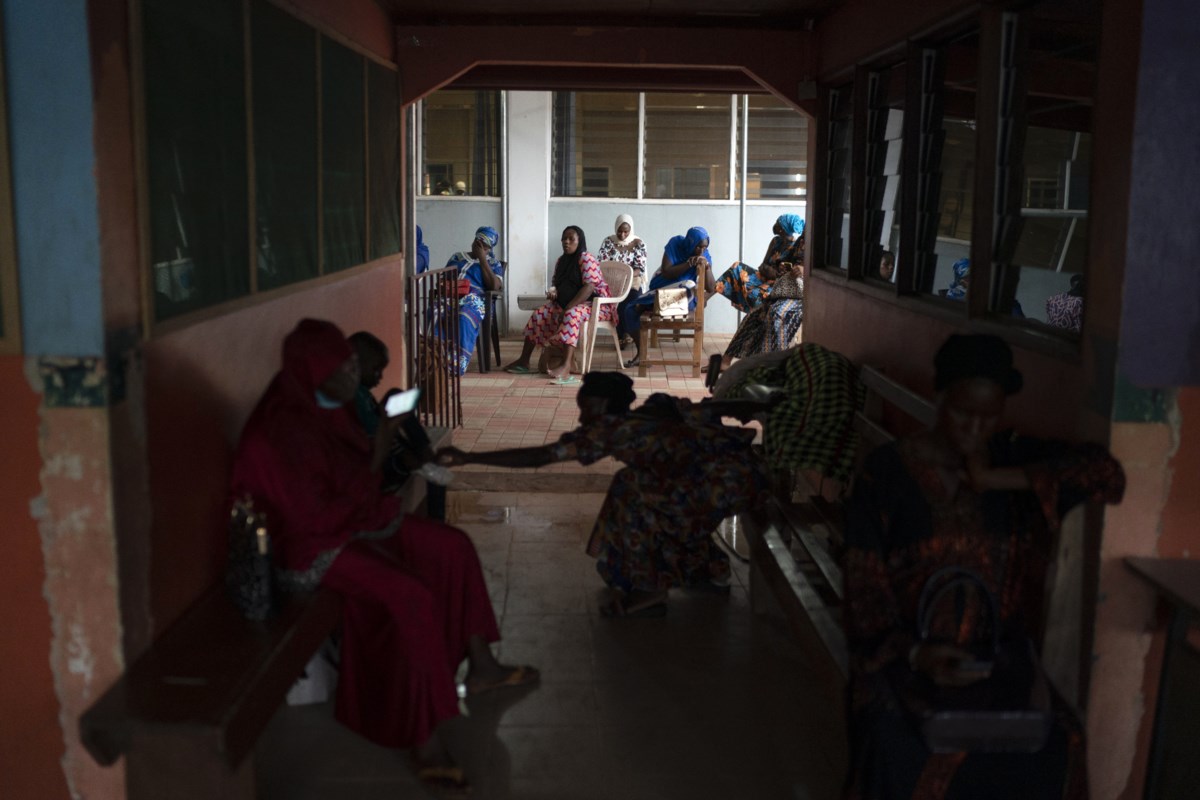
Reluctance to the coronavirus vaccine isn’t limited to remote villages. One recent morning at the Bundung hospital in Serrekunda, on the outskirts of Gambia’s capital, chief executive officer Kebba Manneh asked dozens of expectant mothers if they’d been vaccinated. Just one raised her hand.
Footsteps away, other women brought in their babies and toddlers for routine immunizations — measles, diphtheria and tetanus.
“You take your child to get vaccinations. What is so special about this one?” Manneh asked. A pregnant woman pulled out her phone to show him a video claiming someone’s body became magnetic after the COVID-19 shot, showing a spoon stuck to an arm.
In Gambia, husbands must give permission for wives’ medical procedures. Most women tell health care workers they won’t get the COVID-19 vaccine without their husbands’ consent.
Fatoumata Nyabally’s job as a security officer puts her at heightened risk of contracting the virus. She’s seven months pregnant, but her husband has refused to allow her to be vaccinated. So Nyabally declined a jab, telling workers: “He’s the head of the family, so I have to obey him in anything we do.”
Of the 100 women approached that day at the hospital, only nine agreed to be vaccinated.
___
Cheng, an AP medical writer, reported from London. AP journalists Yves Laurent Goma in Libreville, Gabon; Cara Anna in Nairobi, Kenya; and Mohamed Sheikh Nor in Mogadishu, Somalia, contributed.
___
See the full series on how the pandemic is affecting women in Africa: https://apnews.com/hub/women-the-eyes-of-africa[1]
Krista Larson And Maria Cheng, The Associated Press
References
- ^ https://apnews.com/hub/women-the-eyes-of-africa (apnews.com)
Newer articles:
- The Sentry: Sanctioned businessmen bag multibillion-dollar contracts with South Sudan government - 14/10/2021 13:00
- 9th batch of Chinese medical team begins work in South Sudan - 14/10/2021 05:02
- Irish aid agency Trócaire announces £2 million extra funding for ‘life-changing programme’ in South Sudan - 14/10/2021 04:37
- Kajo-Keji county authorities receive 'threats' from illegal loggers - 14/10/2021 02:25
- South Sudan Women's Right Activist Wins Amnesty International Award - 14/10/2021 00:51
Older news items
- SUDAN – SOUTH SUDAN: a partnership to prevent floods and drought - 13/10/2021 04:55
- South Sudan Regional Refugee Response Plan - 2021 Mid Year Report - 13/10/2021 01:14
- Human Security Survey South Sudan: Central Equatoria - July 2021 - 12/10/2021 11:49
- Rising community violence exposes South Sudan’s fragile peace deal - 12/10/2021 02:56
- Will Salva Kiir end secrecy in South Sudan graft-riddled oil sector? - 11/10/2021 22:04
Latest news items (all categories):
- Juba commissioner denies chasing foreigners - 07/10/2026 14:36
- Australia: 19-year-old from South Sudan arrested over a wild joy ride - 07/10/2026 14:33
- South Sudan’s aid crisis deepens as food stocks run low - 07/10/2026 14:29
- South Sudan’s Juba warns foreigners against running small-scale businesses - 07/10/2026 14:25
- Peace Dialogues foster social cohesion in Nyirol County after persisting tensions - 07/10/2026 14:23
Random articles (all categories):
- Malaria in Rwanda declines by 3 million cases in three years - 25/04/2021 23:34
- S.Sudan will not celebrate Independence Day - 24/06/2016 23:00
- Symbol of freedom runs dry as S.Sudan brewery eyes closure - 05/08/2015 02:07
- UAE President receives President of South Sudan - 10/02/2025 16:09
- South Sudan denies abuses cited by HRW in Jonglei report - Chicago Tribune - 25/08/2012 15:12
Popular articles:
- Who is the darkest person in the world, according to Guinness World Record? - 25/10/2022 02:34 - Read 150636 times
- School exam results in South Sudan show decline - 01/04/2012 17:58 - Read 28188 times
- Top 10 weakest currency exchange rates in Africa in 2023 - 19/07/2023 00:24 - Read 25299 times
- No oil in troubled waters - 25/03/2014 15:02 - Read 24530 times
- NDSU student from South Sudan receives scholarship - In-Forum - 29/09/2012 01:44 - Read 22488 times
