
The euphoria following South Sudan's independence from Sudan on July 9, 2011 was short lived.
Less than a year and a half later, the resource-rich country was plunged into a brutal civil war, at a cost of almost 400,000 lives.
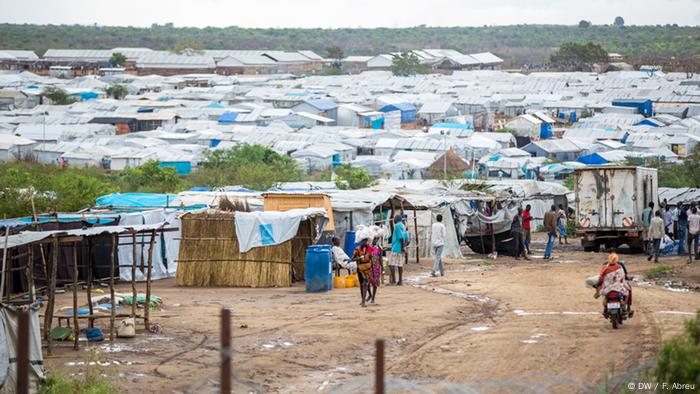
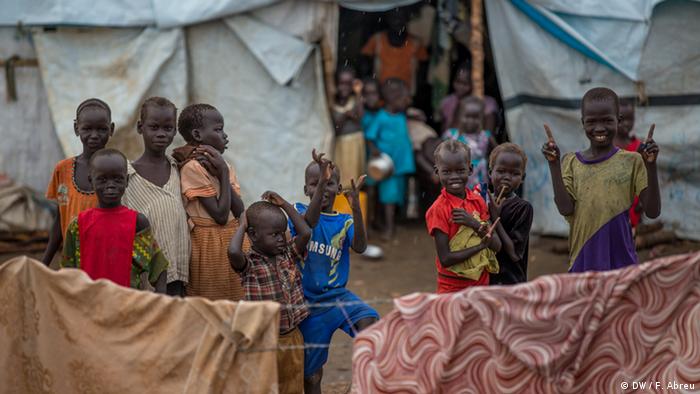
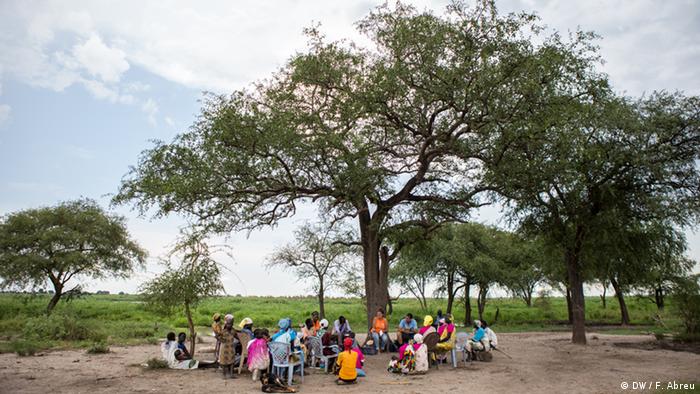
As a result of the civil war, 1.6 million people of the country's 11 million people are currently displaced within South Sudan while more than 2 million South Sudanese have sought refuge in other nations.
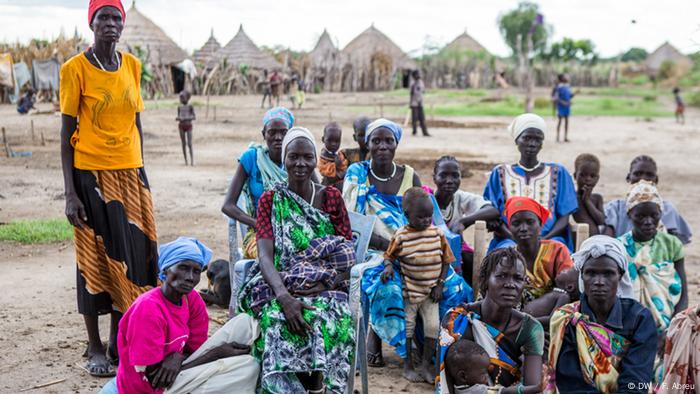
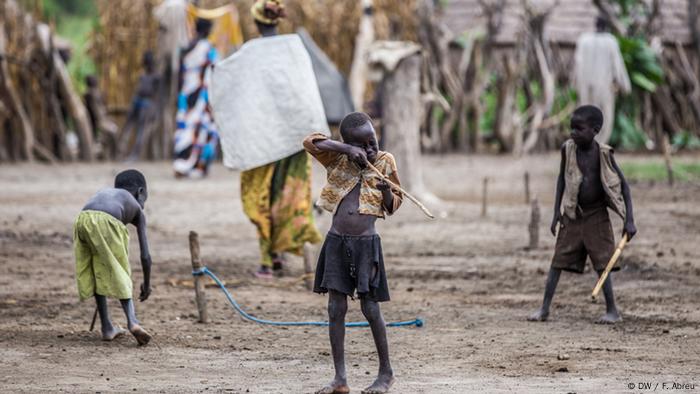
Today, South Sudan is one of the world's poorest countries with 8 million people, or two thirds of the population, dependent on humanitarian aid.
The United Nations Children Fund (UNICEF) warned earlier this week that South Sudan is suffering its worst humanitarian crisis yet. Some 300,000 children under the age of five alone are at risk of starvation, the agency said in a report published ahead of South Sudan's tenth anniversary.
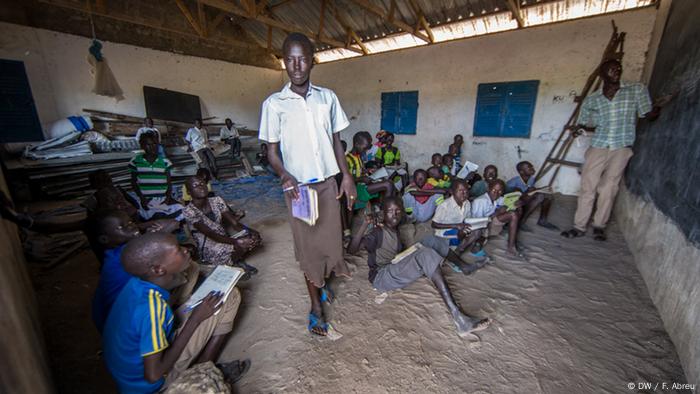
In the report, UNICEF emphasized that peoples' lives are severely affected by weak state structures, extreme poverty, social and economic crises, the consequences of climate change, and the COVID-19 pandemic.

International agencies have resorted to dropping food from airplanes to help people
Post-independence euphoria replaced by ethnic conflict
South Sudan expert Clemence Pinaud told DW much has gone "wrong" in the Horn of Africa country.
"Genocidal violence against civilians of various ethnic groups" is one of the major issues besetting the UN's youngest member state, said Pinaud, an assistant professor at the Hamilton Lugar School of Global and International Studies at Indiana University.
As Pinaud sees it, during South Sudan's fight for independence from Sudan, a mentality of entitlement grew among the Dinka, South Sudan's dominant ethnic group. This has turned into something akin to a belief in ethnic supremacy, she said.
Salva Kiir, who has been president since independence, is a Dinka.

Despite agreements with militias, President Salva Kiir has failed to quell violence
In 2013, Kiir first dismissed Vice-President Riek Machar from the country's second-largest ethnic group, the Nuer. Kiir accused Machar of plotting to overthrow him even though the two had been on the same side in the push for independence from Sudan.
Machar's firing marked the country's descent into one of the most brutal civil war's of modern times, marked by massacres, rapes and the recruitment of child soldiers[1].
The civil war raged on and off until 2018, when the latest fragile peace deal[2] was signed between the rivals.
Low-level violence persists
While a coalition government was finally formed in February 2020[3], local conflicts continue to flare. More than 1,000 people were killed in violence between rival communities in the second half of 2020.
A report by the UN Commission on Human Rights in South Sudan, released in February 2021, found "an intensification in attacks against the civilian population by armed groups and militias organized and mobilized along ethnic lines, often with the support of armed State and opposition forces."
The armed forces are also divided along ethnic lines and more often loyal to specific politicians than to the State.
A compromised leadership
Observers accuse both Kiir and Machar of playing a "waiting game" by delaying the full implementation of the peace accord and blocking the establishment of accountability mechanisms, including a war crimes court in partnership with the African Union.
"This is a government that works by terrifying civilians and by cajoling and co-opting opposition figures," said analyst Pinaud. "It's very difficult for people who oppose the government to stay in opposition because it implies that you will have to refuse a government appointment or order."
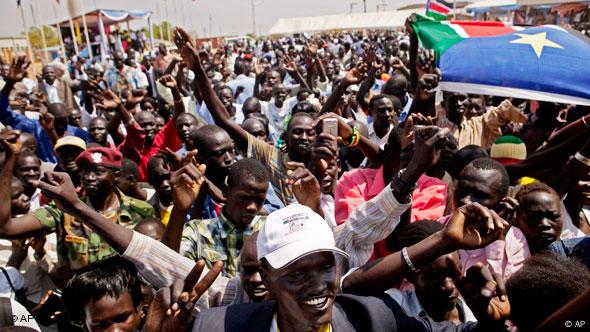
Gone are the days when South Sudanese joyfully celebrated their independence
Some experts see little hope for the country as long as the current politicians remain in power.
"You should give room to a new crop of leaders who'll reflect with a new mindset the reality and the diversities of a post-conflict South Sudan," Andrews Atta-Asamoah, Senior Researcher at the South African Institute for Security Studies (ISS), told DW. "That is what they really need at the moment."
Government officials have deep pockets
As well as the persistent violence, the country is also beset by endemic government corruption.
The UN Commission on Human Rights in South Sudan found in a 2020 report that government officials "are implicated in the pillaging of public funds as well as money laundering, bribery and tax evasion."
"Over time, corruption has been so lucrative that it has infected every sector of the economy and every State institution," the report said.
This, in turn, is fueling human rights abuses and is a major driver of South Sudan's ethnic conflict, according to the report.

South Sudan is rich in resources like oil, but the wealth isn't reaching the people
Despite the country's massive problems, it is failing to garner much international attention.
For conflict analyst Atta-Asamoah, this is because the international community has become weary of South Sudan lurching from one crisis to another.
Despite this, he is loath to give up hope on the situation eventually improving. He considers himself to be "somewhere between optimism and pessimism" concerning South Sudan's future.
External pressure is important, he said, but at the end of the day, "the onus is on the domestic actors in South Sudan to make sure that they sustain progress and work towards adding to it."
References
- ^ recruitment of child soldiers (www.bing.com)
- ^ latest fragile peace deal (www.bing.com)
- ^ coalition government was finally formed in February 2020 (www.bing.com)
Newer articles:
- ‘We need people to heal’: after 10 years of conflict South Sudan’s women seek peace - 09/07/2021 00:53
- Salva Kiir: The man who led South Sudan to independence then war - 08/07/2021 21:26
- Kiir blames sanctions for South Sudan's sluggish economy - 08/07/2021 04:44
- Rebels soldier on, a decade after Sudan split - 08/07/2021 04:43
- South Sudan President SALVA KIIR now reveals why he hates UHURU with passion – Was UHURU behind the coup in South Sudan in 2013? - 08/07/2021 03:49
Older news items
- South Sudan celebrates 10 years of independence – but few rejoice - 08/07/2021 03:28
- South Sudan: Govt Cancels Independence Celebrations Due to Covid-19 Fears - 08/07/2021 02:41
- Efforts to Boost South Sudan Agriculture Found Lagging - 07/07/2021 15:31
- South Sudan: War and hunger scar world's newest country - 07/07/2021 03:26
- After 10 years of independence in South Sudan, action against hunger calls for greater efforts to address malnutrition and food insecurity - 07/07/2021 02:43
Latest news items (all categories):
- Ramaphosa presses Kiir to implement peace deal ahead of South Sudan’s first elections - 09/10/2026 12:19
- South Sudan steps up Ebola alert after Kenya case - 09/10/2026 12:17
- Laotian man deported by U.S. to South Sudan leaves for Laos after year in detention - 09/10/2026 12:14
- Bullet and blast injuries … and a constant need for blood: inside South Sudan’s overwhelmed trauma wards - 09/10/2026 12:10
- MTN South Sudan and Regulator Pledge Cooperation to Expand Connectivity - 09/10/2026 12:01
Random articles (all categories):
- South Sudan hunger at its worst since independence in 2011: experts - 27/05/2015 09:39
- South Sudan's new cease-fire already broken - 10/11/2014 17:52
- Museveni’s new fears on South Sudan - 14/04/2025 17:12
- Two children among 14 killed in fight for Khartoum police headquarters - 26/06/2023 02:48
- Around 120 killed or wounded in attack on western Sudan village, UN says - 26/07/2020 16:22
Popular articles:
- Who is the darkest person in the world, according to Guinness World Record? - 25/10/2022 02:34 - Read 150848 times
- School exam results in South Sudan show decline - 01/04/2012 17:58 - Read 28208 times
- Top 10 weakest currency exchange rates in Africa in 2023 - 19/07/2023 00:24 - Read 25315 times
- No oil in troubled waters - 25/03/2014 15:02 - Read 24542 times
- NDSU student from South Sudan receives scholarship - In-Forum - 29/09/2012 01:44 - Read 22504 times
