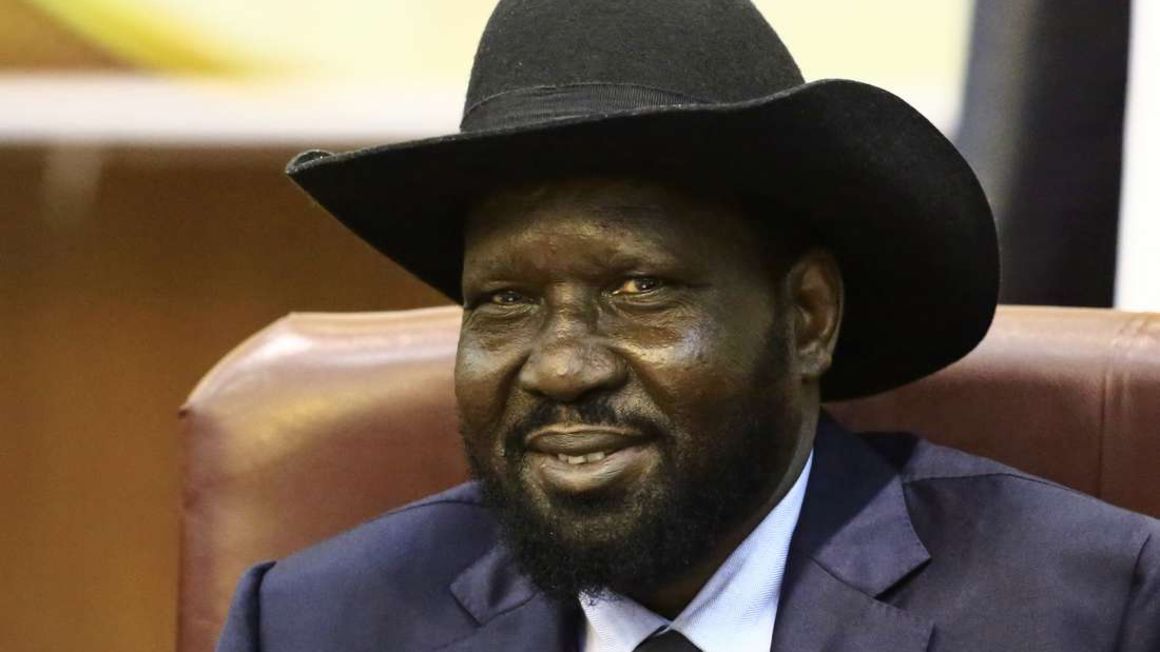
South Sudan's President Salva Kiir. PHOTO | FILE
It may be up to South Sudan’s President Salva Kiir to decide the country’s direction after the National Dialogue conferences proposed several legal changes to stabilise the country.
The conferences, originally mooted in 2017 to help unite and reconcile the country after years of violence, finally took place over the past two weeks.
The discussions, which were divided into two phases, began with grassroots regional meetings followed by the national conference.
Participants presented solutions to local issues such as cattle rustling and land tenure, as well as to more critical concerns like whether the country should adopt a federal system.
Other matters covered were a suggestion for two presidential terms per holder, appointing South Sudanese with dual citizenship to senior government offices, and return of the country to 32 states.
The conference, led by a steering committee with funding from the Japanese embassy through UNDP, held regional meetings in Upper Nile, Bhar-el-Ghazel, and Equatoria, with representatives from the grassroots levels.
At the final national event that ended on Wednesday, more than 500 representatives from various communities and political parties were present.At the closing ceremony on Wednesday in Juba, President Kiir said the resolutions will be incorporated in the permanent constitution.
“The National Dialogue has been broad-based bottom-up consultation. The revitalised agreement on the other hand came as a result of talks between political elites, which makes it narrow in scope,” President Kiir said, referring to the 2018 peace agreement between him and various rebel movements that led to the formation of the Government of National Unity in February this year.
Implementation follow-up
“However, the agreement has a constitutional sanctity that the National Dialogue lacks, despite its popular legitimacy. Therefore, we should not attempt to replace the agreement with the consensus reached through the National Dialogue,” the president said.
He added that the National Dialogue should be used as a guide to enrich the constitution-making process, which the 2018 peace deal mandates.
However, some participants feared that the country may sweep the suggestions under the carpet now that there is some sort of stability.
Jame Kolok, who heads Foundation for Democracy and Accountable Governance, a civil and human rights advocacy organisation, recommends the formation of a select committee to follow up the resolutions' implementation.
“South Sudanese have reasons to doubt the commitment of the government towards implementing matters. The criticism coming from citizens is, if the government is unable to implement a broader peace agreement that looks at the National Dialogue as a sub component of the peace process, then how can it implement the dialogue resolutions?
“What is important now is translating the recommendations that have been made into tangible outcomes that must come in terms of improving the situation of this country. This can be done when a committee is constituted to monitor the resolution implementation,” said Mr Kolok.
Newer articles:
- Ebola Eradication Act: Combating Disease in DRC, South Sudan and Burundi - 22/11/2020 14:45
- USA - Funeral service for young SouthSudanese hit-and-run victim highlights the joy he provided others - 21/11/2020 23:37
- Transforming opportunities for a generation of girls in South Sudan - 21/11/2020 20:38
- Coronavirus: African Union Member States reporting COVID-19 cases as of 21 November 2020, 9 ... - 21/11/2020 15:33
- Sudan boycotts faltering talks over Ethiopia's mega-dam - 21/11/2020 15:11
Older news items
- Africa's Great Lakes Region Recommits To Tackling Security Challenges - 21/11/2020 04:52
- Uganda, South Sudan military chiefs meet over border security - 21/11/2020 01:17
- UNMISS starts construction of outpatient department at Bor Hospital - 20/11/2020 21:45
- Sudan Considers Total Lockdown With More COVID Cases - 20/11/2020 21:33
- UNHCR Ethiopia Refugee Response Plan: Quarterly Monitoring Report, PoCs from South Sudan, January 2020 - June 2020 - 20/11/2020 17:03
Latest news items (all categories):
- Research ● Olga Algayerova: Small-State Diplomacy in an Era of Geopolitical Fragmentation - 28/10/2026 17:44
- The long journey back to the wild: The return of Przewalski’s horses - 28/10/2026 17:38
- South Sudan to begin voter registration in November ahead of December elections - 28/10/2026 17:12
- South Sudanese Liberation Hero Joseph Lagu Dies at 94 as President Kiir Declares National Mourning - 28/10/2026 17:03
- National average price spreads for maize: Across select East African countries - 28/10/2026 16:56
Random articles (all categories):
- Ethiopia, South Sudan sign security cooperation agreements - 20/08/2022 00:10
- MR. J. Gatluak Latjor Geng Lamenting Over Spilt Milk - 25/06/2009 14:21
- Arrested S.Sudan journalist 'freed' - 20/08/2014 01:49
- Inter-Communal Clashes Kill 7 in South Sudan - 17/12/2020 11:41
- MSF opens new project in Pibor providing healthcare to people in remote villages and people on the move - 11/06/2021 06:44
Popular articles:
- Who is the darkest person in the world, according to Guinness World Record? - 25/10/2022 02:34 - Read 151413 times
- School exam results in South Sudan show decline - 01/04/2012 17:58 - Read 28457 times
- Top 10 weakest currency exchange rates in Africa in 2023 - 19/07/2023 00:24 - Read 25559 times
- No oil in troubled waters - 25/03/2014 15:02 - Read 24762 times
- NDSU student from South Sudan receives scholarship - In-Forum - 29/09/2012 01:44 - Read 22736 times