
Reclaiming Azza: A History of Female Resistance in Sudan
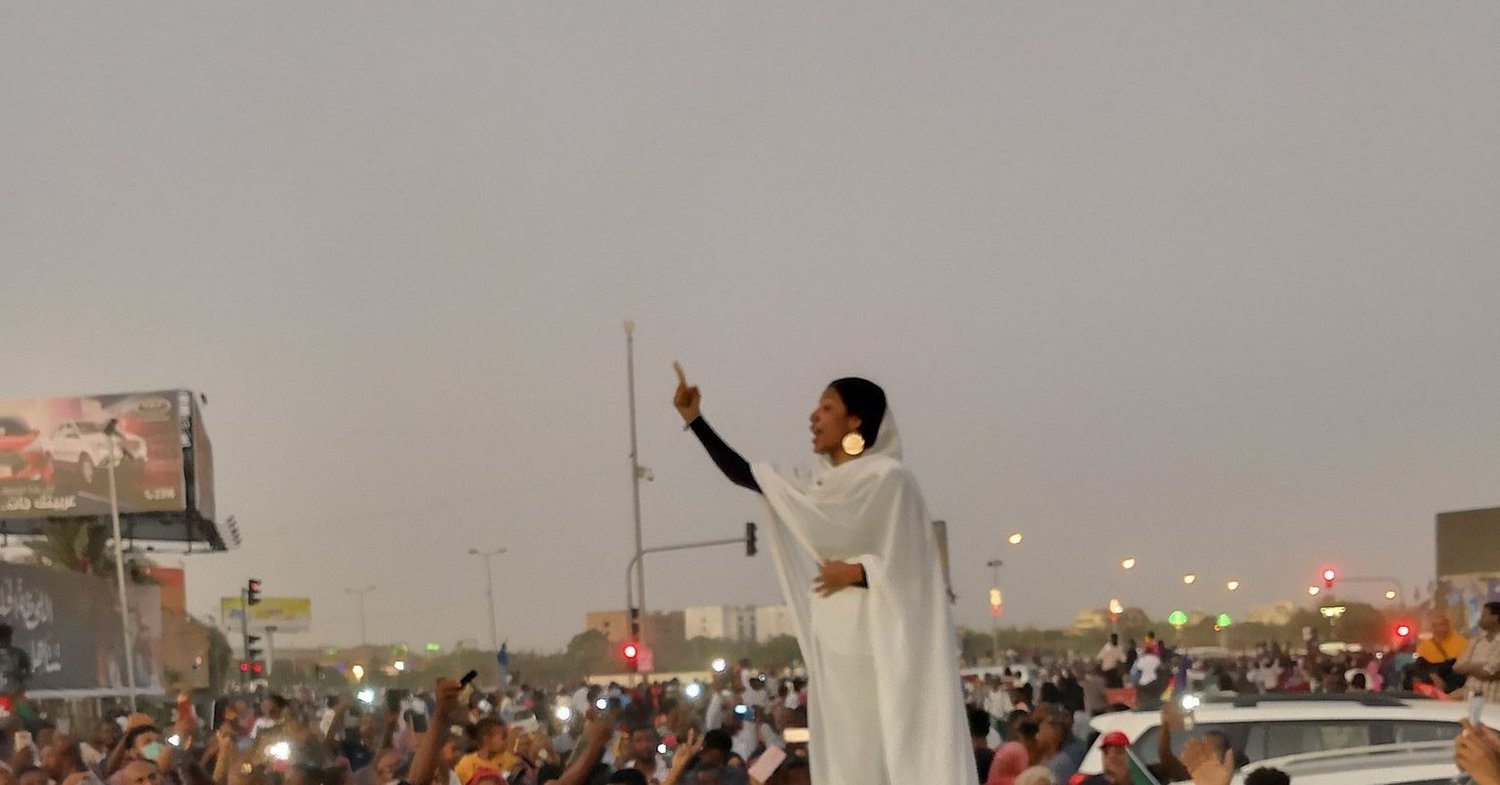
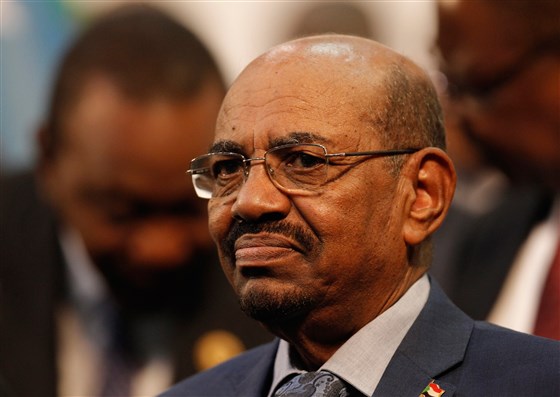 Source: KIM LUDBROOK / EPAProtests quickly spread throughout the nation in Sudan’s capital Khartoum, as well as in marginalized areas such as South Kordofan and Darfur. Some protests even sparked in newly independent South Sudan purely for solidarity purposes. This is in spite of the socio-economic exclusion and racism (heavily fuelled by al-Bashir’s pan-Arabism) that led to the split between North and South Sudan in 2011 to begin with. Protesters across Sudan, particularly women, have been met with a brutal police force (half of those that took the streets and were leading the revolution were indeed, women), and these women have suffered and continue to suffer the worst from the regime. The establishment of Sudanese public order laws, for example, place women’s bodies under constant surveillance through the complete control of their clothing and behaviour. Women caught participating in anti-regime activities would be detained and tortured. Security forces would even resort to cutting off their hair in order to incite fear. Despite these obstacles, it is clear that Sudanese women are a force to be reckoned with.
 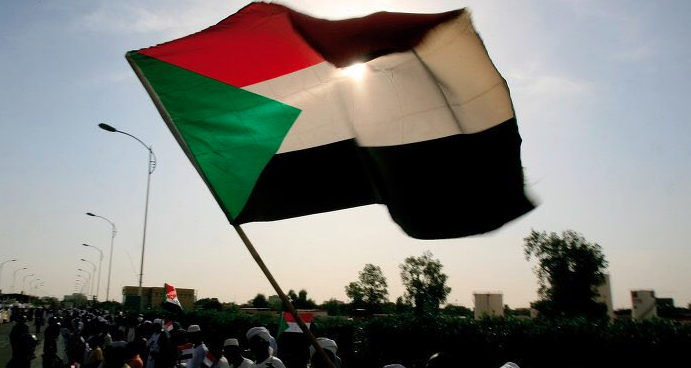 Protesters waving the Sudanese flag.Contrary to popular belief, Sudanese women have been at the forefront of every socio-political movement dating back to pre-colonial times up until the present day. Our history is filled with female icons who have protected the land, and society they birthed. For instance in 332 BC, the Nubian queens of Meroe—known as the “Kandakas”—strategically prevented Alexander the Great from controlling Nubian land. Fast forward to the 20th century, Dr. Khalida Zahir—Sudan’s first female doctor who was arrested by the British for her clear opposition to colonial rule—founded the Sudanese Women’s Union (SWU). The union was known for challenging not only British imperialism, but also the establishment of Islamic governments that operated on Sharia Law. An excerpt written by Amira Osman on Feminist Africa notes that the SWU pushed for dialogue between those in the North and in the marginalized regions of Sudan such as the Nuba Mountains and Darfur. It also played a crucial role in two of Sudan’s previous uprisings in 1964 as well as 1985. This trend has continued throughout history, right up till the current uprising. Whether it is their involvement in overthrowing colonial regimes or military dictatorships, it is clear that energy of the Kandakas continues to run deep through the blood of Sudanese women. But I cannot discuss the empowerment of Sudanese women and their role in the nation’s third revolution without acknowledging the Kandakas in the margins. Women of Darfur and South Sudan have suffered a unique set of social, economic challenges from the regime. As those located in what is now known as South Sudan suffered from colonial and post-colonial regimes, women in the south rose up as leaders of non-violent resistance activities. Female-led resistance played a huge role in the formation of the Southern People’s Liberation Army (SPLA) during Sudan’s second civil war. On a similar note, women in Darfur have also greatly contributed to shaping contemporary Sudanese society despite being largely oppressed by the government based in Khartoum due to ethnic divisions. Despite their continuous suffering, Darfurian female poets—also known as hakamat—were and continue to be known as peacemakers in their respective communities. An article published by Nisrin Elamin and Tahani Ismail on Aljazeera emphasizes that resistance activities conducted by women that involved arms were in response to “political exclusion, underdevelopment and fabricated food shortages” after non-violent tactics failed to meet the demands of the people. And despite all this, the legacy of Sudanese women in the margins continues to be erased from history books, and have their voices silenced. The image and video of Salah reciting poetry and leading the chants of the revolution are truly empowering, and are deeply rooted in the symbolism of Sudan’s rich culture and history. But my concern is that we have reduced an entire nation’s history and current revolution to a single caricature, one that does not adequately represent Sudan’s diverse population. While it is important that we have icons to give us a sense of hope, we must constantly remind ourselves that these movements are much more nuanced. Salah deserves to be an icon of such an important time in Sudan’s history, but let’s not forget who this revolution is really for. Sudanese women all across the nation and throughout our complex history deserve to be acknowledged and applauded for their efforts. The Kandakas of the Nuba Mountains, Darfur, Gezira and all along the margins should not be excluded from a conversation taking place during such a crucial time in Sudan’s history. The latest revolution—which has been referred to as a “revolution of the mind”—is one that is learning from its past mistakes and women continue to be on the forefront time and time again. While we are doing so, let’s make sure that we are including the women who have been marginalized throughout history as a consequence of colonialism and pan-Arabism. Despite the decades of trauma Sudan has endured, despite the west and its media contributing to this trauma; we need to create room for a nation to properly heal. The first step is rather than speaking for Sudanese women, both in the capital and in the margins, we simply hand them the microphone. The time has come for us to reclaim our nation and heal her on our own terms.
 References
- ^ SISIMAG.COM (www.sisimag.com)
Newer articles:
- Sudan's Bashir charged with corruption, in first appearance since April - 16/06/2019 12:18
- South Sudan seeks $500 mln loan to bridge budget gap - 16/06/2019 08:46
- UN praises Indian peacekeepers in S Sudan for humanitarian aid, critical work - 16/06/2019 04:16
- UNHCR welcomes South Sudan’s accession to convention to protect internally displaced people - 15/06/2019 23:30
- Pearson: A strong bond over South Sudan, 20 years in the making - 15/06/2019 08:51
Older news items
- Why South Sudan cattle rustlers keep terrorising northern Uganda - 15/06/2019 01:08
- Record 7 Million People in South Sudan Face Severe Hunger - 15/06/2019 00:42
- 'We're Dealing With Complete Monsters Now': Three Pioneering Women Recount The Brutal Turning Point Of Sudan's Revolution - 15/06/2019 00:15
- South Sudan's embassy closures could harm ties with Norway and France - 14/06/2019 22:40
- Ousted Sudan president to be sent for trial soon, prosecutor says - 14/06/2019 10:00
Latest news items (all categories):
- Ramaphosa presses Kiir to implement peace deal ahead of South Sudan’s first elections - 09/10/2026 12:19
- South Sudan steps up Ebola alert after Kenya case - 09/10/2026 12:17
- Laotian man deported by U.S. to South Sudan leaves for Laos after year in detention - 09/10/2026 12:14
- Bullet and blast injuries … and a constant need for blood: inside South Sudan’s overwhelmed trauma wards - 09/10/2026 12:10
- MTN South Sudan and Regulator Pledge Cooperation to Expand Connectivity - 09/10/2026 12:01
Random articles (all categories):
- South Sudan and Kenya sued over killing of two activists - 02/08/2019 05:59
- South Sudan: Humanitarian Situation Monitoring, April-May 2024 - Access to education (19 August 2024) - 25/08/2024 10:15
- Missions Reach More than 500,000 in South Sudan - 02/11/2014 03:58
- South Sudan rebel leader Riek Machar postpones return to Juba - 18/04/2016 04:22
- Situation in South Sudan - Report of the Secretary-General (S/2021/172) - 25/02/2021 21:15
Popular articles:
- Who is the darkest person in the world, according to Guinness World Record? - 25/10/2022 02:34 - Read 150807 times
- School exam results in South Sudan show decline - 01/04/2012 17:58 - Read 28201 times
- Top 10 weakest currency exchange rates in Africa in 2023 - 19/07/2023 00:24 - Read 25311 times
- No oil in troubled waters - 25/03/2014 15:02 - Read 24537 times
- NDSU student from South Sudan receives scholarship - In-Forum - 29/09/2012 01:44 - Read 22499 times
