
By Carmen Tremblay
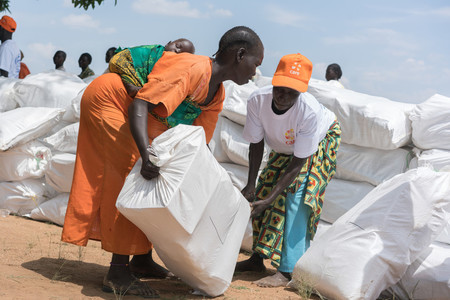
A siege can come in many forms.
There's the one unfolding in Aleppo -- with relentless bombs, destruction and chaos.
Five thousand kilometres south, there's a quieter siege underway in South Sudan where renewed conflict has made most roadways too dangerous for travel, leaving people stuck inside cities, towns and villages previously thought safe.
Different crises, but for those trapped, the fear and desperation is omnipresent.
I returned from a month in the city of Torit, in Eastern Equatoria (now called Imatong state), located in the southern region of South Sudan.
Although the young country in east/central Africa has faced many challenges since its independence in 2011, Torit and the Equatorian region as a whole, had remained relatively calm.
Unlike the GUN states (an acronym for Greater Upper Nile region in northern part of South Sudan, but fitting for multiple reasons), in the south, Equatorians had managed to keep their heads down, planted and harvested their crops, and lived their lives in relative peace until July 2016.
But in the past six months, everything has changed. The violence and guns have moved south.
At risk of oversimplifying, what we're experiencing now is an expansion - or a kind of second phase -- to the conflict in South Sudan, which first broke out three years ago.
In December 2013, fighting between government and opposition forces started in the capital Juba and quickly spread, engulfing three states to the north and causing a massive displacement of people and tremendous humanitarian need.
The Integrated Phase Classification[1], an international food security monitoring tool, has warned that an estimated 4.8 million people were suffering from extreme hunger with parts of Unity State at risk of famine.
And this was before the events of July 2016.
It was just ahead of South Sudan's fifth birthday when a fresh round of violence flared up in Juba. The details remain murky, but a small skirmish in the capital quickly escalated to heavy gunfire and artillery with thousands of people seeking shelter in UN protected sites.
Again, the fighting spread beyond the capital, but this time it moved throughout the southern part of South Sudan, in areas previously left unscathed by the fighting. For anyone who has worked towards a peaceful solution in South Sudan in the past few years, this was devastating.
The Equatorian region had been regarded as the green belt of South Sudan. That's a big deal for a country teetering on the brink of a food crisis since its inception. Its staple crops such as sorghum and maize have helped local farmers earn a meagre living, helped by the fact that the area is home to major trading routes between Juba and neighbouring countries of Uganda and Kenya.
The expansion of conflict to the Equatorias has meant that much of the regions' food crops in July were left unharvested. Thousands fled and the massive displacement continues: according to the UNHCR, refugees arriving in Uganda reached a daily average of 2,700 in early November, of whom more than half are women and girls. The total number of South Sudanese refugees and asylum-seekers[2] in neighbouring countries is nearly 1.3 million.
But not all are able to flee.
"Many families have been forced to flee their fields -- a vital source of food and income."
Regina was one of those who stayed behind in Eastern Equatoria. She told us how she was working in her garden one morning when neighbours reached her in the field and urged her to hurry home. She rushed back to where her five children, elderly mother and husband, who is disabled, were alone.
Others in the nearby village had fled for safety, but Regina decided to stay behind to look after her family.
That night, armed men arrived and told them to leave or they would be killed. She was beaten and her house looted and burnt down.
As the violence continued over the following weeks, she was able to flee the area with her husband and her elderly mother. Tragically, Regina lost three children when they drowned in the water while trying to cross a river to escape.
Many families have been forced to flee their fields -- a vital source of food and income. They are living in cities and towns like Torit hoping for safety. Many of the men have left, and there is a preponderance of women left alone with children, struggling to feed and care for them.
Crops lost at harvest time coupled with an inability to access their fields due to the prevailing insecurity, is leading to an urgent food and nutrition crisis. As the fields lay fallow and unproductive and with no means to purchase food, men, women and children are going hungry.
Since the fall, roads in the countryside of the Equatorias have become treacherous for locals and aid workers alike. Indeed, a humanitarian worker was killed just a few kilometres outside of Torit during my time there. At the moment, a small airport provides the safest route in and out of the town.
With the outlying areas unsafe to travel, some aid organizations have been forced to scale back. CARE was already present in Torit prior to the July escalation conducting development projects funded by the Government of Canada, among other donors.
At this time, CARE remains active in Torit, delivering programming focussed on improved food security and livelihoods, as this is vital to the future of the region, while ramping up its emergency assistance activities to meet immediate needs and protect development gains.
At last we spoke, Regina and her family are residing in an old abandoned shelter just outside of Torit. As she now cares for her two remaining children, her main worry is how to access food every day. Her family sometimes goes three to four days without a meal, she says. Sometimes she begs for food or earns a little money by selling charcoal.
In early November, CARE provided her family with relief items, including kitchen utensils, blankets, soap, plastic sheeting, mats, and jerry cans to replace those that were looted.
She reports that this assistance is giving her some hope, as she has been suffering under the sun and the rain with her children since July. She added the items given by CARE address some of her problems, and she hopes that they can one day return to their abundant field to cultivate for the family.
But until then, she will likely remain here, living day-by-day quietly under siege by a conflict that only seems to worsen.
Carmen Tremblay is a Canadian who served as emergency team leader for CARE in South Sudan.
The views expressed are those of the authors and do not necessarily reflect the views of CCIC or its members.
Follow HuffPost Canada Blogs on Facebook
References
- ^ Integrated Phase Classification (www.ipcinfo.org)
- ^ total number of South Sudanese refugees and asylum-seekers (data.unhcr.org)
Newer articles:
- UN Security Council rejects arms embargo on South Sudan - 23/12/2016 10:29
- U.S. Push for South Sudan Arms Embargo Falls Short at U.N. - 23/12/2016 09:08
- South Sudan Is on the Cusp of Genocide—It Can Be Stopped, If We Care - 23/12/2016 01:20
- Inadequate bulletproof jackets and helmets for Indian peacekeepers in South Sudan - 22/12/2016 21:36
- Arms Embargo On South Sudan Fails U.N. Vote - 22/12/2016 21:00
Older news items
- South Sudan Arms Embargo 'Not Productive,' Japan Envoy Says - 22/12/2016 11:02
- South Sudan At a Crossroads - 22/12/2016 05:35
- S Sudan, Sudan seek to settle border demarcation - 21/12/2016 16:30
- In South Sudan, Children Remain Trapped In The Trauma Of War - 21/12/2016 15:10
- Wau displaced tell of death and horrifying escapes - 21/12/2016 13:40
Latest news items (all categories):
- Western Equatoria prepares for voter registration - 14/09/2026 15:11
- South Sudanese Women Reclaim Their Lives after Fistula Surgery - 14/09/2026 15:10
- Digitel Launches Voice and Social Media Bundles in South Sudan - 14/09/2026 15:07
- Nearly 100,000 displaced in Sudan’s Blue Nile state since January amid fighting: UN agency - 14/09/2026 15:03
- جنوب السودان يرفض طلبًا لـ”حميدتي” بمنحه الحصة الأكبر من عائدات النفط - 14/09/2026 14:51
Random articles (all categories):
- South Sudan Rivals Agree To Form Transitional Govt - 11/06/2014 16:46
- Juba citizens decry increase in Christmas expenses - 20/12/2023 06:27
- أبناء شلو بالخارج والعمل المقدر - 29/07/2010 01:00
- Uganda: Govt pulls plug on South Sudan deal - 16/10/2023 04:02
- Sudan PM Hamdok arrives in Juba on first official trip - 12/09/2019 03:59
Popular articles:
- Who is the darkest person in the world, according to Guinness World Record? - 25/10/2022 02:34 - Read 149550 times
- School exam results in South Sudan show decline - 01/04/2012 17:58 - Read 28110 times
- Top 10 weakest currency exchange rates in Africa in 2023 - 19/07/2023 00:24 - Read 25190 times
- No oil in troubled waters - 25/03/2014 15:02 - Read 24460 times
- NDSU student from South Sudan receives scholarship - In-Forum - 29/09/2012 01:44 - Read 22413 times
